
Table of Contents (8)
Forty Hours in the Jianghu: How Where Winds Meet Hooked Me, Then Tested My Patience
My first hour with Where Winds Meet was pure wuxia fantasy brain candy. I was sprinting up walls, parrying arrows in midair, and skimming across a lake like a budget hero from a Zhang Yimou movie. By hour ten, I was obsessively screenshotting sunsets over bamboo forests. Somewhere around the thirty-hour mark, I was swearing at the camera during yet another crowded boss fight, but still booting it up every night “just to finish one more quest”.
That’s the core of my experience with Where Winds Meet: it’s a game that nails the feeling of stepping into a living wuxia novel, then keeps tripping over its own systems and jank. I can’t stop thinking about it, but I also can’t pretend it isn’t messy.
For context, I split my time roughly 70/30 between a desktop PC and mobile play. On PC I ran it with a controller at high settings; on mobile I tested it extensively on an iPhone 17e, which the game happily recognized and let me push to Ultra graphics, albeit with some frame rate limits. That split ended up revealing a lot about what this game really is-and who it’s actually for.
First Steps: When the Wuxia Fantasy Actually Works
The opening hours don’t waste time. You’re dropped into a war-torn, late-Ten-Kingdoms China, given a sword and a chip on your shoulder, and gently nudged toward a nearby city that acts as your first hub. What struck me immediately wasn’t the plot-that takes a while to warm up-but the vibe. Fog curling off distant mountains, paper lanterns drifting over rivers, distant flute melodies drifting in as I crossed a bridge at night.
On PC, the world impressed me straight away. Fields of tall grass sway as you ride through them; water actually ripples around your character when you dash across it using qinggong; there’s a density to the architecture that sells this as an old, lived-in world rather than a fantasy amusement park. It’s not as photoreal as something like Ghost of Tsushima, but it leans harder into that stylized, almost painterly wuxia aesthetic.
The first “oh, ok, this might be something special” moment for me came about three hours in. I was tasked with infiltrating a fortified manor. The obvious route was to fight through the front gate, but instead I climbed a nearby cliff, used qinggong to jump to a rooftop, tightrope-walked along an old beam, and then dropped silently into an inner courtyard to poison the target’s tea. None of that was a scripted tutorial; it was just the traversal and stealth systems quietly working together, and the game letting me be clever.
Those early hours feel like someone took the daydream parts of a classic wuxia drama—the wire-fu rooftop chases, the brooding swordsman by the riverbank, the chaotic brawls in tea houses—and built a toybox around them. When you’re in that headspace, Where Winds Meet is intoxicating.
Combat: Flashy, Flexible, and Frequently Frustrating
Combat is where the game spends most of its energy, and also where its seams show the most.
At a glance, it’s an action-RPG hybrid: light and heavy attacks chained into combos, dodge rolls, parries, a handful of martial arts skills with cooldowns, plus weapon-specific techniques. Think somewhere between Black Desert Online and a more forgiving Sekiro, with distinct stance skills and a generous timing window on parries.
The high points are genuinely thrilling. One of my favorite fights was a duel on a cliffside against a spear master. He’d open with long, sweeping thrusts that forced me to dodge back, then close suddenly with a spinning slash. After a couple of deaths, I realized the game really wanted me to use my mobility tools. I started using qinggong to vault over his spear, firing off mid-air slashes as I drifted behind him, then following up with a ground-pound that broke his guard. The whole thing felt like a playable fight choreographed by a stunt team.
Where it starts to fall apart is readability and camera control. The game loves throwing multiple elite enemies at you in tight spaces—small bridges, narrow courtyards, cramped tavern interiors—then layering flashy effects on top. Projectiles, glowing telegraphs, particle-heavy skill animations from both you and enemies; it all looks cool in a trailer, but in practice it can be hard to parse.
Several times during my playthrough I died not because I mis-timed a dodge, but because the camera decided a nearby wall was more interesting than the three dudes swinging halberds at my head. Lock-on helps, but makes it harder to track flanking enemies. The game clearly wants you to use verticality—leaping to rooftops mid-fight, sliding down banners—but the camera doesn’t always cooperate when you rapidly switch elevations.
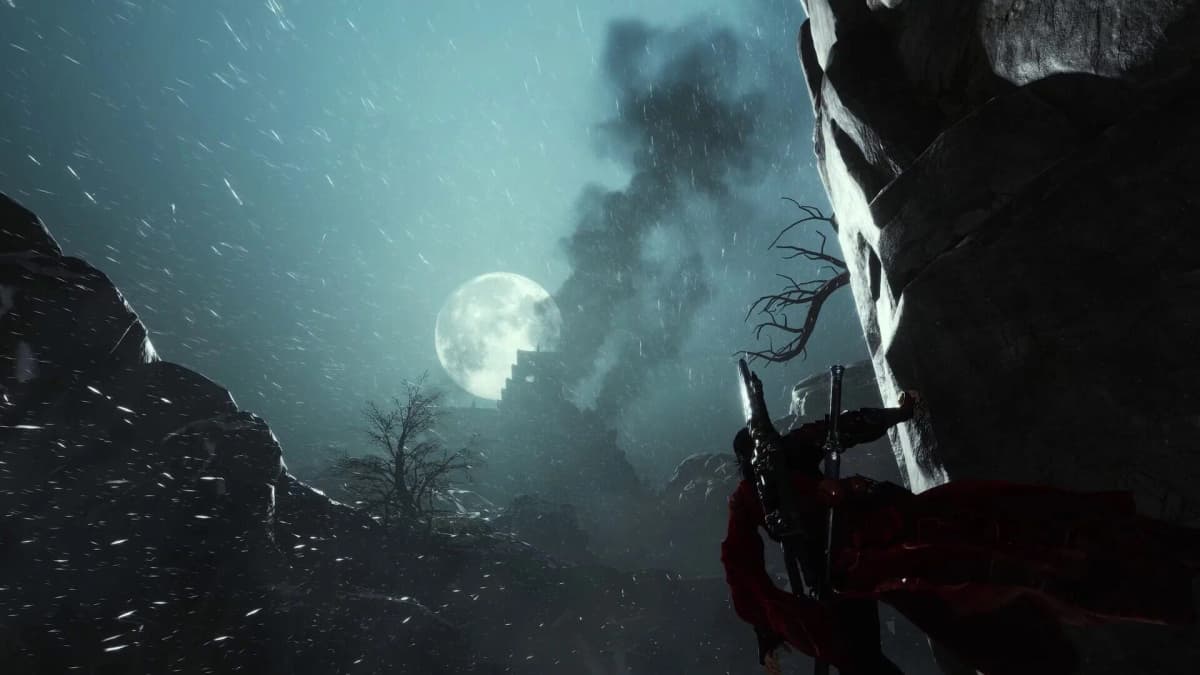
Enemy variety improves as you go: early on it’s a lot of sword guys and archers, but later factions introduce tricky martial artists with counter-stances, heavy armored brutes, and ranged cultivators who set up nasty area denial zones. Bosses range from “tutorial dummies with more health” to “why are there four phases and adds and a giant AOE in a room the size of a bedroom.” When it clicks, combat feels like participating in a carefully staged wuxia duel. When it doesn’t, it feels like wrestling the camera more than your opponent.
Traversal and Exploration: The Real Star of the Show
If the combat is the flashy poster child, traversal is the quiet MVP. Where Winds Meet absolutely understands how important it is, in a wuxia story, to simply move beautifully through the world.
Very early on you unlock core qinggong techniques: wall-running, air-dashing, gliding, and the ability to briefly sprint across water or along vertical surfaces. None of these are locked behind late-game progression; they’re part of your basic kit, and the game designs its world around them.
I lost count of how many times a mundane “go talk to this NPC” objective turned into a mini-parkour puzzle just because I could. Instead of taking a road, I’d spot a broken aqueduct, run up the pillar, chain a couple of air-dashes, land on a rooftop, then glide the rest of the way in. There’s a wonderful looseness to it—movement doesn’t hit the tight, authored satisfaction of something like Marvel’s Spider-Man 2, but it hits that fantasy of a wandering martial artist passing through the world on their own terms.
The world rewards this, too. Hidden manuals tucked in cliffside alcoves, hermits living on precarious ledges with short side tales to tell, random events like bandits shaking down travelers on a road you only notice because you saw the commotion from above. It’s not as systematically reactive as Elden Ring, but it often surprised me in small ways: a musician turning up later in a city after I’d helped him on the road, a child recounting “the sword immortal who flew over the village roof” (clearly me, after a particularly show-offy arrival).
Story, Quests, and the Wuxia Drama Factor
Story-wise, Where Winds Meet leans fully into melodrama: fallen kingdoms, secret sects, betrayals, fate, the whole package. The main plot kicks off slowly, then starts layering conspiracies and revelations until you’ve got flowcharts worth of overlapping loyalties. Tonally, it’s much closer to a long-running Chinese TV drama than a tight, focused Western RPG narrative.
I found the central arc serviceable rather than mind-blowing. The writing swings between sincere and slightly stilted, especially in English. Translation is mostly workable, but there are moments where emotional beats land awkwardly because the phrasing feels off or the VO direction doesn’t quite match the scene’s intensity.
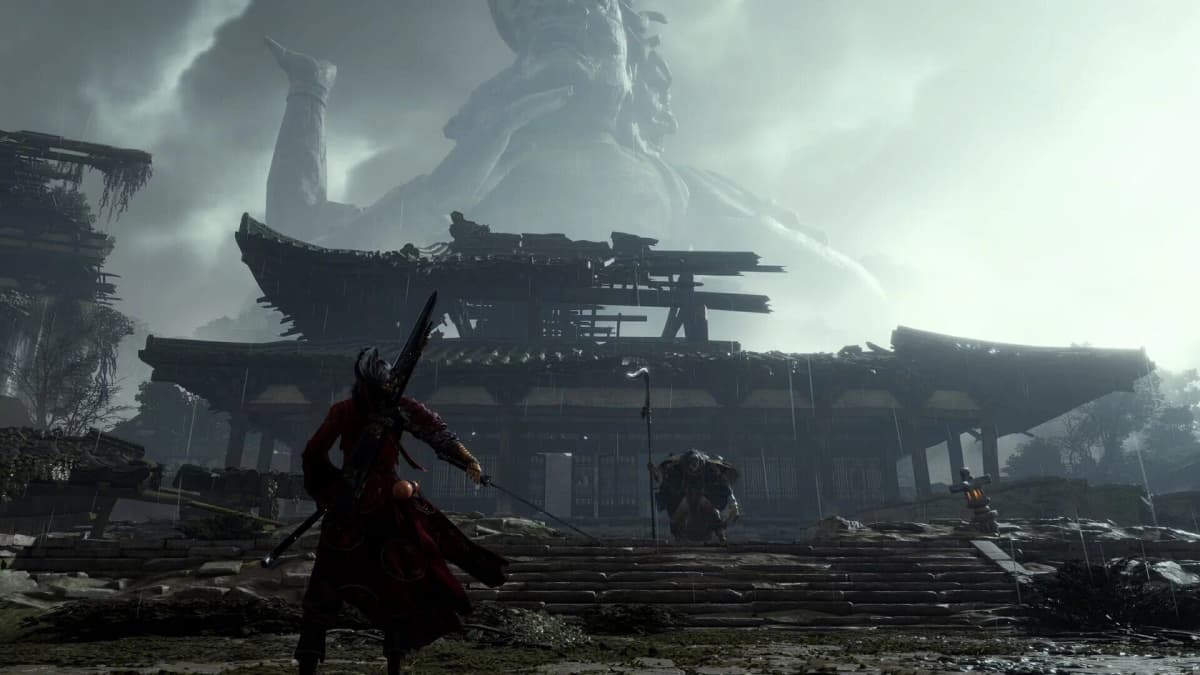
Where the game shines is in smaller, self-contained stories. One of my favorites involved a supposedly cursed bridge where travelers kept vanishing. Following rumors led me to a hidden smuggling ring using qinggong to spirit people away at night, their footprints literally ending on the middle of the bridge. Solving it involved night-time stakeouts, following faint scuff marks up vertical pillars, and eventually a rooftop chase. The payoff was modest, but the journey felt like a proper wuxia mystery.
Side quests are uneven. Some are classic “fetch this herb” filler perched on top of pretty scenery; others are surprisingly affecting character studies. A small arc about a retired executioner trying to atone for his past by protecting a village hit harder than anything in the main plot, largely because it let scenes breathe and gave you space to sit with the moral ambiguity.
Systems, Roles, and Living in the World
Marketing pitched Where Winds Meet as a game where you can “choose your own path in the jianghu”—not just as a swordsman, but potentially as a doctor, a merchant, a bounty hunter, and more. In practice, those roles mostly slot into a web of side systems that range from neat to undercooked.
The medicine path, for example, has you foraging herbs, learning prescriptions, and running a small clinic. I spent a couple of evenings just treating random passersby, diagnosing illnesses with brief minigames, and then seeing the same NPCs later out in the world with changed dialogue. It’s not deep enough to carry the whole game, but as a “slow living” break from constant combat, it works.
Likewise, bounty hunting lets you track fugitives across the map using clues or rumors, sometimes ending in straight combat, other times in social encounters where you can choose to accept bribes, let them go, or drag them back in. Those choices mostly feed into reputation meters with different factions rather than radically altering the world, but stacked over dozens of hours, you do start to feel like you’ve carved out a specific identity.
Where the systems start to feel more like obligations than opportunities is in the gear and crafting grind. Upgrading your weapons and armor means juggling multiple currencies and materials. Some of it drops naturally as you play; some is clearly tuned for people who want to live in the game’s daily and weekly loops. It’s not as aggressive as a typical mobile gacha grind, but if you only want to hop in a few nights a week, you may feel a step behind the intended power curve.
Performance and Platforms: PC Sweet Spot, Mobile Compromise
On PC, my experience was mostly smooth. At high settings the game held a stable 60fps in the open world, dipping into the 50s during especially busy city scenes or particle-heavy boss fights. I had a few brief streaming hitches when galloping into dense areas at high speed, but nothing ruinous. Crashes were rare—two in roughly thirty hours on that platform.
On mobile, it’s a more complicated story, and this is where my time with the iPhone 17e came in handy. The game detected the A19 chip and happily let me set graphics to the Ultra preset, with high-res textures and all the fancy lighting turned on. Visually, it’s impressive for a handheld device: detailed character models, respectable draw distance, and a lot of the atmospheric flair intact.
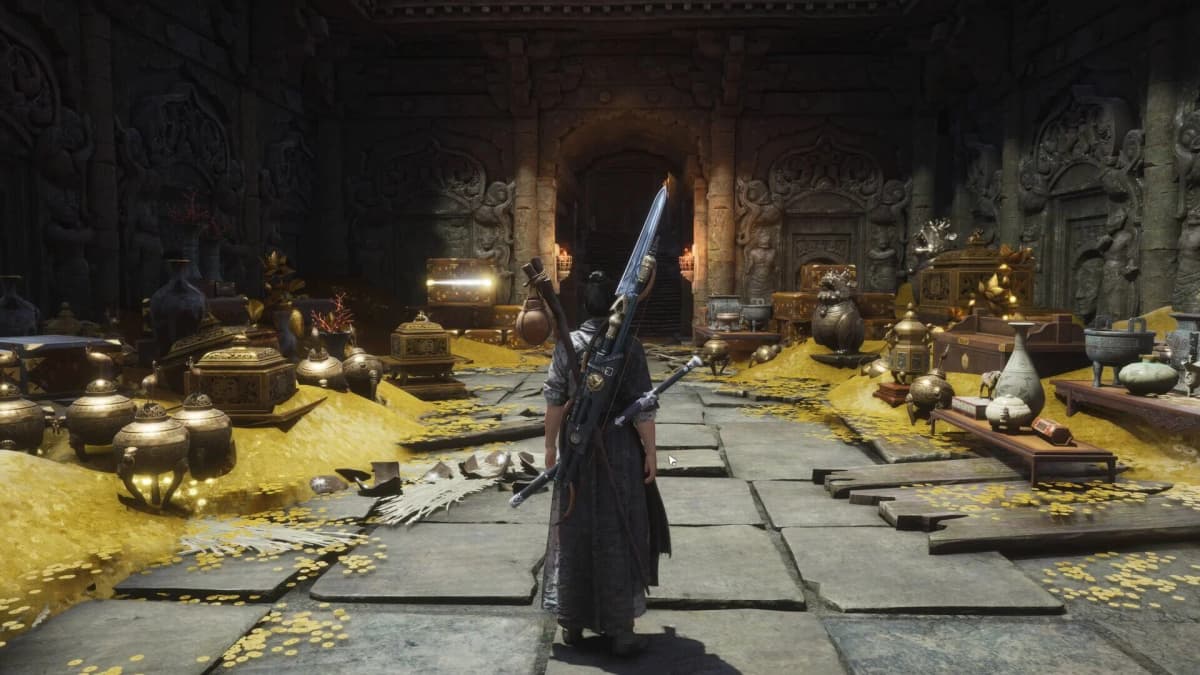
The catch is frame rate. On the 17e, the frame rate menu topped out at the “High” option, with “Ultra”, “Extremely High”, and “Supreme” locked out. Subjectively, that “High” setting feels like 30fps. It’s stable—after half an hour of running around and fighting, the phone barely got warm—but if you’re used to 60fps on PC or a higher-end phone, you will notice the difference in responsiveness, especially during tight parry windows.
The reduced GPU core count on the 17e clearly matters here: the CPU has power to spare, but the game is playing it safe on the graphics side. It’s still absolutely playable, especially for exploration and lighter questing, but I eventually stopped doing big, multi-enemy boss encounters on mobile because the lower frame rate and touch controls together felt like needless punishment.
Battery life, at least, is humane. A 30-minute session on the 17e at Ultra graphics and the “High” frame rate setting cost me about 6% of the battery with brightness around half, which lines up with broader battery tests on that device. So if you’re the type to grind materials or do casual side quests on the couch or commute, mobile fits nicely—as long as you’re okay saving the hardest fights for a more powerful setup with a proper controller.
Who Will Actually Love Where Winds Meet?
After about forty hours, I don’t think Where Winds Meet is for everyone. It’s not the tightly honed, relentlessly polished experience of a prestige single-player action game. It’s sprawling, occasionally clumsy, and clearly built by a team trying to do a bit of everything at once.
If you’re the kind of player who needs:
- Razor-sharp combat and camera tuning
- Impeccable localization and writing in English
- A focused 20-hour story with minimal side fluff
- Perfect 60fps on every platform, including midrange phones
…you’re going to bounce off this, hard.
But if you’re someone who can forgive rough edges in exchange for atmosphere and freedom—if the idea of wandering a stylized medieval China, picking fights and roles and loyalties as you go, excites you—Where Winds Meet has a grip. It’s the kind of game where you intend to progress the main story, then spend three hours tracking a rumor about a ghost sword, only to end the night playing doctor in a village clinic and watching the sun rise over misty rice paddies.
FinalBoss // Gear
Level up your setup
01Top-rated gaming headsetson Amazon→02High-refresh gaming monitorson Amazon→03Gaming chairson Amazon→04Discounted game keyson Kinguin→
Affiliate links · As an Amazon Associate, FinalBoss earns from qualifying purchases.
Want to Level Up Your Gaming?
Get access to exclusive strategies, hidden tips, and pro-level insights that we don't share publicly.
Ultimate Reviews Strategy Guide + Weekly Pro Tips