
Table of Contents (7)
Wo Long on Switch 2 is playable, but the technical trade-offs are hard to ignore
Wo Long: Fallen Dynasty – Complete Edition gives Switch 2 owners the full Team Ninja action RPG package: the base campaign, three major expansions, every added weapon class, extra difficulty tiers, Divine Beasts, new stages, and The Thousand-Mile Journey endgame. The content is complete. The port is not equally complete from a technical standpoint.
Docked players must choose between an image that is cleaner but uneven at 30fps, or a softer performance mode that aims for 60fps yet still loses stability in demanding fights. Handheld mode removes that choice entirely, locking players to the softer FPS-oriented presentation. For a game built around reacting to attacks in a split second, inconsistent frame pacing has more consequence than a few ugly textures.
The practical recommendation is straightforward: buy the Switch 2 version for portable access to Wo Long’s combat, progression, and DLC. Pick another platform if clean image quality, consistent performance, and fast death-to-retry loops matter more.
Switch 2 version at a glance
| Category | Switch 2 details |
|---|---|
| Release date | September 3, 2026 |
| Included content | Base game, Battle of Zhongyuan, Conqueror of Jiangdong, Upheaval in Jingxiang, and all additional DLC |
| Added weapon types | Cestus, long sword, and whip |
| File size | 39.1GB estimated download |
| Docked graphics options | Prioritise FPS or Prioritise Resolution |
| Handheld graphics options | FPS-oriented mode only |
| Local wireless | 2-3 players |
| Online support | 1-5 players listed; co-operative play supports up to three players |
| Japanese MSRP | 7,480 yen for digital and physical versions |
The combat still has the right teeth
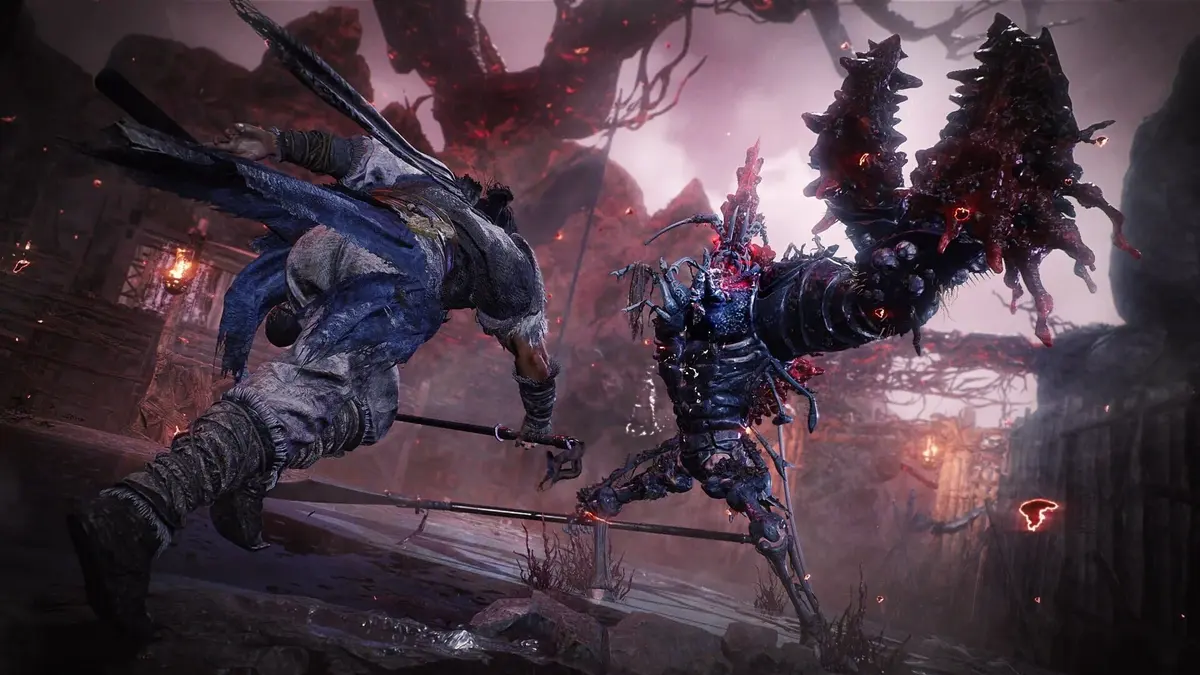
Wo Long is set during the fall of the Han dynasty in 184 CE, but its systems are far more readable than its dense historical-fantasy setting initially suggests. The game revolves around deflection: enemies telegraph major attacks with a red glow, and a well-timed parry can stagger them for a punishing heavy strike. Weapon variety helps, but this rhythm of baiting danger, deflecting it, and converting that opening into damage remains the main event.
The morale system gives every stage its own pressure curve. Morale starts at zero, rises to a maximum of 25 through enemy kills and planted flags, and affects both your power and the danger posed by opponents. Death does not remove the currency used for leveling, which takes some sting out of failure. It does cut your morale while strengthening the enemy that killed you. A sloppy loss therefore makes the rematch worse in a very immediate way.
That structure works because Wo Long makes timing feel valuable. Fast weapons, Qi-based magic, Divine Beasts, bosses, and morale escalation all feed into an action game that rewards control under pressure. A stable 30fps presentation could support that design. A stable 60fps presentation would suit it even better. Switch 2 delivers neither outcome consistently enough.
Docked mode: choose clarity or higher frame-rate targets
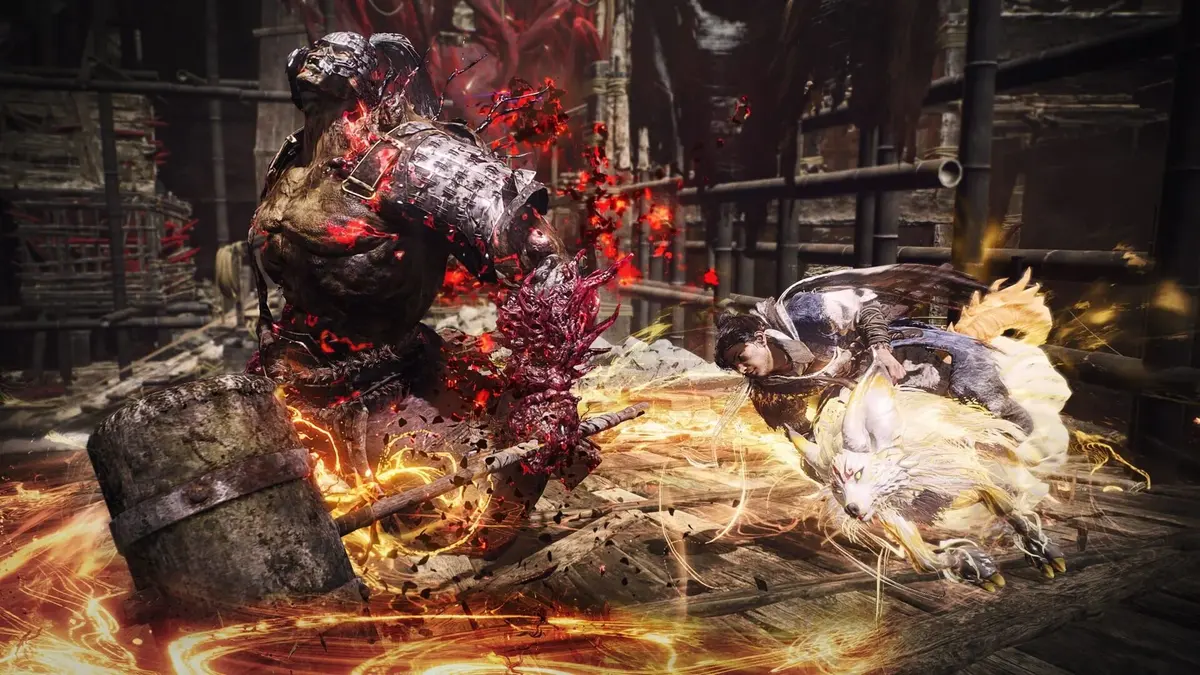
Docked mode offers the only meaningful settings choice. Prioritise FPS uncaps performance with a 60fps aim, while Prioritise Resolution targets 30fps and puts more of the limited rendering budget into image quality. Neither setting is a clean win.
| Mode | Frame-rate behaviour | Image quality | Best fit |
|---|---|---|---|
| Docked: Prioritise FPS | Aims for 60fps; lighter scenes feel responsive, while busy combat produces dips and uneven frame delivery | Very soft image, aggressive detail reduction, visible pop-in; around 720p is the estimated ballpark in performance mode | Players who prioritise deflections, dodges, and faster camera response |
| Docked: Prioritise Resolution | Targets 30fps, but inconsistent frame pacing introduces judder during movement and camera pans | Cleaner image, improved texture presentation, and stronger character readability | Players who can tolerate uneven 30fps for clearer visuals |
| Handheld: FPS-oriented mode | Targets higher performance, with drops during quick combat and dense open areas | Soft image and reduced texture detail; the smaller screen hides some of the damage | Portable-only players willing to accept the compromise |
Prioritise FPS is the sensible default for docked play because Wo Long’s deflections are central to every difficult encounter. When the game runs close to its target, inputs feel suitably sharp and the combat’s aggression comes through. The trouble arrives when several enemies, particle-heavy magic, or large effects hit the screen together. Frame-rate drops and frame-time spikes make the action feel less predictable exactly when a red attack cue needs a clean response.
The visual cost is severe. Texture detail is reduced, environments lose definition, distant geometry pops into higher-detail states, and the reconstruction leaves the whole screen looking smeared on a television. Koei Tecmo’s stated maximum of 1440p in docked quality mode is an upper limit in a dynamic system, rather than a guarantee of the internal resolution being rendered in every scene. Performance mode operates far below that ceiling.
Prioritise Resolution improves the image enough to make enemy silhouettes, scenery, and boss arenas easier to parse. That is valuable in a game whose attack reads can be buried under effects and movement. The 30fps target, however, suffers from poor frame pacing. Smooth 30fps needs frames to arrive every 33.3 milliseconds; uneven spacing produces motion judder even when the counter broadly sits around 30. Camera pans and running through detailed villages expose this problem immediately.
Handheld mode is easier on the eyes, tougher on the timing
The smaller Switch 2 display does Wo Long a favor. Soft edges, low-detail materials, and compromised texture work are less distracting in handheld play than they are on a large TV. That makes this the more forgiving way to look at the port, especially during slower exploration or a straightforward one-on-one duel.
Handheld mode still has only one graphics option. Resolution priority is disabled, so there is no route to a clearer fixed-30-style presentation for players who value image stability over a higher frame-rate target. Fast fights, crowded encounters, and open sections with several enemies visible at distance can lose performance. Some distant enemies also animate at a visibly lower update rate, with that animation state occasionally lingering as combat begins. Bosses avoid that particular issue, but regular encounters are where this port spends much of its time.
For a slower action RPG, this may be an acceptable portable trade. Wo Long is less forgiving. Deflection timing depends on seeing an attack, reading its approach, and committing at the right instant. A fluctuating presentation does not necessarily change the game’s internal parry logic, but it makes the visual rhythm harder to trust. That distinction matters: the issue is not that every missed deflection is the port’s fault; the issue is that the port adds friction to a system built around precision.
Load times add friction to a game built around retries
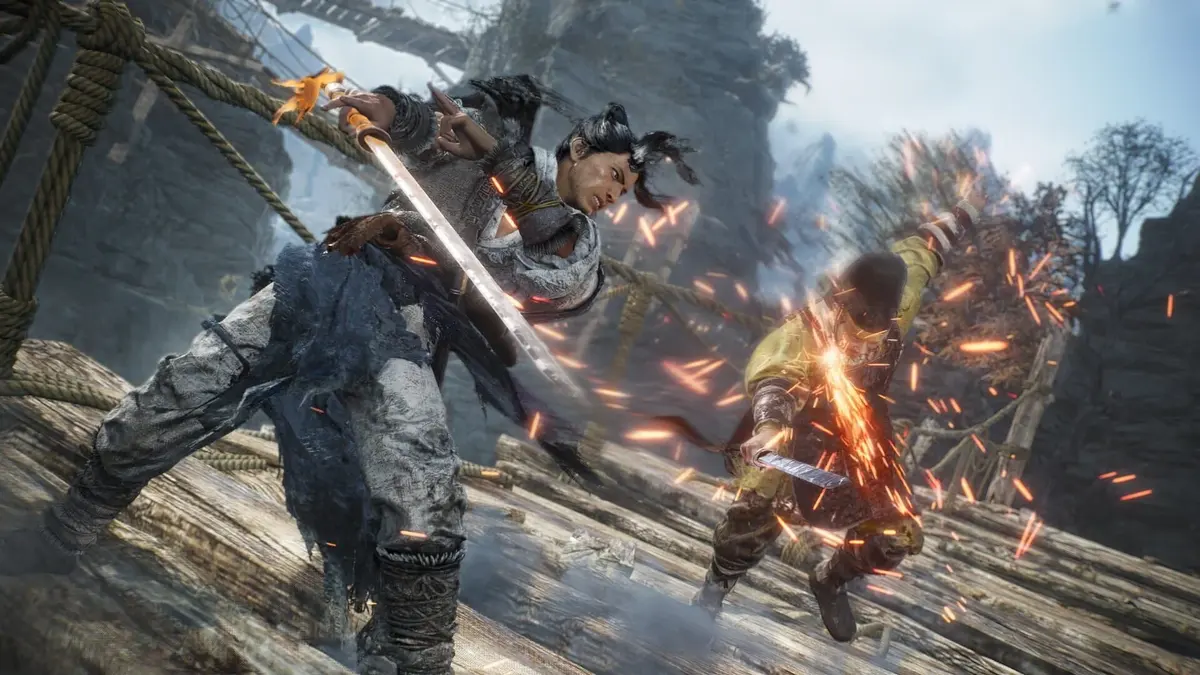
Wo Long expects repeated failures. The game’s morale penalties make failed attempts meaningful, bosses are designed to be learned through repetition, and the best fights often demand several rematches. Switch 2 load times make those loops feel slower than they should.
| Platform and storage | Dashboard to title | Title to early-game save |
|---|---|---|
| Switch 2 internal storage | 33–34 seconds | 18–19 seconds |
| Switch 2 microSD Express | 38–39 seconds | 23–24 seconds |
| Steam Deck OLED | 28–29 seconds | 20–21 seconds |
| PS5 Pro internal storage | 10 seconds | 11–12 seconds |
Installing Wo Long to Switch 2 internal storage saves roughly five seconds when reaching the title screen and loading a save compared with microSD Express. That is worthwhile for a 39.1GB game, especially if the Switch 2 version is your only option. It does not transform the retry cadence: nearly 20 seconds to return to an early-game save remains a noticeable pause after a difficult death.
What to test before committing to a long run
The key technical test is frame-time consistency, not an occasional glance at an fps counter. In docked FPS priority, test a boss fight and a multi-enemy battle with magic effects active. Watch for abrupt motion hitches, stutter during deflections, and a change in how reliably attacks can be read. A game can briefly display a high average frame rate while still feeling rough because frames arrive unevenly.
In docked resolution priority, run through a detailed village and slowly pan the camera across dense scenery. This exposes 30fps frame-pacing problems far more clearly than standing still in a menu or a small room. Handheld testing should focus on open areas, distant enemies, and multi-target combat, where the lower-detail animation behaviour and performance drops are easiest to spot.
Keep the game on internal storage if possible, use docked FPS priority when combat responsiveness is the priority, and treat handheld mode as a portability-first compromise. There is no dated Switch 2-specific performance-fix roadmap at launch, so the current presentation should be treated as the version being purchased rather than a temporary inconvenience guaranteed to disappear.
FinalBoss // Gear
Level up your setup
01Best-selling Switch 2 gameson Amazon→02Switch 2 accessorieson Amazon→038BitDo controllerson Amazon→04Discounted game keyson Kinguin→Affiliate links · As an Amazon Associate, FinalBoss earns from qualifying purchases.
Want to Level Up Your Gaming?
Get access to exclusive strategies, hidden tips, and pro-level insights that we don't share publicly.
Ultimate Tech Strategy Guide + Weekly Pro Tips