
Table of Contents (10)
World of Tanks: HEAT runs on Agents, not just tanks
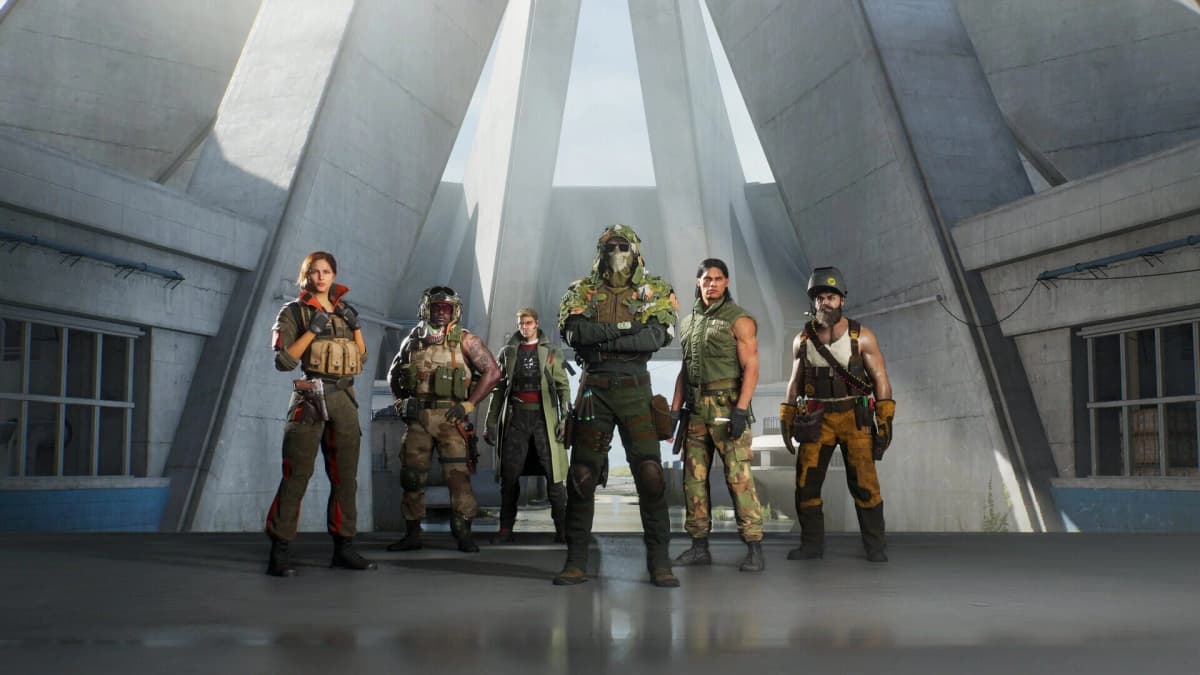
If you came from classic World of Tanks, you are used to thinking in armor, angles, and vehicle classes. World of Tanks: HEAT, the standalone hero-driven game Wargaming launched on May 26, 2026, keeps that battlefield DNA but bolts a new layer on top: your identity is built around an Agent as much as the tank. HEAT shipped with eight Agents split across three roles — Defender, Assault, and Marksman — and each Agent commands a two-vehicle roster, with each vehicle tuned to its role. None of this exists in base World of Tanks, so if a guide tells you Chopper or Hound belongs to the original game, it is wrong.
The short version
- Defenders hold space and absorb attention. Start here if you are new.
- Assaults flank, finish low targets, and reposition before the enemy front can answer.
- Marksmen control sightlines, reveal weak spots, and punish from range.
- Every Agent has a passive trait and a powerful ultimate, and each one fields two specialized tanks — so picking a role is really picking a loadout and two ability kits.
- Cover all three roles before you stack any of them. A team that skips Defender struggles to take ground; one that skips Marksman lets enemy peeks go unpunished.
How roles actually work in HEAT
Your role lives in the Agent-and-tank pairing, not just the portrait. Each Agent commands two specialized vehicles, each with its own abilities, so role choice is a loadout decision: you are choosing a playstyle and how your tools behave across different situations. HEAT does not ask every player to do everything. There is no healer ferrying bad trades back to safety — the three roles are battlefield jobs. Skip the Defender and your team cannot take ground. Skip the Marksman and enemy peeks become free. Skip the Assault and winning damage rarely turns into kills.
- Defender: takes first contact, blocks momentum, wins space slowly.
- Assault: changes tempo, punishes exposed targets, repositions faster than the enemy can track.
- Marksman: controls sightlines, reveals openings, and converts information into clean damage.
Defenders: the role that makes the map playable
Defenders are the frontline anchors. Their job is to make dangerous space usable for the rest of the team. A good Defender is not the player with the biggest armor profile — it is the one who takes aggro at the right time, forces bad enemy angles, and lets teammates move behind that pressure. This is why Defender play is stronger than most expect in objective matches: when a lane is contested, someone has to show hull, bait cooldowns, and keep the enemy looking forward. If nobody does, your faster roles enter the fight from a losing angle.
Chopper is the clearest example of the Defender identity. His passive trait, Stubbornness, automatically reduces incoming damage when his HP is low and adds extra defense while he is capturing or holding a point — exactly the survivability you want when you are the one absorbing focus fire. His ultimate is a mobile-artillery, creeping-barrage bombardment that walks across an area and shoves enemies off objectives, so Chopper is about area denial and controlled pushes rather than flashy duels. (His tank-specific Active Protection System is a vehicle ability tied to piloting the M1E1 — it is not his trait.)

When you pick a Defender, think in two jobs. Your first tank should help you take contact; your second should help you sustain control once the fight stabilizes. If your lineup already has an anchor, lean into a more pressure-oriented setup. If your team is full of aggressive roamers, lean harder into durability — somebody has to be the safe point they can return to.
- Best use case: chokepoints, objective circles, slow pushes, peeling for weaker allies.
- Big mistake: treating the role as immortal. A Defender that overextends alone is still just free focus fire.
- What good Defender play looks like: entering first, not deepest; forcing enemies to shoot you while your team gains angle control.
Assaults: speed only matters if it arrives on time
Assault is the role most players misread first. Speed and aggression make it sound like the easy carry pick, but Assaults are strongest as timing predators. The job is not to start every fight by diving in — it is to appear where the enemy is weakest, force a fast numbers advantage, and leave before the enemy front line can punish the angle. A Defender wins value by staying in a dangerous area; an Assault wins value by changing which area is dangerous.
The launch Assault Agents show two flavors of this. Reaper is built to survive the commitment: his trait stops a single hit from instantly killing him as long as his HP is high enough, and his ultimate calls in an F-4 Phantom that drops guided napalm to deny ground and cook clustered enemies — there is no charge or dash on Reaper. The gap-closing pressure tool belongs to Raketa (often misspelled “Racketer”), whose scavenger trait turns enemy vehicle wrecks into scrap tokens you collect as temporary HP, rewarding you for staying active and chaining kills in the thick of the fight.
Because every Agent commands two specialized tanks, Assault players should think about entry pattern more than raw speed. One vehicle should open the flank; the other should continue pressure once the target survives the first hit or the lane collapses. The worst Assault setups reach a fight fast but cannot live there for even a few seconds.
- Best use case: rotating between lanes, collapsing on weakened enemies, punishing exposed Marksmen.
- Big mistake: taking first contact instead of second contact. Assaults thrive after the enemy is already busy.
- What good Assault play looks like: short, violent engagements followed by immediate repositioning.
Marksmen: far more than sniping from the back
Marksmen are the easiest role to stereotype and the hardest to play well in coordinated matches. They operate from range and deal precise damage, but the real function is battlefield control from distance: vision, target selection, and punishing overconfidence before it becomes a full push.
The launch Marksmen prove the point. Hound reveals an enemy’s critical weak spots when you hold aim on a target, carries a UAV drone for reconnaissance, and fires a guided-missile ultimate that can one-shot a tank and reveal everyone caught in the blast — so spotting and target discovery are as much his job as raw damage. Fuzzer (not “Fuzz”) is built around setup: his laser-designator ultimate marks an enemy and every ally near it, amplifying your team only while that enemy stays in the pack. If you pick a Marksman and only sit in the deepest safe corner, you are missing half the role. Keep key enemy movements visible, make risky crossings expensive, and soften priority targets so your Defenders and Assaults can finish cleanly.
Marksman loadouts should be built around sightline management. One tank punishes from range; the other helps you re-angle, scout, or survive when the map stops being a shooting gallery. The role gets much worse when it stays static — once enemies know exactly where you are, every future peek is pre-aimed against you.
- Best use case: open lanes, overwatch positions, objective defense, information support.
- Big mistake: staying planted after the first reveal and becoming predictable.
- What good Marksman play looks like: constant lane pressure, smart spotting, and clean focus on the target your team can actually convert.
How the three roles fit together
The healthiest HEAT lineups are not built around stacking one role — they cover all three battlefield problems: taking space, converting openings, and controlling lines of fire. In larger objective matches, a stable structure is one Defender-led brawl lane, one Marksman-supported firing lane, and Assaults flexing between them to exploit whichever side draws too much enemy attention.
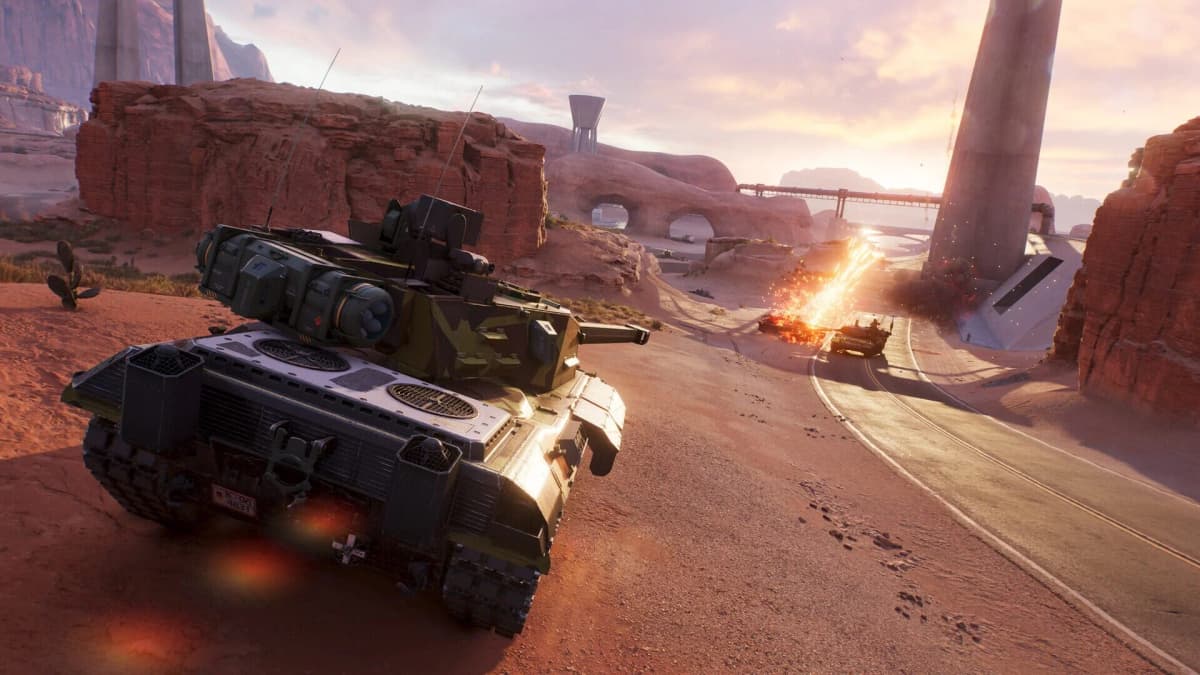
The cleanest synergy is usually Defender plus Marksman, then Assault as the finisher. The Defender creates a durable front. The Marksman supplies information and punishes exposed peeks. Once the enemy burns defensive tools or tries to rotate, the Assault arrives to break the position. That is why a team full of fast vehicles can feel strangely weak: speed alone does not create safe damage windows. Somebody still has to hold, and somebody still has to watch the lane.
- Too many Defenders: strong on one lane, weak at chasing advantage across the map.
- Too many Assaults: explosive early, but prone to collapsing if no one can anchor space.
- Too many Marksmen: solid at poke, poor at actually claiming objectives once the enemy commits.
Common mistakes
- Treating HEAT like base World of Tanks. Armor and angles still matter, but ignoring Agent traits and ultimates throws away half your kit.
- Playing one vehicle and forgetting the second. Each Agent fields two specialized tanks for a reason — switch to match the phase of the fight.
- Stacking your favorite role. Three Assaults with no anchor melt the moment the enemy holds a lane.
- Holding an ultimate forever. Chopper’s barrage, Reaper’s napalm, Hound’s missile, and Fuzzer’s designator all win fights — using them late loses more than using them early.
- Sitting still as a Marksman. After your first reveal you are a known, pre-aimed target. Move.
Which role should you pick first?
If you are learning HEAT and want the most reliable value, start with Defender. It teaches spacing, angle control, and objective timing without demanding perfect route knowledge. If you already read maps well and like creating chaos, Assault has the highest playmaking ceiling but punishes bad judgment the hardest. If you prefer controlled fights and cleaner decisions from range, Marksman is the natural fit.
There is no single best role — the best one is the role your team is missing and the map supports. A narrow, pressure-heavy layout boosts Defenders. Multi-lane maps with flank routes reward Assaults. Long sightlines elevate Marksmen. Treat role select as a response to the battlefield, not a permanent identity.
Practical takeaway
World of Tanks: HEAT’s role system looks simple, but each Agent role defines a combat posture and your two-tank pairing decides how that posture survives under pressure. Defenders like Chopper hold ground; Assaults like Reaper and Raketa convert openings; Marksmen like Hound and Fuzzer win fights before they start by controlling information. Queue in assuming every match needs a Defender first, an Assault second, and a Marksman whenever the map gives range and vision real value — then learn each Agent’s trait and ultimate, because in HEAT that is where matches are decided.
FinalBoss // Gear
Level up your setup
01Top-rated gaming headsetson Amazon→02High-refresh gaming monitorson Amazon→03Gaming chairson Amazon→04Discounted game keyson Kinguin→Affiliate links · As an Amazon Associate, FinalBoss earns from qualifying purchases.
Want to Level Up Your Gaming?
Get access to exclusive strategies, hidden tips, and pro-level insights that we don't share publicly.
Ultimate Guide Strategy Guide + Weekly Pro Tips