
Table of Contents (10)
Why I’m Logging Back into World of Warcraft: Midnight
Blizzard’s next WoW expansion, Midnight, lands worldwide on March 2, 2026 (March 3 at 00:00 in Europe). I played a limited beta on a specialized server with nothing but the new systems and my hands on the keyboard. What matters for players isn’t the marketing blurbs—it’s whether new toys change how you play. For me, two things did: a fresh Demon Hunter specialization that’s actually fun to loop, and a push to bake more of the add-on ecosystem into the base client. The rest? Promising, but not guaranteed to hold me long-term.
- Housing is surprisingly rich but feels optional unless you’re roleplay or guild-focused.
- The new Demon Hunter spec (Devourer) hooked me immediately—clean, fast, satisfying.
- Tutorials are clearer than ever but risk being boring; onboarding may convert but won’t retain without flavor.
- Talent revamp and integrated UI help are Midnight’s real retention play—less fiddly, more playtime.
Key Takeaways
- The Devourer spec is a genuine loop, rewarding timing and resource management.
- Housing shines for social players but won’t replace raiding or Mythic+ for most grinders.
- Onboarding is polished yet soulless; Blizzard needs more narrative hooks.
- Built-in talent tools and UI fixes could be Midnight’s biggest win for retention.
Beta Impressions: What I Actually Touched
The beta didn’t show everything—I missed some class overhauls and the full “manhunt” tracking system because those need higher-level content and time to reveal themselves. What I did see were four major systems: the housing editor, the new Demon Hunter spec, a reworked prologue/tutorial in the Exile’s Edge, and the expanded talent trees now capped at level 90. That’s enough to form an opinion: Midnight feels like a consolidation patch that also tries to seduce players with clear, bite-sized novelties.
Housing: A Big Sandbox That Won’t Change My Raid Loop
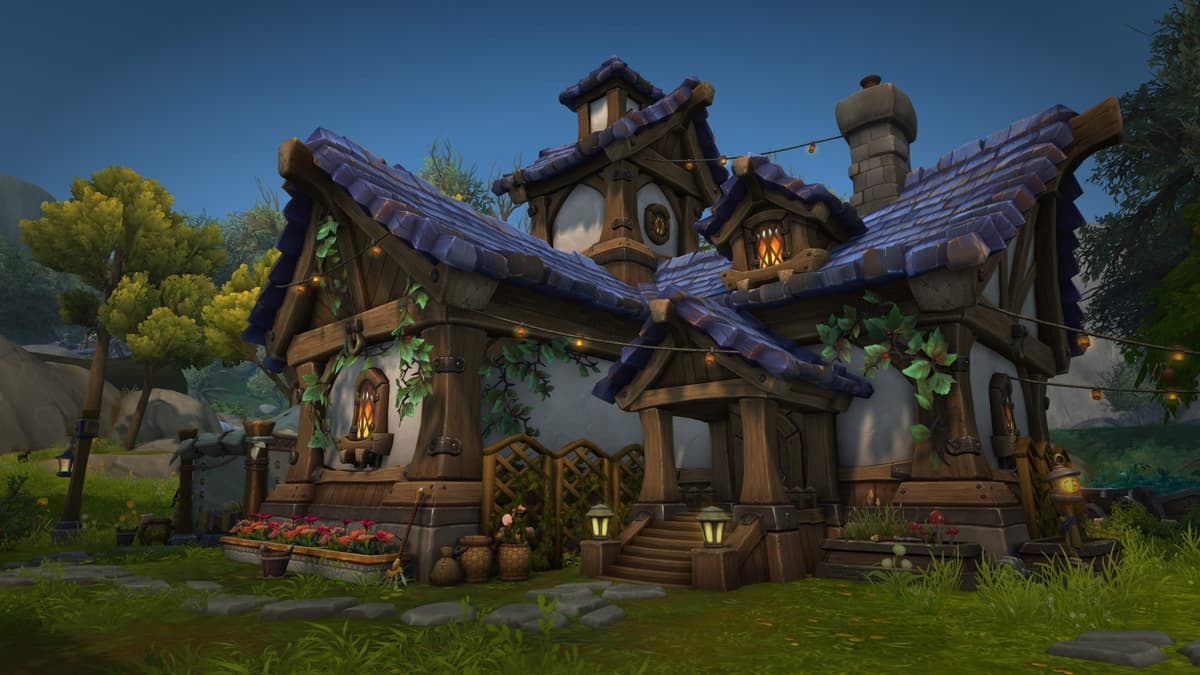
On paper, the housing system checks every box. Pick a neighborhood and house, furnish with a “quick place” mode or micro-manage every centimeter, unlock decorations through quests, events, crafting, and vendors. Blizzard clearly aimed for both accessibility and depth.
Hands-on, I like it—but I also don’t feel it will change how I spend my WoW evenings. If you’re a roleplayer or a guild that wants persistent staging grounds, housing is huge. For a raid/Mythic+ grinder like me, it’s a nice sandbox during downtime, not a new endgame loop.
Here’s the dashboard breakdown: you open a panel that lists your four neighborhoods, each with a reputation bar and next reward. Hover over the bar to see “20/50 Reputation – unlocks Crystal Fountain” or “35/50 Reputation – unlocks Star-Shaped Gazebo.” Weekly “homework” quests—like collecting 50 elemental shards or hosting a tavern minigame—grant 5–10 rep each. As I completed two furnishing quests, my bar jumped from 40% to 65%, and I unlocked a decorative chandelier. There’s even a “Go to NPC” button that places a waypoint, so you’re never digging through map pins.
That clever funnel—small chores for small rewards—feels like a low-friction retention nudge. But I suspect most raiders will ignore housing after the first novelty wears off.

Demon Hunter—Devourer: Pure Loop, Instant Addictiveness
This was the part of the beta that made me grin mid-play. The new Demon Hunter spec centers on generating fragments with abilities like Ingestion (a channeled, mobile damage spell) and Cleave, then dumping them through a void beam and a transformation cooldown that turns the class into turbo mode. Hit 30 fragments during your transformation, and you unlock a devastating finisher. It’s simple, kinetic, and rewards timing over spreadsheets.
Playthrough Vignette: In one rotation, I started a fight by channeling Ingestion for three seconds to generate 5 fragments, clipped immediately into Cleave for 2 more, then popped Void Beam to dump 15 at once. With my transformation cooldown off, I activated Devourer’s Hunger (a 20-second buff), and spent the next 8 seconds weaving in Ingestion/Cleave to hit 30 fragments. At that threshold, Void Rift—the spec’s finisher—landed for a massive burst. That entire cycle felt smooth and intuitive: three charges, one cooldown, one finisher.
As someone who usually toggles between Paladin tank, Retribution, and Elemental Shaman, I appreciated a spec that feels both ranged and nimble—double jump included—while still true to the Demon Hunter identity. For players who like swapping roles without rolling new toons, Devourer is an obvious pick.
Tutorials and Onboarding: Too Safe, Not Fun Enough
Midnight’s revamped prologue in Exile’s Edge is pedagogically excellent. The game highlights every ability, gives clear visual cues, and won’t let you wander off script. In the first combat encounter, a mini-boss taught crowd control by staggering you if you didn’t interrupt its cast. Every step glowed with an arrow pointer. Problem is, it’s a bit sterile—battles feel padded, pacing slows, and the writing rarely injects personality.
Here’s how it played out: after the initial cut-scene, I was handed five new spells, each with an overlay tooltip explaining cooldowns and use cases. Then I walked through a gauntlet of five scripted fights, each more tutorial than actual threat. By the time I was done, I knew exactly what to do—but I didn’t care much about why I was there. Clarity helps convert newbies, but entertainment sells retention. Blizzard still needs to bake in more memorable events—like branching story choices or dynamic encounters—to hook new players beyond the tutorial finish line.
Why the Talent and UI Changes Are the Long Game
The most consequential change might not be any single spell, but the talent overhaul and Blizzard’s push to integrate more helpful tools into the client. Extra hero and prestige talent points give you toys to reimagine specs without hitting a brick wall. Now, instead of 20 talents picked at preset levels, you earn points every few levels—20, 40, 60, 80, 90—each unlocking three thematic options.
In practice, I tested two Devourer builds. My first focused on raw fragment generation: at level 60, I picked the talent that boosted fragment output by 15%; at level 80, I chose one that reduced my transformation cooldown by 2 seconds; at level 90, I unlocked the finisher-damage buff, boosting Void Rift by 25%. The second build leaned into utility—extra mobility during Devourer’s Hunger and a passive healing effect on finisher hits. Switching between these was as simple as opening the talent UI and dragging points around—no add-on required.
On the UI side, Blizzard added built-in group frames, cooldown trackers, and buffdebuff highlights. It’s a mini–WeakAuras clone baked into the client: you can toggle on key cooldown timers and import basic triggers without installing third-party tools. That could lower the barrier for new and returning players who dread spending hours on interface setups.
The Missing Pieces: What We Haven’t Seen Yet
Beta covered the low-to-mid-level experience, but several marquee features remain under wraps. I didn’t touch the full “manhunt” tracking system, which promises stealthy pursuits across zones, or the deeper class overhauls that only emerge in endgame rotations. And raids, dungeons, and high-level Mythic+ pacing weren’t in scope.
Those long-term systems will determine whether Midnight sustains interest past week one. Will balance patches land quickly? How deep are the raid encounters and seasonal event flows? Blizzard’s track record suggests iterative tweaks, but the proof will be in the post-launch support.
Who Should Play Midnight?
If you’re a social or roleplay guild looking for persistent staging grounds, dive into housing—the sandbox is deep and the rewards are tangible. If you’re a bookmark-and-barrel Mythic+ grinder, you’ll appreciate the UI streamlining and talent flexibility, but you might skip housing after setting up once. Raiders chasing world-firsts will judge Midnight on boss design and balance tuning. And newcomers? They’ll love the clear tutorials—just hope Blizzard spices them up with narrative hooks.
Conclusion: What to Watch for at Launch
Midnight convinced me enough to log back in at launch, but several questions remain. Here’s your launch checklist:
- Balance patches and bugfix cadence—will Devourer remain stable across 5-man and raid tiers?
- Full manhunt/tracking reveal—does it add meaningful depth to world exploration?
- Endgame class overhauls—does each spec feel as polished as Devourer?
- Raid and Mythic+ pacing—are seasonal events engaging or grindy?
- UI support—does the built-in addon suite cover core needs, or will we revert to classic tools?
For now: I’m excited, cautiously optimistic, and ready to see if Midnight can hold my attention beyond the novelty phase. See you in Silvermoon.
FinalBoss // Gear
Level up your setup
01Top-rated gaming headsetson Amazon→02High-refresh gaming monitorson Amazon→03Gaming chairson Amazon→04Discounted game keyson Kinguin→Affiliate links · As an Amazon Associate, FinalBoss earns from qualifying purchases.
Want to Level Up Your Gaming?
Get access to exclusive strategies, hidden tips, and pro-level insights that we don't share publicly.
Ultimate Gaming Strategy Guide + Weekly Pro Tips