

I Battled 200 Zombies Solo in World War Z VR—Was It Worth It?
Game intel
World War Z VR
Based on the hit game World War Z that has now captivated over 25 million players, World War Z VR is an immersive single-player first-person shooter experience…
World War Z VR drops you headfirst into a one-person stand against a tidal wave of 200 undead, playable on Meta Quest and SteamVR headsets. At just $19.99, Saber Interactive’s VR remake swaps your usual squad for two AI sidekicks and promises VR-scale chaos. We strapped on our headsets, braced for nausea, and dove into grimy tunnels, vertigo-inducing high-rises, and blinding harbors to see if this solo thrill ride packs enough punch to keep you coming back—or if it loses something without human teammates.
Quick Facts
- Platforms: Meta Quest 2/3/Pro (Standalone & PC Link), SteamVR-compatible headsets
- Release Date: August 12, 2025
- Price: $19.99 USD
- Mode: Single-player campaign with two AI companions
- Maximum Horde Size: Up to 200 zombies simultaneously
- Maps Included: New York Subway, Tokyo High-Rise, Marseille Harbor
- Hero Classes: Seven unique perks—Medic, Engineer, Recon, and more
From Squad to Solo: The Survival Shift
The flatscreen World War Z thrived on chaotic teamwork, frantic revives, and four-player banter. In VR, Saber Interactive shrinks your crew to you plus two AI buddies—“Vlad” and “Maya.” They’ll reload weapons, toss you medkits, and duck behind cover…most of the time. But don’t be surprised when Maya freezes mid-reload or Vlad refuses to climb stairs, transforming a well-defended chokepoint into a mad dash under ravenous jaws.
These AI quirks actually highlight the core achievement: rendering—without slowdown—200 zombies at once in VR. When that tide of undead crests a barricade, there’s no distracting joke to ease the tension. It’s pure, unfiltered terror: you, two occasionally glitchy friends, and an unrelenting sea of the undead.
The Three Arenas Unpacked
New York Subway
Under flickering fluorescent lights and dripping pipes, the New York Subway map forces you into tight corridors with no margin for error. Every missed shot feels like a mortal sin as zombies close in from both ends. You’ll duck behind overturned seats, time your reloads between lurching masses, and pray your headshots drop more than one at a time. The echoing moans and distant screeches amplify the claustrophobia—one of VR’s most pulse-pounding opening acts.
Tokyo High-Rise
Step onto the atrium of a broken skyscraper, where shattered glass and twisted desks become your cover. Undead pour in from shattered windows, crawl over railings, and rain down from shattered floors above. You juggle ground-level bottlenecks, mid-level ambushes, and penthouse drop-ins, all while teetering on catwalks that sway under your weight. A single misstep off a ledge can mean an instant face-off with half a dozen gnarling corpses. It’s a masterclass in vertical VR combat that feels as dizzying as it looks.
Marseille Harbor
Sunlight glares off rusting shipping containers and crane booms, casting long shadows that hide creeping walkers. The open dock invites long-range firefights with scoped rifles, but every container stack and tractor trailer is a deadly choke point. One stray zombie slipping past your sights can trigger an avalanche of undead over the gangplank. Explosions echo across the water, reminding you of your isolation as the world’s last line of defense against the apocalypse.
Technical Triumphs—and VR Trade-Offs
Sustaining 200 zombies at a smooth 72 FPS on a tethered Meta Quest 3 is nothing short of a technical marvel, and the standalone Quest 2 can hold its own with scaled-down textures. On premium PC VR headsets—Valve Index, HP Reverb G2—you get higher refresh rates, richer ragdoll physics, and blood effects that make every decapitation more visceral.
Locomotion remains a VR sore spot. Smooth movement can induce motion sickness in sessions longer than twenty minutes, while teleport with snap turns protects your stomach at the cost of immersion. A hybrid system with motion blinder cuts the nausea but doesn’t completely eliminate occasional stutter or pop-in when hordes surge. I encountered no crashes—Saber’s adaptive level-of-detail management keeps performance solid even as zombies swarm.
Your Arsenal: Choose Your Zombie Slayer
With over 20 weapons at your disposal, World War Z VR lets you craft loadouts for any playstyle. The Bullock SMG’s rapid-fire recoil is perfect for close-quarters panic, while scoped marksman rifles reward patience and precision. Crossbows and silenced pistols let you pick off stragglers without summoning every walker in a hundred-meter radius. When chokepoints collapse, grenade launchers and sticky bombs deliver cinematic crowd control.
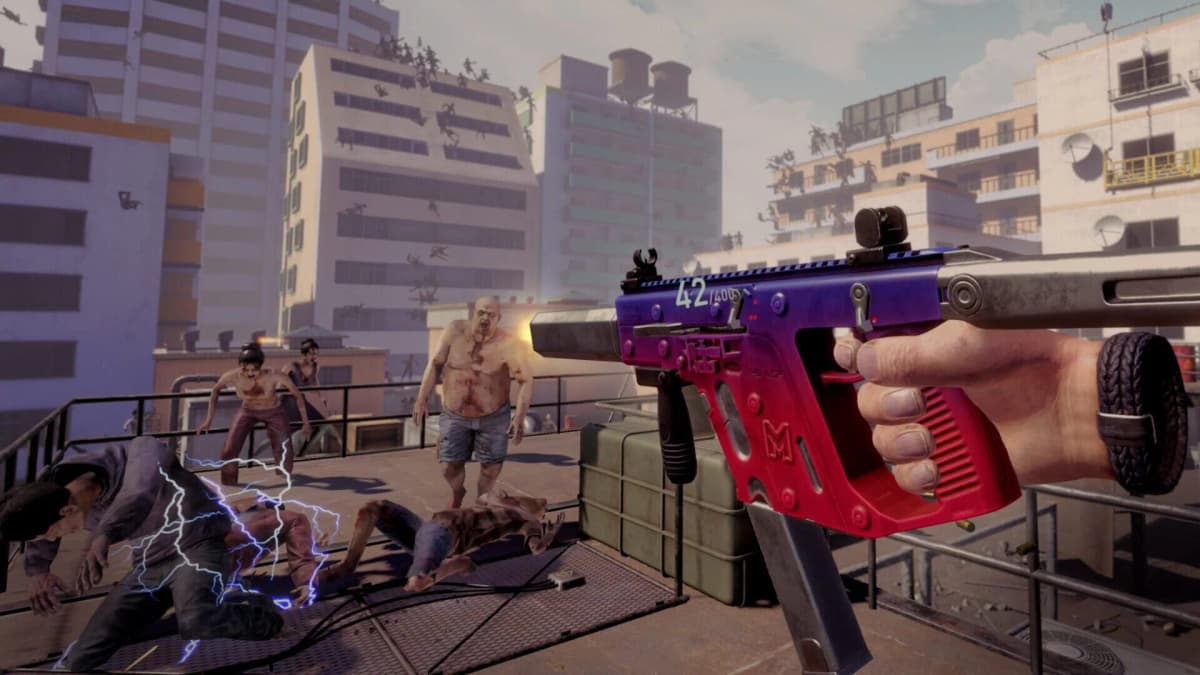
Earn XP through kills and mission objectives to unlock attachments—extended mags, thermal scopes, laser sights—and hero-class perks. Engineers can build automated turrets; Recon players deploy flares to expose invisible threats. Progression stays rewarding up to mid-tier difficulties; XP gains taper slightly on Nightmare and Apocalypse modes. There’s no battle pass or loot box grind—just a straight path to new toys and tactics.
Want to Level Up Your Gaming?
Get access to exclusive strategies, hidden tips, and pro-level insights that we don't share publicly.
Ultimate Gaming Strategy Guide + Weekly Pro Tips
Comfort & Accessibility
- Locomotion Options: Smooth, teleport, or hybrid—with snap or continuous turns
- Field of View Adjustments: Motion-blinder strengths and customizable vignettes
- Audio & Subtitles: Full caption support for zombie moans, gunfire, and AI commands
- Difficulty Presets: Recruit, Hardened, Veteran, Apocalypse, plus custom modifiers
Whether you’re VR-curious or a seasoned veteran, these options let you tailor the experience. A heavy motion blinder and teleport keep nausea at bay, while immersion fanatics can ramp up every setting and embrace each gruesome headshot in jaw-dropping detail.
Replayability & Future DLC Potential
After clearing the three core arenas, leaderboards and daily challenges hook you back in, tasking you to shave seconds off your best runs or boost your kill counts. Saber’s roadmap teases free future updates—new maps, weapons, and hero classes—that could push total content well past the campaign’s 12–15 hour sweet spot for completionists. Community-made loadout guides on Reddit and Discord already hint at creative ways to mix perks and tactics.
Seasonal events and rotating mutators—one-shot headshots, sprinting hordes, limited ammo—should give even veteran slayers new reasons to dive back into the swarm. If Saber delivers on its promises, this VR sequel could stand shoulder-to-shoulder with the best post-launch support in the genre.
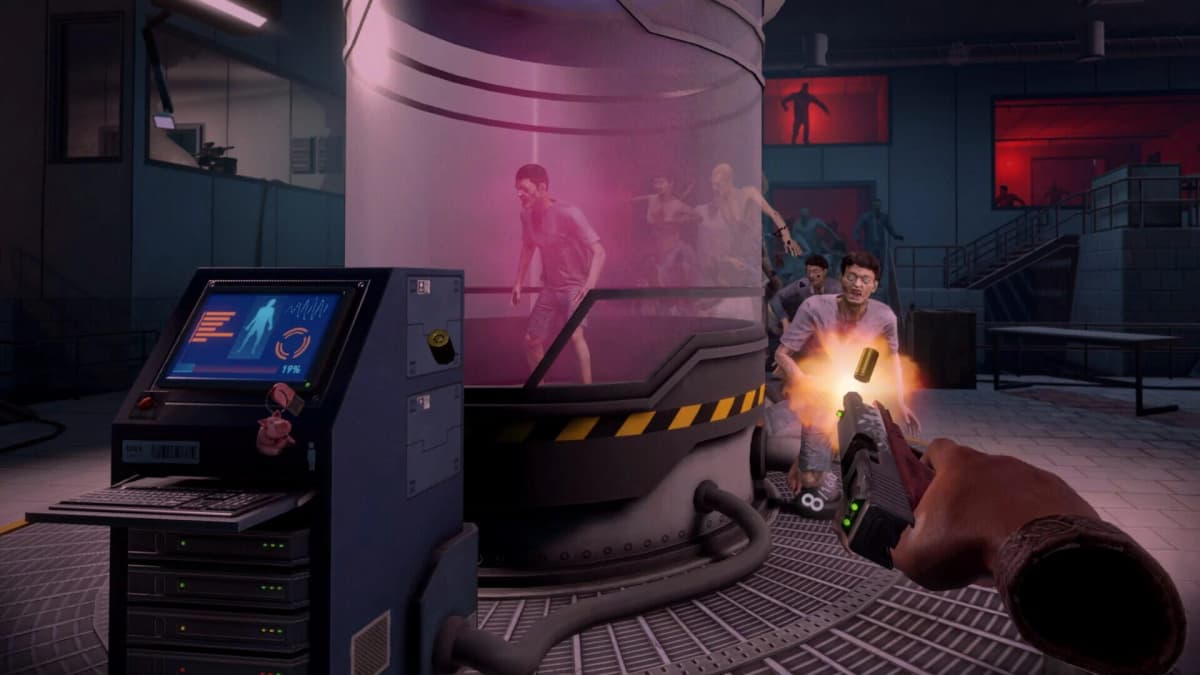
Value Check: $19.99 for the Hordes
At under $20, you get three fully realized missions, seven hero perks, over 20 weapons, leaderboards, and a satisfying progression loop. That’s high-value content by solo VR shooter standards. Multiplayer fans craving sprawling maps might find the package lean after 20 hours, but for adrenaline junkies chasing raw zombie mayhem, it’s a steal—especially with free DLC on the horizon.
How It Compares to Other VR Horde Shooters
Arizona Sunshine leans into co-op puzzles and light story beats, while Saints & Sinners focuses on crafting and moral dilemmas in a slow-burn horror drama. Fan-made mods like Vampire: The Masquerade – Bloodlines VR trade on narrative immersion. None match WWZ VR’s sheer scale—most titles cap hordes at 30–50 enemies, whereas Saber’s engine unleashes up to 200 at once. If your VR library needs an unrelenting swarm-fest, this is your crown jewel.
Pro Tips for Surviving the Swarm
- Start on Recruit: Learn zombie behaviors before cranking up the difficulty
- Pair Perks Wisely: Engineer turrets plus Recon flares turn narrow passages into kill zones
- Tune Comfort Early: Find your ideal locomotion and FOV settings to avoid mid-horde nausea
- Adapt by Map: Teleport shines in claustrophobic tunnels; smooth strafing rules open docks
- Join the Community: Reddit and Discord are goldmines for loadouts, event alerts, and speed-run strats