
Table of Contents (9)
The Night WoW Classic Reminded Me MMOs Can Still Be Peaceful
One evening not long ago, I logged into WoW Classic after a brutal workday and fully intended to “be productive.” Clear a few quests, maybe knock out a dungeon, inch my character toward the level cap. Instead, I ended up sitting on a dock in Stranglethorn Vale, fishing while the in-game sun went down. I shuffled some herbs around on an alt, chatted absentmindedly in guild, and logged off an hour later having advanced absolutely nothing important.
And I felt great.
No FOMO. No nagging sense that I had failed to keep up with some invisible weekly bar. No spreadsheet open on my second monitor. Just an ancient MMO letting me exist in its world without constantly yelling that I was wasting my time.
That is the magic of WoW Classic. Not the “no LFD” purism, not the jank, not even the 2004 class design. The core, beating heart of Classic is that it is chill by design. It moves slowly on purpose. It is a time capsule that gives players permission to relax, wander, and progress at their own pace in a genre that has turned into a never-ending performance review.
Which is exactly why I am increasingly worried every time Blizzard talks about “what’s next” for Classic. Because you can already see the modern instincts creeping in: seasonal modes, accelerated leveling, limited-time rewards, the same pressure-driven design philosophy that turned retail WoW into a second job. If they forget that Classic’s entire identity rests on being slow and low-pressure, they will wreck the one thing they cannot patch back in.
Nostalgia As A Feature, Not A Crutch
I played original vanilla WoW. I was there wiping on Hogger with a full group because nobody knew what the hell they were doing. When Classic launched in 2019, I expected a cheap nostalgia hit, a rerun of my twenties that would evaporate after a few weeks.
What I got instead was something way more interesting: a curated museum piece that respects the fact that time has passed. Logging into Classic is not just booting up an old build. It is stepping into a preserved snapshot of a particular era of MMO design and of my own life. The music in Elwynn, the scrappy look of early armor sets, the way Westfall feels both huge and empty at the same time-these are not just memories, they are pacing tools.
Classic dishes out nostalgia in a slow drip. You do not get the big hits all at once. That quest chain you barely remember pops up fifteen levels later. The first time you see Ironforge again, the ambient sound and the layout hit like an old photo album. It is not just “remember this” flashing lights; it is a gentle, continuous resurfacing of moments as you level. That only works because the game refuses to rush you through the content buffet in a weekend.
The nostalgia and the chill pacing are intertwined. The slower you move, the more room your brain has to reconnect with all those half-forgotten little moments. The boat ride to Menethil is not wasted time; it is breathing space where your memories get to catch up with you.
Slow Leveling Is Not A Bug, It Is The Point
Somewhere along the line, MMO devs collectively decided that leveling is a tutorial to be escaped as quickly as possible. Retail WoW treats 1-69 like an awkward cutscene you are forced to watch before the “real game” starts at endgame. XP buffs, heirlooms, chromie time, skip mechanics-it is all designed to shorten the runway.
Classic does the opposite. Every system quietly reinforces an unhurried tempo:
- Travel takes time. You run. You take boats and zeppelins. Flight paths are not one-click teleports everywhere from day one.
- Quests are spread out and often inefficient, forcing you to decide how patient you feel rather than auto-completing everything in a single loop.
- You literally have to sit and drink after pulls. Mana breaks are built-in pacing, not “downtime to be eliminated by design.”
- The XP curve is long. That bar crawls. Hitting 60 (or 70 in later Classic expansions) is an achievement, not a tutorial checkbox.
People love to complain that this is “wasted time” or “artificial friction.” I get it. I play fighting games; I know what tight, high-intensity gameplay feels like, and I enjoy that rush in the right context. But Classic is not trying to be a constant dopamine spike. It is closer to a long walk through a city you used to live in. The gaps between the action are where your brain can actually process the world, your build, your plans for the next session.
And here is the critical part: when the game itself is not in a hurry, you stop feeling guilty about not sprinting. You can log in, do two quests, get distracted by a random escort chain that goes sideways, and log off without that ugly sense that you have “fallen behind.” Classic normalizes taking your time.
Retail WoW And The Anxiety Of The Weekly Checklist
By contrast, retail WoW is allergic to idle moments. The modern game is engineered around engagement metrics and retention curves. Weekly reset, raid lockouts, Mythic+ score decay, time-limited currencies, seasonal FOMO mounts, renown tracks, Great Vault thresholds-everything screams that you are supposed to be doing something right now before the number goes away or falls behind.
You can feel that design philosophy in Blizzard’s newer ideas too. Look at how the upcoming Midnight expansion leans into its Prey system: a roaming nemesis designed, in the words of a dev, as essentially a “don’t AFK mode” on higher difficulties. Players apparently loved being ambushed during testing, which is great for those who want constant adrenaline. But it is a particularly modern Blizzard move: take a playstyle (tabbing out in the overworld, semi-idle farming) and punish it into extinction.
Retail has increasingly become about managing timers more than inhabiting a world. When I play it, I find myself booting up out of obligation rather than curiosity. I am logging in because the Vault needs filling or the renown bar needs nudging. The game is a schedule, not a space.
And that is exactly why Classic matters. It is the last corner of Azeroth that is not built around weekly engagement spreadsheets. The moment Classic starts inheriting the same time-gated, “always on” mindset, it stops being an alternative and becomes just a worse-looking version of retail with fewer systems bolted on.
Multiple WoW Classics, One Core Identity
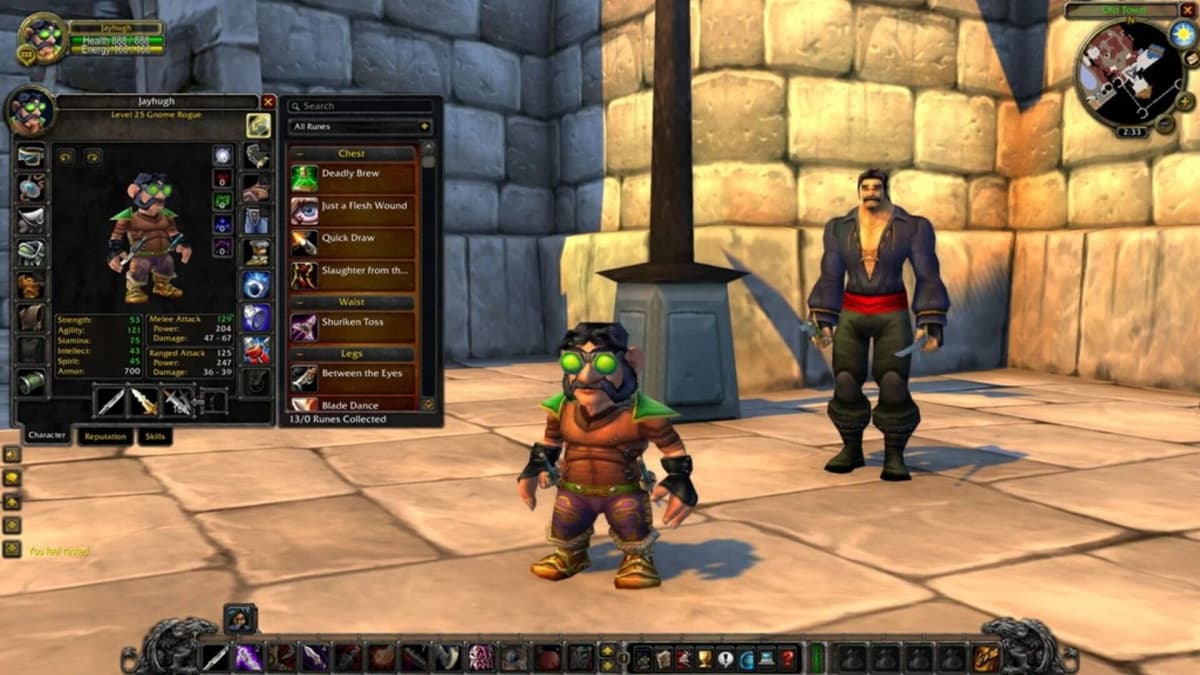
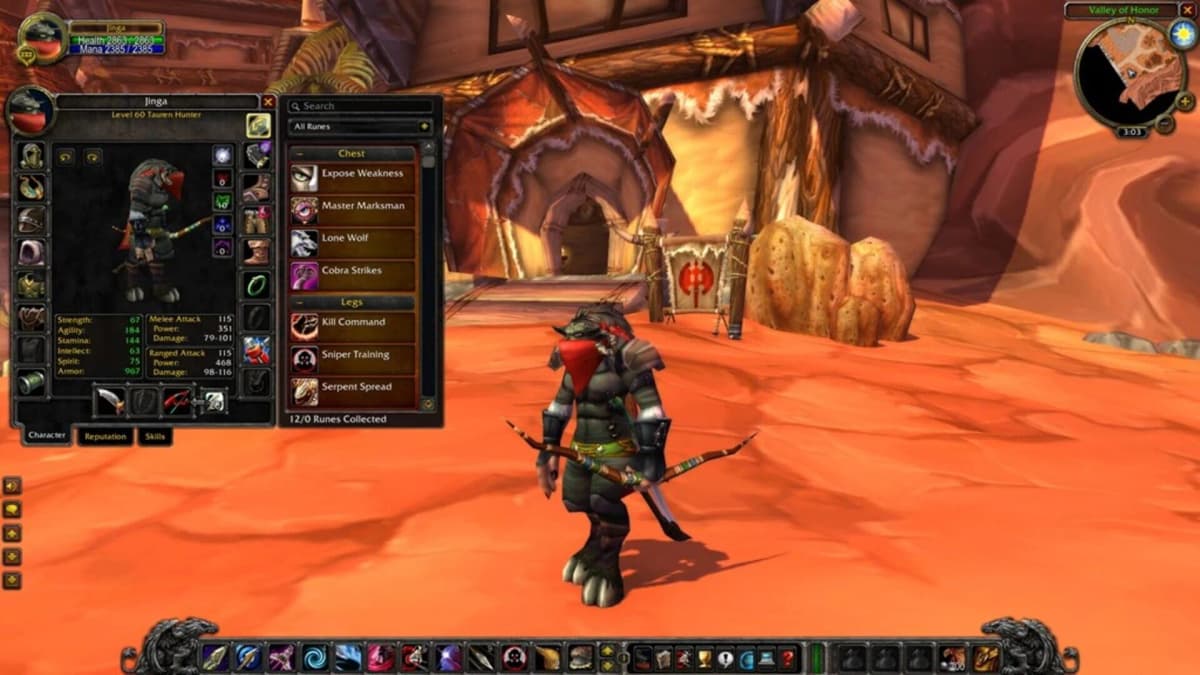
Right now, Blizzard is experimenting hard with the Classic umbrella. There are the permanent “Era” realms if you want pure vanilla. There is the progression track that has marched through Burning Crusade into Wrath, and Cataclysm Classic on the way. There are Hardcore servers for the masochists who think leveling was not punishing enough. Season of Discovery came along to remix old content with new twists and a faster cadence.
On paper, this is great. More choice is good. Not everyone wants the same tempo or the same “museum accuracy.” Seasonal servers scratch that itch for novelty and give Blizzard room to tinker without touching the sacred cow.
The problem is the creeping assumption that faster is automatically better. XP boosts, condensed raid schedules, time-limited rewards, “get in now before this phase ends” messaging—those pieces start to drag Classic toward the same FOMO treadmill that burnt people out on retail in the first place. Hardcore already leans into a very different kind of tension, where every pull is a potential disaster and every disconnect can erase weeks of progress. It is thrilling, but it is not chill.
Blizzard needs to draw a hard line in the sand: at least one flavor of Classic must remain unapologetically slow and low-pressure. No boosts baked into the baseline experience. No seasonal mount that disappears forever if you miss a three-month window. No “Classic but with daily world quests and a weekly reward chest.” Experiment with those ideas in side modes if you must, but keep a core version of Classic that rejects modern urgency on principle.
Chill Design Changes How People Behave
The pacing of an MMO does not just impact how quickly you level. It rewires how people act around each other.
In Classic, the long leveling curve means the world is always populated by players at every stage. Westfall, Stranglethorn, the Plaguelands—they never fully empty out, because it takes a real chunk of time to move through them. That naturally creates more crossovers with the same names. The warrior who helped with your elite gnoll quest at 22 might be your tank in Zul’Farrak at 45. The mage who tipped you a couple of gold for conjured water at 30 might turn up in your first raid group.
Travel time and inconvenience also become social glue. Boats and zeppelins are gossip hubs. Long runs to dungeons give you five to ten minutes of chat before you even pull the first mob. The fact that you cannot instantly queue into a faceless cross-realm instance nudges people to talk, because the friction of finding each other already forced some investment.
Compare that with hyper-accelerated, instanced-first design elsewhere. Queue pops, you speedrun, you disband without saying a word, because there will be another group in thirty seconds if this one implodes. Players are disposable because the systems treat them as disposable.
Chill Classic also makes room for activities that would be treated as a waste of time in a faster game. Fishing in Booty Bay while idly chatting. Grinding leather in a quiet corner simply because you like the loop. Sitting in a tavern roleplaying nonsense for two hours. When the game is not constantly reminding you of your “to-do” list, your goals shift from developer-imposed checkboxes to self-directed play.
Chill Versus Thrill In MMOs
I am not pretending everyone wants the same thing from online worlds. Sometimes I want high-octane, room-shaking intensity too. I play fighting games where every frame matters, I have done my time sweating in Mythic+ dungeons, I have raided on schedules that would make a project manager proud.
Old-school MMOs nailed both ends of that spectrum in ways modern games often forget. Look at a weird indie like Project: Gorgon, which recently got another burst of attention. Its whole pitch is chaotic, surprising, and slow-burn: you unlock bizarre skills by experimenting, die in dumb ways, and discover systems socially because the game refuses to spoon-feed you. It is not designed around instant clarity or polished sprinting; it is designed around curiosity.
On the other side, you have stuff like Fellowship revving up with “time-friendly, hypercharged” dungeon runs, designed to condense the thrill into tight sessions. That has a place. Not everyone can or wants to sink four hours into a single Molten Core crawl every week. Tighter, more focused experiences are necessary for grown-up schedules.
The trick is not to pretend one style should replace the other. The trick is to clearly label the vibes and then stick to them. Retail WoW already owns the “always another system to push” lane. Classic is at its best when it leans hard the other way, into the hammock rather than the treadmill.
How To Pick Your Version Of Classic Based On Your Tempo
With so many Classic flavors, picking a home can be paralyzing. The easiest way to cut through that choice is to be brutally honest about your desired tempo.
- If you want pure chill: Permanent Classic Era realms are your best bet. Progress is slow, nothing is going away, and the community skews toward people who are here for the journey rather than the race.
- If you want long-term but still moving: The progression track (vanilla into BC into Wrath and beyond) offers a middle ground. You still get that old-school pacing, but with the knowledge that new phases eventually roll in.
- If you want novelty and speed: Seasonal modes like Season of Discovery or Hardcore scratch the itch for fresh metas, faster leveling, and bragging rights. Just know you are signing up for something closer to a limited-time event than a digital retirement home.
Personally, my sub lives or dies on having at least one realm where I can log in, do almost nothing, and feel like that was a valid way to spend an evening. If I wake up one day and every Classic server is running on seasonal FOMO, condensed XP, and chase-the-meta design, I am out. Not because those modes are evil, but because then there is nowhere left that respects slow play as a first-class citizen.
What I Want Blizzard To Do Next With Classic
Blizzard loves to talk about “player agency” and “letting players choose how they engage.” If they actually mean that, then Classic’s future is the perfect test case.
Here is what I want to see:
- Keep at least one set of Classic realms completely free of seasonal FOMO and aggressive XP boosts. Let that be the forever home for slowpokes and nostalgia tourists.
- Resist the urge to import retail-style time-gated grinds. No weekly renown bars, no Great Vault knockoffs, no “log in every day for thirty days or you miss the reward” garbage.
- If you must add new systems, bias them toward evergreen and chill activities: housing, cosmetic crafting, more roleplay tools, better social features, expanded professions. Things that deepen the world instead of accelerating the race.
- Be honest in messaging. Do not pretend a hyper-condensed seasonal with limited-time rewards is “just another way to take it easy.” Call it what it is so players can self-select.
Classic does not need to compete with retail on content cadence or system complexity. It wins when it focuses on being the place you go when you are tired of being optimized to death. The place where fishing in Stranglethorn for an hour is as legitimate as clearing a raid, where a three-month gap between levels is not a failure state, and where a missed holiday event is just a shrug, not an existential crisis for your collection.
Blizzard already has a game for players who want ambush systems that punish going AFK, weekly checklists, and seasonal power resets. It is called World of Warcraft, and it is doing fine being that thing. World of Warcraft Classic should be the opposite: the game that trusts you to decide how fast you move, how much you care, and how long you want to linger on that dock as the digital sun sets.
As long as Classic stays that way, I will keep coming back, sub in hand, ready to stroll through Azeroth at a walking pace while the rest of the industry sprints past. The moment it forgets that chill is not a side effect but the entire point, it stops being worth fighting for.
FinalBoss // Gear
Level up your setup
01Retro consoleson Amazon→028BitDo controllerson Amazon→03Capture cards (Elgato & more)on Amazon→04Discounted game keyson Kinguin→Affiliate links · As an Amazon Associate, FinalBoss earns from qualifying purchases.
Want to Level Up Your Gaming?
Get access to exclusive strategies, hidden tips, and pro-level insights that we don't share publicly.
Ultimate Gaming Strategy Guide + Weekly Pro Tips