
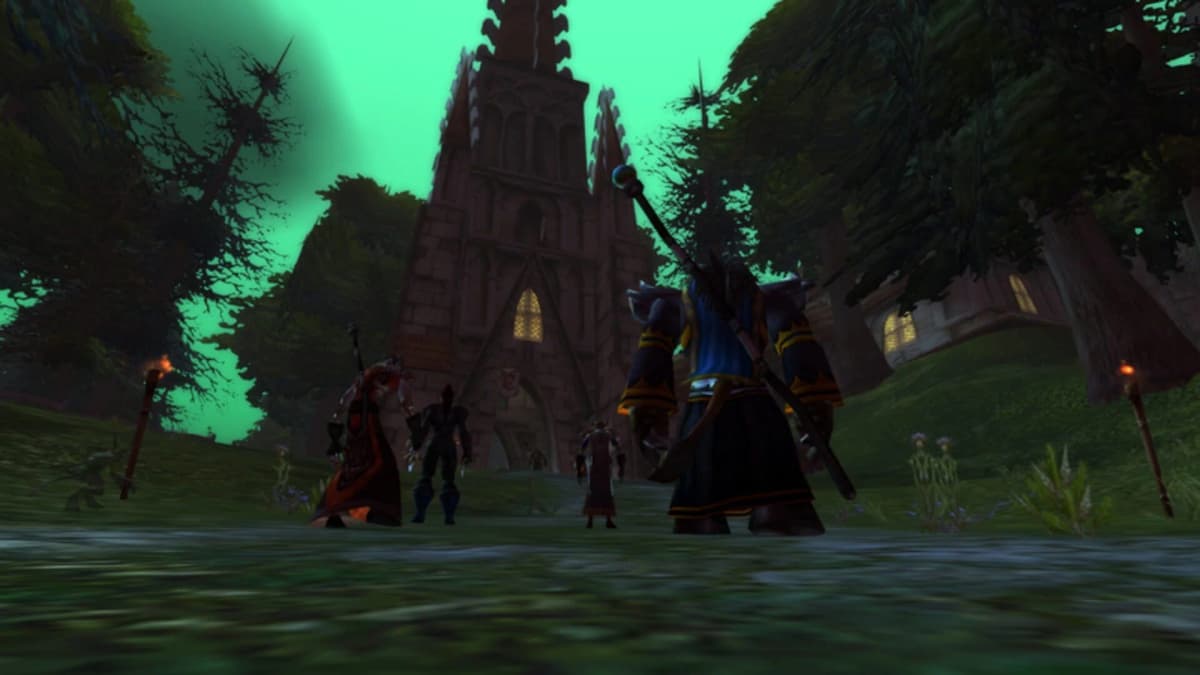
Blizzard did two important things right in the World of Warcraft GM cheating case: it confirmed that a staffer abused development-only abilities on a live realm, and it removed that employee from the company while taking action against player accounts involved in the violation. That is real accountability, and I am not interested in pretending a firing is meaningless. A company should fire someone who uses internal power to tilt a competitive Mythic+ run for friends.
But Blizzard’s “single employee” explanation does not restore the trust that the incident burned down. It closes the personnel case. It does not close the competitive-integrity case.
That distinction matters because this was not somebody exploiting an unintended class interaction or squeezing a few extra seconds from a dungeon route. A Blizzard employee had access to live-server commands capable of instantly changing a combat encounter. The abilities involved included Area Death (TEST) and the GM-only effect commonly called Death Touch, tools that could erase enemies or bosses in seconds. In a high-level Mythic+ key, seconds are the whole damn argument. A timed completion, score, title race, and player reputation can pivot on a moment that ordinary players have no way to reproduce or challenge.
Table of Contents (5)
A +23 Mythic+ Run Cannot Be Treated Like a Private Favor
The scandal became especially ugly because it centered on a +23 Mythic+ run, precisely the kind of content where legitimacy carries weight beyond the five people inside the dungeon. The higher the key climbs, the more every pull, death, cooldown decision, route adjustment, and final timer becomes part of a public competitive record. Players study these runs. They compare them. They use them to judge whether a group earned its score or got carried by an advantage nobody else could possibly access.
Then a GM-side effect appears and a boss or mob disappears. That is not a minor technical irregularity. It contaminates the result.
Blizzard community manager Randy “Kaivax” Jordan said the incident involved a single Blizzard employee acting in violation of the company’s Code of Conduct. I accept that as Blizzard’s personnel finding. There is no evidence here that every competitive WoW result is suspect or that GM abuse is running wild across every realm. Players should resist the urge to turn one confirmed act of misconduct into a fantasy conspiracy that explains every loss, every title, and every impressive key.
Still, the narrowness of the confirmed case does not make the underlying problem narrow. The live tools existed. The employee could access them. A player group benefited. The advantage was severe enough to matter in a +23. Blizzard’s internal safeguards did not stop the competitive damage before it happened. That is the part the “one employee” line cannot wash away.
The Community Should Never Be the First Integrity Team
The detail that sticks in my throat is how the case became public. Players correlated combat logs, footage, and social posts before Blizzard’s response arrived. The community noticed something impossible-looking in the run, followed the evidence, and forced a public reckoning.
That should embarrass Blizzard. Combat logs are a fantastic player tool, but they are a terrible substitute for a company’s integrity system. A player parsing a strange death event after the fact has none of the access, context, or authority available to Blizzard’s Platform Security team. Players cannot see who activated an internal command, whether it was authorized, whether similar commands were used elsewhere, or whether connected accounts received a competitive benefit.

Blizzard has said that use of internal spells and commands on live realms is logged and shared with Platform Security. Good. That is the baseline any responsible operator should have. Live games need emergency tools, support functions, and development access. Server problems happen. Characters get stuck. Urgent fixes need to be deployed. I do not want Blizzard stripping its own staff of the ability to solve real live-service problems because one employee chose to abuse the privilege.
Yet logging something internally and proving that the system protects competition are two different achievements. The public learned that the logs existed only after the community had already done the detective work. That leaves players with an awful incentive: keep watching, keep parsing, keep recording, because the company may only explain a breach once the evidence is too visible to ignore.
A competitive ladder cannot run on that arrangement. The burden belongs with Blizzard, whose staff controls the tools, the logs, the account records, and the enforcement system.
Punishing the GM Does Not Repair the Competitive Moment
Firing the employee was necessary. Sanctioning complicit player accounts was necessary. Neither action rewinds the moment when an illegitimate command changed a live dungeon run.
Players competing around that group lost something Blizzard cannot simply mail back through account action: a fair comparison. Someone may have missed a score threshold. Someone may have altered their own push schedule based on a result that should never have stood. Someone may have seen a suspiciously fast completion and assumed they needed to play cleaner, pull bigger, or take more risks to keep pace. The damage spreads outward because competitive WoW is built on visible outcomes and social credibility.
That is why “the staffer was fired” cannot be the final sentence in Blizzard’s response. The company also has to explain how it handled the result itself. Any completion, score, reward eligibility, or ranking consequence connected to GM intervention should be invalidated. Accounts directly affected by the run should be told what happened. Players whose competitive position changed because of the invalid result deserve a clear appeals route instead of a shrug and a forum post.
Competitive integrity is a chain. One broken link can leave a whole bracket arguing over whether the scoreboard still means anything. Blizzard cannot fully restore the lost timing or erase the suspicion that followed the run, but it can at least show players that the game’s official records will not preserve the benefit of internal cheating.
Blizzard Needs to Publish Integrity Metrics, Not More Reassurance
The fix I want is not a dramatic public dump of secret GM commands or security procedures. Blizzard should not hand out a practical guide to abusing its own live systems. But it can give competitive players meaningful evidence that abuse is bounded, reviewed, and punished without exposing sensitive operational details.
After a confirmed integrity breach, Blizzard should publish a short public integrity bulletin. It should contain aggregate information that tells players whether Platform Security caught the problem quickly, whether the competitive damage was reversed, and whether the company is improving its safeguards.
- Total live-server GM and developer tool uses during the relevant reporting period, separated into legitimate support or development exceptions and confirmed unauthorized uses.
- Median time to detection for unauthorized internal-tool activity.
- Median time from detection to enforcement, including player-account penalties and employee discipline where applicable.
- Number of player accounts sanctioned for directly participating in, requesting, or benefiting from a confirmed misuse of internal powers.
- Number of competitive outcomes invalidated, covering timed completions, rankings, rewards, and title eligibility where the breach affected them.
- The category of tool misused, described broadly enough to preserve security while making clear whether Blizzard is dealing with combat manipulation, item creation, movement, encounter control, or another form of advantage.
Those numbers would matter more than another polished assurance that Blizzard takes fairness seriously. Every company says that after a scandal. The question is whether it can show that its controls catch misconduct before players have to build a case from combat logs.
There is a huge difference between “we found it internally” and “we acted after the community made it impossible to ignore.” Blizzard’s statement leaves that distinction too blurry. It says the company’s tools confirmed the incident, but confirmation after exposure is not the same thing as prevention. Players deserve to know whether the monitoring system raised an alarm on its own, how quickly that alarm was reviewed, and whether the abuse affected any result beyond the run already under scrutiny.
The Real Problem Is Invisible Power With Invisible Boundaries
I understand why Blizzard employees need powerful live-server tools. A game as large and constantly active as World of Warcraft cannot be supported with ordinary player permissions alone. The company needs staff who can investigate broken content, address emergencies, and test urgent fixes in the environment where problems occur.
What players cannot accept is a system where those godlike powers remain effectively invisible until someone uses them for a friend in a public competitive setting. Blizzard says a small number of employees can use development tools and spells on live servers. Fine. Then the company has an obligation to prove that “small number” comes with real controls: narrow access, durable logs, active review, consequences for misuse, and competitive remediation when the system fails.
World of Warcraft asks players to invest heavily in competitive progress. Mythic+ players plan routes, organize schedules, chase ratings, rebuild groups after failed keys, and spend entire seasons trying to earn a better standing. Blizzard profits from that commitment in the broadest sense because the game’s competitive ecosystem keeps people engaged. The company therefore carries a bigger responsibility than simply removing the employee who betrayed that ecosystem.
The healthy response to this scandal is neither blind panic nor blind faith. Blizzard has established that a staffer abused live-server access and that punishment followed. It has also exposed how fragile competitive trust becomes when the community discovers the breach first and everyone else is asked to trust internal controls they cannot inspect.
That is the tension Blizzard now has to live with: World of Warcraft needs employees who can wield extraordinary power on live servers, while competitive WoW needs players to believe that power cannot quietly decide a key, a score, or a title race. The firing ends one person’s access. The hard work begins with proving that the next suspicious combat log never has to become the community’s job again.
FinalBoss // Gear
Level up your setup
01Top-rated gaming headsetson Amazon→02High-refresh gaming monitorson Amazon→03Gaming chairson Amazon→04Discounted game keyson Kinguin→Affiliate links · As an Amazon Associate, FinalBoss earns from qualifying purchases.
Want to Level Up Your Gaming?
Get access to exclusive strategies, hidden tips, and pro-level insights that we don't share publicly.
Ultimate Gaming Strategy Guide + Weekly Pro Tips