
Table of Contents (6)
What actually changed: Spencer out, CoreAI exec in – and Xbox just got a strong AI signal
This caught my attention because Microsoft didn’t hire another pure-platform or studio veteran to steer Xbox – it promoted Asha Sharma, president of Microsoft’s CoreAI product, to succeed Phil Spencer effective February 23. Spencer will stay on as an advisor through the summer, Matt Booty is being elevated to chief content officer, and Xbox president Sarah Bond has resigned. The handover landed in a flurry of internal memos and was first reported by Rock Paper Shotgun; now the reshuffle is official.
- AI is moving from buzzword to boardroom: Promoting a CoreAI leader signals Microsoft wants gaming tightly aligned with broader AI strategy.
- Sharma’s public pledge keeps human-crafted games front and center: She promises quality, studio empowerment, and restraint on AI monetization gimmicks.
- Content stewardship shifts: Matt Booty’s promotion centralizes studio and content responsibility under a dedicated executive.
- Leadership continuity is uneven: Spencer’s advisory role softens the loss, but Sarah Bond’s exit removes a platform-focused voice.
Breaking down the move – why a CoreAI chief now?
Microsoft has been threading AI into every major product line; gaming was the last big public-facing holdout. Putting a CoreAI executive in charge of Microsoft Gaming is an explicit statement: AI will be a strategic lever across Xbox — from tooling and cloud services to personalization and possibly new business models. That doesn’t mean everything will be auto-generated or stripped of human craft, but it does change the incentive structure inside the company.
Sharma’s background — running CoreAI inside one of the most AI-forward companies on Earth — suggests the Xbox leadership wants to accelerate AI-enabled capabilities: better developer tools, smarter cloud services for Game Pass and streaming, and content discovery that scales. Yet her memo also contains a public guardrail: “Games are and always will be art, crafted by humans,” and “we will not chase short-term efficiency or flood our ecosystem with soulless AI slop.” That line reads like a deliberate answer to the shoulder-shrugging, profit-first approach critics fear when AI meets entertainment.
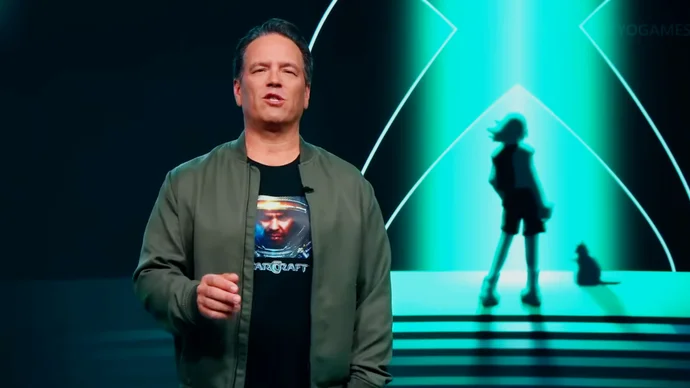
Matt Booty as chief content officer — what that means for studios
Booty’s promotion hands the content baton to someone already steeped in studio relationships and pipeline management. That’s sensible: if the platform side leans into AI-driven services and multiplatform reach, you want a content boss focused entirely on protecting creative output, release cadence, and quality. In practical terms, expect Booty to be the internal shield against overzealous monetization experiments and the executive who decides which franchises get resources.
What gamers should expect
Sharma’s three-pronged promise — great human-made games, a multiplatform “return of Xbox,” and cautious use of AI in monetization — is a neat PR package. For players it points to a few possible outcomes: fewer hardware-tied exclusives in favor of multiplatform releases, more AI tools built into developer workflows and cloud deployments, and new business models layered on top of Game Pass that may test the boundaries of what consumers find acceptable.
That last point is the tricky one. “Invent new business models” is corporate shorthand that can mean healthy experimentation or creeping nickel-and-diming. Sharma’s explicit pushback against “milking” IP is promising, but internal incentives — quarterly targets, shareholder expectations, and the economics of AI-driven personalization — will matter more than memos.
Why this matters now
The timing is pragmatic: Spencer’s retirement had been signaled, and Microsoft moved fast to line up successors. It’s also strategic: the industry is mid-shift toward AI-driven pipelines and multiplatform revenue models. Microsoft is using this leadership change to align Xbox with company-wide priorities while trying to reassure gamers that quality and human creativity won’t be casualties.
TL;DR — The real headline
Microsoft has swapped a long-time gaming CEO for a CoreAI executive, signaling that AI will be central to Xbox’s next chapter — but Asha Sharma’s first public commitments also try to balance that pivot with a promise to protect human-driven game creation and studio autonomy. Whether the words hold up against commercial pressures will be the story to watch this year.
FinalBoss // Gear
Level up your setup
01Best-selling Xbox Series X|S gameson Amazon→02Xbox controllerson Amazon→03Top-rated gaming headsetson Amazon→04Discounted game keyson Kinguin→Affiliate links · As an Amazon Associate, FinalBoss earns from qualifying purchases.
Want to Level Up Your Gaming?
Get access to exclusive strategies, hidden tips, and pro-level insights that we don't share publicly.
Ultimate Gaming Strategy Guide + Weekly Pro Tips