
Table of Contents (8)
The moment I realised Xbox needed saving from itself
I was scrolling through the news, half-expecting another “we’re bringing more Xbox games to other platforms” story, when I saw it: Phil Spencer retiring, Sarah Bond out, and a CoreAI exec called Asha Sharma taking over Xbox.
My first reaction wasn’t excitement. It was that horrible mix of déjà vu and dread that every long-time Xbox fan has felt since the Xbox One TV debacle. I’ve been in this ecosystem since the original chunky black box, I burned most of my uni years on a 360 controller, and I’ve watched this brand go from the king of the living room to “vague subscription plus some confused hardware in the corner.”
Phil Spencer was, in many ways, the kind of exec we say we want: he clearly loved games, talked like a human, and dragged Xbox out of the ashes of 2013. But the brutal truth is that by the time he walked out, Xbox didn’t have a clear identity, the hardware felt like an afterthought, and Microsoft had spent the GDP of a small country on acquisitions without a coherent plan to make it all hang together.
So when Microsoft parachuted in an AI boss to run Xbox, it felt, on the surface, like the final nail. The company that can’t stop shoving Copilot into every menu now controls 30 years of gaming history and has put an AI-heavy exec in charge? Every red flag lit up at once.
But after sitting with it, reading everything I could, and thinking back over how many times Xbox has fumbled its own future, I’ve landed somewhere uncomfortable: I actually think Asha Sharma might be the inflection point this division desperately needs – if she uses AI as a tool for a strategic reset instead of another buzzword to slap on the box.
Phil Spencer’s passion didn’t fix the core problem
Let’s start with something that will get me strung up in certain corners of the internet: loving video games and being good for the games business are not the same thing.
Phil Spencer obviously cared. You could hear it when he talked about preservation, about backward compatibility, about respecting player choice. I don’t doubt for a second that he plays games, understands the culture, and meant every word.
But look at the scoreboard when he left. Microsoft has spent close to $100 billion gobbling up publishers and studios – Zenimax, Activision Blizzard, and a trail of others – and yet Xbox still doesn’t feel like it knows what it wants to be:
- A console platform that competes head-on with PlayStation?
- A subscription pipeline where Game Pass is the real “platform”?
- A third-party publisher throwing its games on every device with a screen?
- A cloud/PC ecosystem where the box under your TV is basically optional?
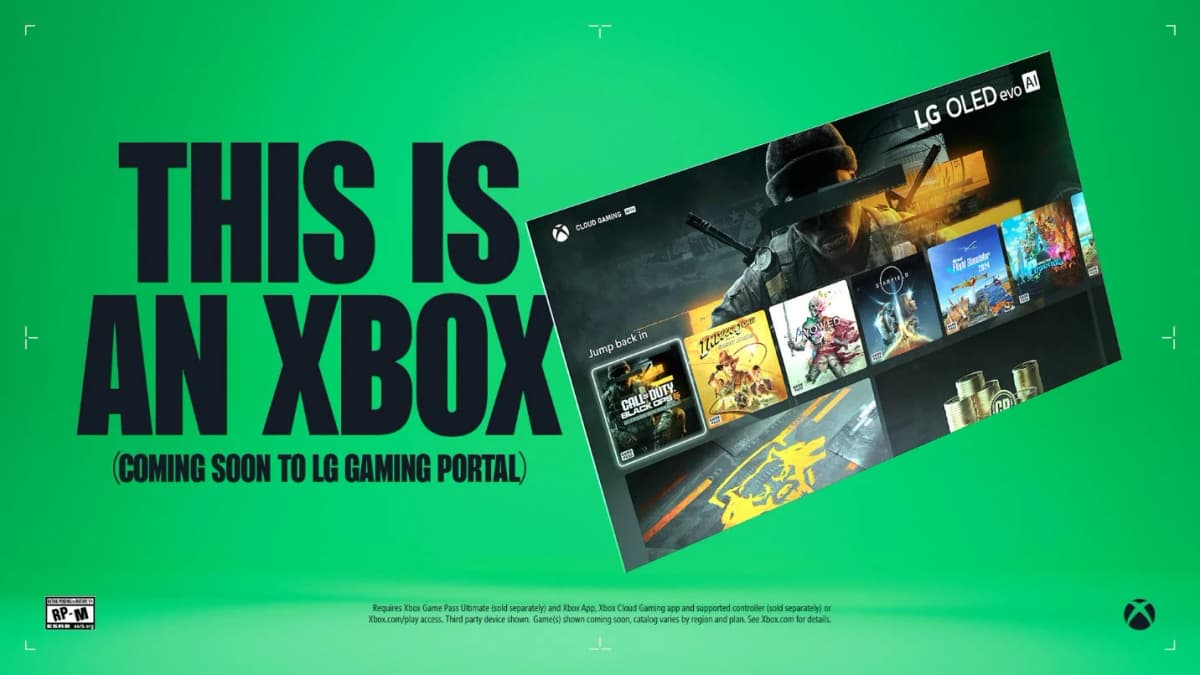
Spencer’s era tried to be all of those at once, then wrapped it in that deeply confused “This is an Xbox” messaging – where a PC, a Game Pass sub, a streaming stick and an actual console all counted as the same thing. From a corporate slide-deck perspective, sure, that looks elegant. From a gamer perspective, it made the physical console feel like a technicality.
I still remember firing up my Series X, a genuinely lovely bit of kit, and realising that every big exclusive I cared about was also on PC day one, often running better, and increasingly creeping to other platforms later. The message became: “Don’t worry about the box. The brand is the service.” That might please shareholders short-term, but it hollowed out what made Xbox worth buying in the first place.
This is the context Asha Sharma is walking into: a beloved but directionless brand, golden IP trapped in bureaucratic limbo, and a player base that’s tired of being told the box matters while watching Microsoft undercut it at every turn.
Why an AI exec at Xbox freaks people out (and why I get it)
Sharma didn’t come up through Xbox Live, Game Studios, or even entertainment. She came from Microsoft’s CoreAI team, and only joined the company a couple of years ago. On paper, that screams “Trojan horse for AI-first everything.” And given how aggressively Microsoft has rammed Copilot into Windows, Office, and even hardware keys on laptops, that suspicion is more than fair.
Then there’s the whole “is she even a gamer?” drama. Her public gamertag, the sudden rush of achievements, the accusations that her account was staged PR and her posts were AI-generated – it turned into a circus. She had to clarify that the account was a shared family profile and that she writes her own stuff.

Honestly? I don’t care if her Gamerscore is 10,000 or 10. I care whether she understands what this platform is supposed to be and whether she can stand up to the rest of Microsoft when they inevitably try to turn Xbox into a showroom for whatever AI gimmick they’re selling this quarter.
History backs that fear up. We’ve been through Microsoft’s “power of the cloud” phase, where every Xbox presentation had to pretend Azure was secretly the star of the show. Very few games did anything meaningful with it. It was corporate strategy chasing tech trends, not player needs.
The nightmare version of Sharma’s appointment is simple: Xbox becomes the Copilot console. Procedurally written side quests, AI-generated art assets at scale, chatbots in the dashboard, AI commentators in multiplayer, and studios quietly “encouraged” to cut human headcount because a model can spit out another generic forest in five minutes.
If that’s the play, Xbox is done for me. I don’t want an algorithmic content firehose. I want carefully authored worlds, from devs who have the space to obsess over details the way Yu Suzuki did building Shenmue – all the weird, inefficient, utterly human decisions that no model would ever prioritise.
But being “a gamer” never guaranteed good leadership
Here’s the uncomfortable flip-side, though. Some of Xbox’s worst strategic blunders came under dyed-in-the-wool games people, and some of its best years happened under someone who barely knew the medium at all.
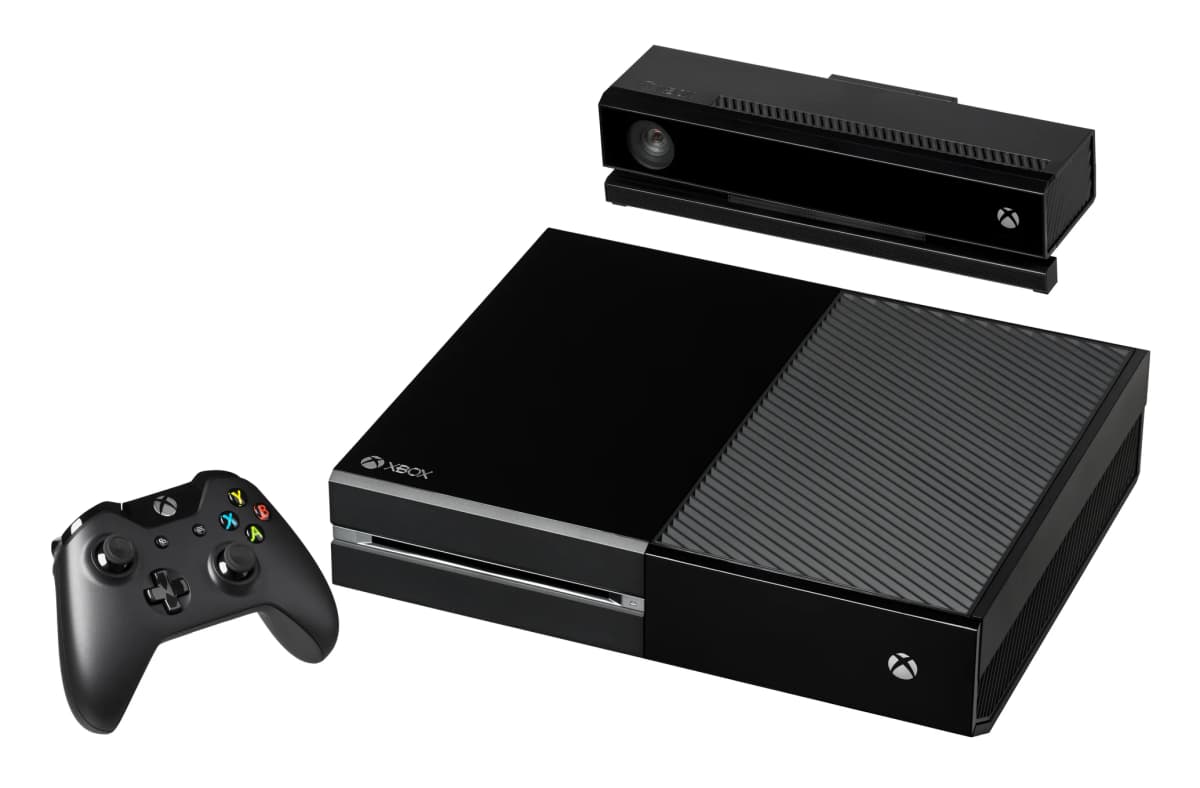
Don Mattrick was a lifer in the industry – founded a dev studio as a teenager, ran big gaming businesses. Under him, we got the Xbox One reveal: always-online DRM, “TV, TV, TV,” mandatory Kinect, a price premium, and the kind of arrogant messaging that still haunts the brand. That wasn’t a tech tourist; that was “one of us” from the industry making catastrophic calls.
Meanwhile, the 360 era most of us look back on so fondly? That was Peter Moore, a guy from the sportswear world. He openly admitted he didn’t grow up with games. But he understood products, he understood branding, and he knew how to position a box with a strong identity. He greenlit hardware like the Elite controller and pushed Xbox Live as more than a feature – it was part of the cultural fabric.
So I’ve had to park the knee-jerk reaction of “she’s not a games person, therefore she’s doomed.” Being a gamer helps you speak the language. It doesn’t automatically teach you how to steer a division that sits at the intersection of consumer entertainment, trillion-dollar corporate strategy, and some of the most volatile tech on the planet.
The job Sharma just took is arguably the hardest in gaming. She has to reconcile four forces that rarely like each other:
- Gamers who still want Xbox to mean something specific
- Developers who are traumatised by layoffs, cancellations, and AI hype
- Microsoft executives who’ve just signed off on $100 billion worth of acquisitions and want a return
- A company-wide pivot to AI that will not politely stop at the edge of the games division
That’s where her AI and product background actually could be an asset – not because I want “AI games,” but because Xbox needs a leader who can talk to Nadella’s AI-obsessed Microsoft in its own language while carving out space for games to be more than a tech showcase.
What Xbox actually needs right now (and how AI-driven leadership fits in)
Strip away the PR fluff and Xbox’s needs are brutally simple:
- A clear product identity – what is “an Xbox” in 2026 and beyond?
- A real commitment to hardware – not just as a reference device, but as a thing worth owning
- A sane plan for all those acquisitions that doesn’t turn everything into a content farm
- Credibility, after years of mixed messages and cancelled promises
Sharma’s previous work wasn’t about shipping GPUs or building engines; it was about consumer-facing products, growth, and tying them into the broader strategy of the company. That’s exactly the friction point where Xbox has been weakest: aligning what’s good for players with what the wider Microsoft machine wants.
Done right, AI-driven leadership at Xbox doesn’t mean AI-written games. It means using the tech behind the scenes to restore some sanity:
- Smarter portfolio decisions: Using machine learning on years of engagement data to figure out what actually drives Game Pass retention versus what just spikes a week of YouTube hype.
- Better forecasting for those $100B acquisitions: Simulations and predictive models that tell you when it’s smarter to keep a franchise exclusive, go timed, or release everywhere without kneecapping your own hardware.
- Production tools that respect humans: AI-assisted QA, asset upscaling, and localisation that cut grunt work so artists and designers can focus on the creative decisions no model can make.
- Anti-cheat and safety at scale: Machine learning already keeps some online games playable; Xbox could double down here and rebuild trust in its multiplayer ecosystem.
This is where comparisons to other tech sectors matter. When Satya Nadella pivoted Microsoft to cloud and later AI, what actually worked wasn’t slapping “Azure” on everything; it was making Azure a backbone that other products could quietly lean on. When Adobe rolled out generative tools in Photoshop, the version that stuck wasn’t “press a button, get art” – it was AI as a co-pilot (the word everyone’s obsessed with, for good reason) that sped up workflows while still leaving the artist clearly in charge.
If Sharma treats Xbox the same way – AI as infrastructure and augmentation, not spectacle – this could finally break the pattern of the division chasing Microsoft’s latest obsession instead of its own mission.
Hardware focus: the line in the sand Xbox has to draw
Buried in all the corporate statements around the leadership shakeup was a line that made my ears perk up: Sharma talking about a renewed focus on hardware and on “what makes Xbox, Xbox.” That’s exactly what Spencer and Bond’s later years couldn’t convincingly articulate.
There’s been chatter for a while that the next Xbox could essentially just be a branded Windows PC – a nice-looking box, sure, but fundamentally not a distinct console platform. As someone who already games on PC, that sounds like a worst-of-both-worlds scenario: you’d get all the headaches of Windows without the clean, locked-down “it just works” simplicity that made consoles worth owning in the first place.
If Sharma really is killing off the “This is an Xbox” fuzziness and doubling down on actual consoles with an identity – silicon tuned for games first, unique OS features, and a library that feels meaningfully anchored to the box – that’s a bigger deal than any AI talking point she could bring to the table.
And yes, the economics are brutal. Supply chains are messy, margins on hardware are razor-thin, and Microsoft is one earnings call away from some suit asking why they’re still building consoles when they could just throw everything on PC and PlayStation. That’s why this role is so nasty: Sharma has to convince the same board betting the whole company on AI that keeping a physical Xbox alive is strategically worth it.
This is where AI might ironically be the shield, not the threat. If she can prove, with hard data, that owning the hardware endpoint – the box, the ecosystem, the living room presence – multiplies the value of Microsoft’s AI and cloud tech rather than competing with it, she has a case to protect the console for another generation.
Experts, insiders, and the AI reality check
Most of the serious voices in game development talking about AI right now are not salivating over replacing writers and artists. They’re talking about:
- Automating repetitive tasks in level design and testing
- Generating variations of assets that still require human curation
- Dynamic difficulty, matchmaking, and personalisation tuned with better models
- Analytics that actually understand long-term player behaviour instead of just chasing launch-week spikes
Every major engine vendor is already quietly baking some version of this in. The difference at the platform-holder level is leadership: do you have someone who treats this stuff as boring plumbing that makes devs’ lives easier, or as something you parade in keynotes to impress Wall Street?
Reports around Sharma’s internal messaging so far suggest she’s at least saying the right things: not replacing developers, keeping internal game development central, using AI “responsibly.” Words are cheap, and this is Microsoft, a company that can talk about ethics with a straight face while jamming AI into your taskbar without asking. But compared to the worst-case “AI evangelist” scenario, a product exec who understands both growth and optics is the lesser evil.
There’s also Matt Booty’s promotion to chief content officer quietly sitting in the background. Booty is the traditional game-production guy – studios, schedules, the unsexy stuff. If Sharma handles the corporate trench warfare and the AI strategy, while Booty owns the actual slate of games, that division of labour could work. It at least acknowledges that running Xbox now is bigger than any one “face of Xbox” personality, gamer cred or not.
My line in the sand as a player
I’ve poured absurd hours into Xbox over the years – Halo 3 customs, Gears horde marathons, losing weekends to weird AA experiments that only seemed to show up on 360. I migrated toward PC and PlayStation when Xbox lost the plot, but there’s still a part of me that wants this brand to matter again.
For me, the conditions are pretty clear:
- If AI shows up primarily in the dev tools and infrastructure, and I feel its impact in smoother launches, fewer delays caused by dumb pipeline issues, better online experiences, and more time for humans to craft actually interesting worlds – I’m in.
- If hardware takes centre stage again, with a next-gen Xbox that isn’t ashamed to be a console and isn’t just a Windows box in a different shell, I’m in.
- If those billions in acquisitions result in a stable, respected home for studios instead of a graveyard of shuttered teams and AI-assisted “content,” I’m in.
- But if the next few years are wall-to-wall “AI-powered experiences” where I can smell the cost-cutting in every procedurally padded quest log, I’m out. No subscription, no backlog loyalty, nothing is worth that.
Phil Spencer’s sincerity couldn’t solve Xbox’s identity crisis. The brand has been drifting for over a decade, oscillating between TV box, cloud terminal, Netflix-for-games, and “don’t worry, it’s all just Xbox.” That drift is more dangerous now than ever, because Microsoft has never had more power over gaming than it does today – and never seemed so tempted to treat games as just another vector for corporate strategy.
Asha Sharma is a risk. Any outsider dropped into this job would be. But she also represents something Xbox hasn’t tried in a long time: a clean break from a failing approach, led by someone whose entire career has been about aligning messy consumer products with even messier corporate priorities.
Right now, that’s exactly the kind of ruthless clarity Xbox needs. If she uses AI to entrench the old confusion, it’ll accelerate the platform’s slide into irrelevance. If she uses it as leverage to carve out a sharper, more honest identity for Xbox – as a console, as a library, as a promise – this could be the moment the brand finally stops drifting and decides what it wants to be when it grows up.
For the first time in a long time, I’m not cheering or mourning an Xbox leadership change. I’m watching. And as someone who still remembers the magic of the 360 era and the weird, human heart of games like Shenmue, I’m hoping the AI boss in charge of Xbox ends up being the one who fights hardest to keep it human.
FinalBoss // Gear
Level up your setup
01Best-selling Xbox Series X|S gameson Amazon→02Xbox controllerson Amazon→03Top-rated gaming headsetson Amazon→04Discounted game keyson Kinguin→Affiliate links · As an Amazon Associate, FinalBoss earns from qualifying purchases.
Want to Level Up Your Gaming?
Get access to exclusive strategies, hidden tips, and pro-level insights that we don't share publicly.
Ultimate Gaming Strategy Guide + Weekly Pro Tips