
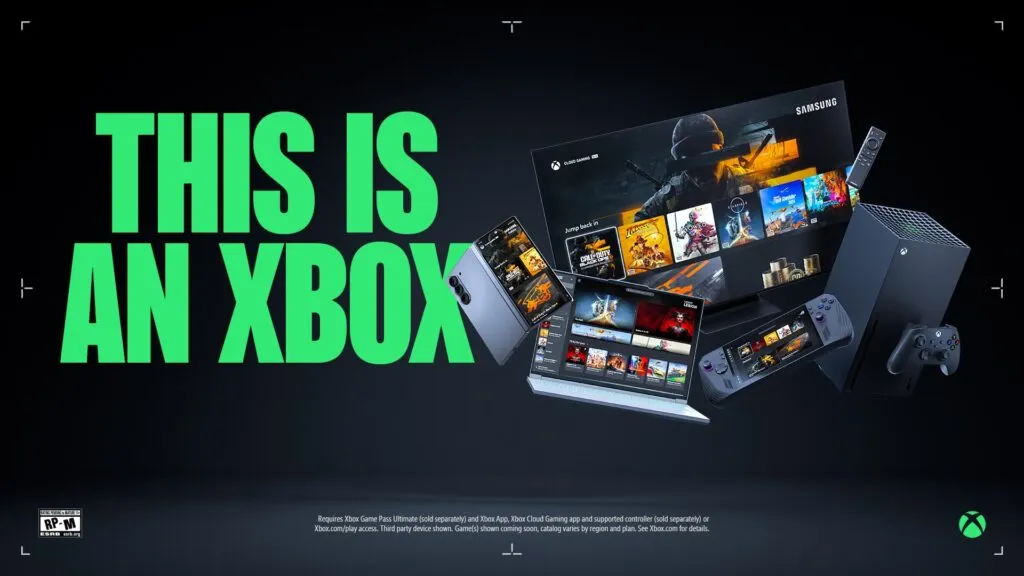
When Microsoft rolled out its “This Is an Xbox” campaign in late November 2024, the goal was to drive home an “Xbox Everywhere” mantra: phones, tablets, smart TVs, even your PC were now “Xbox” thanks to Game Pass. But what was supposed to be a bold repositioning quickly turned into something far more explosive inside the walls of Redmond. Engineers and first-party leads—people who have spent years optimizing consoles—felt the slogan erased their craft. Before long, that simmering resentment spilled into an exodus at the top.
Our deep dive into internal accounts, Game Developer and IGN/The Verge reporting, and Microsoft’s recent leadership shuffle reveals that the real fallout from “This Is an Xbox” wasn’t just bad creative—it was the latest chapter in a tug-of-war over Xbox’s identity.
Table of Contents (10)
Key Takeaways
- The “device-agnostic” thrust—part of Sarah Bond’s “Xbox Everywhere” strategy—hit console teams the wrong way and, per IGN/The Verge, offended many engineers and studio heads.
- Bond rose to become Xbox president in October 2023, but her vision coincided with multiple executive exits, including CMO Jerret West (June 2024) and Kareem Choudhry. Phil Spencer also announced his retirement, effective February 23, 2026.
- Rising DRAM and NAND prices in 2025–26 have squeezed hardware margins, making a services-first pitch more than just marketing spin (Game Developer reporting).
- New Xbox boss Asha Sharma has pledged a focus on trust, tools, and developer relations—but her memos must translate into clear budget and roadmap signals to calm the console vs. cloud battle.
The cultural collision at Xbox
When you’ve spent countless hours fine-tuning thermal limits or squeezing out a few extra frames per second, being told “your phone is an Xbox” can feel personally insulting. According to multiple current and former employees quoted by Tom Warren at The Verge (via IGN), the campaign “trivialized console engineering” and created a sense that hardware teams were second-class citizens. That tension didn’t stay behind closed doors: it became a flashpoint in the wave of departures that followed.
For studio leads working on big-budget exclusives, the message also sent mixed signals to third-party partners. If Microsoft genuinely saw mobile devices as equal Xbox platforms, why invest tens of millions in native Series X/S titles? That contradiction fueled a spike in attrition among executives who felt their projects were underserved.
Timeline: From Bond’s rise to Spencer’s exit
- October 2023: Sarah Bond is promoted to President of Xbox shortly after the $68.7 billion Activision Blizzard deal closes.
- April 2024: Kareem Choudhry (Xbox Cloud Gaming and backward compatibility lead) departs, citing a desire to “pursue new challenges.”
- June 2024: CMO Jerret West exits; marketing begins reporting directly to Bond, amplifying her influence over brand messaging.
- Late November 2024: “This Is an Xbox” campaign launches, positioning every device as an Xbox platform via Game Pass.
- Early 2025: Sources describe growing discontent among console engineers who feel cornered by device-agnostic messaging.
- Mid-2025: Phil Spencer announces he will retire effective February 23, 2026; Bond’s own resignation is later tied to the same leadership transition.
- May 2025: Asha Sharma, formerly of Microsoft’s Core AI group, is named the new head of Xbox, promising a “no tolerance for bad AI” and “trusted platform” approach.
Engineer and studio pushback
Behind the scenes, console teams weren’t just grumbling—they felt blindsided. “It was confusing,” one anonymous developer told IGN. “We build these machines from the ground up. Suddenly, our work didn’t matter because a phone could do the same thing?” Studio heads shared similar frustrations, warning that the campaign risked undermining the narrative for funding high-end hardware and exclusive first-party games. The result: a bruising culture clash that eroded morale.
Several leads even began embedding device-agnostic disclaimers in internal presentations, desperately trying to carve out a clear path for Series X/S investment amid the noise. That kind of patchwork defense only deepened the divide—and made it clear the slogan had become a political wedge.
Financial reality: cost pressures and the pivot to services
The public slogan hinted at a deeper economic story. Game Developer’s analysis of 2025–26 DRAM and NAND price inflation shows hardware costs climbing by 5–10 percent, cutting into profit margins on each Xbox unit sold. In that light, emphasizing Game Pass subscriptions over cutting-edge consoles starts to look less like branding bravado and more like a strategic hedge. If you can’t make as much on hardware, push recurring revenue from cloud and service tiers—just don’t tell the engineers their silicon optimizations no longer matter.
Analysts note that with component lead times stretching and tariffs impacting supply chains, pushing a subscription model also reduces inventory risk. But it’s a delicate balance—gamers still expect peak performance on dedicated consoles, which means the next hardware refresh needs both engineering muscle and marketing clarity.
Counterpoint: the promise of Xbox everywhere
To be fair, the “Xbox everywhere” pitch isn’t without merit. Microsoft now reaches over 30 million Game Pass subscribers, many playing on mobile or PC. Cloud streaming investments have reduced latency and improved quality across devices. For players unwilling to invest in a $500 console, the promise of Xbox on a phone can be a game-changer. From a global perspective—where smartphones outnumber consoles 20-to-1—device-agnostic Game Pass could be Xbox’s largest audience opportunity.
Microsoft’s own data shows a spike in engagement when major releases launch on cloud—players who try Halo Infinite on Android are more likely to upgrade to a Series X. That funnel could offset narrowing hardware margins, if executed without alienating the console core.
What Sharma’s leadership might mean for Xbox’s future
Asha Sharma’s first memo laid out three pillars: developer trust, responsible AI, and transparent platform roadmaps (per GamesIndustry reporting). That’s deliberately vague, but it buys time—while hinting at a course correction. Will she restore console R&D budgets or double down on cloud infrastructure? The real test will be next year’s annual planning cycle. If we see renewed hardware investments, it’s a win for console purists. If R&D funds stay tight and cloud margins drive decisions, the “everywhere” ethos lives on.
Sharma’s background in AI and platform tooling suggests she views services as a critical differentiator—yet she’s also stressed the importance of “tools that make hardware shine.” Whether that becomes capital spending on next-gen console chips or more Azure backend capacity remains to be seen.
What to watch next
- Campaign status: Has “This Is an Xbox” been quietly retired or rebranded? A silent pull suggests a reset.
- Budget and hiring: New console projects, studio funding announcements, or cuts to hardware teams will reveal priorities in dollars, not slides.
- Sharma’s communications: Follow-up memos on AI, cloud, and console support for explicit language on where Xbox invests.
- Xbox mobile store: Shelving or aggressively launching this project will signal how much weight device-agnostic gaming still holds.
- Earnings call commentary: Watch Xbox hardware revenue vs. Game Pass growth; that’s where intentions meet reality.
Conclusion
The “This Is an Xbox” campaign laid bare a deeper fault line within Microsoft: a team torn between its console heritage and an aggressive push into services. As hardware costs rise, the business case for Game Pass everywhere only strengthens—yet the soul of Xbox still beats strongest in its custom silicon and exclusive studios. Asha Sharma’s tenure will show whether Xbox can bridge that divide or ends up choosing one side.
TL;DR
When Xbox insisted “your phone is an Xbox,” console engineers felt erased, sparking a series of executive exits and a culture clash. Rising hardware costs made the services-first pitch more than marketing spin. New boss Asha Sharma has a chance to balance console heritage with cloud ambitions—but upcoming budgets and project launches will tell the real story.
FinalBoss // Gear
Level up your setup
01Best-selling Xbox Series X|S gameson Amazon→02Xbox controllerson Amazon→03Top-rated gaming headsetson Amazon→04Discounted game keyson Kinguin→Affiliate links · As an Amazon Associate, FinalBoss earns from qualifying purchases.
Want to Level Up Your Gaming?
Get access to exclusive strategies, hidden tips, and pro-level insights that we don't share publicly.
Ultimate Gaming Strategy Guide + Weekly Pro Tips