
Table of Contents (7)
Xenoblade Chronicles 2 Has Finally Caught Up With Its Ambition
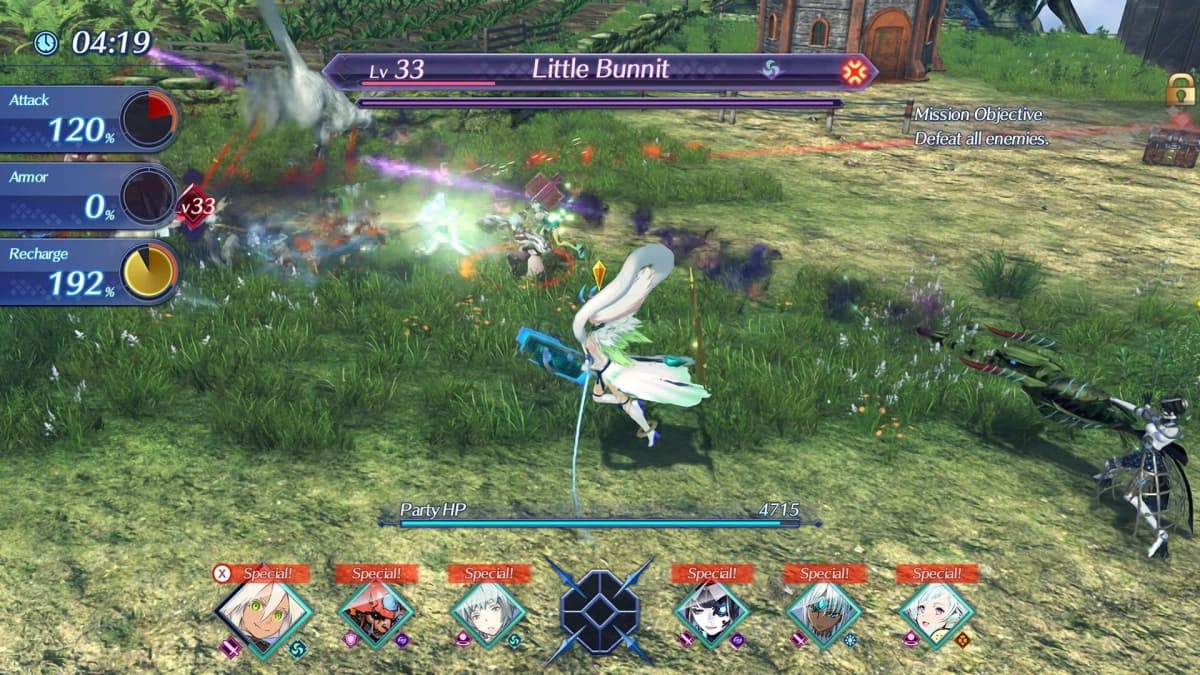
Monolith Soft’s 2017 RPG was always built on a scale the original Nintendo Switch struggled to comfortably sustain. Gormott’s huge fields, cloud-sea vistas, crowded towns, elaborate Blade effects, and Titan-sized environments gave Xenoblade Chronicles 2 real visual identity, but the cost was obvious: a soft image, ugly foliage shimmer, uneven frame pacing, and handheld resolution that could make long quest sessions feel like squinting through a fogged-up visor.
Xenoblade Chronicles 2: Nintendo Switch 2 Edition addresses the old game’s most persistent technical complaints. The headline figures are 60fps gameplay, 4K output in TV mode, and 1080p output in handheld mode. The more interesting reality sits beneath those marketing-friendly labels: it renders at relatively low internal resolutions, then relies heavily on temporal reconstruction to create a much cleaner final image.
That distinction matters. This is not a native-4K remaster running brute-force pixels at a modern console level. It is a smart, well-targeted upgrade that spends the Switch 2’s additional power on steadier motion, better image reconstruction, more world detail, and a dramatically less compromised portable experience. For this particular game, that is the right priority.
Resolution, Performance, and Storage at a Glance
| Mode / Version | Internal Rendering | Displayed Output | Performance Target | What It Means in Play |
|---|---|---|---|---|
| Original Switch, docked | Dynamic resolution, often around 720p | Up to 1080p output | 30fps | Soft image, heavy sharpening, foliage shimmer, and visible slowdowns in demanding scenes. |
| Switch 2 Edition, docked | About 1280 × 720 | 4K-like reconstructed output | 60fps | Far cleaner edges and camera motion, although some textures still look soft on large 4K displays. |
| Original Switch, handheld | Dynamic and frequently very low | 720p screen output | 30fps | The game’s weakest presentation, particularly in busy open areas and combat. |
| Switch 2 Edition, handheld | About 468p | 1080p-like reconstructed output | 60fps | Much clearer portable image, steadier movement, and a huge comfort upgrade for questing away from the TV. |
The Switch 2 Edition is listed at approximately 45.8GB, a major jump from the original Switch release’s 13.2GB footprint. That extra storage does not automatically mean every asset has been rebuilt from scratch, but it tracks with the upgraded cutscenes, improved texture handling, added content, and more substantial presentation package.
Docked Mode: 720p Internally, Much Better on a 4K TV
The number likely to make hardware enthusiasts pause is the docked internal resolution: roughly 1280 × 720. On paper, that sounds uncomfortably close to the original game’s baseline. In practice, it does not look remotely like the old Switch version blown up to a large 4K panel.
The key is temporal upscaling. Rather than treating each 720p frame as a self-contained image, the renderer uses information from successive frames to reconstruct a denser output. Fine details that would have broken into crawling pixels on the original release — fences, architecture, character outlines, distant foliage — hold together much more effectively as the camera moves.
That stability is the upgrade’s real win. The old game often tried to hide its low rendering resolution with aggressive sharpening. It produced a harsh, noisy look around grass, hair, and high-contrast scenery. Switch 2’s reconstruction produces a calmer image: less jaggedness, fewer distracting flashes of aliasing, and more coherent detail across broad landscapes.
There is still a hard ceiling. On a 55-inch or 65-inch 4K OLED, some ground surfaces, far-off rock formations, and lower-detail character materials can look smoothed over. Native 4K assets and a native 4K render would retain more fine texture information. The game outputs a 4K-class signal; it does not suddenly become a native-4K production. Anyone expecting that will spot the gap quickly.
Against the 2017 release, though, the difference is not subtle. Gormott and Mor Ardain benefit hugely from the cleaner reconstruction because they are packed with geometry and environmental detail — the exact sort of scenes that exposed the original Switch’s limits.
60fps Changes More Than the Benchmark Graph
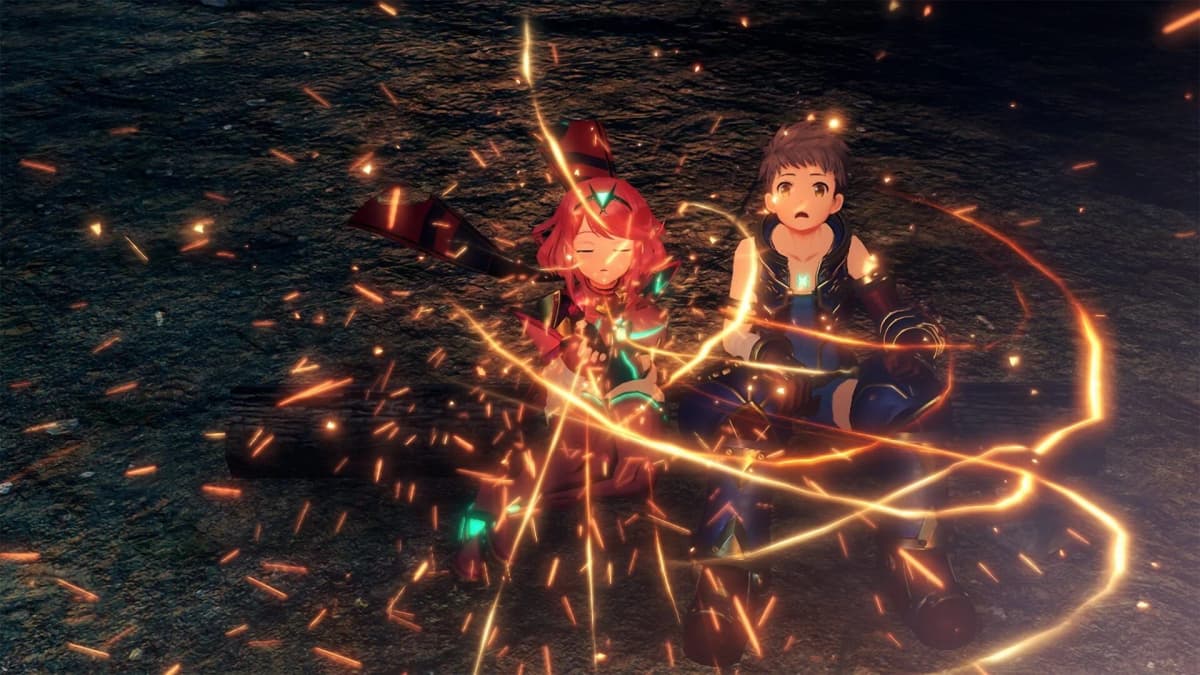
The move from a 30fps target to 60fps does more for Xenoblade Chronicles 2 than the resolution upgrade alone. The game has plenty of fast camera movement, broad open-world traversal, menus that players constantly cycle through, and combat loaded with particle effects. At 60fps, those systems finally feel as responsive as the game’s art direction always deserved.
Camera pans across enormous Titans are smoother. Running through towns and fields feels less juddery. Blade specials, chain attacks, and menu navigation have less visible latency. The improvement is especially welcome in long sessions, where the original version’s uneven motion could become more tiring than any single ugly screenshot suggests.
It is not a flawless 60fps lock. Heavy alpha effects, dense environmental scenes, busy cutscenes, and large combat stacks can still push the engine past its 16.7ms frame-time budget. The game uses double-buffer v-sync, so a missed frame can momentarily turn into a 33.3ms presentation. That creates a noticeable hitch — a brief 30fps-like stumble — before performance recovers.
The important point is frequency and duration. These are short interruptions rather than the regular, sustained compromises that defined the original release. Players who hammer out Blade Specials in crowded fights will still see the occasional wobble, but ordinary exploration and most combat now run with the fluidity the game always needed.
Handheld Mode Is the Biggest Quality-of-Life Upgrade
The portable version of Xenoblade Chronicles 2 was notorious at launch. The original hardware had to cut rendering resolution severely in demanding scenes, which left distant scenery blurry and made dense effects difficult to parse. It was playable, but hardly the version to recommend to someone buying the game for a long trip or a commute.
Switch 2 Edition still renders at only about 468p internally in handheld mode, which sounds low until the screen and reconstruction pipeline enter the equation. The reconstructed result looks close to 1080p on the Switch 2 display, and that is enough to make the game’s UI, character models, and environmental shapes read cleanly at normal handheld viewing distance.
In many scenes, the new handheld experience looks cleaner than the original game did docked. That is a remarkable reversal. The reduced internal resolution is less damaging on a smaller screen, while the improved temporal reconstruction prevents the image from collapsing into the murky blur that defined the old portable mode.
The 60fps target matters even more here. Handheld play involves more close-up camera movement, more rapid menu browsing, and more sensitivity to image instability because the display is literally moving with the player. Cleaner motion makes the whole package feel modern rather than merely functional.
Foliage, Lighting, and Depth of Field Do the Quiet Work
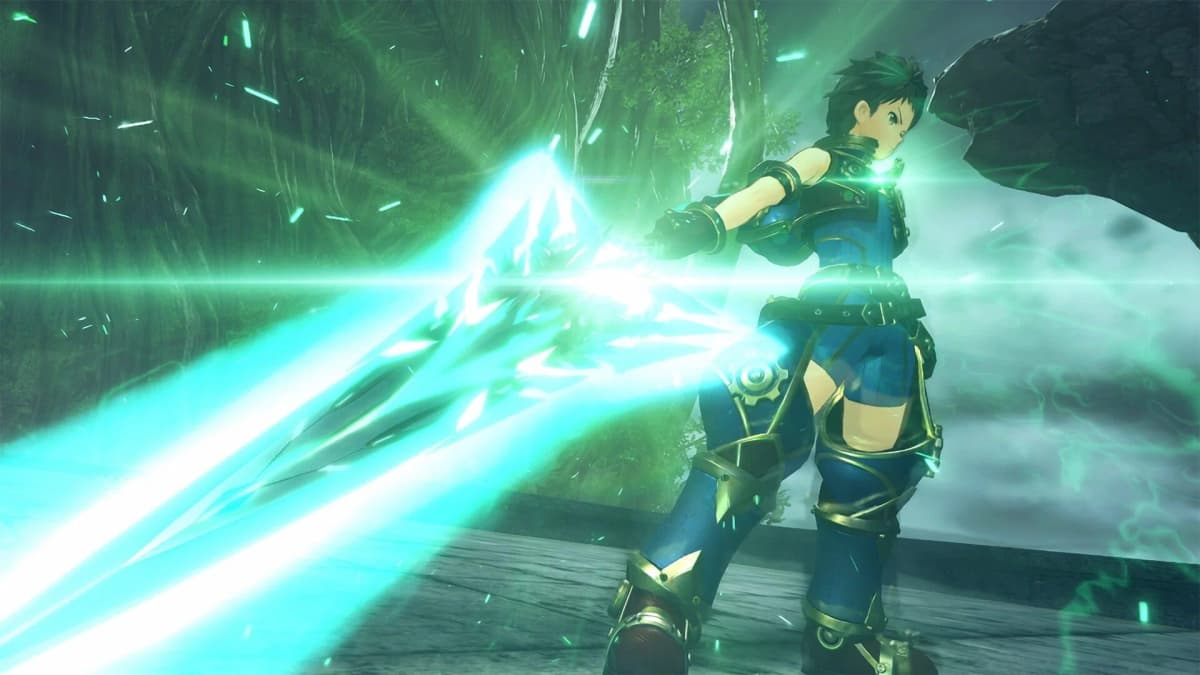
Resolution and frame rate dominate the conversation, but the environmental changes are what make the upgrade feel more complete than a basic performance patch. Grass is denser, sharper, and placed more liberally across the world. That matters in a game where vast fields and layered terrain are central to the sense of scale.
Lighting has also received attention through adjusted bloom, ambient occlusion, and more locally shaded scenes. The original release could look washed out in bright areas and muddy in darker ones. The revised lighting gives terrain and objects more separation without making the image look unnaturally contrasty.
Depth of field is more nuanced as well. Background blur appears less like a blunt instrument, helping distant scenery retain atmosphere without turning whole sections of the image into a smeared backdrop. Better texture filtering and faster detail resolution round out the package, even if they cannot erase every low-detail source texture inherited from the original game.
These are modest upgrades individually. Together, they reduce the sense that the game is straining against its hardware. The world looks more composed, more readable, and closer to the sweeping JRPG presentation its concept art always promised.
Who Should Buy or Upgrade?
Existing fans who avoided replaying Xenoblade Chronicles 2 because of its performance and handheld image quality have the clearest reason to return. This version preserves the game’s identity while removing much of the technical friction that surrounded the original release.
Players starting the game for the first time also benefit. A 60fps target, more legible action, and cleaner output make the lengthy RPG easier to live with across dozens of hours. The portable improvement is especially valuable for anyone who splits time between a television and handheld play.
Hardware purists should set expectations correctly. The Switch 2 Edition does not compete with a current high-end console RPG rendering native 4K assets at a locked 60fps. It is a technically efficient enhancement of a game designed around 2017 mobile hardware. The reconstruction is doing serious work, and occasional frame-time stumbles confirm that this remains a demanding engine.
FinalBoss // Gear
Level up your setup
01Best-selling Switch 2 gameson Amazon→02Switch 2 accessorieson Amazon→038BitDo controllerson Amazon→04Discounted game keyson Kinguin→Affiliate links · As an Amazon Associate, FinalBoss earns from qualifying purchases.
Want to Level Up Your Gaming?
Get access to exclusive strategies, hidden tips, and pro-level insights that we don't share publicly.
Ultimate Tech Strategy Guide + Weekly Pro Tips