
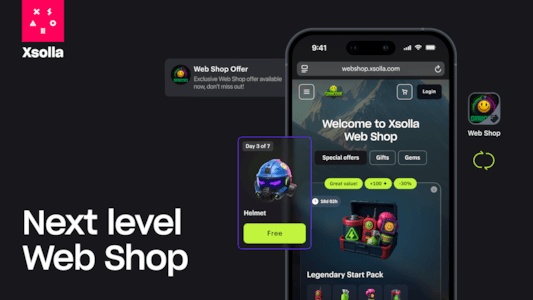
Direct-to-consumer is the quiet arms race of mobile games right now, and Xsolla just dropped a big upgrade to its Web Shop platform that pushes the trend forward. As someone who’s watched Fortnite, Genshin Impact, and Supercell quietly shepherd players to web purchases with extra perks and better prices, this update reads like Xsolla turning that playbook into a product: less dependence on app stores, more LiveOps hooks, and a not-so-subtle attempt to keep more of each dollar away from Apple and Google.
Xsolla says over 600 Web Shops have launched so far, and this update leans into three buckets: operational sanity, monetization levers, and platform workarounds. On the ops side, “catalog sync” is the headline-mirror your in-game items to the web via API, dynamic bundles, and JSON import so the shop stops falling out of date. If you’ve ever seen a web offer with wrong prices or expired art (we all have), this matters more than the buzzwords suggest.
On the monetization front, “adaptive offer chains” and “configurable daily rewards” are designed to increase ARPPU and repeat visits. Translation: low-friction entry deals that escalate, plus web-only check-ins that turn the shop into a habit. Subscriptions round it out with recurring perks-think VIP tiers and monthly packs—baked into the same backend. None of this is new in spirit; what’s new is bundling it cleanly for teams that don’t have Supercell-scale tooling.
The “Buy Button” is the spicy bit. Xsolla pitches up to 25% higher margin on U.S. iOS transactions by linking out to a browser checkout (with Apple Pay) instead of processing in-app. If you’ve followed the Apple/Epic saga and shifting policies around external payments, you know the rules are a maze and vary by region. The promise is real in theory—web checkout often means lower platform cuts—but the actual margin depends on compliance, potential platform fees, and how Apple’s policies evolve. Keep your lawyer nearby.
User acquisition costs are up thanks to privacy changes, in-app fees still hover around that infamous 30%, and regulations (DMA in the EU, ongoing U.S. cases) keep shifting the ground under everyone’s feet. Studios need first-party channels where they own the relationship and the data. Xsolla’s Web Shop is a way to build that without hiring an entire commerce team: global payments, push notifications via PWA, subscriptions, loyalty mechanics, and now a “headless” approach for custom features.
Headless Storefront is essentially “headless commerce” for games: marketers keep a visual editor for promos and branding, while engineers can ship React components that plug into Xsolla’s cart, login, and rewards APIs. Publish those as reusable blocks, drag-and-drop them into new pages, and you’ve got a LiveOps machine that doesn’t require a full sprint for every weekend event. For mid-sized studios chasing Supercell-style direct stores or a Codashop-like top-up flow under their own brand, this is the compelling part.
Let’s be real: for players, this means more web-exclusive deals and “visit the shop for your daily reward” loops. If you’ve bought V-Bucks or Genesis Crystals on the web for a better rate or bonus currency, expect more games to follow suit. Browser-based push notifications can re-engage you with timed offers, event alerts, and “last chance” reminders. On iOS, those web pushes require installing the PWA and opting in—so it’s not pure spam—but the intent is obvious: keep you coming back without paying the app store tax.
There’s upside here: better prices, more generous bundles, and fewer checkout headaches with Apple Pay in the browser. There’s also a downside: more nudging, more FOMO-driven offer ladders, and more of your data in a developer’s first-party system. If you don’t want your email and device behavior fueling personalized upsells, watch what you opt into. The line between player-friendly deals and manipulative design is thin; some studios dance on it.
Xsolla cites numbers like 5-15% ARPPU lifts, +15% retention, and 30%+ conversion boosts from PWA notifications. Possible? Absolutely—especially in midcore and MMO titles where web shops already perform. But results vary wildly by genre and country. If the “Buy Button” is your cornerstone, remember: Apple’s policies change, fees can still apply depending on implementation, and compliance isn’t optional. Region by region, the math can flip.
On execution, I’ll be looking for clean, consistent account linking (no one wants currency stuck between platforms), fast catalog updates that don’t break SKUs, and responsible offer design. Offer chains can feel like a fair value ramp—or a shark tank for whales. The best teams tie them to events, cosmetics, and community goals instead of raw power creep.
This update doesn’t reinvent the wheel, but it does put real tires on the D2C car most mobile studios are already driving. Catalog sync reduces the ops tax, headless components speed up custom features, and the Buy Button probes the boundaries of iOS payments without detonating your app. For players, expect more “buy on the web for extra value” prompts—and, hopefully, better bundles for your money.
Xsolla’s Web Shop upgrade is a practical toolkit for studios going direct: synced catalogs, smarter rewards, subscriptions, and a cautious end-run around app store fees. If devs use it well, players get better deals with fewer checkout headaches; if they overdo it, get ready for more pings and pushy offer ladders.
Get access to exclusive strategies, hidden tips, and pro-level insights that we don't share publicly.
Ultimate Gaming Strategy Guide + Weekly Pro Tips