
Table of Contents (5)
The Scheduled Terminus of Mists of Pandaria Classic
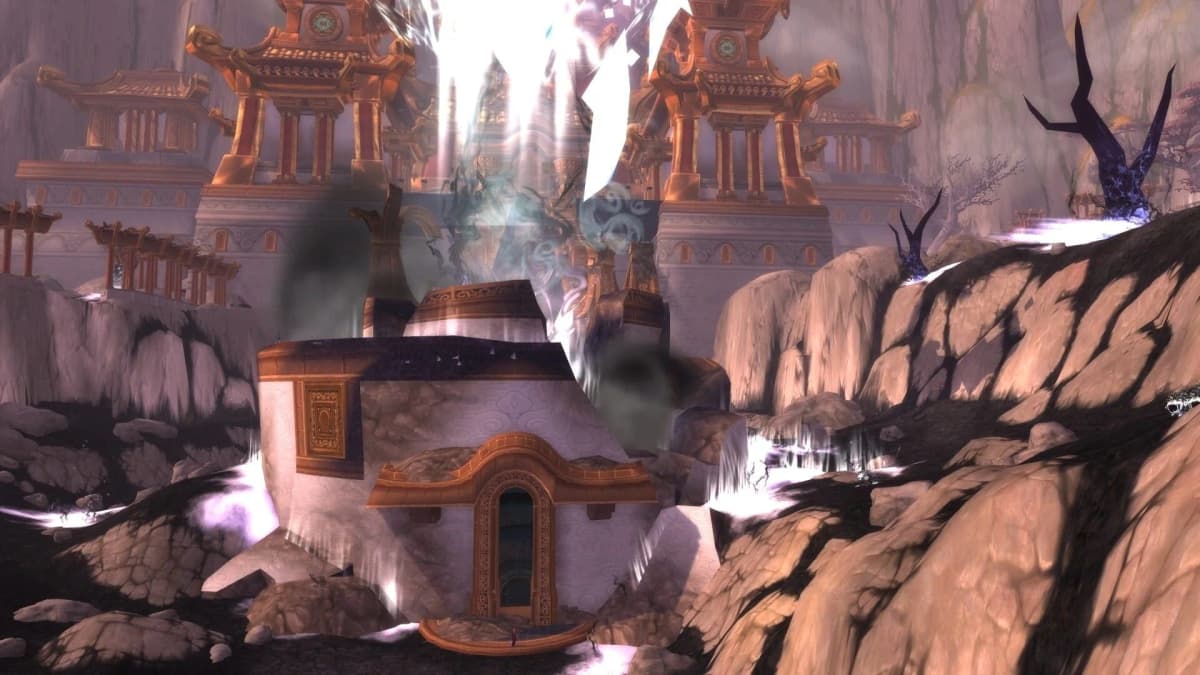
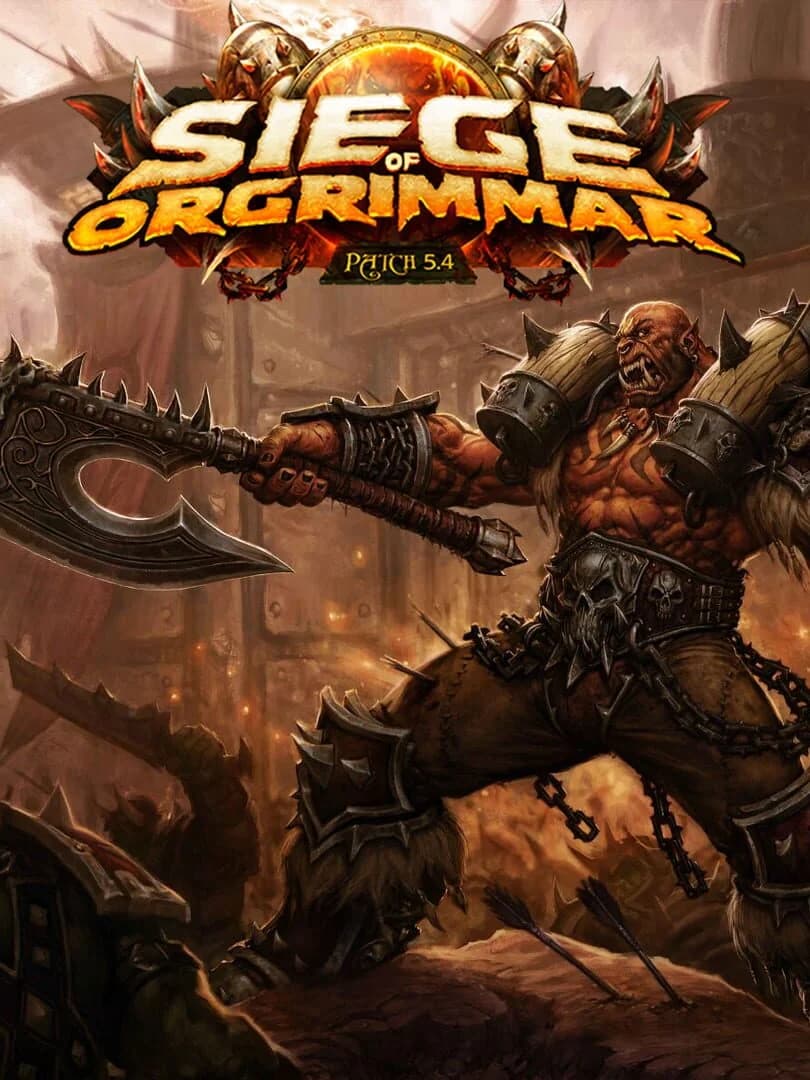
World of Warcraft: Mists of Pandaria Classic concludes its progression cycle with the Siege of Orgrimmar. The raid presents fourteen bosses across Normal and Heroic difficulties, terminating in a final encounter with Garrosh Hellscream. For the guilds currently allocating weekly lockout time to this content, the experience carries the weight of a culminating event. Raid composition, loot distribution, and scheduling revolve around a shared understanding that this is the end of the line for the expansion. That sense of finality is, that said, a manufactured narrative. The content exists on Blizzard’s servers as a reconstituted data set, and its availability is governed by business metrics rather than player sentiment. The Siege of Orgrimmar is not a permanent historical monument. It is a rotating exhibit.
The Classic initiative relies on a psychological framing that encourages players to treat these re-releases as reclaimed property. Marketing language evokes preservation, legacy, and authenticity. Yet the technical reality is unchanged from the original 2012 release: all character data, inventory states, and realm configurations reside in databases that Blizzard controls absolutely. When the operator decides that Mists of Pandaria Classic has reached the end of its profitable lifecycle, the servers will be repurposed or decommissioned. The mounts earned, the reputations grinded, and the boss kills recorded during Siege of Orgrimmar progression will not be transferred to a player-controlled archive. They will be deleted or warehoused according to corporate data policy. What feels like a personal era is, structurally, a temporary allocation of server resources.
Tenancy, Not Ownership
The distinction between emotional investment and legal possession is central to understanding the MMO business model. Players routinely employ the language of ownership-referring to characters, guild banks, and server communities as personal assets-but the End User License Agreement defines the relationship as a revocable grant of access. The monthly subscription does not purchase equity in the game world. It rents time inside a controlled environment. This is not a semantic quibble. It determines the rights available to the user when service changes occur. Server merges, faction population rebalancing, and eventual sunsetting are unilateral operator decisions. The player has no claim to the continuity of the world or the persistence of the character record.
The Classic format makes this tenancy especially visible because it explicitly monetizes nostalgia as a discrete product. Mists of Pandaria Classic is sold as a return to a specific historical moment, yet it is bound to the same lifecycle mechanics as the retail game. The existence of long-running private projects such as Turtle WoW and Project Ascension further illustrates the gap between player desire and official policy. These communities attempt to create persistent, player-governed spaces outside Blizzard’s infrastructure. They operate in legal ambiguity and without the stability of corporate backing, but they exist because the official channels offer no permanence. Blizzard’s Classic eras are not preserved pasts. They are licensed replays with expiration dates determined by quarterly reports.
Neighborhood Housing and the Internalization of Social Capital
The upcoming Midnight expansion advances this model through social design rather than content gating. Neighborhood housing, scheduled for pre-order early access on December 2, 2025, and full integration with Patch 12.0.7 on June 17, 2026, represents a deliberate effort to re-anchor community activity inside the World of Warcraft client. The feature allows players to enter neighborhoods, establish houses, and design interior layouts including kitchens. On the surface, this is a quality-of-life addition. Structurally, it is a relocation of social infrastructure from external platforms-primarily Discord—back into a space Blizzard fully controls.
The technical topology of these neighborhoods matters. They are instanced, server-dependent spaces where visitation, decoration, and social display are routed through Blizzard’s matchmaking and database systems. Progression incentives attached to housing will inevitably produce optimization behaviors. Players will calculate the most efficient paths to acquire desirable furnishings or neighborhood prestige. Carry services will emerge, offering to shortcut housing grinds for in-game gold or real-money equivalents. These side effects are predictable, but they are not the primary function of the system. The function is retention through infrastructure lock-in. When a guild’s social hub is a Discord server, the operator cannot monetize the traffic or guarantee the continued connection. When the hub is an in-game neighborhood, the social graph becomes a captive asset. If the account is suspended, compromised, or migrated during a server merge, the player loses not only character progress but the social coordinates of their community.
Contingent Stability and Accelerated Risk
The reliability of this tenancy is further undermined by the current pace of development. Following the Midnight expansion launch, Patch 12.0.5 shipped with widespread bugs and technical instability less than two months into the cycle. An accelerated patch cadence may satisfy content-hungry segments of the player base, but it increases the probability of service disruption. A player’s ability to engage with their supposed era—whether Siege of Orgrimmar in Classic or Neighborhood progression in Midnight—is contingent on the quality of the code deployed by the operator. The tenant has no recourse when the property becomes temporarily uninhabitable. There are no refunds for emotional investment lost to a bricked raid instance or a housing plot that fails to load. The precarity is compounded: the player owns nothing, and the thing they do not own is not even guaranteed to function consistently.
The Only Recoverable Asset: Account Access
Given that the game world is corporate property and the service is inherently unstable, the only element a player can realistically secure is the credential that grants entry. Account recovery is not a secondary concern. It is the sole operational safeguard in a relationship defined by asymmetrical control. Losing access to a World of Warcraft account does not merely pause progression; it annihilates the record of participation in an era that was already temporary. The following protocols are mandatory, not advisory.
- Dedicated recovery email. The email address attached to the gaming account should be reserved exclusively for that purpose. Using a general-purpose email that also registers for shopping, social media, or work platforms expands the attack surface. Cross-service breaches are common, and credential stuffing frequently targets gaming accounts because of their resale value. Additionally, the recovery email must remain active and monitored. If the player loses access to that address—through provider shutdown, domain expiration, or forgotten credentials—Blizzard’s identity verification pipeline may reject restoration requests. The account then enters a recovery dead end from which support cannot extract it without verifiable proof of purchase and original registration details that many long-term players no longer possess.
- Two-factor authentication backup codes. Enabling 2FA on a mobile device or authenticator app is standard practice, but it creates a single point of failure: the device itself. Phones break, get stolen, or are factory reset. If the authenticator is tied to a device that becomes inoperable, and no backup codes were generated and stored offline, the player is functionally locked out of their own tenancy. Blizzard’s account recovery system treats 2FA bypass requests with extreme caution, often requiring extended review periods and documentation that many users cannot readily produce. Generating backup codes at the moment of 2FA activation and storing them in an offline, physically secure location eliminates this dependency. It is the only insurance policy against hardware loss.
These measures do not confer ownership. They do not prevent a Classic server from shutting down or a Neighborhood housing instance from becoming obsolete. They simply preserve the login. In an ecosystem where every achievement, relationship, and virtual possession is ultimately a licensed database entry, the password and the recovery pathway are the only assets that approach tangibility. The Siege of Orgrimmar will eventually close. The neighborhoods of Midnight will follow. What remains is the question of whether the player still holds the key when the doors lock.
FinalBoss // Gear
Level up your setup
01Top-rated gaming headsetson Amazon→02High-refresh gaming monitorson Amazon→03Gaming chairson Amazon→04Discounted game keyson Kinguin→Affiliate links · As an Amazon Associate, FinalBoss earns from qualifying purchases.
Want to Level Up Your Gaming?
Get access to exclusive strategies, hidden tips, and pro-level insights that we don't share publicly.
Ultimate Gaming Strategy Guide + Weekly Pro Tips