
Table of Contents (8)
Why Mastering Media Circus’s Newspaper and Modular Story Matters
The first time you dive into Media Circus, it’s tempting to treat it like a straightforward narrative game: follow the biggest lead, publish the juiciest headline, repeat. That mindset is exactly why most players hit a wall around their third or fourth in-game week. The story feels fragmented, key characters vanish, and huge reveals seem to come out of nowhere.
The game is built around two moving parts that quietly run everything:
- A modular narrative made of self-contained “story modules” (leads, scandals, investigations) you can tackle in different orders.
- An evolving in-game newspaper that reacts to what you choose to cover, how you frame it, and what you ignore.
Once you start thinking like an editor instead of a protagonist, Media Circus opens up. The chaos turns into a pattern you can read, manipulate, and even exploit. This guide breaks down exactly how to do that: how to see the modular structure, how to use the paper as both UI and narrative weapon, and how to stop missing the quiet stories that actually drive the big twists.
Step 1 – Read Media Circus’s Story as Modules, Not a Timeline
Under the hood, Media Circus isn’t really a linear campaign. It’s a toolbox of modules-short, focused storylines about a particular scandal, faction, or character. Each has a clear beginning, middle, and end, and most can trigger or reshape other modules depending on when you play them.
Before you worry about “the plot,” train yourself to spot these modules and treat them like puzzle pieces:
- Identify the start of a module: any time you get a new named lead (e.g. “The Vanishing Polls,” “The Mayor’s Blackout,” “Factory Fire on the Westside”), that’s a module start. Check the details panel from the newsroom hub via
Pause → Leads & Investigations. - Check its scope: the lead summary usually hints at scope and stakes (personal drama, city-wide conspiracy, faction turf war). This tells you whether it’s a side-thread or a backbone piece of the campaign.
- Note its tags: most leads are flagged with tags like Politics, Crime, Corporate, Grassroots, or specific faction names. Those tags are your map of how modules connect later.
What throws a lot of people off is that Media Circus rarely tells you which module is “main story”. That’s on purpose. The game wants you to build your own throughline out of modules. To stay sane:
- Pick one or two major tags to prioritize early (e.g. Politics + Corporate if you want a power-and-money arc).
- Any time you pick up a new lead with those tags, mark it in a notebook or a simple digital doc with three bullets: who is involved, what’s at stake, and what it references (past events, factions, places).
- Accept that you won’t see everything in one run. The goal is a coherent thread, not checking off all content.
This small habit-treating each lead as a module and tracking just the key connections-does more for clarity than any in-game hint system. It also sets you up for the next layer: how those modules get turned into headlines.
Step 2 – Plan Your News Cycles Like a Route, Not a To-Do List
The core gameplay loop in Media Circus is built around news cycles. Each in-game day or cycle, you can investigate a limited number of leads and publish a limited amount of content. This is where most players get stuck: they either try to cover everything equally, or they chase only the loudest scandal.
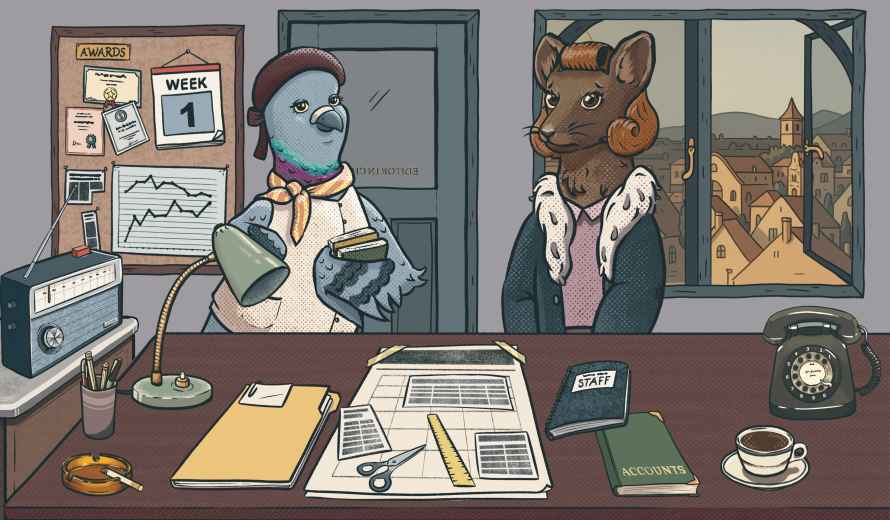
Instead, treat each cycle like routing your party in a tactical RPG:
- At the start of a cycle, open
Newsroom → Board. Pin 3-5 leads: two that match your priority tags, one that pushes a secondary angle, and maybe one “wildcard” that just looks interesting. - Check deadlines and volatility. Some leads are marked with timers or “heat” indicators. Anything about live events, protests, or market crashes will mutate or disappear if ignored. Don’t make my mistake of hoarding these “for later” – they’re designed to branch the story now.
- Decide your cycle goal: Are you trying to raise a faction’s influence, tank a public figure’s approval, or expose a corporate plot? Your goal should decide which leads you publish and how you frame them.
Think of it as building a mini-arc every in-game day: one anchor story that pushes your chosen meta-plot forward, plus side pieces that either support that narrative or open options for future cycles (new sources, new neighborhoods, unlocked mechanics).
Step 3 – The Newspaper Screen Is a Strategic Map, Not Just Flavor
The in-game newspaper is where Media Circus hides its real strategy layer. It’s not just a recap of what you did; it’s how you tell the world what you did, and that version of events is what other factions and story modules will respond to.
When you open Newspaper → Layout after selecting stories for a cycle, pay attention to three things:
- Placement: Front-page headline, sidebar, bottom-of-page, or buried in a small column. The more prominent the placement, the more it shifts public opinion and the more likely it is to wake up or redirect other modules.
- Angle / Tone: Most big stories let you pick from 2–3 angles (“Corruption Scandal Rocks City Hall” vs. “Opposition Launches Witch Hunt”). This choice often toggles different follow-up modules or changes faction relationships without telling you explicitly.
- Links / Callouts: Sometimes you can link related stories together with a callout box or “ongoing coverage” banner. Doing this reinforces a narrative line in the world’s memory, making it easier to continue that thread later.
Here’s the trick I wish I’d internalized earlier: layout is more important than raw “truth.” You can technically expose three different scandals in one cycle, but if you scatter them with weak placement and mixed tone, the game treats it as noise. Concentrate your impact:
- One big front-page story tied to your current meta-plot.
- One or two supportive sidebars reinforcing the same angle or teasing connected modules.
- Optional fluff or human-interest pieces to manage reputation if you’ve been too aggressive.
Any time a layout screen offers a choice and you’re not sure, ask yourself: “Which version of this story creates the most interesting trouble for me later?” Pick that one.
Step 4 – Treat Every Article as a Clue Board
Most players read the in-game paper once, nod, and move on. Media Circus expects you to study it. Articles are where the modular design leaves its fingerprints: names dropped once, off-hand references to districts you haven’t visited, or “expert opinions” from people who later turn out to be central antagonists or allies.
To turn the paper into your personal intelligence network:
- After every cycle, go to
Newspaper → Archiveand skim the last 2–3 editions, not just the current one. You’ll spot patterns you missed in the moment. - Highlight recurring names and entities in your notes. When the same megacorp, lobby group, or anonymous source keeps popping up across unrelated stories, that’s the game nudging you toward a hidden throughline.
- Watch for contradictions. One article calls an event an “accident”; a later op-ed implies sabotage; a leaked memo you uncover says “scheduled maintenance.” Those contradictions usually gate alternative modules you can unlock by publishing a corrective or digging further.
- Use rumors. Some short filler pieces or gossip columns look like jokes, but they often point at optional modules: a bar everyone mentions, a streamer talking about a “blackout,” a meme about a new security drone. Follow those up when you’re between big beats.
If you feel overwhelmed, don’t try to track everything. Pick two or three recurring threads that interest you and follow them deliberately, cycle after cycle. Media Circus rewards focus with deeper, more coherent resolutions.
Step 5 – Common Mistakes (and How to Fix Them Mid-Run)
Because the narrative is modular and the newspaper reacts dynamically, it’s easy to paint yourself into a corner without realizing it. Here are the big pitfalls and what to do if you’re already in them.
- Mistake 1: Chasing every red exclamation mark.
You jump on whatever looks urgent and end up with a scattered mess of half-finished modules.
Fix: At the next cycle start, deliberately pick one storyline to “feature” for 2–3 days. Use your front page and angles to push that thread, and park everything else unless it’s about to expire.
- Mistake 2: Ignoring “small” stories because they don’t look important.
Those short pieces about infrastructure, labor disputes, or local culture often hide the triggers for the game’s biggest late-campaign turns.
Fix: Each cycle, commit to publishing one non-headline story that connects to a faction or district you haven’t explored much. Use it as a scouting tool; see what new leads or NPCs appear afterward.
- Mistake 3: Forgetting that factions read your paper.
You blow up every scandal equally, then wonder why every side hates you and key sources stop talking.
Fix: From Newsroom → Relations, check your faction standings. For one or two cycles, deliberately soften your coverage or give certain groups sympathetic framing to repair bridges. The goal isn’t to be “neutral”; it’s to keep at least one or two power blocs invested in you.
- Mistake 4: Not using the archive.
By mid-campaign, you forget who said what, and the story feels random.
Fix: Build a quick ritual: at the end of each real-world play session, spend five minutes in Newspaper → Archive, skim the last week of in-game editions, and jot down 3–5 bullet points summarizing the major narrative threads you’ve created.
Step 6 – Using Media Circus as a Lab (For Designers, Journalists, and Power Users)
If you’re coming to Media Circus as a narrative designer, games journalist, or just a systems nerd, it’s an excellent sandbox for studying modular storytelling and diegetic UI.
- Play multiple short runs instead of one marathon. On run one, always pick the most sensational angles; on run two, play the cautious, establishment paper; on run three, champion grassroots movements. Keep screenshots or notes of how the paper looks after the same in-game week across runs.
- Diagram modules and their triggers. Every time a new lead appears, note which previous stories it references and where they were placed in your paper. Over time you’ll see patterns in how the game “rewards” certain narrative shapes.
- Study feedback loops. Track how headlines change faction behavior, how that alters the leads you get, and how those leads let you push the next set of headlines. This is the core loop you can steal or analyze for your own projects.
- Pay attention to negative space. Which stories don’t get follow-ups? Where does the system gracefully drop a thread, and how does the paper itself keep your version of events feeling coherent anyway?
Once you see Media Circus as a controlled experiment in modular narrative plus dynamic news, it stops being overwhelming and starts looking like a very talkative design doc you can poke at from the inside.
Wrapping Up – Turning Noise into a Story You Own
Media Circus feels chaotic if you try to “follow the plot” in the traditional sense. The breakthrough comes when you flip that assumption: the game isn’t feeding you a story; you’re authoring one out of modular pieces, and the newspaper is both your tool and your scoreboard.
- Treat leads as discrete modules with tags and implied connections.
- Plan each news cycle around a clear narrative goal, not just urgency.
- Use layout and tone on the newspaper screen as deliberate strategic choices.
- Reread and mine your own paper for clues, contradictions, and recurring names.
- Accept that you’ll miss content—and use that as an excuse to try radically different editorial personas on future runs.
Once you approach Media Circus this way, the same systems that felt overwhelming become the reason to keep coming back. Every new campaign is a chance to see how differently the city, its factions, and its scandals can evolve when you change just a few headlines.
FinalBoss // Gear
Level up your setup
01Top-rated gaming headsetson Amazon→02High-refresh gaming monitorson Amazon→03Gaming chairson Amazon→04Discounted game keyson Kinguin→Affiliate links · As an Amazon Associate, FinalBoss earns from qualifying purchases.
Want to Level Up Your Gaming?
Get access to exclusive strategies, hidden tips, and pro-level insights that we don't share publicly.
Ultimate Guide Strategy Guide + Weekly Pro Tips