
Table of Contents (21)
Why This 2025 Headset Guide Is Different
After spending way too many nights swapping between headsets mid-match, I finally sat down and treated this like a proper test: same games (Valorant, Apex, Baldur’s Gate 3, Helldivers 2), same rooms (quiet office vs noisy living room), same friends on Discord, and a pile of gear from Audeze, Beyerdynamic, Sony, SteelSeries, HyperX, Corsair, Razer, Audio-Technica, Logitech, and AceZone.
The breakthrough came when I stopped asking “What’s the best headset?” and started asking “What’s the best headset for this type of player?” Once I matched gear to player type, the winners became obvious-and a few popular models dropped off my list fast.
This guide is built around that idea: I’ll walk you through the top 2025 headsets by playstyle (audiophile, esports, console, streamer, budget), explain why each one actually works in real games, and point out the traps I fell into so you don’t repeat them.

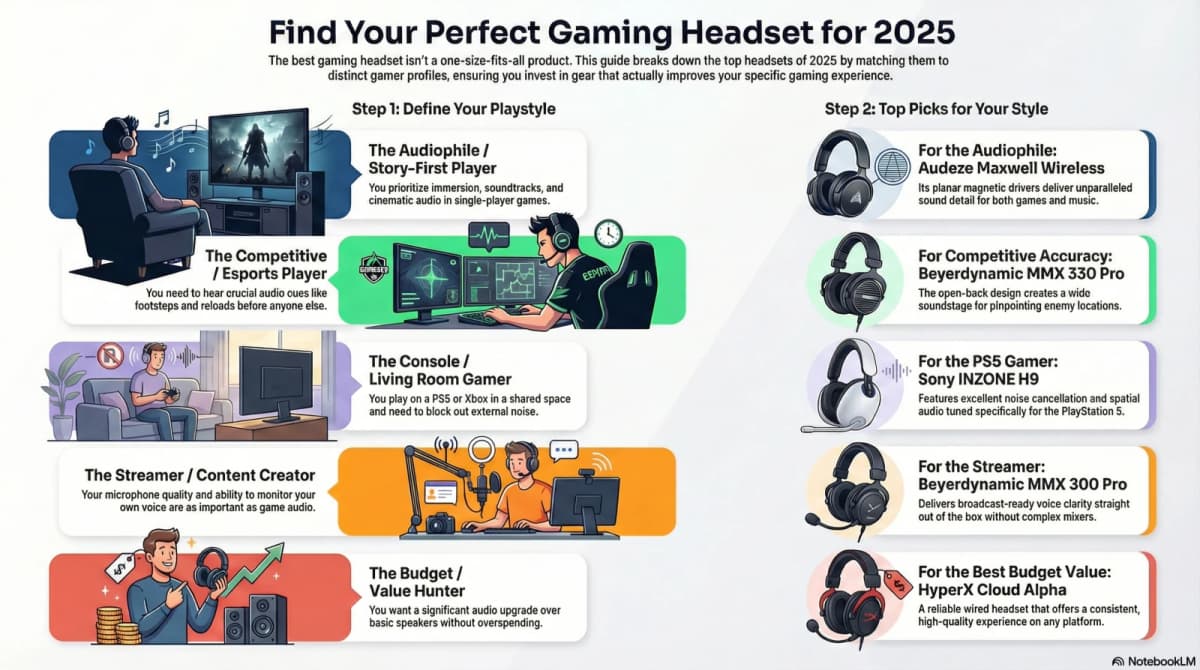
Step 1: Decide What Kind of Gamer You Actually Are
Before you even look at brands, be honest about how you play. When I didn’t, I wasted money on “pro” gear that made no difference in the games I played most.
- Audiophile / Story-first: Single-player epics, RPGs, cinematic games. You care about music, soundtracks, and immersion as much as winning.
- Competitive / Esports: Shooters, battle royales, MOBAs. You care about hearing footsteps, reloads, and positional cues before anyone else.
- Console / Living room: PS5 or Xbox on the couch, shared spaces, TVs, and noise to block out.
- Streamer / Creator: Your mic matters as much as your K/D. You care about clean voice and monitoring your own audio.
- Budget / Value hunter: You want big gains over TV speakers or cheap earbuds without overspending.
Hold that category in your head as you read-because the “best overall” headset on paper is not always the best one for you.
For Audiophiles & Immersion: Audeze Maxwell vs Audio-Technica ATH-M50xSTS
Audeze Maxwell Wireless – The One to Beat for Pure Sound
The Audeze Maxwell Wireless is, in my experience, the best overall gaming headset in 2025. It earns that title the hard way: sound first, gamer features second. Its 90 mm planar magnetic drivers dig out details most gaming cans just smear together-subtle reverb tails in dungeons, positional echoes in shooters, and layered orchestral soundtracks all feel cleaner and more separated than on typical 50 mm dynamic drivers.
Out of the box, the Maxwell has a relatively flat, studio-like profile. That means:
- Explosions still hit hard, but they don’t drown out footsteps.
- Voices stay natural and non-fatiguing during long sessions.
- Music in games actually sounds like a decent pair of audiophile headphones, not a “gamer bass cannon.”
In my tests, it handled everything from Baldur’s Gate 3’s orchestral score to Apex Legends’ chaotic gunfights without needing constant EQ tweaks. The Dolby Atmos support and wide soundstage make it easy to track vertical audio cues—super helpful in games with zip lines, jetpacks, or multi-level buildings.
Build-wise, the spring steel headband is legit. It feels like something you’ll hand down rather than replace next year. Early runs had some QC noise online, but later units I tried were rock solid. Multi-platform support (PC, PlayStation, and Xbox variants) plus LDAC for high-res Bluetooth put it firmly in the “buy once, use everywhere” category.
Get the Maxwell if: you want one headset that can double as your main music pair and your high-end gaming rig, and you don’t mind a premium price for premium fidelity.
Audio-Technica ATH-M50xSTS – Studio Roots, Streamer-Friendly
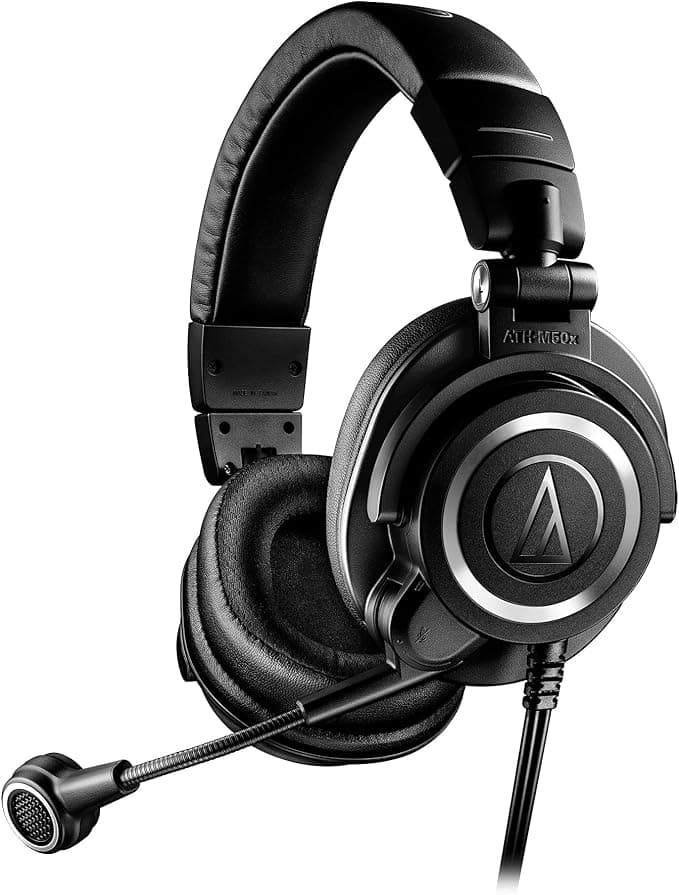
Audio-Technica’s ATH-M50xSTS is basically: “What if we took a studio workhorse and grafted on a proper broadcast mic?” It uses the same style of balanced, studio-grade tuning you’d expect from their classic M50x line—tight bass, clear mids, and crisp highs—then adds a condenser mic derived from their 20-series studio mics.
Compared to the Maxwell, the M50xSTS is wired and more “work” focused:
- Better for plugging straight into an audio interface or mixer.
- Great for monitoring your own stream and in-game audio accurately.
- No wireless freedom, but also no battery anxiety or latency.
If you split your time 50/50 between gaming and content creation and you don’t mind cables, the M50xSTS is a fantastic “do everything” headset that doesn’t hype the sound—or your voice—unnaturally.
For Competitive & Esports: Hear First, Shoot First
Beyerdynamic MMX 330 Pro – Footstep Radar with an Open-Back Edge
The MMX 330 Pro is where my ranked games started to feel unfair (in a good way). Its open-back design and 45 mm drivers create a noticeably wider soundstage than most closed gaming headsets. That extra space makes it easier to place sounds precisely in 3D.
In my Valorant and CS-style testing, the MMX 330 Pro really did what reviewers claim: it excels at pinpointing exact footstep locations in chaotic environments, sometimes better than the Audeze Maxwell. The treble-leaning tuning pushes footsteps, reloads, and glass breaks forward without wrecking dialogue. You trade some bass slam and isolation, but gain freakishly good positional awareness.
The metal adjustment forks and velour pads are classic Beyerdynamic—sturdy and comfortable for long scrim blocks. At around $299, it’s not cheap, but if ranked shooters are your main thing, this is money better spent than on RGB-laden “gamer” sets.
Logitech G Pro X 2 LIGHTSPEED – Tournament-Ready Wireless
When I needed something I could throw in a bag for LANs or play from the couch without worrying about audio delay, the Logitech G Pro X 2 LIGHTSPEED became my go-to. The LIGHTSPEED dongle connection feels effectively instant in practice—rhythm game timing and flick shots lined up just as well as with wired headsets.
Where it shines for esports use:
- Low-latency 2.4 GHz + Bluetooth + wired: easy to swap between PC, console, and mobile.
- Clean, slightly V-shaped sound that keeps footsteps and gunshots distinct.
- Lightweight, robust frame that survived more than a few “I just got one-tapped” desk drops.
If you play competitively but move between setups a lot—tournaments, friends’ houses, living room vs desk—this is a very practical choice.
AceZone A-Spire – LAN-Ready, Noise-Canceling All-Rounder
The AceZone A-Spire surprised me. It doesn’t market as aggressively as the big names, but for mixed environments (noisy apartments, LAN cafés), its combination of 2.4 GHz wireless, 3.5 mm, and Bluetooth plus real active noise cancellation is a life-saver.
At about 289 grams with pleather cushions, it stayed comfortable during multi-hour practice blocks. ANC plus a solid seal let me keep volumes lower while still hearing crucial details. A mobile app for on-the-fly EQ was actually useful—I kept a “Ranked Shooter” preset and a “RPG / Chill” preset and swapped between them as needed.
Think of the A-Spire as the “jack of all trades competitive” pick: not as ultra-precise as the MMX 330 Pro, but far more versatile and travel-friendly.
SteelSeries Arctis Nova 7 & Razer BlackShark V3 – Mid-Range Competitive Heroes
If your budget doesn’t reach the Beyer or Logitech price bracket, these are the two mid-range models I’d actually trust in ranked.
- SteelSeries Arctis Nova 7 Wireless: Low-latency dongle (PC, PlayStation, Xbox variants), warm bassy sound with a treble lift for effects, and a genuinely useful EQ in software. Great if you want a “set and forget” wireless daily driver.
- Razer BlackShark V3: Whether you go wired or wireless, its 50 mm TriForce drivers and THX Spatial modes do a solid job of positional audio on PC. Footsteps are easy to pick out once you dial in an EQ preset you like.
Both are strong “I want to take my games seriously without going full sweatlord” options.
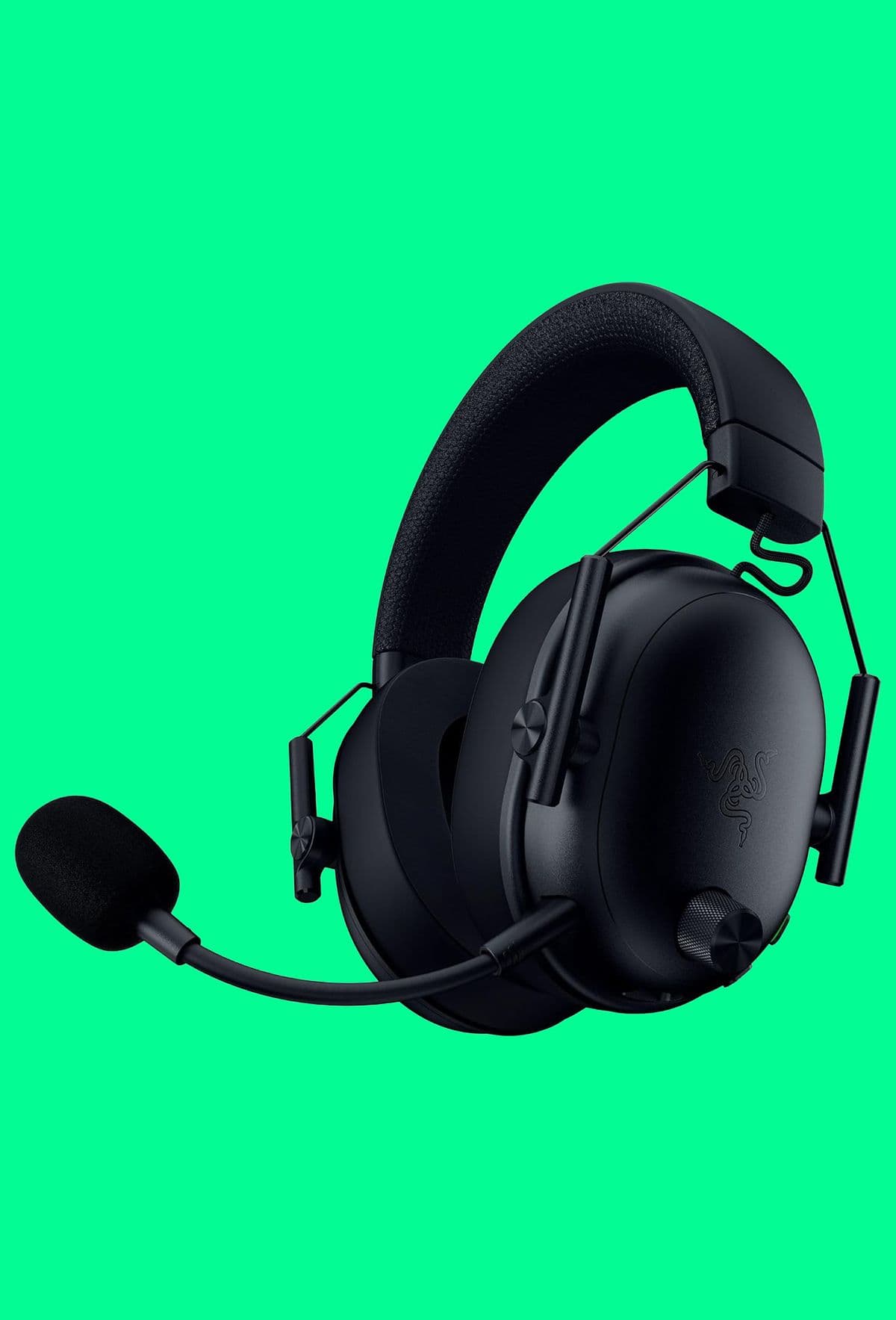
Read our in depth Review of the Razer BlackShark V3
For Console & Living-Room Gamers: Sony INZONE H9 Leads the Pack
Sony INZONE H9 – PS5’s Sweet Spot
If your main battlestation is a PS5 on a TV, the Sony INZONE H9 hits a very comfortable sweet spot. At around $199, it behaves more like a premium Bluetooth ANC headphone that just happens to know it’s a gaming headset.
In my living-room tests, the H9 did three things right:
- Noise cancellation: It genuinely cuts down on TV, fans, and roommates. Not as strong as the best lifestyle ANC cans, but good enough that I could keep the volume moderate.
- Spatial audio tuned for PS5: Sony’s spatial processing makes PS5 exclusives (Horizon, Spider-Man, etc.) feel properly cinematic.
- Comfort: Soft pads and reasonable clamp force made multi-hour sessions feel easy.
Sound quality isn’t at the level of the Maxwell or MMX line, but for the price and feature set, the INZONE H9 delivers exceptional value for PlayStation gamers who want a one-and-done console headset.
If you also game on PC or Xbox, the Arctis Nova 7 or Audeze Maxwell might make more sense, but for PS5-first players, the H9 is hard to beat.
For Streamers & Creators: Your Mic Matters More Than You Think
Beyerdynamic MMX 300 Pro – “Broadcast-Ready” Straight Out of the Box
The MMX 300 Pro is the one I recommend when someone says, “I want my voice to sound professional, but I don’t want to deal with XLR mics and mixers.” Priced around $299, it combines studio-grade drivers with one of the cleanest boom mics I’ve heard on a gaming headset.
The mic picks up detail and clarity more like a small broadcast mic than a typical headset mic. For streamers, that means less post-processing, less noise gating, and fewer “you sound muffled” comments from chat. The audio tuning itself is balanced enough to double for editing VODs or basic audio work.
The only downside: the thick cable. It’s durable, but I definitely noticed it brushing against my shirt at first. I got used to it after a week, but it’s worth knowing going in.
Audio-Technica ATH-M50xSTS – When You Care About Monitoring
I mentioned it earlier for audiophiles, but for creators specifically, the ATH-M50xSTS shines when you want to hear your own mix accurately: your mic level, game audio, music, alerts. Its studio heritage plus the condenser mic from Audio-Technica’s 20-series means it pulls double duty as both your primary cans and your main mic.
If you’re not ready to invest in a separate XLR setup, either the MMX 300 Pro or the M50xSTS will carry your stream for a long time.
Best Budget Picks: Real Upgrades Without Wrecking Your Wallet
HyperX Cloud Alpha – The Safe Wired Bet
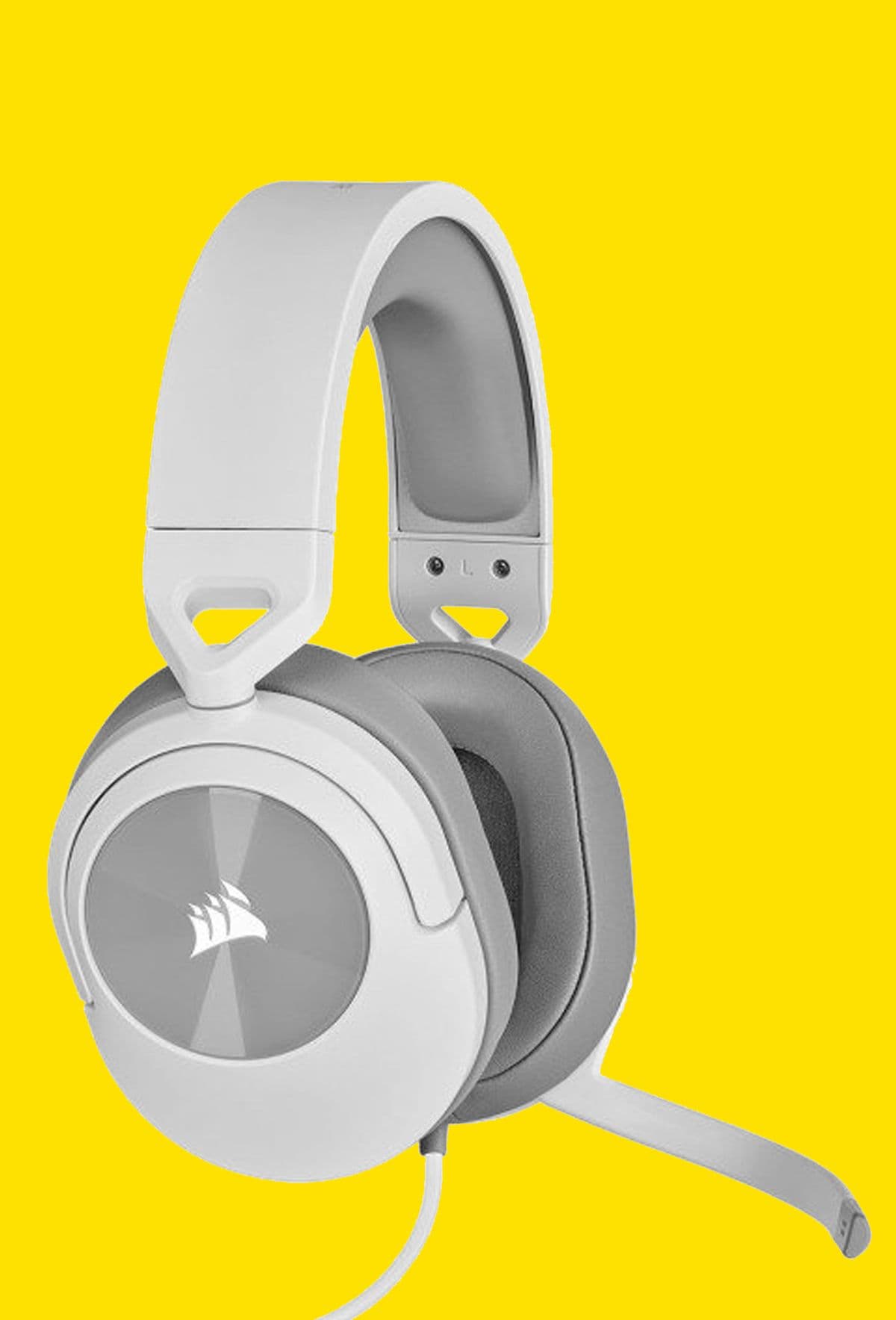
The HyperX Cloud Alpha is still my default answer when someone says “I have a limited budget, I don’t need wireless, what should I get?” Its dual-chamber 50 mm drivers deliver punchy bass without turning everything into a muddy mess, and the detachable mic is more than good enough for Discord and casual streaming.
What I like most is its consistency: whether I plug it into PC, PS5, Xbox, or Switch, it just works via 3.5 mm. No dongles to lose, no firmware updates, no weird compatibility quirks.
Corsair HS55 Stereo – Lightweight, Great Sound for the Price
The Corsair HS55 Stereo is my “surprisingly good” pick. At about 273 grams with memory-foam pads, it’s light and comfortable, and the 50 mm drivers punch way above what its price suggests. Directionality is solid, treble is clean, and bass has enough weight for immersion without drowning everything.
The flip-to-mute mic is simple but practical, and the no-frills design means your money goes into sound and comfort rather than features you’ll never touch.
Razer BlackShark V3 – Budget-Friendly with Serious Features
If you want budget-ish pricing but still crave wireless and spatial tricks, the Razer BlackShark V3 is the one I’d look at. The 50 mm TriForce titanium drivers, THX Spatial audio on PC, and 2.4 GHz plus Bluetooth connectivity make it a versatile option for PC, PS5/PS4, Switch, and mobile.
Just don’t fall into the trap I did: spend a few minutes dialing in an EQ preset in Razer’s software instead of sticking with stock. A small midrange boost and slightly tamed treble made it far less fatiguing for me during long sessions.
Common Mistakes (Don’t Repeat Mine)
- Buying for features, not fit: The best sound is useless if you rip the headset off after an hour. Always check weight (under ~300 g is ideal) and clamp force.
- Ignoring your room: Open-back heroes like the MMX 330 Pro are incredible in quiet rooms, but terrible next to a loud TV or AC unit.
- Trusting “virtual 7.1” marketing blindly: Many headsets sound better with spatial processing turned off and a good stereo mix.
- Overlooking mic quality: If you stream or shot-call in ranked, a clean mic (MMX 300 Pro, M50xSTS, Maxwell) is worth more than RGB and “gamer bass.”
When you get a new headset, run this quick three-step test:
- Positional test: Load into a practice range or bot match and focus only on where sounds are coming from. Can you track someone circling you with eyes closed?
- Comfort test: Wear it for a full match (30–60 minutes) without adjusting. Any hotspot or pressure that early will be torture later.
- Mic test: Record yourself in something like
Voice RecorderorAudacity, then listen back. If you hate how you sound, your teammates will too.
Final Picks: If I Had to Choose Today
If I had to boil all this testing down to quick recommendations:
- Best overall / audiophile: Audeze Maxwell Wireless
- Best competitive accuracy: Beyerdynamic MMX 330 Pro
- Best PS5 living-room headset: Sony INZONE H9
- Best for streamers without XLR: Beyerdynamic MMX 300 Pro or Audio-Technica ATH-M50xSTS
- Best mid-range wireless all-rounder: SteelSeries Arctis Nova 7 Wireless
- Best budget wired: HyperX Cloud Alpha or Corsair HS55 Stereo
- Best budget wireless with extras: Razer BlackShark V3
If you match your headset to your playstyle and environment instead of chasing hype, you’ll feel the upgrade in every match. I went through the trial and error so you don’t have to—pick the category that sounds like you, grab the headset that fits, and you’ll be in a much better spot than I was when I started this whole journey.
FinalBoss // Gear
Level up your setup
01Top-rated gaming headsetson Amazon→02High-refresh gaming monitorson Amazon→03Gaming chairson Amazon→04Discounted game keyson Kinguin→Affiliate links · As an Amazon Associate, FinalBoss earns from qualifying purchases.
Want to Level Up Your Gaming?
Get access to exclusive strategies, hidden tips, and pro-level insights that we don't share publicly.
Ultimate Tech Strategy Guide + Weekly Pro Tips