
After spending a few festivals and a dozen-plus hours with different Media Circus builds, I finally stopped tanking my newspaper every other edition. The breakthrough came when I treated each front page like a timed puzzle instead of just dragging cool headlines around. This guide walks you through the exact steps, layouts, and decision rules I use now to keep readership high, profit steady, and the city only just chaotic enough to be fun.
Table of Contents (18)
How Media Circus Actually Plays (And Why Your First Editions Matter)
Media Circus looks like a silly animal tabloid sim, but under the jokes it’s a tight strategy game about trade-offs. Each edition is basically one sprint where you:
- Assign reporters to stories on the city map
- Pick and tweak headlines in the story pool
- Lay everything out on a 5×8 tabloid grid (40 slots)
- Drop in ads without making readers hate you
- Publish and deal with the factions and fallout
Your first three editions are brutal if you don’t respect them. I kept going full-sensational from edition one and watched my budget and integrity nosedive together. Once that happens, reporters quit, advertisers bail, and you’re stuck firefighting instead of steering the narrative.
So the core idea of this guide is simple: use the early editions to build a stable, neutral foundation, then decide if you want to pivot into chaos, propaganda, or prestige journalism once you’ve got cash and loyal staff to back it up.
Step 1 – Reporter Setup: Win the Edition Before You Even See the Layout
The biggest mistake I made early on was treating reporters as interchangeable icons. They’re not. If you mismatch them to beats, your layout phase becomes a nightmare because all your “big” stories have weak stats.
1.1 Use Affinities, Don’t Fight Them
Open the staff screen with Tab or the top-left button. Hover each reporter and actually read their traits. You’ll see things like:
- Profit +20% on scandal stories
- Integrity +15% on data or investigative pieces
- Speed +30% but “Sloppy Fact-Checking”
What finally worked for me was creating three mental “roles” and sticking to them:
- Profit Hounds – send them to obvious money stories (celebrity drama, luxury events).
- Integrity Nerds – point them at policy, corruption, and data-heavy beats.
- Chaos Gremlins – use them only when you want messy, sensational outcomes.
In the city map, drag each reporter to a zone that matches their role. For example, I send my scandal fox to the docks or nightlife areas, and my owl analyst to city hall and finance districts.
Input tip: Right-click a reporter, choose Investigate [Zone], then confirm with Enter. This is faster than dragging if you’re speed-running editions.
Don’t make my mistake of forcing a high-integrity reporter onto a trashy gossip beat just because they’re idle. The game quietly punishes that with big quality drops, and you feel it later when that story fights for front-page space.
1.2 Deadlines and Chaining: How to Get “Real Journalism” Bonuses
When you pick deadlines, the temptation is to rush everything so you can have more stories to choose from. I did that for a while and ended up with lots of shallow coverage.
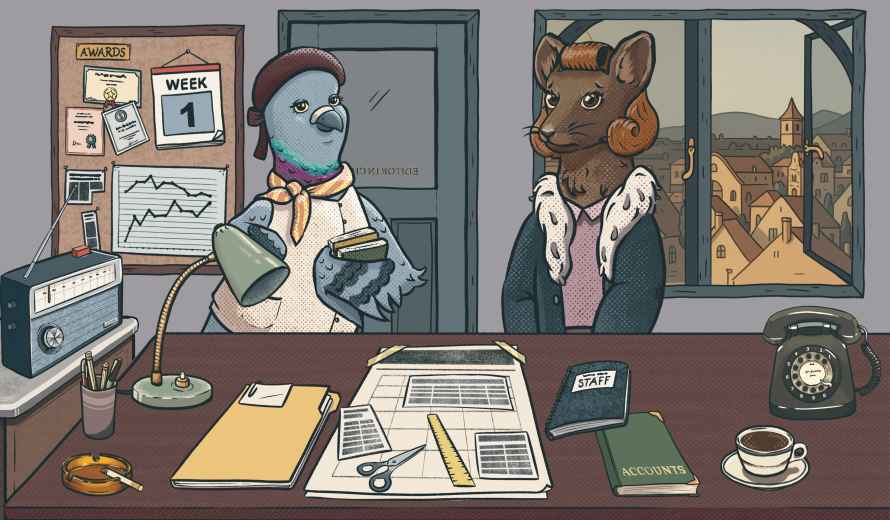
What finally worked was this pattern:
- 1–2 big stories with longer deadlines (higher quality, more impact)
- 3–4 quick hits on short deadlines (filler for side columns and online)
For your main story, chain two reporters:
- Send a chaos or profit reporter first for the scoop.
- When that finishes, assign an integrity reporter to “verify” the same beat.
This unlocks corroborated or “double-sourced” versions of the headline with huge credibility and influence boosts. It takes a couple of editions to get used to the timing, but once you nail it, your front pages feel like actual investigations instead of rumors.
Step 2 – Headline Picking: Start Neutral, Then Lean
Once the stories come in, hit F1 or click the bottom bar to open the story pool. Here’s where I used to blow up my run by going all-in on one faction or mood.
2.1 Build a Safe Core of Neutral Stories
For the first three editions, I always grab at least three neutral or lightly biased stories:
- City infrastructure updates
- Economic trends without obvious blame
- Soft human-interest pieces (well, animal-interest)
Click a story and you’ll see sliders for bias and tone. My rule of thumb early on:
- Keep bias near center for your lead story.
- Let one sub-story lean slightly toward the faction you might support later.
- Reserve heavy bias and propaganda for mid-game when your coffers are healthy.
This keeps your integrity rating from collapsing and stops advertisers from panicking. Once I adopted this, my ad revenue graphs stopped looking like roller coasters.
2.2 Writing Headlines That Actually Move Numbers
Media Circus quietly rewards certain headline shapes. You don’t need to min-max the text, but some patterns clearly do better:
- Short, punchy main headline (under ~30 characters)
- One emotional keyword: “Scandal”, “Exposed”, “Crisis”, “Cover-Up”
- Subheading that names a place or group (“At City Hall”, “Among Dock Workers”)
Click the story, edit the main line, then adjust tone. If you go “Funny” on something genuinely tragic, you’ll spike engagement for a while but anger multiple factions. I save the dark humor tone for editions where I’m intentionally chasing chaos endings.
Tip: If a story already has a high impact score, don’t over-edit it. I wasted time trying to squeeze a few extra percentage points and missed the bigger picture: layout placement and ad balance matter more than the last 5% headline tweak.
Step 3 – Layout That Feels “Real” (and Hits the 50k Readers / $5k Profit Targets)
Hit Spacebar to enter the layout editor. This is where most people freeze the first time. You’ve got a 5×8 grid (40 slots) and you’re trying to cram in main stories, sub-stories, photos, and ads without turning it into a cluttered mess.

3.1 My Basic “Stable Edition” Template
This is the layout that finally gave me consistent 50k+ readership and around $5k profit per edition without disasters:
- Top 2 rows (10–12 slots): One big main headline, one large photo or illustration beside it.
- Middle rows (3–5): Two sub-stories, each with a small image or pull quote.
- Bottom row: 2–3 ads, 1 light feature or teaser.
In grid terms, that’s roughly 60–65% editorial content and 35–40% ads. If you consistently push above 40% ads, you’ll feel it: readers start to distrust you, influence growth slows, and some narrative branches lock out.
Drag each element into place and let it snap to the grid. Hold Shift when resizing to avoid weird aspect ratios, and use Ctrl + Z liberally if a snap goes wrong.
3.2 Heatmap Preview: The Feature I Ignored for Too Long
Press P to preview the page. The game simulates how readers’ eyes move with a simple heatmap. I used to skip this because I felt “done” once everything fit, and that was a mistake.
Look for two things:
- Cold corners – dead zones where important stories are being ignored.
- Overheated clusters – too many high-impact pieces stacked, wasting potential.
If a key story sits in a cold spot, swap it with a lighter piece or shrink an ad. Two or three small tweaks in preview mode often gave me more engagement than adding a whole extra story.
Warning: Don’t stack all your sensational stories in one vertical strip just because it looks dramatic. It’s hilarious once, but it rockets chaos and faction anger at the same time. Save that “all-in” layout for when you’re deliberately chasing destabilized endings.
Step 4 – Picking a Narrative Path Without Bricking Your Campaign
By editions 4–6, you should have a feel for your balance of cash, integrity, and influence. This is when I decide which of three “archetypes” I’m going to lean into.
4.1 Profit-First Tycoon
If my bank balance is low but my integrity is decent, I switch to a profit-focused run:
- Ads at 40% of the page, never more.
- Mostly neutral or mildly positive stories about wealthy factions.
- Target advertisers with fluff coverage to unlock high-paying campaigns.
This path taught me the real-life lesson that safe, centrist coverage sells… but it also slowly freezes your influence. Expect money, not revolutions.

4.2 Chaos and Sensationalism
When I’m bored or want to see the city burn, I intentionally ramp up sensational headlines:
- At least one scandal or crisis story in the main slot every edition.
- Tone slider toward dramatic or humorous inappropriately.
- Layouts that visually emphasize disaster (big photos, red-tinted graphics).
The trick is to survive the backlash. I always keep one fully neutral, almost boring piece in a visible spot as a fig leaf of professionalism. That tiny buffer has saved my integrity meter from bottoming out more than once.
4.3 Integrity-First “Serious Paper”
This is the hardest path early on but the most satisfying. Here’s what I do when I’m aiming for prestige or reformist endings:
- Always chain investigations with verification reporters.
- Refuse obviously fake or propaganda stories, even when money’s tight.
- Keep ad density closer to 30% and favor long-form layouts.
Your profit curve will be slow for a few editions, but by mid-game your influence spreads across factions. Advertisers that respect credibility start appearing, and your staff morale is way easier to manage.
Step 5 – Staff, Morale, and Avoiding the Death Spiral
Almost every failed run I’ve had in Media Circus can be traced back to ignoring morale warnings. Once the newsroom turns sour, quality drops, scoops get missed, and layouts become a struggle because nothing is strong enough to anchor the page.
Open the staff screen regularly and watch for red or orange mood indicators. Here’s what I now do by default:
- After 2–3 tough editions: Buy a cheap perk (coffee, snacks, small party) to reset tensions.
- After a big scandal win: Give bonuses or praise; happy reporters stick around through future mistakes.
- If someone threatens to quit: Either address their complaint immediately or let them go and hire to fill their specific role, don’t just grab a random replacement.
It’s tempting to hoard money for gear upgrades, but a small, regular morale budget pays off way more in story quality and long-term flexibility.
My Go-To Edition Routines You Can Copy
To wrap this up, here are two simple edition “templates” that I now follow almost without thinking.
A. Safe Builder Edition (Great for Early Game)
- Reporter assignments: 1 long investigation, 3 quick neutral beats.
- Headlines: 3 neutral, 1 lightly biased, 1 soft feature.
- Layout: 60–65% content, 35–40% ads, no more than one obviously sensational photo.
- Goal: Increase integrity and steady profit, avoid big faction swings.
B. Controlled Chaos Edition (Mid/Late Game Spice)
- Reporter assignments: 2 scandal beats, 1 verification, 2 fillers.
- Headlines: 2 strongly biased/sensational, 2 neutral, 1 faction-pleaser.
- Layout: One huge main story with aggressive tone, but keep ad ratio in check.
- Goal: Shake up the city, push a narrative arc, but keep enough “respectable” coverage to survive the blowback.
If you run a Safe Builder edition every time your finances or integrity wobble, and only drop Controlled Chaos when you have momentum, you’ll see far more endings and spend a lot less time in unrecoverable spirals.
Stick with these principles for a few campaigns and you’ll feel Media Circus click: the layouts start to make instinctive sense, your staff work with you instead of against you, and every front page becomes a deliberate choice about what kind of world you’re building-just like a real newsroom, only with more lizards and birds yelling at each other.
FinalBoss // Gear
Level up your setup
01Top-rated gaming headsetson Amazon→02High-refresh gaming monitorson Amazon→03Gaming chairson Amazon→04Discounted game keyson Kinguin→Affiliate links · As an Amazon Associate, FinalBoss earns from qualifying purchases.
Want to Level Up Your Gaming?
Get access to exclusive strategies, hidden tips, and pro-level insights that we don't share publicly.
Ultimate Guide Strategy Guide + Weekly Pro Tips