
Table of Contents (13)
Why the GTA 6 Map Matters (and What We Actually Know)
Spend a bit of time pausing GTA 6’s trailers frame-by-frame and the scale of Leonida starts to hit you. This isn’t just “GTA V but bigger” – the whole layout changes how you’ll move, fight, and make money. If you want a gta 6 map – complete breakdown of vice city, leonida, and all confirmed locations, it helps to think like a player planning their first 20-30 hours, not just a tourist staring at a pretty map.
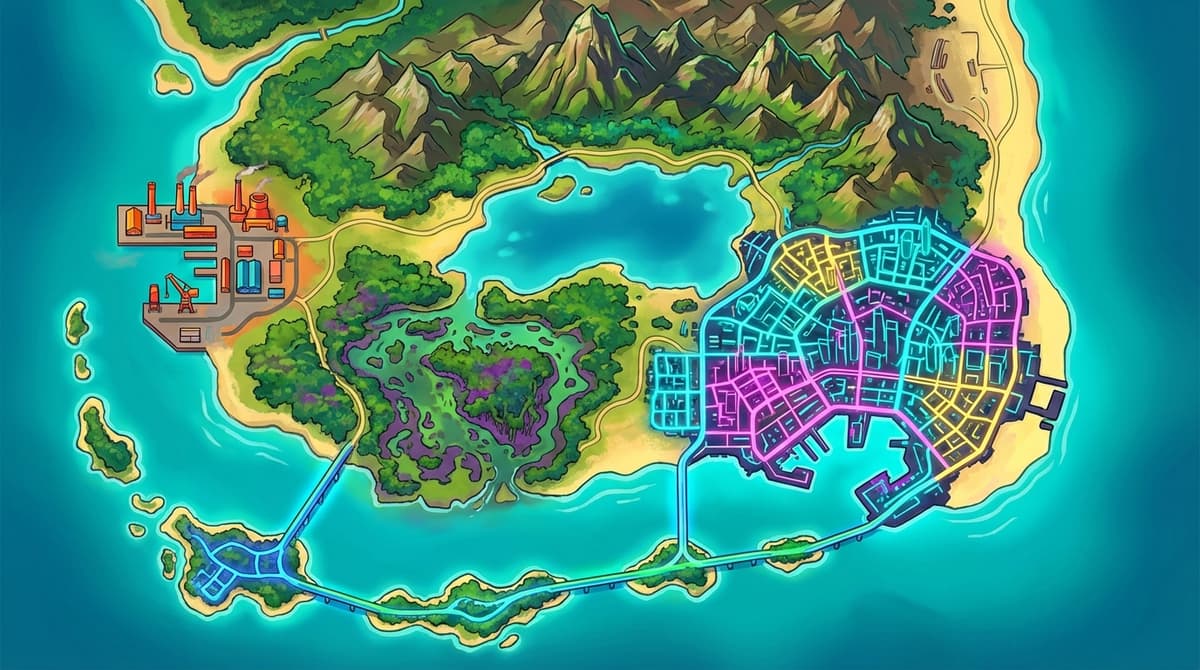
Rockstar has confirmed the setting as the state of Leonida (a clear Florida stand-in) with Vice City as its neon urban core. Official footage and signage point to at least six major regions: Vice City, the Leonida Keys, Grassrivers, Port Gellhorn, Ambrosia, and Mount Kalaga National Park. Community mapping projects that line trailer shots up with real-world Florida put Leonida at roughly twice the land area of GTA V’s Los Santos and Blaine County combined, with far more water and interiors layered on top.
This guide breaks that down in practical terms: how big Leonida really is, what each region looks built for, and how you can use that knowledge to plan routes, heists, and general chaos once you’re finally dropped into the world.
How Big Leonida Is Compared to GTA V (and Why It Changes Everything)
Based on current estimates from detailed fan reconstructions, Leonida sits around the 150 km² mark – roughly double GTA V’s ~75 km². On its own, “2x bigger” just sounds like a marketing bullet point, but several details matter for actual gameplay:
- Much more water: Between the Leonida Keys, a huge central lake, and the ocean, a big chunk of usable space is aquatic. Boats and potentially aircraft aren’t “optional toys” anymore; they’re core transport.
- Hundreds more interiors: Asset counts from official material suggest on the order of 700+ enterable buildings across the map, compared to roughly 200 in GTA V. That means more places to duck into, loot, or fight through during chases.
- Higher verticality: Downtown Vice City high-rises, bridges, and a proper mountain range at Mount Kalaga mean you’re not just moving across the map, but also up and down it much more often.
- Region diversity: Dense city, resort islands, swamps, ports, and national park wilderness all packed into one map. Each biome pushes you toward different vehicles and tactics.
If you played GTA V like “drive anywhere in a supercar and you’ll be fine,” that mindset will punish you in Leonida. A sensible approach is to treat each region almost like its own mini-sandbox with preferred tools and escape routes, then learn the connections between them.
Vice City – The Neon-Drenched Urban Core
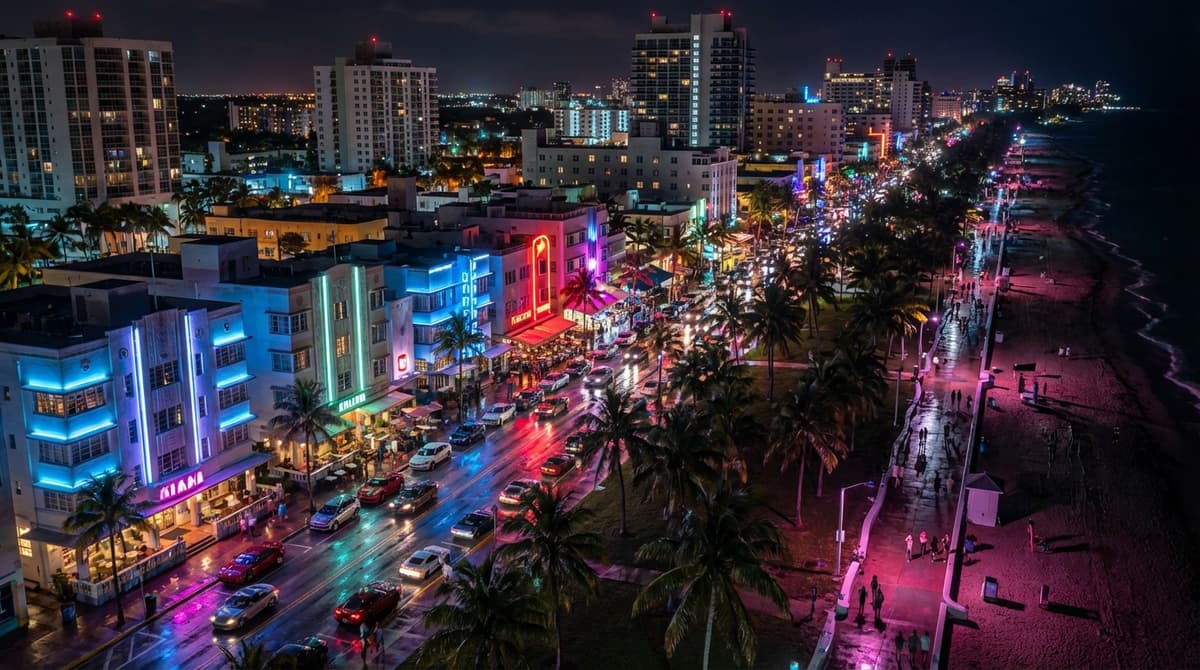
Vice City is the star of the show and easily the densest part of the map. Trailers linger on its beachfront boulevards, stacked skylines, and packed nightlife strips for a reason: this is where you’ll spend a huge chunk of your early game learning how Leonida “flows”.
Beaches, Ocean Drive-Style Strips, and Tourist Chaos
The classic pastel beachfront – clearly inspired by Miami’s Ocean Drive – looks built for high-speed chases and quick-hit crimes:
- Long, straight roads: Perfect for testing out your fastest cars and bikes, but also ideal for police roadblocks and spike strips.
- Crowded sidewalks: Lots of pedestrians and parked cars give you improvised cover when you need to break line of sight.
- Beach access: Trailers show sand, piers, and watercraft right off the main drag. Expect easy transitions from car chases to jet-ski or boat getaways.
A smart early-game habit will be to learn two or three “default” escape lines that take you from the crowded beachfront into either quieter residential streets or out toward the bridges to the Keys. The temptation will be to keep flooring it along the coast, but cops have just as much straight-line advantage there as you do.
Downtown High-Rises and Rooftop Routes
Move inland and Vice City turns into a dense downtown core with towering high-rises, multi-lane highways, and big civic landmarks. Two things stand out from the footage:
- Vertical interiors: Many buildings are not just enterable but layered with multiple floors, stairwells, and (almost certainly) elevators. That’s a huge change from GTA V’s mostly flat interiors.
- Multi-level roads: Overpasses, underpasses, and complex junctions give you lots of chance to shake pursuers if you know where ramps and alley exits are.
Once you’re in-game, it will be worth spending a session just driving slowly through downtown and mentally marking:
- Parking garages or construction sites that connect street level to rooftops.
- Service alley networks that let you cut under major roads.
- Any interior clusters (malls, office blocks) you can duck into during a wanted chase.
Think of this as the “parkour” half of Vice City – the more exit paths you know that aren’t just straight roads, the more room you have to improvise when things go loud.
Airport and Port District: Your Global Gateways
Like every modern GTA, Leonida appears to feature a large airport complex and a busy commercial port stitched onto Vice City’s edges. Even just from a map-planning point of view, these areas are crucial:
- Airport: Wide runways and hangars give you open spaces for plane thefts, stunt challenges, and long sightlines for shootouts. They’re also natural hubs for smuggling and high-stakes missions.
- Port: Stacks of containers, cranes, and dockside warehouses turn the port into a vertical maze. Perfect for stealthy infiltrations early on and full-auto chaos later.
If GTA 6 follows Rockstar’s usual logic, expect important story beats and repeatable money-making opportunities clustered in these transport hubs. Plot at least one fast-ish driving route from your main safehouse to each of them once you’ve revealed the map.
Beyond the City: Leonida’s Major Regions Explained
Leave Vice City proper and Leonida opens up fast. Location names like Leonida Keys, Grassrivers, Port Gellhorn, Ambrosia, and Mount Kalaga National Park show up on road signs, in-game branding, and UI snippets in official material, and each clearly leans into a different style of play.
Leonida Keys and Lake Leonida – Water and Smuggling Playground
South of Vice City sits a chain of tropical islands linked by long bridges – the Leonida Keys – with a huge inland lake acting as a central watery hub. Compared to GTA V’s mostly decorative ocean, this region looks built as a full-blown playground:
- Plenty of marinas, docks, and beaches for spawning and storing boats.
- Island compounds and luxury mansions that scream “late-game heist targets”.
- Bridges that double as stunt ramps and chokepoints during pursuits.
Because water slices through the middle of the map, expect a lot more situations where the optimal “escape car” is actually a boat stashed just off a bridge or behind a beach house. Treat the Keys and the lake as your second road network, not just sightseeing.
Grassrivers – Swamps, Airboats, and Wildlife
Grassrivers is Leonida’s swamp zone, clearly inspired by the Everglades. Official footage shows airboats weaving through mangroves, mud tracks instead of paved roads, and plenty of alligators and other wildlife.
This is the region where your usual supercar habits will hurt the most. Shallow water, mud, and narrow channels mean:
- Off-road vehicles and airboats are mandatory if you don’t want to bog down constantly.
- Line of sight is short, so stealth and ambushes matter far more than in the wide-open desert of GTA V.
- Wildlife can become both a threat and a tool – luring enemies into gator-infested water is very much on the table if Rockstar leans into it.
When planning routes that cross Leonida west-to-east, don’t assume a straight road across Grassrivers will be the fastest. Sometimes going around via highways and bridges will be quicker than fighting the terrain.
Port Gellhorn and Ambrosia – Industrial Combat Zones
Port Gellhorn appears to be a massive shipping and industrial hub, while Ambrosia leans more into factories, rail yards, and heavy industry. Visually, these regions are all cranes, gantries, smokestacks, and tracks – lots of hard cover and dangerous explosive props.
- Port Gellhorn: Expect missions involving container ship raids, truck hijacking, and smuggling. From a pure gameplay angle, those container stacks are perfect for cat-and-mouse firefights and multi-layered stealth routes.
- Ambrosia: Rail lines, warehouses, and machinery make this a natural home for train robberies, convoy ambushes, and close-quarters shootouts inside industrial buildings.
Players who like heavier, cover-based combat should get comfortable here. Once you understand the common choke points (yard gates, rail crossings, dock entrances), you can turn what looks like a mess of metal into a series of reliable traps.
Mount Kalaga National Park – Off-Road and Sniper Heaven
To the north, Mount Kalaga National Park gives Leonida its big vertical anchor, similar to what Mount Chiliad did for GTA V – just larger and more rugged if current estimates are right.

- Winding mountain roads for drift runs and risky deliveries.
- Off-road trails perfect for dirt bikes, ATVs, and 4×4 trucks.
- Cliffside lookouts and fire towers that double as sniper perches or meeting points.
Kalaga is also likely where Rockstar hides a lot of longer-form side content: hiking or photography challenges, hunting-style activities, or remote safehouses. It’s the opposite extreme of Vice City’s tight grid – plan for slower, deliberate movement rather than quick zip-around sessions.
Smart Ways to Explore Leonida in Your First Hours
Even before touching the game, the map layout already suggests some solid exploration patterns that should translate well once GTA 6 is in your hands, based on how Rockstar structured GTA V and Red Dead Redemption 2.
- Do one “ring road” drive early: As soon as the game lets you roam, take a reliable car and do a wide loop: Vice City → Keys bridge → a slice of Grassrivers → industrial belt → foothills of Mount Kalaga → back to the city. You won’t hit everything, but you’ll anchor where each biome sits relative to your home base.
- Mentally tag transition points: Bridges, major junctions, ferry docks, and highway interchanges are more important in Leonida than in Los Santos. Those are your “network nodes” for both quick travel and emergency escapes.
- Build region-specific garages: Instead of hoarding every vehicle in one place, keep a fast street car in Vice City, boats in the Keys, off-roaders near Grassrivers, and a dirt bike or truck near Kalaga. You’ll spend less time fighting terrain and more time doing missions.
- Experiment with water shortcuts: Any time you see a road that hugs the edge of the lake or Keys, ask yourself if a boat would cut that trip dramatically. As you unlock more cash and property, investing in a “mobile base” yacht or houseboat will probably pay off.
- Use the map legend aggressively: Once you have access to the full
Mapmenu, spend a couple minutes toggling icons and learning how Rockstar categorises bus stops, ports, and special activity markers. That quick familiarity pays dividends later when you’re under pressure.
Most players will naturally drift toward Vice City and stay there for too long. The sooner you force yourself into the swamps, the Keys, and the mountains, the faster you’ll unlock the full range of vehicles, activities, and money-making routes Leonida supports.
What to Expect as GTA 6 Evolves
Rockstar has a long history of expanding their worlds post-launch, and the shape of Leonida makes that almost a given. Unmapped northern or western edges, offshore platforms, or extra Keys-style islands are all obvious candidates for later expansions or online updates.
For now, though, the confirmed skeleton is already huge: a Vice City that can rival or beat Los Santos in density, a web of islands and waterways that make boats genuinely important, swamps that punish lazy vehicle choices, and a mountain park that anchors everything with vertical challenge.
If you go in thinking of Leonida as a set of interconnected regions rather than just “one big map”, you’ll be a step ahead. Learn what each area is trying to push you toward – high-speed city chases, stealthy swamp ambushes, industrial shootouts, or off-road exploration – and you’ll squeeze far more fun and efficiency out of GTA 6’s massive new playground.
FinalBoss // Gear
Level up your setup
01Top-rated gaming headsetson Amazon→02High-refresh gaming monitorson Amazon→03Gaming chairson Amazon→04Discounted game keyson Kinguin→Affiliate links · As an Amazon Associate, FinalBoss earns from qualifying purchases.
Want to Level Up Your Gaming?
Get access to exclusive strategies, hidden tips, and pro-level insights that we don't share publicly.
Ultimate Guide Strategy Guide + Weekly Pro Tips