
The useful part of Strauss Zelnick’s latest GTA 6 explanation is not the delay itself. Everyone already understood that a game this large slipping into November 2026 was possible. The interesting part is that Take-Two’s CEO chose to frame the delay as a labor decision, not just a quality decision. In other words: this is no longer just “we need more time.” It is “we need more time because we are not supposed to finish this game the old Rockstar way.” That is a much bigger claim, and it deserves more scrutiny than a clean executive soundbite usually gets.
In a recent interview, Zelnick said delaying a launch is sometimes necessary because crunch is not part of how Take-Two operates today. He paired that with a college analogy: do your homework, do not pull an all-nighter. The message is obvious. If planning is disciplined enough, overtime should not be the emergency lever that gets pulled at the end. That sounds reasonable. It also lands awkwardly when attached to Rockstar, a studio whose public reputation on working conditions did not come out of nowhere.
Table of Contents (6)
This is Take-Two trying to turn a delay into evidence of cultural reform
Most outlets will stop at the headline version: GTA 6 was delayed to avoid crunch. That is true as far as it goes. The more important reading is that Take-Two is using the delay as proof of a management philosophy. Zelnick is not merely explaining a schedule change. He is presenting the schedule change as evidence that the company has matured past a development model that once seemed baked into Rockstar’s identity.
That matters because GTA 6 is not just another release on the slate. It is the most heavily scrutinized AAA production in the business, likely the most expensive game launch cycle in the industry, and the kind of project that exposes whether corporate values survive first contact with blockbuster pressure. If Take-Two can say “we delayed the biggest game in the world rather than force the team through the wall,” that becomes a powerful line for investors, press, and future recruits. It is reputationally valuable in a way “we needed more polish” simply is not.
There is also a practical reason to choose this framing now. GTA 6’s budget has been discussed in almost mythic terms, with reporting and estimates placing it in the billion-dollar conversation. Zelnick himself has described the project as a high-stakes play requiring massive resources. Once numbers like that enter the public imagination, so does the assumption that somebody, somewhere, is paying for the ambition in exhausted weekends. Saying the delay was partly about avoiding crunch is an attempt to get ahead of that assumption.
The problem is Rockstar’s history makes this a claim, not a settled fact
This is where the polished executive answer runs into institutional memory. Rockstar has spent years carrying baggage around labor conditions. The most widely cited flashpoint remains the reporting around Red Dead Redemption 2, when comments about “100-hour weeks” became shorthand for the studio’s crunch culture, whether management liked that summary or not. Since then, Rockstar leadership has talked about change. Some former and current employees have described improvements compared with earlier eras. But “improved from before” and “crunch is not part of how we operate today” are not identical statements.
That distinction is the part PR would prefer stayed blurry. A delay can reduce overtime pressure. It does not automatically prove the absence of overtime, nor does it tell outsiders how that pressure is distributed across internal teams, support studios, QA, outsourcing partners, or regional offices. Background reporting around Rockstar-linked labor concerns has not fully disappeared, and some allegations involving overtime in parts of the wider production network have continued to surface. Take-Two has every incentive to deny a return to old habits. The public still lacks the level of transparency that would let anyone verify the claim with confidence.

That does not mean Zelnick is lying. It means the statement should be treated as a strategic claim from management, not as independently confirmed closure on Rockstar’s labor story. Those are different things, and the industry routinely pretends they are the same.
The “homework, not all-nighter” line sounds neat, but AAA development is rarely that neat
Zelnick’s college analogy is clean enough to survive a headline, which is probably why he used it. The problem is that giant open-world game production does not work like a semester calendar. Games like GTA 6 are not delayed because somebody forgot to manage a deadline in week ten. They slip because modern AAA development is a collision between scale, iteration, technical instability, content ambition, platform optimization, certification, and the entirely predictable fact that creative teams keep changing things after discovering what does and does not work.
That is not a defense of crunch. It is exactly why avoiding crunch is hard. Better planning helps. More time helps. Stronger project controls help. But every executive in games talks like crunch is what happens when people fail to organize a spreadsheet. In reality, crunch often comes from structural incentives: massive marketing commitments, investor expectations, immovable fiscal windows, cross-studio dependencies, late-stage bug avalanches, and the simple refusal to cut scope until the calendar is already on fire.
So if Take-Two wants credit for using delay as a health measure, fine. That is preferable to forcing the plane to land with one wing missing. But the real test is not whether management can describe crunch as preventable in theory. It is whether Rockstar was empowered to move a launch with enough lead time to materially change working conditions in practice. Those are not the same standard.

There is also a financial subtext: delay is cheaper than burnout on a game this large
Take-Two’s public line is moral. It is also operationally rational. A project the size of GTA 6 cannot afford attrition, morale collapse, or quality failures caused by exhausted teams. Crunch is not just a labor issue; it is a production risk multiplier. Bugs get missed. Rework increases. Senior staff burn out or leave. Coordination gets worse, not better. On a release this large, each of those failures becomes expensive fast.
That is why the “delay versus crunch” framing is not some noble act detached from business logic. It is business logic. If GTA 6 is the cornerstone release that many analysts assume it is, protecting the people building it is not charity. It is asset protection. Again, that does not make the decision bad. It just strips away the halo. Companies do not suddenly discover humane scheduling in the final act of a multi-billion-dollar production because they found inner peace. They do it because the alternative is messy, expensive, and visible.
There is a historical pattern here. The industry loves to treat delays as either incompetence or benevolence, when they are usually a mix of risk management, unfinished work, and political messaging. CD Projekt’s Cyberpunk 2077 delay cycle ended with mandatory crunch anyway. Other publishers have delayed major games and still shipped with reports of brutal final months. A delay is helpful. It is not a vaccine.
The question Take-Two still has not really answered
If I were in the room, the follow-up would be simple: what concrete safeguards now exist at Rockstar to prevent crunch beyond moving the date? Not the slogan. Not the campus analogy. The mechanisms. Are overtime caps enforced? How is workload tracked across support studios? How much authority do team leads have to cut features? What happens when milestones slip? Are contractors and external partners covered by the same standards management is invoking publicly?
Those questions matter more than the quote because they determine whether this is a structural change or a well-timed narrative. Without those answers, outsiders are being asked to accept the conclusion without seeing the operating model underneath it.
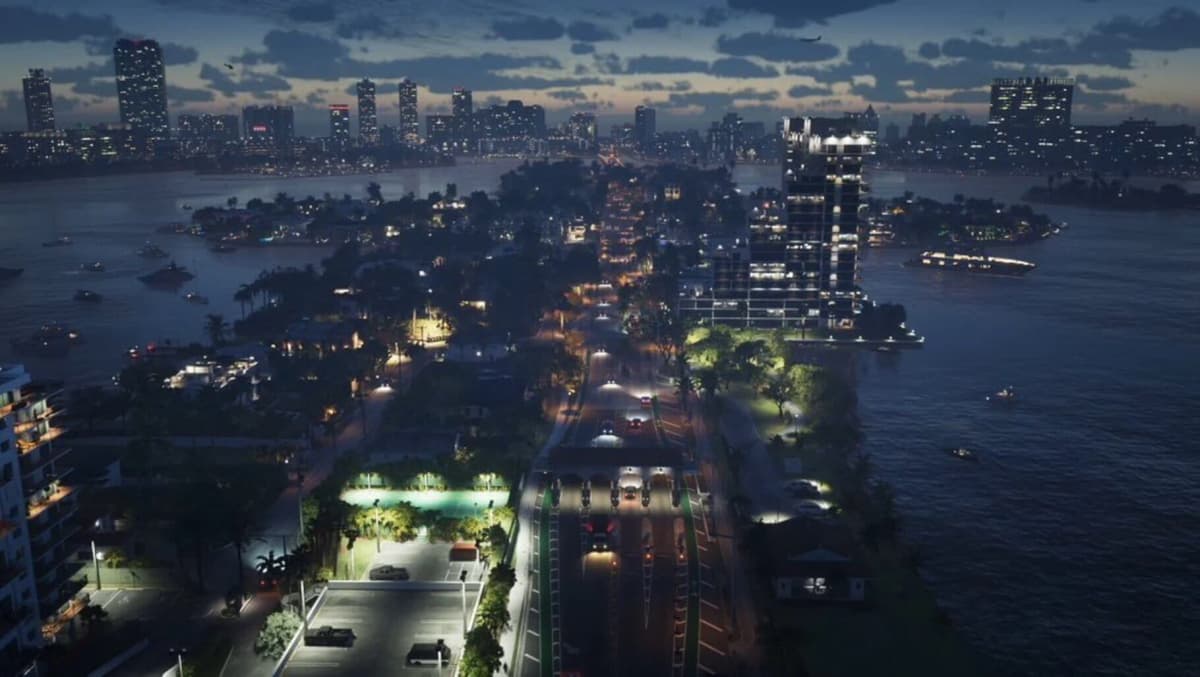
- A delay can reduce crunch risk, but it does not prove crunch has been eliminated.
- Rockstar’s labor history means Take-Two’s claim carries credibility baggage by default.
- The bigger story is not the slip to November 19, 2026. It is Take-Two wanting that slip read as evidence of cultural change.
- The real test will be whether post-launch reporting from employees matches the executive line.
What to watch before November 19, 2026
The first thing to watch is whether Take-Two and Rockstar keep the date locked now that they have tied it to a healthier production runway. If the game slips again, the “homework, not all-nighter” framing gets harder to sustain, because it suggests either the planning was still off or the scope remains unstable enough that more time still is not enough.
The second is whether employee reporting, formal or informal, supports the line that crunch is no longer part of the process. That will tell you more than any investor call. Big publishers can script a message. They cannot fully script what leaks out of a production this large over time.
The third is how the rest of the marketing campaign behaves. If Rockstar starts running an aggressive, inflexible countdown with the usual blockbuster tempo, then the pressure pipeline at the studio gets worth watching again. The closer a company binds itself to a public release machine, the harder it becomes to absorb internal slippage without somebody eating the cost.
Zelnick may well be right that delaying GTA 6 was partly about avoiding crunch. The mistake would be treating that statement as the end of the labor conversation. It is the beginning of a new version of it, one where Take-Two is no longer just defending a delay. It is asking to be believed that Rockstar has changed.
FinalBoss // Gear
Level up your setup
01Top-rated gaming headsetson Amazon→02High-refresh gaming monitorson Amazon→03Gaming chairson Amazon→04Discounted game keyson Kinguin→Affiliate links · As an Amazon Associate, FinalBoss earns from qualifying purchases.
Want to Level Up Your Gaming?
Get access to exclusive strategies, hidden tips, and pro-level insights that we don't share publicly.
Ultimate Gaming Strategy Guide + Weekly Pro Tips