
Table of Contents (12)
Drinking Formaldehyde and Missing a Kid’s Tooth: How Zero Parades Sold Me on Failure
The moment Zero Parades clicked for me was right after I failed to punch a kid in the mouth.
Not in a cool, hard-boiled-spy kind of way either. I’d just chugged a medical jar of formaldehyde on the advice of a deeply suspect doctor, backed myself into threatening a child with a pry bar, rolled the dice on an intimidation check… and whiffed it. My supposedly dangerous operative, Hershel “Cascade” Wilk, wound up landing a limp, awkward hit that didn’t even knock out the tooth I was angling for.
It was pathetic. It was darkly hilarious. And it was the exact moment I stopped worrying about “playing well” and started trusting Zero Parades’ systems to make my screw-ups more interesting than any clean success.
This preview build – split between the public Steam Next Fest demo (available until April 17) and an extended session at GDC – makes something very clear: Zero Parades is testing what it means to fail in a CRPG. Instead of punishing you for every bad roll, it nudges you to push your luck, burn your mental reserves, and live with the fallout. The result is a spy thriller where collapsing under pressure can be just as rewarding as keeping it together.
Key Takeaways
- Failure is intentionally frequent and fun – bad rolls create new scenes, jokes, and quest branches instead of hard blocks.
- Three “pressure” bars (Fatigue, Anxiety, Delirium) let you exert yourself for better odds… at the cost of long-term stability and even skills.
- Skills are grouped into Action, Relation, and Intellect, with fewer individual stats than Disco Elysium to reduce choice paralysis.
- Pressures rise from exertion and from social humiliation, turning mental strain into a core gameplay resource, not a background meter.
- Even when I failed constantly, I rarely felt stuck — the game leaned into my disasters and spun them into memorable moments.
- Writing already shows sharp humor and strong character voice, though some voice acting and balance feel early and unpolished.
- It’s unapologetically in Disco Elysium’s lineage, but the espionage setting and exertion system give it its own identity.
- No release date yet, but on PC it’s already one of the most promising experimental CRPGs on the horizon.
Porter Firo, One Very Broken Spy, and a Lot of Regret
Zero Parades is a narrative-heavy CRPG about being the worst person in the room who still has to save the day.
You play as Hershel Wilk, codename Cascade — a disgraced operative who very obviously messed something up five years ago. You’ve been on ice since, and when the game begins you’re dumped back into the field in the coastal city of Porter Firo with almost no idea what you’re supposed to be doing.
Everyone else knows more than you. Your handler, Pseudopod, is passed out in a swamp of substances and bad decisions. Your old colleagues have strong opinions about how badly you burned them. And Porter Firo itself has that lived-in, sideways sort of logic that fans of Disco Elysium will recognize: people arguing about music formats, trading bizarre items, and treating your spy drama like just another Tuesday.
The immediate goal in the demo is simple on paper: track down leads, wake up your handler, and figure out what the hell you did five years ago. In practice, it’s a mess of:
- Scraping through dingy apartments and clinics for anyone willing to talk.
- Bluffing your way through bureaucratic and medical jargon you barely understand.
- Juggling the social fallout from your past betrayal — and your present incompetence.
What struck me right away isn’t just that Cascade is a screw-up; it’s that the game encourages you to lean into that. The whole design is built around playing a mentally fraying operative whose best tools are both his training and his ability to keep pushing long after he should have stopped.
Skills, Pressures, and Why Exerting Yourself Feels Dangerous
Under the hood, Zero Parades runs on a familiar CRPG skeleton: you level up, you get skill points, you invest them to improve your odds on checks. The twist is how aggressively it asks you to strain yourself for just one more die.
Your skills are divided into three broad faculties:
- Action – physical and practical competencies; the things you do with your body and gear.
- Relation – social skills, empathic reads, manipulation, and conversational instincts.
- Intellect – analysis, deduction, memory, and all the quiet thinking that keeps a spy alive.
Compared to Disco Elysium’s sprawling web of skills, this is leaner. Personally, I prefer it this way. In Disco, I’d sit on the character screen paralyzed, agonizing over whether I needed one more point in some esoteric internal voice that might only fire once in 30 hours. In Zero Parades, your build is still meaningful, but the game seems much more interested in what happens when you press that build past its limits.
That’s where the three “pressures” come in:
- Fatigue – the cost of pushing your body too far.
- Anxiety – the mental weight of social risk, humiliation, and paranoia.
- Delirium – the destabilizing edge of altered states, overthinking, and creeping unreality.
Whenever you face a skill check, you see your base odds. They’re often not great. So the game tempts you: exert yourself. Spend some of your mental stability to improve your roll. This isn’t some abstract modifier; you’re literally agreeing to jack up one of those three pressures in exchange for more dice and a better chance to succeed.
The crucial part is that pressures don’t just come from you clicking “exert”. They also rise when you embarrass yourself publicly, get frightened, or push lines too far in conversation. It’s a feedback loop between how brazenly you play and how shredded your character becomes.
Hit certain thresholds and those pressures bite back. Stack too much of one type and you can actually lose a related skill point — your exhaustion and stress quite literally making you worse at the things you rely on. Push even further and, yes, you can die.
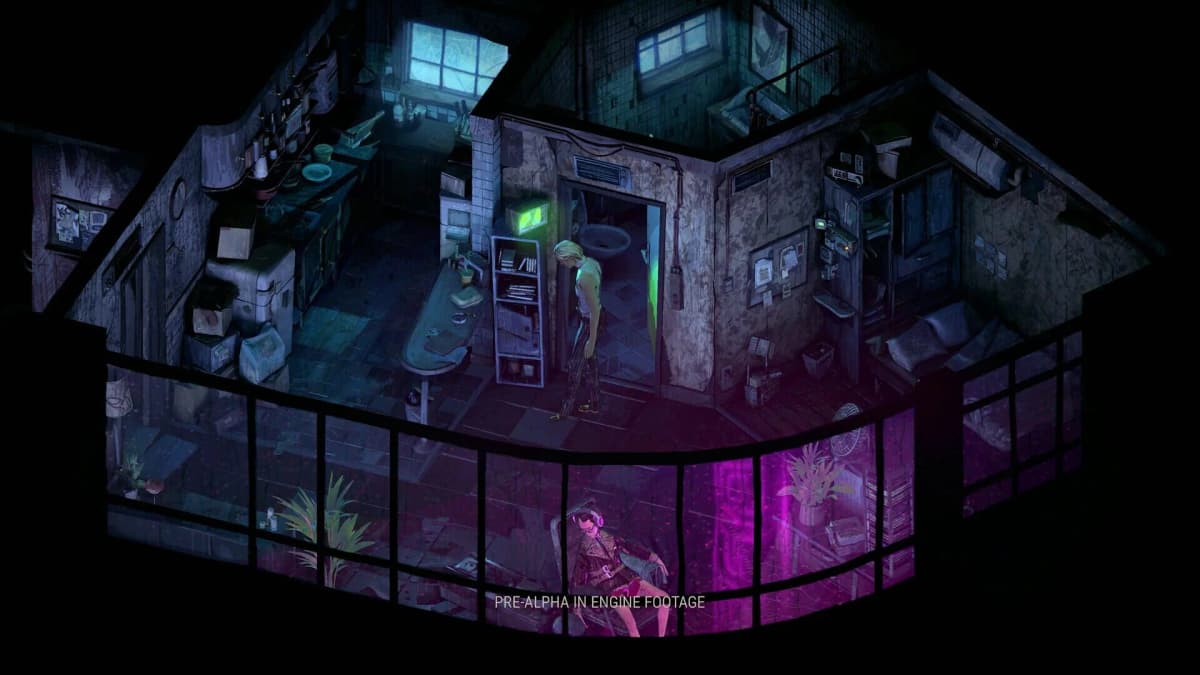
In theory, that sounds like a classic risk–reward seesaw. In practice, it feels like the game whispering, “Go on. Blow yourself up a little. The fallout will be interesting.”
Failing Upwards: When Bad Rolls Make the Best Stories
Most CRPGs say they embrace failure, but then quietly punish you for it. You miss the crucial persuasion check and the questline locks. You fail a combat roll and suddenly you’re slogging through a reload. That tension is part of the genre, but it teaches a very clear lesson: save-scumming is safety.
Zero Parades still lets you save, obviously, but its systems are tuned to make you feel almost reckless if you overprotect yourself. I went into the demo with my usual “optimize everything” mindset: placing skill points carefully, exerting only when odds were dire, scanning every room for tiny advantages.
And then I started failing. A lot.
Despite what I thought were decent stats, I flubbed conversation checks, misread people, and blew rolls I had no business missing. Some of this is almost certainly early-balance wobbliness — the devs have time, and there’s no release date yet — but a lot of it felt intentional. The game isn’t built around a fantasy of constant competence. It wants your cover to slip.
The formaldehyde-and-tooth fiasco is a perfect example. That entire sequence — the shady doctor, the escalating lies, the grotesque “treatment” idea, the failed intimidation check on the kid — spun out of me trying to stay in control and the dice refusing to cooperate. If I’d just nailed the early checks, I probably would have had a tighter, more straightforward conversation and left. Neat, efficient, forgettable.
Instead, my failure dragged me into a bizarre, uncomfortable spiral that became the highlight of the demo.
In the extended GDC build, I hit a similar moment with a keypad-based security check and an intercom argument. On paper, both are simple obstacles: punch in a code, talk through a speaker. In Zero Parades’ hands, they became full-on comedic setpieces where every failed input, every flubbed social gambit, dug the hole deeper and made the pay-off sweeter.
What makes these scenes work is that failure doesn’t feel like the game saying “no.” It feels like the game saying, “Yes, and actually it’s going to be like this now.” Story branches unfold sideways instead of shutting down. The plot keeps moving, just with more bruises, more weird detours, and more reasons for Cascade to hate himself.
By the end of my time with the demo, I’d stopped treating low odds as red lights. If something looked risky but interesting, I’d exert, crank up my Anxiety or Delirium, and see where the dice landed. If I failed, great — that probably meant I’d get a stranger, more memorable version of the scene.
By the end of my time with the demo, I’d stopped treating low odds as red lights. If something looked risky but interesting, I’d exert, crank up my Anxiety or Delirium, and see where the dice landed. If I failed, great — that probably meant I’d get a stranger, more memorable version of the scene.
🎮 Get This Game at the Best Price
Compare prices instantly and save up to 80% on Steam keys with Kinguin — trusted by 15+ million gamers worldwide.
*Affiliate link — supports our independent coverage at no extra cost to you

The Mental Toll as Gameplay, Not Just Flavor
The pressure system isn’t just a fancy health bar. It’s quietly shaping how you role-play Cascade.
Because you decide which pressure to increase when you exert, you’re effectively choosing how Cascade is falling apart. Need to lean on physical feats? You’ll end up exhausted, your body lagging behind your intentions. Push social gambits too hard and your Anxiety spikes; Cascade becomes more jittery, more prone to panicked blunders. Chase abstract, high-concept solutions and Delirium creeps in, blurring the line between razor-sharp insight and unmoored paranoia.
That choice resonates beyond the moment of the roll. When a particular bar is high, it subtly colors how you read upcoming situations:
- With high Fatigue, I found myself hesitating before physical solutions, even when the numbers looked decent.
- With Anxiety building, every social risk started to feel like a threat, which ironically made me want to push them harder, just to prove I still could.
- With Delirium rising, the temptation to lean into stranger, less grounded options became almost irresistible — if my mind’s going, I might as well see where it takes me.
It’s an elegant way to simulate the mental toll of espionage without just shoving sanity debuffs in your face. You’re barreling through this city as a half-broken asset trying to pretend you’re still the sharpest person in the room. The pressures make that pretense feel fragile. Every time you exert for a bit of extra control, you’re trading tomorrow’s clarity for today’s bravado.
Living in Disco Elysium’s Shadow — and Getting Out from Under It
Zero Parades is going to be talked about as “the next game from the Disco Elysium studio” whether it likes it or not. That’s an impossible comparison to fully escape from. Disco isn’t just beloved; it’s one of those games people use as a yardstick for the entire genre.
From what I’ve played, Zero Parades does two smart things in response:
- It embraces the lineage: the internal voices, the literate writing style, the love of turning mundane conversations into philosophical mud-wrestling — it’s all very clearly of the same DNA.
- It changes the verbs: instead of drunken amnesia and political theory, you’re in an espionage story about loyalty, betrayal, and psychological strain.
The narrower skill list is part of that shift. Yes, some players will miss Disco’s dense lattice of stats, but I never felt like Zero Parades was “dumbed down.” If anything, the pressure system pulls some of that complexity out of permanent character creation and into moment-to-moment decision-making.
The other major difference is how it treats failure. In Disco Elysium, health and morale are precious, and losing them can mean a hard game over. You can absolutely die in incredibly stupid ways — pulling a tie off a ceiling fan springs to mind — and that’s part of its charm. But it quietly trains you to fear the red text. Enough brutal failures and you start save-scumming almost on instinct.
Zero Parades still has teeth — pressures can kill you, and there are conversations I’m sure you can mangle beyond repair — but the baseline mood is different. I rarely felt like the game was slapping my hand for trying things. Even when I wrecked a roll, the scene usually kept flowing, spikier and stranger than before.
That reframing is subtle but important. You’re still playing a wreck of a man in a hostile city, but the fantasy shifts from “can I stop disintegrating long enough to function?” to “how much of myself am I willing to burn to get this done?” It’s a spy story question, not just a hangover cop question.
Writing, VO, and the Rough Edges of an Early Build
Mechanics aside, this kind of game lives or dies on its writing. The preview builds I played give reasons to be optimistic, with a few caveats.
The dialogue is consistently sharp. Conversations twist from mundane to absurd on a dime; characters have distinct rhythms; the game is very good at escalating a simple premise into something darkly comic. That whole sequence with the dubious doctor and the medical board bluff is a perfect example — it starts as a straightforward investigation and spirals into self-harming medical theater because I can’t stop doubling down on bad lies.
The worldbuilding feels rich but not suffocating. Porter Firo isn’t just a backdrop; it’s thick with subcultures, political tension, and odd localized obsessions. You’ll argue about music formats with the same intensity you reserve for interrogations. You’ll trade weird items that feel like they fell out of someone’s too-personal notebook rather than a generic loot table.
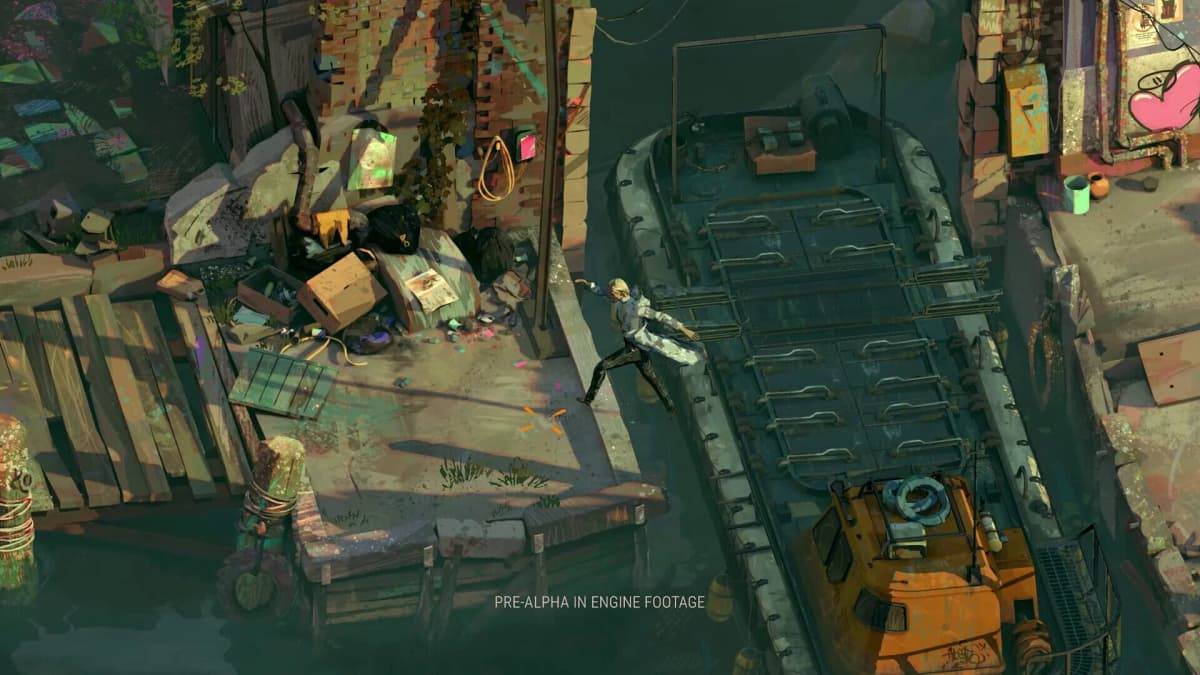
Where it’s less consistent right now is voice acting and polish. Some performances land perfectly and sell the characters’ oddities; others feel flat or miscast, like they’re still in an early pass. It’s not disastrous — this is a text-heavy game where VO is seasoning, not the main dish — but you can feel where the production is still finding its footing.
On the systems side, those frequent failures I mentioned toe the line between “designed friction” and “numbers that still need tuning.” I enjoyed how much the game pushed me into disasters, but I’d like to see the final build make sure that high-investment characters feel correspondingly more reliable, even if failure remains a frequent, flavorful outcome.
Interface-wise, the demo is solid but workmanlike — tooltips, dice breakdowns, and pressure changes are all visible enough that I could understand why things happened, but there’s room to make the feedback more tactile and satisfying. When I push my Anxiety into the red, I want the UI and audio to make that feel like an event, not just another number ticking up.
Who Zero Parades Is Really For
This isn’t going to be the CRPG for everyone, and honestly, that’s a good sign.
You’ll probably click with Zero Parades if:
- You like talking more than fighting. This is a dialogue- and choice-driven game first. Even its “encounter” systems feel like extensions of conversation, not tactical combat grids.
- You’re comfortable being wrong. The game shines when you let it run with your missteps instead of save-reloading the second a roll goes sideways.
- You enjoy dense, slightly pretentious writing — in a good way. It loves its metaphors, its political digressions, its quietly horrible jokes.
- You’re curious about new failure mechanics. The exertion-and-pressure system is one of the most interesting twists on CRPG skill checks I’ve seen in years.
If you’re the kind of player who needs:
- Combat-heavy progression with lots of loot and build tinkering, or
- Near-perfect reliability from well-invested skills, or
- Straight-faced espionage without surreal tangents or moral grime,
then Zero Parades may feel too slippery, too talky, or too willing to make a joke out of your carefully curated stats.
For my money, though, that’s exactly what makes it exciting. The genre has plenty of CRPGs where the fun is about becoming an unstoppable mastermind. Zero Parades is more interested in what happens when the mastermind is hanging on by frayed nerves and caffeine, bluffing his way through a world that remembers every bad thing he’s ever done.
Bottom Line: A Spy CRPG That Weaponizes Your Screw-Ups
Across the roughly four hours I’ve spent with Zero Parades so far, the throughline has been simple: failing is fun, and the game knows it.
The exertion system and its three pressures make every important decision feel like a little bet against your own sanity. You can play carefully and still end up in a ditch, or you can lean into the chaos, jack your Anxiety and Delirium through the roof, and trust that the designers have built something interesting to catch you when you fall.
Sometimes that “something” is a perfect comic beat — a botched intimidation, an overconfident keypad attempt, an intercom exchange that spirals into personal tragedy. Sometimes it’s a new narrative path that only exists because you embarrassed yourself publicly and can’t take it back. Either way, the game rarely wastes your mistakes.
It’s still early. The balance isn’t locked, the VO isn’t all the way there, and the pressure system will live or die on how it scales in the full game. But right now, Zero Parades feels like a CRPG that’s genuinely experimenting with what failure can mean — not just as a punishment, but as the engine that drives the story forward.
Preview verdict: If the full release maintains this level of narrative reactivity and refines the rough spots, Zero Parades has the potential to sit comfortably alongside the greats of the genre. For now, I’d peg it at a confident 8/10 potential, with plenty of room to climb once we see the whole picture.
TL;DR
- Zero Parades is an upcoming PC CRPG where you play disgraced spy Hershel “Cascade” Wilk in the city of Porter Firo, trying to figure out what you ruined five years ago.
- Skill checks use an exertion system tied to three pressures — Fatigue, Anxiety, Delirium — that you raise to improve your odds, at the cost of long-term stability.
- Those pressures don’t just modify numbers; they can strip away skill points or even kill you if you abuse them.
- The game is designed so that failure is frequent but rewarding, pushing the story into weirder, more memorable territory instead of just blocking progress.
- Fewer, broader skills than Disco Elysium mean less choice paralysis; the depth shifts into how you manage pressures and accept messy outcomes.
- Writing is already strong, with sharp humor and vivid characters, although some voice acting and balance still feel early.
- The Steam Next Fest demo (playable until April 17) and GDC build suggest a promising, experimental CRPG that uses your screw-ups as fuel, not failure states.
FinalBoss // Gear
Level up your setup
01Top-rated gaming headsetson Amazon→02High-refresh gaming monitorson Amazon→03Gaming chairson Amazon→04Discounted game keyson Kinguin→Affiliate links · As an Amazon Associate, FinalBoss earns from qualifying purchases.
Want to Level Up Your Gaming?
Get access to exclusive strategies, hidden tips, and pro-level insights that we don't share publicly.
Ultimate Reviews Strategy Guide + Weekly Pro Tips