
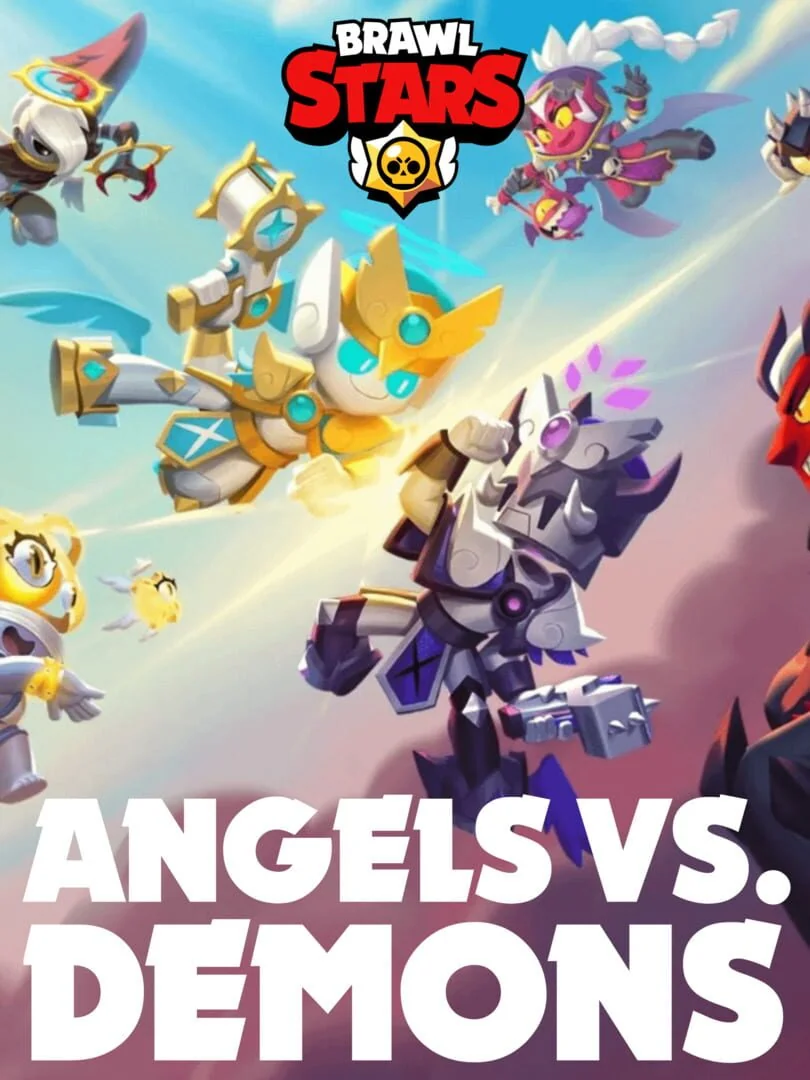
Short version: the safest blind picks for Angels vs. Demons are brawlers that are already strong before any event Ability is equipped – Brock, Angelo, Larry & Lawrie, Gene, Sandy, Colette, Edgar, Mortis, Cordelius, Gale, Belle and Max. They win lanes, hold space, or convert an engage into a kill regardless of which Ability you slot. Two things have changed since this list was first written, and both matter: the July 2026 Ramen Rebellion balance sweep touched more than 40 brawlers, and Crow and Meg took the heaviest hits in it. The other correction is that skin popularity is not a power ranking – Brawl Stars skins are cosmetic and change nothing about combat.
This is a meta ranking based on how brawlers perform in the event’s contest modes, not an official Supercell win-rate sheet. There is no published per-brawler win-rate list for Angels vs. Demons, so treat the tiers as a draft priority.
Table of Contents (17)
Where the game actually is right now (July 2026)
Before the tiers, the state of play, because half the Angels vs. Demons content online is dated:
- Current season: Season 52: NanoNoodles, live since 2 July 2026 and running to 6 August 2026. It is the first half of Update 68: Ramen Rebellion, a dual-season summer expansion running 2 July to 3 September that continues into Season 53: Windstock.
- New brawlers: Nori, a Legendary assassin built around a single-ammo charge bar, arrived with NanoNoodles. Bolt landed on 19 June 2026 in Season 51 – a toy car whose damage scales with speed while rolling.
- Season mechanic: limited-time Nano Powers for every brawler, plus new modes (Food Fight, Culinary Wars, Mecha Guard).
- Balance: the Ramen Rebellion patch adjusted 40+ brawlers, with buffs outnumbering nerfs, followed by maintenance tweaks.
Angels vs. Demons itself is not currently live. It launched in November 2024 with Brawl Pass Season 32, returned in 2025 split across two 12-day events – Ascending Angels in Season 40 (mid-to-late July) and Descending Demons in Season 41 (late August) – and community writeups summarising Supercell communications point to a repeat in July–August 2026 in the same two-event, 12-day format. Treat that as expected rather than confirmed: no Supercell blog post or Brawl Talk transcript detailing a 2026 run has surfaced, and the July 2026 slot went to Ramen Rebellion instead. This list is written so it holds whenever the event does come back.
How the Abilities system works – and how it changed
Each day you pick a side, Angel or Demon (assigned randomly on weekdays, your choice at weekends), which converts your Daily Starr Drops into Angelic or Demonic Drops. Opening those Drops progresses the Codex of Doom, where you equip event Abilities. They are universal power-ups available to every brawler, not tied to a character, and they only function in modes running the event modifier.
The number of Abilities and how many you can run has changed between versions, and this is where most old guides go wrong:
- 2024 launch: 12 Abilities, 6 Angel and 6 Demon. You unlocked them by opening Drops – 116 Drops total (58 Angelic + 58 Demonic) to own the full set – and equipped one per match.
- 2025 return: the pool grew to 8 Angel and 8 Demon, and every Ability was unlocked from the start. Drops instead bought skill slots, granted at 1, 9 and 25 Drops opened for that side, letting you run up to three at once.
- Synergies: each equipped Ability has a main trait, and some gain secondary traits when combined. When a combination has real synergy, the slots glow – that visual cue is the only in-game signal you are stacking correctly.
That shift is why base-kit strength now matters more than grind. A strong lane brawler starts every match strong; a gimmick pick can no longer be carried by out-farming the event.
The Angel side skews toward sustain and protection – Seraphim (spawns a healing ally when a teammate falls), Rebirth (survive one fatal hit at 1 HP with a knockback, once per game), Radiant Touch (damage converts into a team healing aura), Smite (light beams that damage and slow), Ascension (movement speed) and a damage-triggered shield. The Demon side is aggression: Siphon (lifesteal shared with Demon teammates), Conjuring Chaos (takedowns spawn an imp), Fury (speed while damaging), Revengeance (explode on death), Demonfire (speed plus a fire trail) and a straight health/damage steroid.
The event modes, and why general tier lists do not map onto them
- Spirit Wars – a Siege variant. Collect Amulets around mid, hold one to activate it, and each Battle summons Spirits equal to your Amulets (capped) to push the enemy defence turret. Three Battles per match.
- Soul Collector – defeated brawlers drop a soul. First team to 6 wins, or the most when time expires, and you can defend your own dropped souls before they expire.
- Trio Showdown – the 3-player-squad survival mode.
Spirit Wars rewards picks that hold space and contest mid for Amulets. Soul Collector rewards reliable kill pressure and the ability to body-block your own souls. Both favour range and control over feast-or-famine melee, which is exactly how the tiers below shake out.
S tier: blind-pick safe in most matches
- Brock
- Angelo
- Larry & Lawrie
- Gene
- Sandy
- Colette
- Edgar
- Mortis
- Cordelius
- Gale
- Belle
- Max
These ask the fewest favours from the map or your teammates. Brock sits here partly on a real buff carried over from the April 2026 update: base health 4800 → 5400, about +13%, which is one more shot survived while holding a lane and chipping turrets in Spirit Wars. Angelo, Belle and Gene control space from safety and punish anyone overextending for an Amulet or a soul. Larry & Lawrie split enemy attention and force awkward trades, which is what contest modes reward.
Colette and Gale are your anti-tank insurance – percent damage and knockback shut down brute-force short range. Sandy and Max set tempo with utility rather than raw damage, keeping a trio moving between Amulet contests. Edgar, Mortis and Cordelius are the scariest assassins where the map gives engage paths, and they are especially strong hunting soul carriers.
Worth flagging: the July 2026 patch deliberately pushed assassin and dive viability up while cutting Hypercharge charge rates. That is a tailwind for the Edgar / Mortis / Cordelius block and for the two newest additions, Nori and Bolt, neither of which has enough event-mode history to slot into a tier honestly. If Angels vs. Demons returns with both in the pool, expect Nori to test near the top in the small-map contests – but that is a projection, not a placement.
A tier: strong with the right map, comp, or matchup
- Shelly
- Jessie
- Rico
- Darryl
- Carl
- Gus
- Piper
- Bibi
- Bea
- Nani
- Griff
- Grom
- Bonnie
- Stu
- Tick
- Ash
- Sam
- Mandy
- Pearl
- Byron
- Melodie
- Leon
- Amber
- Kit
- Berry
- Fang
- Buster
- Lou
- Otis
- R-T
- Charlie
- Jacky
The largest tier, because the event still rewards specialists. Piper, Nani, Mandy, Bea and Tick play like S tier on open maps and merely fine on closed ones. Shelly, Darryl, Sam, Buster and Fang climb when walls and chokepoints let them force contact. Jessie, Rico, Griff, Byron, Otis, Lou and R-T rarely feel unfair but fit comps cleanly. Leon, Melodie, Amber, Kit and Charlie can carry but are draft-sensitive.
Two July 2026 movers land here. Bonnie gained main attack damage 1120 → 1220, which meaningfully improves her poke before she commits to a dive. Jacky went from 5000 to 5200 health and is promoted out of C tier on the back of it – she is now a real front-line anchor in objective play rather than a body that evaporates on approach.
B tier: playable, usually outclassed
- Nita
- Colt
- Barley
- Poco
- Penny
- Bo
- Emz
- Pam
- Lola
- Maisie
- Tara
- Mr. P
- Sprout
- Squeak
- Gray
- Willow
- Chuck
- Chester
- Draco
- Colonel Ruffs
- Janet
- Eve
- Dynamike
- 8-Bit
- Crow
- Meg
B tier is not weak; it needs a reason beyond raw power. Colt and Dynamike can take over games but demand more precision than the tiers above. Poco and Pam are solid when a team knows its plan yet feel a step slow when fights spike around Ability timings. Sprout, Squeak, Mr. P, Janet, Eve and Ruffs win in organised teams but bring less immediate pressure than the event wants.
Crow and Meg are the July 2026 demotions. Both were among the picks community trackers singled out as taking the sharpest cuts in the Ramen Rebellion sweep. Supercell has not published a full per-brawler breakdown of all 40+ adjustments, so the exact numbers are not public – but the direction is consistent enough across coverage that you should stop treating either as a safe pick until per-brawler notes surface.
C tier: map-locked or easy to punish
- Bull
- El Primo
- Rosa
- Frank
- Hank
- Doug
- Mico
- Lily
- Clancy
This is where the event is cruel to pure brawlers. Bull, El Primo, Rosa, Frank, Hank and Doug can stomp careless teams on the right map, but against decent spacing, knockback or anti-dive they spend the match trying to reach the fight. Mico and Lily create chaos, which is not consistency. Clancy drops hardest on the April 2026 nerf: his main attack went from a flat 1600 at every level to 1200 / 1400 / 1600 by level, and his level-3 Super fell from 1520 to 1400.
Balance changes that actually moved brawlers
July 2026 (Ramen Rebellion, Update 68)
- Jacky: health 5000 → 5200. Front-line reliability up.
- Bonnie: main attack 1120 → 1220. Better poke pressure.
- Hypercharge: certain Buffied Hypercharge charge rates cut heavily – less spam, fewer swing moments.
- Roster-wide: 40+ brawlers adjusted, buffs outnumbering nerfs, with stated emphasis on bringing underused assassins and damage dealers back into viability. Crow and Meg are the picks community coverage flags as the hardest hit.
April 2026 (version 67.264), still in effect
- Brock: base health 4800 → 5400.
- Clancy: main attack now scales 1200 / 1400 / 1600 by level; level-3 Super 1520 → 1400.
- Spike: nerfed, not buffed. No health change; Popping Pincushion 1200 → 1000 damage per spike; Life Plant cooldown 14s → 18s, and it no longer charges his Super.
Keep skins out of this entirely. Demon Mortis, Dark Angel Edgar and Angel Max are event cosmetics and change how a brawler looks, not how it plays.
Common mistakes
- Reading a skin popularity list as a power ranking.
- Picking Spike expecting a tank buff – he was nerfed in 67.264.
- Still trusting a pre-July-2026 tier list. The Ramen Rebellion sweep touched over 40 brawlers.
- Assuming you can equip three Abilities in the 2024 version – that was the 2025 return only, and slots unlock at 1, 9 and 25 Drops.
- Blind-picking dive tanks into open maps where they cannot reach the fight.
FAQ
Is Angels vs. Demons live right now?
No. Season 52: NanoNoodles is live until 6 August 2026. Community summaries of Supercell communications point to the event returning July–August 2026 in the same two-event format, but there is no official 2026 announcement confirming it.
How many Abilities can I equip?
One in the 2024 version. Up to three in the 2025 return, with slots unlocked at 1, 9 and 25 Drops opened for that side.
Do I need to grind Drops to unlock Abilities?
In 2024, yes – 116 Drops for the full set. In the 2025 return every Ability was unlocked from the start and Drops bought slots instead.
Do event skins affect stats?
No. Every Brawl Stars skin is cosmetic.
Practical takeaway
Use S tier as your blind-pick pool, A tier as strong specialists, B tier as comfort or comp picks, and C tier as map-dependent gambles. Lead with range and control, because Spirit Wars and Soul Collector reward holding space and contesting objectives rather than all-in melee. Respect the current balance state – Brock, Jacky and Bonnie up; Clancy, Spike, Crow and Meg down – and keep skin hype out of your draft.
For what is actually live this month and the rest of the roster, the Brawl Stars hub tracks each season as it lands. If you run more than one mobile competitive game, our Last Shelter: Survival July 2026 hero tier list applies the same “rank the kit, not the cosmetic” approach, and our Voidpet Dungeon pet rankings cover where to spend limited progression resources.
FinalBoss // Gear
Level up your setup
01Mobile gaming controllerson Amazon→02Top-rated gaming headsetson Amazon→038BitDo controllerson Amazon→Affiliate links · As an Amazon Associate, FinalBoss earns from qualifying purchases.
Want to Level Up Your Gaming?
Get access to exclusive strategies, hidden tips, and pro-level insights that we don't share publicly.
Ultimate Guide Strategy Guide + Weekly Pro Tips