
The worst morning in Harvest Moon: One World is the one where you water everything, harvest a full bag, head to the Harvest Goddess Spring, and still get no new scene. The game rarely tells you why. Progress here is less about working harder and more about reading event logic, expanding only the farm spots that solve a real problem, and running a daily loop that keeps money coming in without selling off the items the next objective wants.
Table of Contents (14)
The short version
- Events need more than arriving. Plan around location, your current objective, and the right item in your bag — then sleep or re-enter the area if a scene refuses to fire.
- Expand selectively. Take a sparkly farm plot only when it solves a travel or crop-climate problem, not just because it is available.
- Run three field roles: a main money field, a regional field for the current biome, and a small reserve field for requests and first harvests.
- Ship by decision, not by reflex. Sell duplicates, keep first copies and anything an active request might demand.
- Use the Doc Pad as a planner the night before, and treat the Harvest Goddess Spring as your progression checkpoint.
How event triggers work in One World
One World does not announce why a scene failed to fire, and that is where most wasted time comes from. Treat a story event as a small checklist rather than a single trigger: be in the right place, with your active objective ready, carrying the item the step needs instead of having already shipped it. Arriving somewhere is often not the last condition.
This is why the Doc Pad matters more than it first looks. Use it as a planning tool, not just a log. Before you sleep, check your active objective and give tomorrow one clear story goal. If the next step reads as vague, confirm three things before you roam: the location, the item in your bag, and whether the game is waiting on a day transition. For the full breakdown of how the Doc Pad gates the Spring, see our guide to unlocking the Harvest Goddess Spring.
A reliable event troubleshooting routine
- Sleep once and try again. Many progression checks settle only after the day rolls over.
- Re-enter the area cleanly. If a scene will not start at the Harvest Goddess Spring or another story spot, leave the zone and walk back in instead of pacing in circles.
- Carry the requested items. “I harvested it earlier” is not enough. If the step wants the item now, have it on hand.
- Hold your first copies. First harvests are often the exact thing the game turns around and asks for.
Farm expansion: take plots that solve a problem
The world is full of sparkly farm spots, and it is tempting to think more plots always means more progress. In practice, early expansion should be selective. Every extra plot adds travel, watering, harvesting, and one more field to forget about. The best expansions cut friction between regions and crop climates — they let the world’s biomes grow what your main farm cannot.
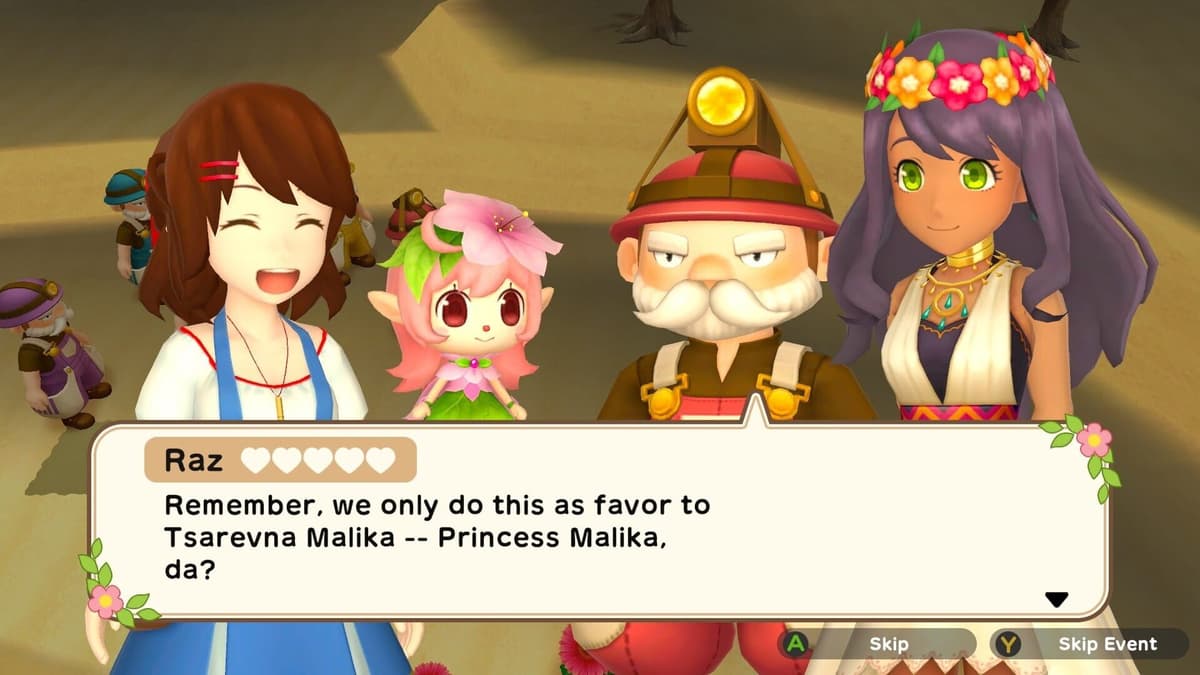
A strong file uses plots by role, not by size. Your first reliable field is your cash engine: easy to reach, easy to water, planted with crops you can count on. Your next plot should earn its place — a new environment, a new seed line, or a request bottleneck — rather than just being “another farm.”
The three field roles
- Main field: steady income crops on your most consistent watering route.
- Regional field: crops tied to the current biome or chapter, so travel does not eat half your day.
- Reserve field: small batches for requests, experiments, and first-time harvests you do not want to ship by accident.
A simple expansion rule: expand when a new plot saves time or unlocks crop variety, not when you merely have the option. If a plot adds another chore loop without solving a story or money problem, skip it for now.
The daily workflow that keeps story and money moving
The most efficient day in One World is compact, not flashy. Stalled runs usually come from overplanting early, then burning the whole morning on watering and harvesting with no time left for exploration, fishing, mining, or event travel. Give your day structure.
Morning: only the profitable chores
Start with the field that matters most today, not every field you own. Water and harvest your primary income crops first. If animals are unlocked, run the basic ranch loop right after — feed, collect, move on. Animals are steady value, but they should never delay a story trip long enough to miss a scene window.
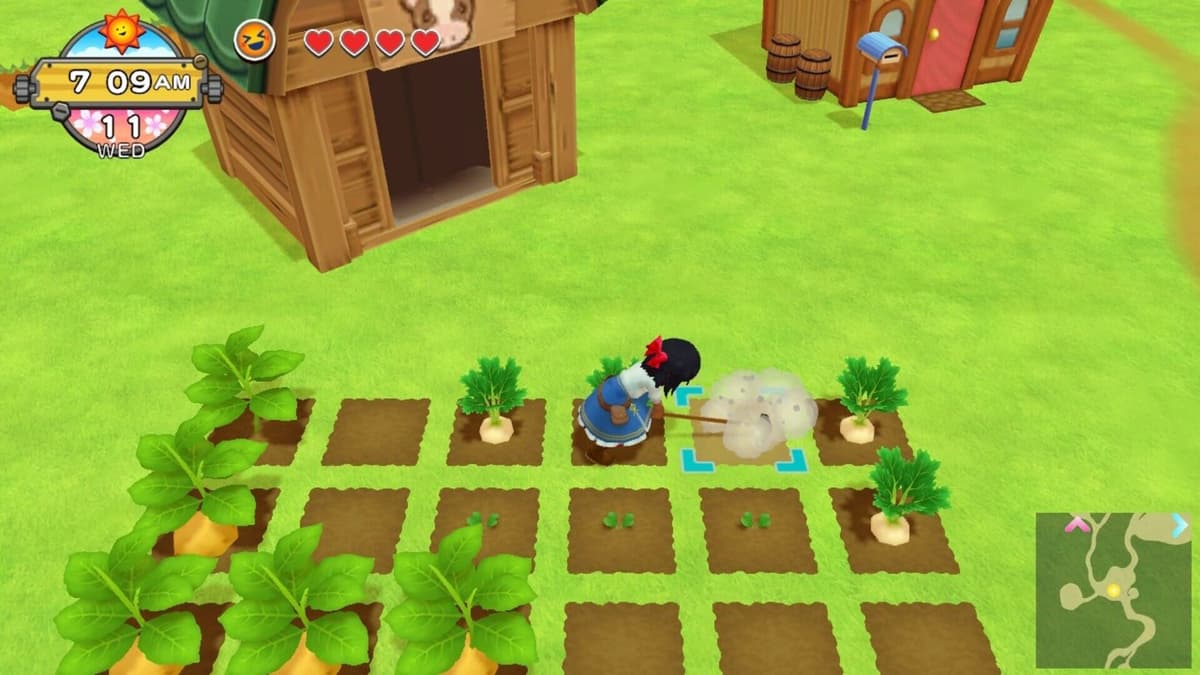
This is the best time for a quick Doc Pad check, with one question in mind: does today’s objective need an item I am about to sell? If it might, set that item aside before the shipping bin becomes a reflex. Upgrading your hoe and watering can early also shortens this loop — see how to upgrade tools and unlock the Workbench.
Midday: exploration, Harvest Wisps, and trigger checks
Once the core loop is done, leave. Midday is when the game opens up: gathering seeds from Harvest Wisps, pushing into new regions, checking event locations, and building the next chapter’s crop options. This is why smaller, role-based farms beat giant early layouts — they free your best daylight hours for progression.
If the next scene is tied to the Harvest Goddess Spring, make it a midday stop while your inventory is sorted and your objective is clear, not a rushed last errand. That avoids the classic mistake of arriving late, missing a requirement, and having no stamina or time left to fix it.
Night: shipping-bin timing is a strategy
The shipping bin is where good runs stay healthy or quietly sabotage themselves. Ship for cash, but not on autopilot. Sell duplicates and keep first copies, request items, and anything likely to appear in the next objective chain. If you have enough of a crop to cover both money and a possible turn-in, sell the surplus. If not, protect progression first and take the smaller payday.
- Safe to ship: surplus from your main money crop, duplicate forage, routine animal products you are not saving for a request.
- Worth keeping: first harvests, newly discovered crops, materials tied to active requests, and anything you have only a tiny quantity of.
- Best habit: decide your keeper stack before you walk to the bin, not while clearing inventory at the last second.
When animals help instead of slowing you down
Ranching is useful, but it turns inefficient fast if you unlock animals before your crop loop is stable. Treat animal care as a tight cycle — feed, collect, process or sell, leave. If that cycle grows so large it eats the time you need for exploration and event travel, your file is overbuilt.
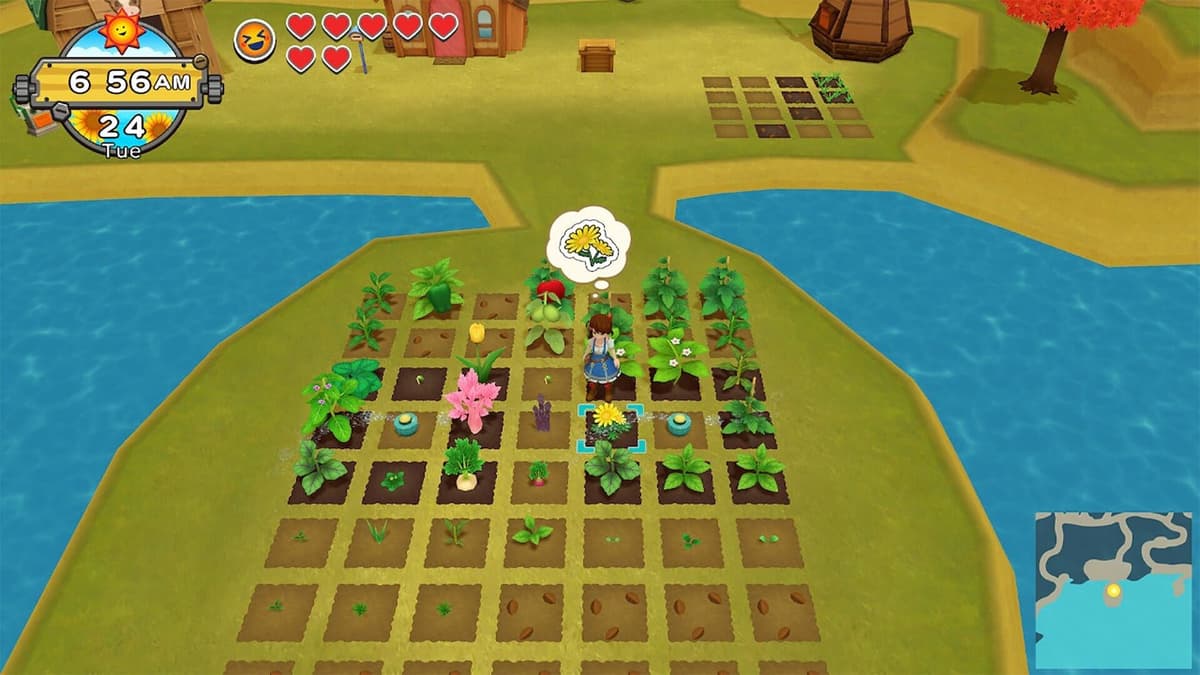
The best moment to lean into animals is after you have one dependable crop income source and at least one regional expansion plan. Then animal products become supplemental money and request coverage. Before that, they are daily maintenance that looks productive without pushing the story.
- Add animals slowly. One or two productive animals beat a full rotation you resent every morning.
- Batch animal care with harvest time. Do not split it into multiple trips.
- If progress stalls after getting animals, your file likely needs more midday exploration, not more chores.
Why the Harvest Goddess Spring is the progression knot
If there is one place to mark as a checkpoint, it is the Harvest Goddess Spring. Story beats and chapter confirmations tend to funnel back through it, which makes it a diagnostic tool as much as a landmark. When you are unsure what the game believes you have accomplished, the Spring is one of the first places to test — after you rest, sort your inventory, and confirm your objective. Do not assume one early visit counts forever; return to it after meaningful unlocks, especially when a scene that should have appeared did not.
If the next scene still will not fire
- Sleep and start a fresh day.
- Verify the active objective in the
Doc Pad. - Carry the likely request or story items with you.
- Enter the target location on foot and check it directly.
- Clear one smaller prerequisite task, then test the Spring again.
Many of these checks also gate character events. Malika, for example, is a Pastilla bachelorette whose heart scenes depend on location, affection, and story progress rather than a calendar festival — the same logic the Spring runs on. For who is romanceable and what unlocks marriage, see our guide to romancing all bachelors.
Common mistakes
- Overplanting early. Oversized fields steal the exploration time that unlocks better seeds and faster progression.
- Shipping everything every night. Fast money feels good until the next request asks for the crop you just sold.
- Expanding every plot on sight. Farm spots are tools, not trophies.
- Ignoring the Doc Pad until you are lost. It works best as a before-bed planner, not a panic menu.
- Treating the Harvest Goddess Spring as a one-time stop. It is often what tells you whether your progression state is ready.
Practical takeaway
Harvest Moon: One World is a logistics game wearing a cozy farming coat. Keep one money field running, expand only the plots that fix a travel or biome problem, hold your first harvests and request items back from the shipping bin, and treat the Harvest Goddess Spring as the checkpoint that confirms your progress. Do that, and the pacing stops feeling stubborn instead of leaving you stuck on invisible walls.
FinalBoss // Gear
Level up your setup
01Top-rated gaming headsetson Amazon→02High-refresh gaming monitorson Amazon→03Gaming chairson Amazon→04Discounted game keyson Kinguin→
Affiliate links · As an Amazon Associate, FinalBoss earns from qualifying purchases.
Want to Level Up Your Gaming?
Get access to exclusive strategies, hidden tips, and pro-level insights that we don't share publicly.
Ultimate Guide Strategy Guide + Weekly Pro Tips