
You went looking for a blacksmith, an upgrade counter, or a tool that levels up the more you swing it. Harvest Moon: One World has none of those, which is exactly why the upgrade path feels broken at first. Tools here are gated behind villager requests, and the key that opens the whole system is one NPC: Doc Jr. Finish his request chain to unlock the Workbench, then craft your upgrades there.
Table of Contents (8)
The short version
- There is no shop or blacksmith. Tool upgrades come from crafting at the Workbench, not from buying them.
- The Workbench is unlocked by completing Doc Jr.’s request chain — not by story progress alone. Prioritize his requests.
- Once the Workbench is open, you craft each upgraded tool from gathered materials.
- Upgrades scale into higher tiers — the line continues up to gear like the Expert Hammer and Expert Axe.
- If the upgrade path never appeared, the missing piece is almost always Doc Jr.’s request, not more grinding.
How tool upgrades actually work
Upgrading a tool in One World is a crafting action, not a purchase. You do not pay a smith to bump your hoe a level. You complete the requests that unlock the Workbench, then use the Workbench to build the better tool from raw materials. That changes how you plan: your bottleneck is request progress and materials, not gold.
This sits inside the game’s defining feature, the Expando-Farm — a movable farm you unlock at the end of the hometown questline that lets you relocate your home base between regions, powered by your companion sprite Sparky. The Expando-Farm moves where you live and work; it does not merge the towns’ facilities into one building. Your tool crafting travels with you because it lives at your base, not in any single town.
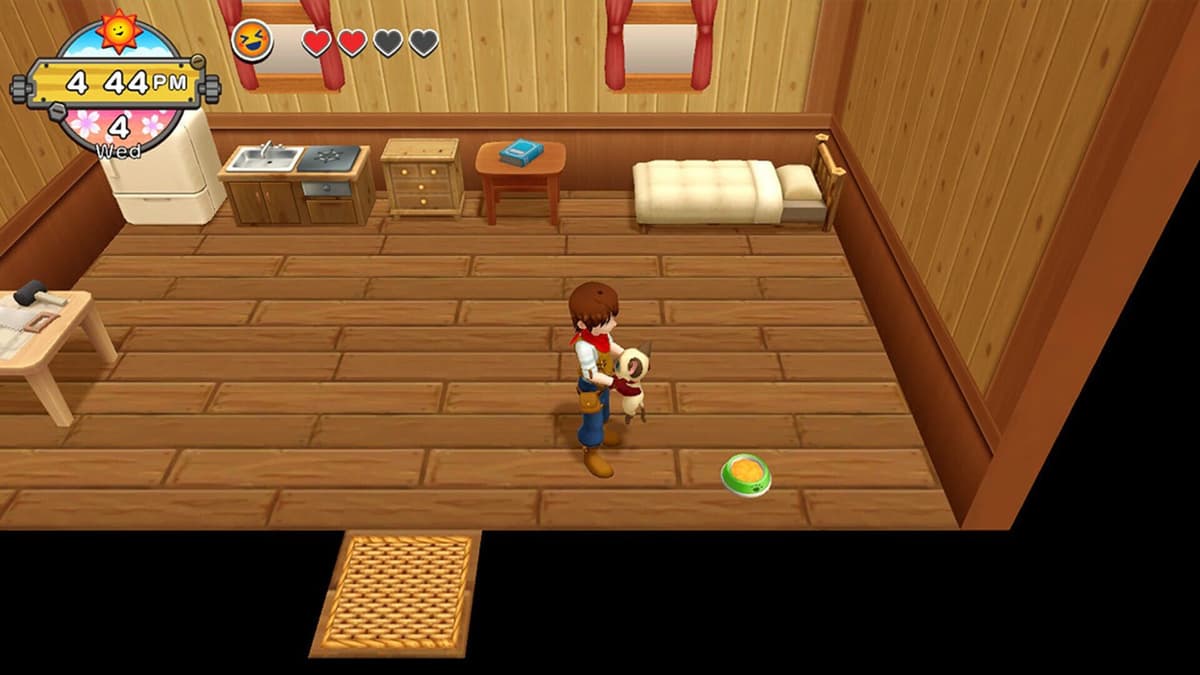
Step 1: Push the early story to open your farm systems
Before you chase tool upgrades, make sure you are not stuck behind the opening chapters. The early game is linear, and several farm functions unlock through main-story advancement. If your home and base still feel locked down, keep moving the main story first. Tool upgrading is part of the broader farm-development curve, so it only opens up once the surrounding systems are active.
This is where most players lose time. They assume the missing step is materials and start hoarding random crafting items, waiting for a menu to light up. It will not. Until the Workbench is unlocked, no amount of stockpiling does anything for tools. Advance the story and let your farm infrastructure catch up.
Step 2: Clear Doc Jr.’s request chain
Doc Jr. is the gate. His request chain is what unlocks the Workbench, and the Workbench is the entire upgrade system. Treat his requests as mandatory progression, not optional errands. If you are choosing between a casual side task and a Doc Jr. request, do his — it is the one that converts tool upgrading from a future promise into a system you can actually use.
- Check for new Doc Jr. requests whenever fresh tasks open up.
- Do not expect the Workbench to appear from story progress alone — it is tied to his chain.
- Advance the day and talk to him again if a follow-up does not trigger immediately.
Step 3: Craft upgrades at the Workbench
With the Workbench unlocked, the loop is simple and repeatable: clear the request that grants the next upgrade, gather the materials it calls for, then craft the improved tool at the Workbench. Materials are the real gate at this stage, so the rule is don’t hoard blind — gather toward the specific upgrade you can now make.
The payoff is throughput. Better tools cut the time each chore eats, and One World stacks a lot of repetitive work — tilling, watering, gathering — into the same day cycle. Faster tools mean more of the day left for requests, travel between regions, and crop management.
Higher tiers: Expert Hammer and Expert Axe
The upgrade ladder does not stop at your first improvements. Higher tiers exist, including the Expert Hammer and Expert Axe, which become worth the investment as gathering and farm expansion ramp up. Expect each tier to stay request- and material-gated rather than turning into a flat purchase ladder, so keep clearing requests as new ones surface.
Common mistakes
- Hunting for a shop. There is no blacksmith or upgrade counter. Upgrades are crafted at the Workbench.
- Waiting on story progress for the Workbench. Story alone will not hand it to you — Doc Jr.’s request chain does.
- Stockpiling materials too early. Without the Workbench and the relevant request, gathered materials sit unused. Gather toward a specific craft.
- Grinding chores when progression stalls. When the path seems missing, the fix is usually the next Doc Jr. request, not more farm work.
- Missing a day-advance trigger. If a follow-up does not fire, sleep to advance the day and speak to Doc Jr. again before assuming something broke.
Practical takeaway
Stop looking for a shop. To upgrade tools in Harvest Moon: One World, push the early story until your farm systems open, clear Doc Jr.’s request chain to unlock the Workbench, then craft each upgrade from gathered materials — all the way up to tiers like the Expert Hammer and Expert Axe. Treat the Workbench as core infrastructure, not a side feature, and the upgrade path stops feeling hidden. For more on how requests and day-advance triggers gate progression, see our event triggers and farm workflow guide, and for the early-game loadout that makes those first chores faster, our best team setups guide.
FinalBoss // Gear
Level up your setup
01Top-rated gaming headsetson Amazon→02High-refresh gaming monitorson Amazon→03Gaming chairson Amazon→04Discounted game keyson Kinguin→Affiliate links · As an Amazon Associate, FinalBoss earns from qualifying purchases.
Want to Level Up Your Gaming?
Get access to exclusive strategies, hidden tips, and pro-level insights that we don't share publicly.
Ultimate Guide Strategy Guide + Weekly Pro Tips