
If you searched for the “best team” in Harvest Moon: One World, here is the honest answer up front: there is no party, no roster, and no team-building system. You play a single farmer. So the real question behind the search is the one worth answering — how do you organize crops, animals, exploration, and tool upgrades into a routine that keeps money and story progress moving at the same time? That is what this guide gives you.
Table of Contents (11)
The short version
- One World has no party or team-setup mechanic — you control one character. “Best team” really means “best daily workflow.”
- Your farm is the movable Expando-Farm: you relocate the whole farm between regions instead of holding multiple separate plots.
- You start in Calisson — it is the opening region, not a late-game expansion. Extra field space opens through main-story progress, not by unlocking a special larger field in Calisson.
- Best routine: keep a mixed field, treat every outing as a seed-and-wisp discovery run, add light ranching for steady side income, and use mining to fill gaps and feed tool upgrades.
Why there is no “team” in One World
Unlike gacha or RPG titles where “best team” means a roster of units, One World is a single-player farming sim. There are no recruitable party members and no synergy stats to optimize. The useful framing is a workflow: the four systems you run every in-game day — crops, exploration, ranching, and mining — and how you keep them feeding each other so no single system stalls the others.
The farm is movable: how the Expando-Farm changes your routine
The defining feature of One World is the Expando-Farm. Instead of owning fixed plots in different towns, your farm is a single mobile base you pack up and relocate between regions. That is why “build a team across biomes” is the wrong mental model — you do not split your operation across zones, you move the one farm to wherever you are working.
Practical consequence: plant for where you are now, harvest, then move. Do not leave crops behind expecting to come back to multiple standing farms — there is only ever one.
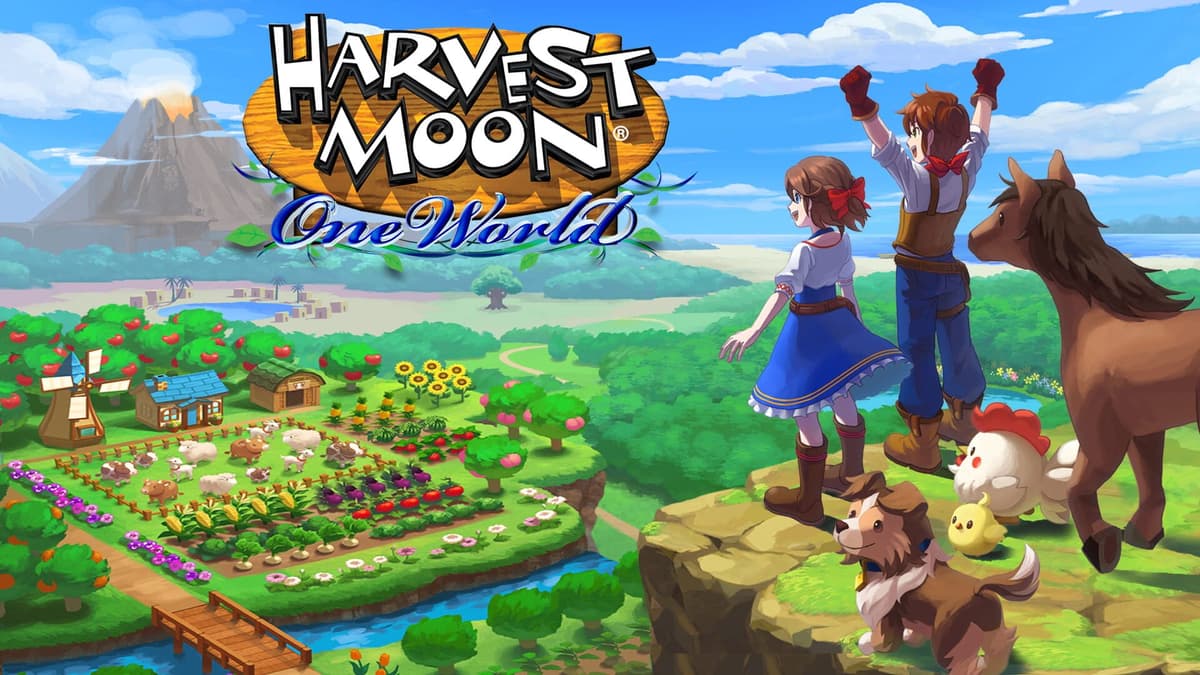
Calisson is the start, not the finish
A common misconception is that Calisson is a late-game region that unlocks a special large farm for end-game scaling. It is not. Calisson is the opening region where you begin the game. Additional fenced field area at your farm opens up through main-story progression — not by returning to Calisson for a bigger plot. So plan your scale-up around how far you are in the story, not around reaching one particular zone.
The daily workflow that actually carries the game
One reliable loop covers the whole game; what changes is the emphasis as more of the map and more field space open up.
- Crops first: do your watering and harvesting before anything else so nothing wilts while you are away.
- Exploration as a second job: every trip off the farm should also be a discovery run — follow wisps and new routes to pick up region-specific seeds rather than wandering aimlessly.
- Light ranching: keep a small animal lane for steady secondary income, but do not let it outgrow your crop economy early on.
- Mining as backup: use the mines on low-routing days to gather materials, which feed straight into tool upgrades.
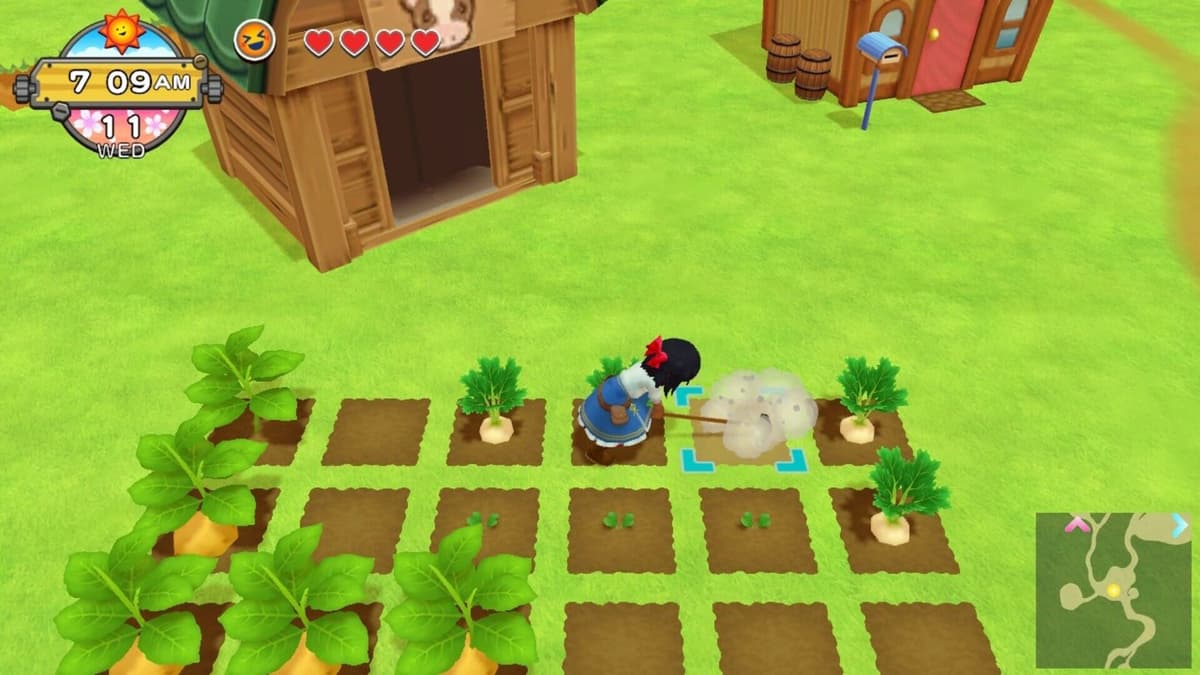
Early game: stay flexible, do not specialize
At the start, your progress is gated by access and discovery, not by profit. Plant a mixed field rather than monocrop spam, add minimal ranching, and explore whenever a new route opens. The biggest early trap is committing hard to one category — you end up with money in one place and shortages everywhere else. A mixed setup protects against that.
Mid game: move the farm, chase variety
As more of the world opens, lean into the Expando-Farm. Relocate to where the seeds and materials you need are, and fold new crop discoveries into your next planting cycle. Mid game rewards variety because requests and progression depend on niche items, not raw output. Keep ranching ticking in the background so move days do not leave your income empty.
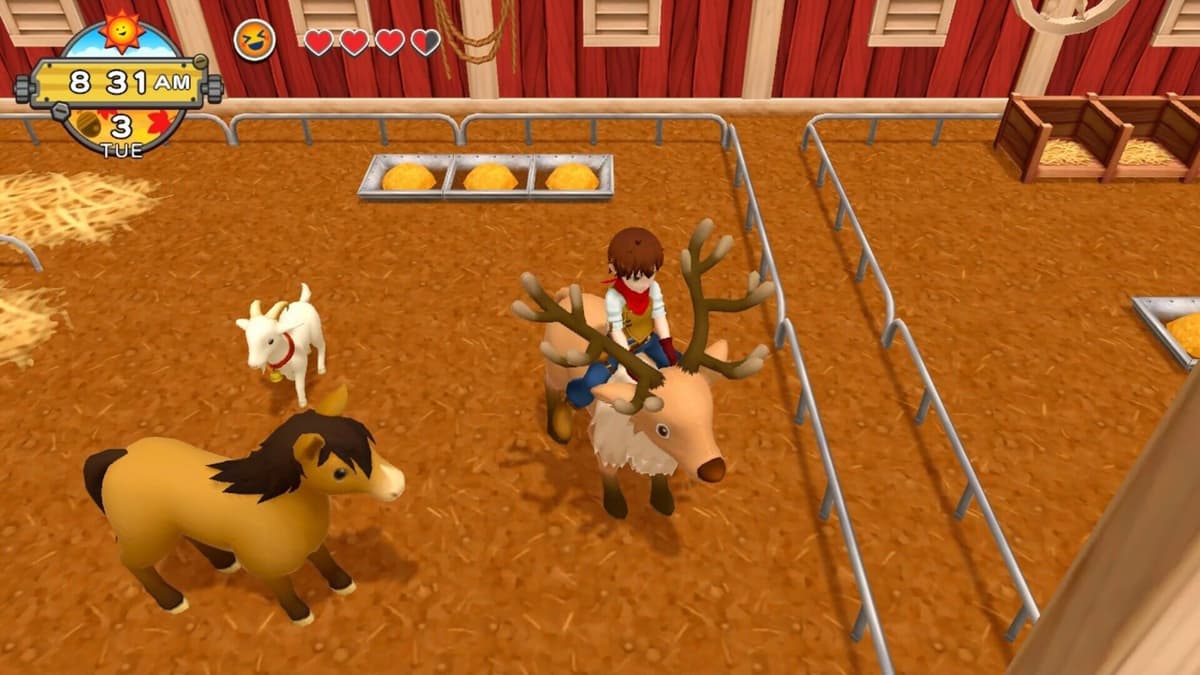
Late game: scale with story progress
Once the story opens up more field space, scale starts to matter more than pure flexibility. Use the larger field for your most repeatable, worthwhile crops, but keep a smaller reserve strip free for requests and new crops the story or villagers suddenly ask for. The mistake here is swinging fully into “profit only” — the game still wants broad participation, and a request chain can demand something you stopped growing because it looked inefficient.
Low-investment alternatives
There are no paid units or premium team building here, so “budget” just means low-maintenance:
- Crop + mining: the safest cheap loop. Mixed crops, with mining covering the gaps between harvests. Reliable, no upkeep pressure.
- One-animal support: add a single animal lane for product income without the cost and attention of a full barn.
- Explorer-first: keep the farm modest, explore aggressively for wisps and region crops, and only expand production once you have the variety to justify it. Slower for cash, clean for unlocks.
Common mistakes
- Treating “team” literally: there is no roster — optimize your daily routine, not a party.
- Expecting multiple farms: the Expando-Farm is one movable base; you relocate it, you do not duplicate it.
- Waiting on Calisson for a big farm: Calisson is the starting region; field space comes from story progress.
- Specializing too early: monocrop or ranch-heavy starts create shortages elsewhere.
- Selling everything: short-term cash hurts when a request needs a crop you stopped growing.
Practical takeaway
Forget the idea of a “team.” In Harvest Moon: One World you run one farmer and one movable farm. Start in Calisson with a mixed field, treat outings as discovery runs, keep ranching and mining light, and let your scale grow as the story unlocks more space. That sequence — flexible early, varied through the mid game, scaled in the late game — matches how the game actually opens up. For the full event-by-event routine, see our Event Triggers and Farm Workflow guide; to make field and mine work faster, read how to upgrade tools and unlock the Workbench; and if you are still choosing where to play, check the best platform comparison.
FinalBoss // Gear
Level up your setup
01Top-rated gaming headsetson Amazon→02High-refresh gaming monitorson Amazon→03Gaming chairson Amazon→04Discounted game keyson Kinguin→Affiliate links · As an Amazon Associate, FinalBoss earns from qualifying purchases.
Want to Level Up Your Gaming?
Get access to exclusive strategies, hidden tips, and pro-level insights that we don't share publicly.
Ultimate Guide Strategy Guide + Weekly Pro Tips