
Your first Paralives household lives or dies on three things, in this order: a complete home, steady income, and not losing your kitchen to a fire on day two. Most early failures are not one dramatic mistake. They are slow bleed: a Para who is constantly hungry, exhausted, or dirty burns the whole day on basic needs, and a stove fire turns your starter budget into a repair bill. Lock down function first, money second, and treat fire as something you respond to fast rather than something a magic gadget prevents.
Table of Contents (9)
The short version
- Build a complete, small home first. Bed, toilet, shower or bath, fridge and a basic kitchen, plus clear walking paths. Looks come later.
- Toggle Build Mode with Tab. Tab switches between Live Mode and Build Mode. Inside Build Mode, the sledgehammer/sell tool is
Kand the wall tool isB. - Get a job on day one from
Phone → Find a Job, or from a home computer if you have set one up. Predictable income beats the perfect career. - Run a boring routine: needs in the morning, work or core task in the day, one optional activity in the evening, bed before exhaustion.
- Fire response, not fire gadgets. There is no extinguisher item to buy. Click the flames and choose
Extinguish Fire, or call firefighters from the phone. A smoke alarm only warns you — it does not stop the fire.
First 10 to 30 minutes: build for function, not for looks
Your starter place does not need to be pretty. It needs to be complete. New players overspend on space and decoration, then realize they still have to fix basic needs one at a time. Keep the footprint small and make every essential object easy to reach.
- A bed
- A toilet
- A shower or bath
- A fridge and a basic kitchen setup
- A clear walking path between the bed, toilet, stove, and front door
- One work or skill object only if it directly helps income, like a computer or an easel
If you are building from scratch, press Tab to switch into Build Mode. Tab is the toggle between Live Mode and Build Mode — it is not opened with a “B” key. Inside Build Mode, B is the wall-drawing tool and K is the sledgehammer (the same tool you use to sell objects back for cash). If you bought a place that came with clutter, use the sledgehammer to remove or sell anything that does not help survival. That tool is one of the best early money savers, because decorative extras look harmless until you realize they are tying up Paradimes you need for actual utility. Leave clear walking paths too. A cheap layout stops being cheap the moment your Para cannot route cleanly to the toilet, the stove, or the door.
Get a job on day one, even if you plan to make money other ways
The fastest stable income comes from a regular job. Open it from the phone menu with Find a Job, or from an in-home computer if you have set up a small office corner. For a fresh save, the phone route is easiest because it does not require any extra furniture first. The point is not to land the perfect career immediately. The point is to start the money loop before your house starts draining your budget.
If the computer method seems inconsistent, check for placement issues. Make sure the chair and desk are usable and the Para can actually reach the interaction point. Bad routing often looks like a menu bug when it is really furniture placement. A plain, reachable desk is more reliable than a computer squeezed into a decorative nook.
For the first week, prioritize consistency over ambition. Promotions and higher ranks matter later; early on you want predictable Paradimes so you can stop making emergency sell-offs. In a multi-Para household, keep at least one Para on a standard work schedule while the other handles the house, social tasks, or side income.
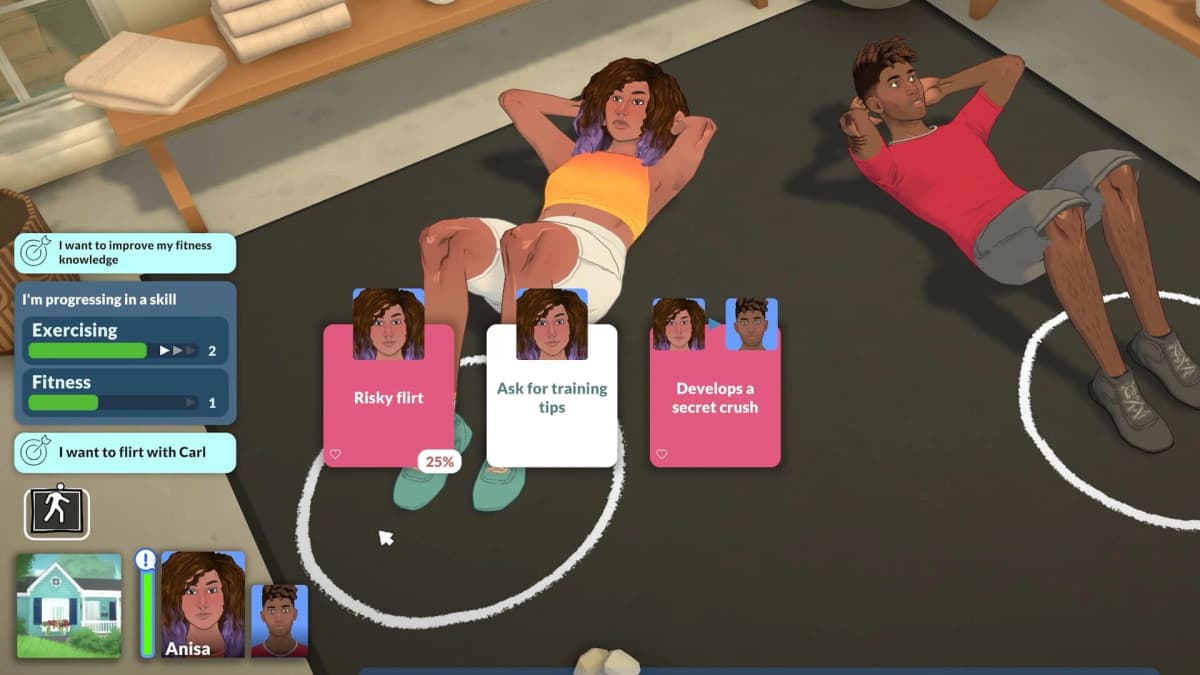
Run a simple first-week routine so needs do not eat your whole day
The cleanest early-game schedule is boring on purpose. Do not try to optimize every conversation, aspiration, or hobby immediately. Until money and needs are stable, your goal is to prevent red bars and wasted time.
- Morning: bathroom, hygiene, quick meal
- Daytime: go to work or finish the day’s core money task
- Evening: eat, clean up, handle one optional activity only
- Night: go to bed before exhaustion becomes an emergency
This works because the four basic needs snowball into each other. Skip sleep and the next morning takes longer. Skip hygiene and bathroom time until the last second and you lose the work window. Leave hunger too low and cooking becomes urgent instead of planned. Keep the household steady first, then add social scenes and side systems around that schedule.
Use side income as backup, not as your only plan
There are other ways to make money in Paralives, and they are useful once the basics are covered. Townie requests can bridge the gap between paychecks. Painting is one of the stronger side-income options once you can afford the setup and spare the time. Treat all of it as backup income, not as a starter strategy — a steady job is what keeps the household out of the red.

The mistake is buying into a side hustle before the house is safe. Do not spend your remaining cash on hobby furniture if you still need a proper bathroom or a working kitchen. The best use of extra income in the first week is stabilizing the house so your regular job becomes easier to maintain.
Fires: respond fast, because there is no extinguisher to buy
Here is the part most starter guides get wrong: Paralives does not have a placeable fire extinguisher you install before cooking. There is no extinguisher object to buy, no “put it near the stove” step, and no Para who needs to “reach” one. Putting out a fire is an interaction, not an item.
A smoke detector or fire alarm is worth having, but be clear about what it does: it warns you a fire has started. It does not prevent fires and it does not automatically summon firefighters in the current Early Access build. So do not treat it as protection — treat it as your cue to act.
When a fire breaks out, you have two reliable responses:
- Click the flames and choose
Extinguish Fire. A Para will put the fire out directly — no extinguisher item involved. - Call the fire service from the phone if the fire is spreading or your Paras cannot path to it safely.
You can also drop into Build Mode (Tab) and use the sledgehammer (K) to remove the burning appliance entirely, which sells the object back and stops it from being a recurring hazard. Whatever you choose, pause the game first so you can act deliberately instead of misclicking under pressure, and do not let every Para crowd the kitchen — extra bodies just block the path to the flames.
Common mistakes
- Trying to open Build Mode with “B”. Tab is the Live/Build toggle.
Bdraws walls andKis the sledgehammer/sell tool. - Buying a “fire extinguisher” object. It does not exist. Extinguishing is a click-the-flames interaction or a phone call to firefighters.
- Treating the smoke alarm as fire prevention. It only warns you; it does not stop a fire from starting or spreading.
- Decorating before the home is complete. A stylish empty shell with missing needs objects wastes your first week.
- Living off side income. Townie requests and painting are backup, not a substitute for a steady job.
Practical takeaway
Build a small, complete home (Tab into Build Mode, K to clear clutter), land a job from the phone on day one, and run a boring needs-first routine. When a fire starts, do not look for a gadget — pause, click the flames for Extinguish Fire or call the firefighters, or sledgehammer the appliance out. Keep the four core needs steady and the paycheck flowing, and your first week stops being a fire drill.
FinalBoss // Gear
Level up your setup
01Top-rated gaming headsetson Amazon→02High-refresh gaming monitorson Amazon→03Gaming chairson Amazon→04Discounted game keyson Kinguin→
Affiliate links · As an Amazon Associate, FinalBoss earns from qualifying purchases.
Want to Level Up Your Gaming?
Get access to exclusive strategies, hidden tips, and pro-level insights that we don't share publicly.
Ultimate Guide Strategy Guide + Weekly Pro Tips