
Table of Contents (9)
Resident Evil Has No Right To Be This Alive At 30
Resident Evil should have been a shambling corpse years ago. By rights, this series ought to be lurching along on cheap mobile spin-offs and soulless live-service experiments, a faded icon trotted out for anniversaries and nostalgia cash-ins. Instead, on its 30th birthday, it’s doing the unthinkable: it’s better, braver, and more creatively locked-in than at almost any point in its history.
I don’t mean “still good for a granddad franchise”. I mean genuinely great. I mean I’ll happily put Resident Evil 7, Village, the recent remakes, and now Resident Evil Requiem up against the series’ all-time highs without flinching. And I’ve been here long enough to remember when the dogs jumped through the damn windows for the first time.
So yeah, as someone born in 1988 who basically grew up in lockstep with this series, watching it wobble, face-plant, and then somehow resurrect itself into the monster it is now… I’ve got skin in this game. I’ve been burned by Capcom before. But sitting here on the 30th anniversary, with Requiem already smashing past six million copies in about a month and the brand everywhere again, I’m honestly stunned at how hard they’ve stuck the landing.
From Demo Discs And Nightmares To Full-Blown Obsession
The first time I “played” Resident Evil, I didn’t actually play it. I stared at it from a safe distance.
The original PS1 game hit Japan on 22nd March 1996, officially marking the birthday Capcom is celebrating today. I was still a kid. I’m pretty sure our household’s first contact with the series was Resident Evil 2, and I definitely remember being more scared of the controls than the zombies. Tank movement on a D-pad was its own horror sub-genre back then.
My first real relationship with the franchise started in the weirdest way: not with a full game, but with a cutscene on a Dreamcast demo disc. I was a hopeless Dreamcast fanboy in the early 2000s, and the timed exclusive Resident Evil: Code Veronica was treated like the second coming in every magazine. I watched that opening cinematic on repeat, fascinated, then… never actually played the thing properly until the PS3 port years later. Peak early-2000s behavior.
The moment it really clicked for me, though, was the GameCube remake of the original: the legendary REmake. It’s wild looking back and realising there were only six years between the 1996 PS1 game and that 2002 reimagining. That’s the same kind of time gap we’ve had between The Last of Us Part II and now. Imagine Sony dropping a full, ground-up remake of that now. Back then, the tech was moving so fast that REmake felt like black magic.
I was obsessed. I printed a complete GameFAQs walkthrough on my parents’ printer – easily hundreds of pages. Pure murder for whatever Amazon rainforest those cartridges came from. I pored over every puzzle solution, every item location, committing that mansion to memory. That was the moment I stopped being “someone who’d heard of Resident Evil” and became an actual fan.
From there it snowballed. Resident Evil 0 on GameCube. Then Resident Evil 4 on PS2, which I still consider one of the best-designed action games ever made. I even ended up reviewing the Wii version of RE4 for Nintendo Life back when games journalism was basically “some guy with a Blogger account and too much time”. That version is still one of the cleanest arguments for motion aiming ever.
The PS3 Era: When Resident Evil Nearly Lost The Plot
Everyone rewrites history now and acts like Capcom always knew what it was doing. That’s nonsense. The PS3 / Xbox 360 era was the point where Resident Evil almost ate itself trying to chase trends.
When Resident Evil 5 landed in 2009, I was a student with an ocean of free time. I grabbed my copy from a local game shop – an actual physical shop, imagine that – and no-lifed it for a whole day. Co-op boulder-punching, sun-bleached shooting galleries, more ammo than I knew what to do with. It was fun, no doubt. But it was also the moment the series stopped feeling scary.
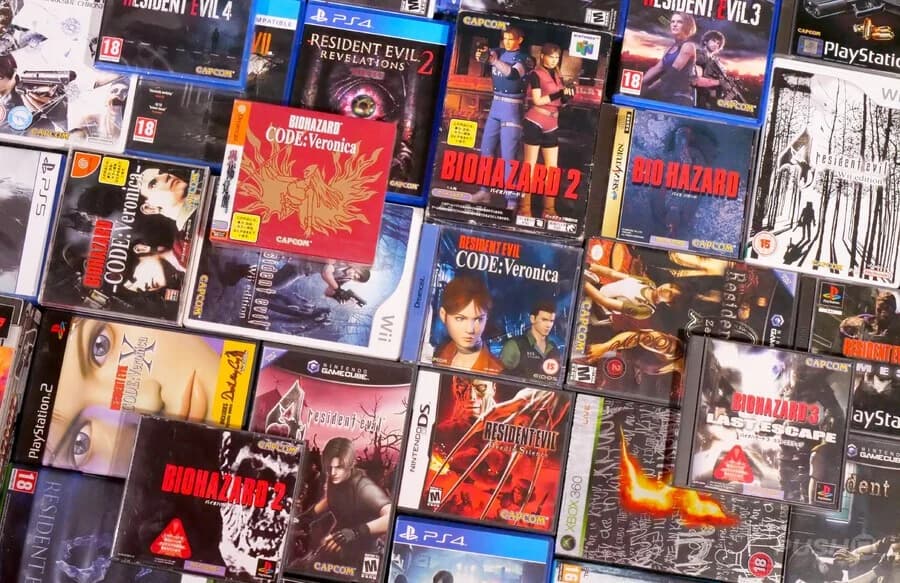
Then came Resident Evil 6. I bought it day one, full price, and then… never actually took the wrapper off my PS3 copy. The reviews were that deflating. When I finally did try it years later, it was exactly what I feared: a bloated, confused monster that wanted to be everything at once – co-op shooter, cinematic action romp, throwback horror – and ended up being nothing in particular. For me, it’s still easily the weakest numbered entry.
That’s the thing people forget: we were absolutely on the brink of Resident Evil becoming one of those brands that lives off name recognition while the actual games slide into mediocrity. There’s a timeline where Capcom doubled down on bloated co-op action and QTE nonsense, and Resident Evil quietly became a punchline.
Instead, we got something far stranger and much braver.
Kitchen, PSVR, And The Course-Correct That Saved The Series
My faith in the franchise came back not with a numbered sequel reveal, but with a VR demo called Kitchen. It was this grimy, claustrophobic experience Capcom was using to show off the original PSVR: you’re tied to a chair, everything’s filthy, there’s a sense of real physical presence, and then… things happen.
It wasn’t immediately obvious that this was Resident Evil-adjacent. But the tone was right. The unease was right. It felt like a team going, “Okay, we tried turning this into a Michael Bay co-op shooter, and that sucked the tension out. What if we get right up in the player’s face and make horror intimate again?”
When it turned out that Kitchen was essentially a tech teaser for Resident Evil 7: Biohazard, everything clicked. That first trailer, that creepy Louisiana plantation, that shift to first-person – it was Capcom quietly admitting they’d lost the thread and were willing to do something radical to get it back.
RE7 is where modern Resident Evil is born, as far as I’m concerned. The Baker house is one of the great horror locations in gaming: intimate, disgusting, layered with secrets. The first-person perspective wasn’t a gimmick; it forced vulnerability back into a series that had forgotten how to make players feel small and powerless. For the first time in years, opening a single door felt risky again.
Crucially, it also worked in plain old “sit on the couch with a controller” mode. I spent hours in PSVR sweating through that game, then replayed chunks flat just to appreciate how tightly constructed it all was. Resident Evil had finally remembered that survival horror isn’t about headshots per minute – it’s about dread per second.
Village, Requiem, And A Franchise That Actually Learns
Resident Evil Village didn’t hit me quite as hard as RE7 did, because the shock of the new had worn off a bit, but it still felt like Capcom had finally found a balance: first-person perspective, tighter gunplay, more gothic pulp energy, and a willingness to get weird with its villains. It was confident in a way the series hadn’t been since RE4.
Village, Requiem, And A Franchise That Actually Learns
Resident Evil Village didn’t hit me quite as hard as RE7 did, because the shock of the new had worn off a bit, but it still felt like Capcom had finally found a balance: first-person perspective, tighter gunplay, more gothic pulp energy, and a willingness to get weird with its villains. It was confident in a way the series hadn’t been since RE4.
🎮 Get This Game at the Best Price
Compare prices instantly and save up to 80% on Steam keys with Kinguin — trusted by 15+ million gamers worldwide.
*Affiliate link — supports our independent coverage at no extra cost to you

And then came the current run that pushed me from “impressed” to “okay, this is getting ridiculous.” The modern remakes – Resident Evil 2, 3, and 4 – could so easily have been lazy nostalgia vehicles. Instead, they’ve been some of Capcom’s best design work in years. They’re respectful of the originals but absolutely ruthless about cutting or reworking things that don’t hold up. They feel like the games you remember, not the games you actually played. That’s a crucial difference.
Then, right as the 30th anniversary rolls around, Capcom drops Resident Evil Requiem. Launched on 27th February 2026 and already past six million copies worldwide within a month, it’s not just commercially successful – it’s critically adored. Some outlets are calling it the highest user-rated entry in the whole franchise so far, and what stands out in those reviews isn’t just “fan service”. It’s how that fan service is being weaponised.
Requiem leans on series history – familiar locales, echoes of older mechanics, dual inventory systems, shifts in perspective between protagonists – but it folds all of that into a genuinely modern survival horror game. It’s not doing the lazy “hey, remember this corridor?” thing for cheap applause. It’s using nostalgia as design material, not wallpaper.
That’s the thread that runs from RE7 through the remakes and into Requiem: Capcom actually learning. Learning from the excess of RE6. Learning what worked about the fixed-camera originals without slavishly copying them. Learning how to make first-person horror that still feels like Resident Evil instead of an Outlast clone.
A 30-Year Brand That Refuses To Rot
What really amazes me about Resident Evil at 30 isn’t just the mainline games, though. It’s that the brand itself is still this omnivorous, weird thing that keeps mutating without totally losing its identity.
I’ve sat through all those Milla Jovovich movies. They go completely off the rails compared to the games, but they also kept the brand alive in the public imagination when the games were wobbling. I’ve watched most of the CG films, too, which sit in that uncanny space between fanfic and canon. Recently I even grabbed the Infinite Darkness comic and I still have some of the old S.D. Perry tie-in novels slowly yellowing on my shelf.
Way back in 2005, I reviewed Resident Evil Outbreak: File #2 on a tiny multiformat site I ran called Games Main Frame. That game introduced Alyssa Ashcroft, who’s now resurfaced as a key figure in Requiem. Seeing a niche PS2-era character pulled forward into a big-budget 30th-anniversary release is exactly the kind of long-tail fan respect most franchises never bother with. That history matters – and Capcom is actually paying attention to it.
And that’s just my tiny corner of it. Step back and look at what Capcom is doing around the anniversary itself: an official 30th anniversary date locked to 22nd March 1996, confirmed by long-time producer Jun Takeuchi; a full anniversary campaign with showcases, a dedicated hub, concerts, even theme park-style attractions. This isn’t a publisher sheepishly acknowledging an old IP while pushing everything into gacha hell. It’s a company treating Resident Evil like a crown jewel and, more importantly, making games that live up to that treatment.
Capcom’s Biggest Trick: Knowing What To Remake, And What To Bury
One thing I keep coming back to is how many versions of Resident Evil never made it out of the lab. There’s a whole alternate history of cancelled projects and prototypes: the infamous “Resident Evil 1.5”, handheld ports that died on the vine, N64 builds that only survive via leaks and preservationist obsession. Not every idea was good. Some of them were rightfully shot in the head.
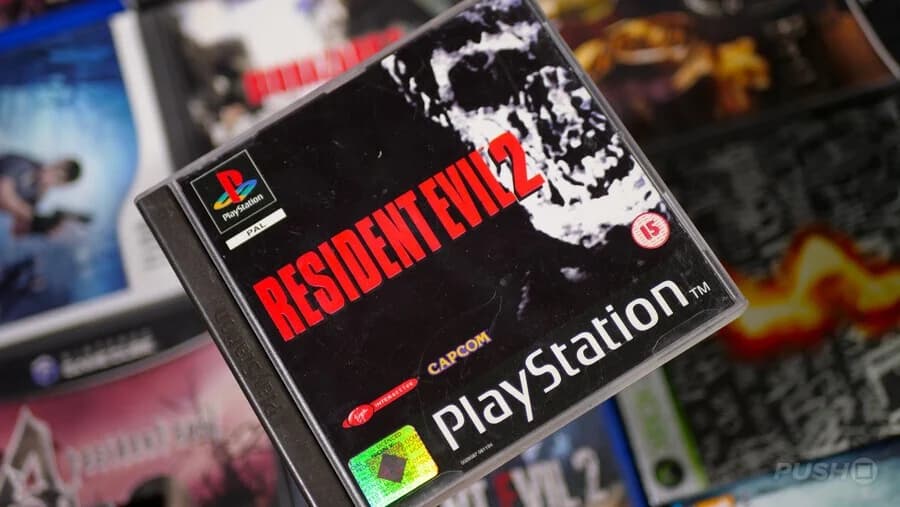
What impresses me now is that Capcom finally seems to understand which parts of that messy legacy are worth exhuming. The remakes laser in on the golden era: RE2, RE3, RE4. They’re not rushing to remaster every spin-off just because. They’re curating.
At the same time, the first-person games push the series forward instead of wallowing in the past. There’s a deliberate split: the remakes are the refined memory; the Ethan Winters saga and now Requiem are the vanguard. That’s smart as hell. It means Resident Evil can serve the nostalgia crowd and the “give me something new to be scared of” crowd without collapsing into self-parody.
Could Capcom screw this up in the next decade? Absolutely. There’s already speculation about what gets remade next – Code Veronica, RE5, something wilder – and there’s always the risk of going one remake too far, or leaning too hard on fan service. But standing here at the 30-year mark, looking at Requiem’s pace and the consistency of the last several releases, it feels like they’ve actually earned the benefit of the doubt.
FinalBoss // Gear
Level up your setup
01Top-rated gaming headsetson Amazon→02High-refresh gaming monitorson Amazon→03Gaming chairson Amazon→04Discounted game keyson Kinguin→Affiliate links · As an Amazon Associate, FinalBoss earns from qualifying purchases.
Want to Level Up Your Gaming?
Get access to exclusive strategies, hidden tips, and pro-level insights that we don't share publicly.
Ultimate Gaming Strategy Guide + Weekly Pro Tips