
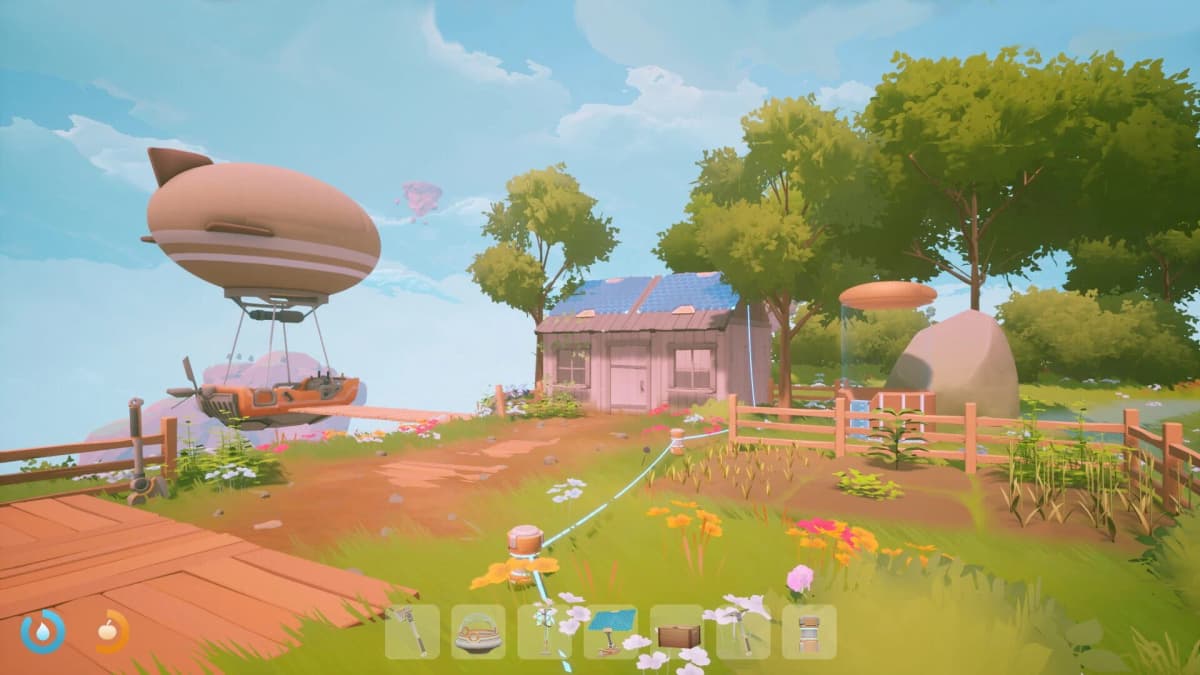
You built a Chicken Coop, it looks finished, and it produces nothing. That is the most common Solarpunk chicken mistake: the coop is not the end of the job, it is the center of a small chain. To get steady eggs you unlock the Animal Basics Pack, build the coop with food and water in place, push every need to 10/10, then add Animal Transport so the loop runs with less babysitting.
Table of Contents (9)
The short version
- Research the
Animal Basics Packat Tier 5 of the Research Table. - The research costs 5x Wheat — that Wheat gate is what locks most players out.
- Build the
Chicken Coopplus its food and water support, and craftAnimal Feedfrom 2x Wheat. - Eggs only start once the chicken’s needs reach 10/10.
- Collect eggs from the basket beside the coop — it holds 4 eggs and must be emptied by hand.
- Add the
Animal Receiving Stationfor transport only after the basic loop already works.
What “taming chickens” means in Solarpunk
There is no long hand-feeding mini-game here. Taming is really about unlocking the animal husbandry chain and meeting the chickens’ needs. The game checks three things: that you researched the right pack, built the right structures, and pushed every need to its cap. Miss any one and egg production either never starts or stalls in a way that feels random.
Step 1: Unlock the Animal Basics Pack at Tier 5
If the coop recipe is missing, do not hunt through every crafting tab. The unlock you need is the Animal Basics Pack, and it sits at Tier 5 of the Research Table. The research costs 5x Wheat, and that cost is the gate that catches most players. Until you have the Wheat to clear it, the entire animal chain stays locked, which makes it look like you are missing a separate taming mechanic when you are really just missing one research.
Solarpunk rewards building in the right order, so do not start designing a chicken area until the research is done. If you lay out a farm corner first and assume the animal pieces will slot in later, you usually end up tearing things down to fit the troughs, access paths, and transport. Unlock first, build once. If you are short on Wheat, prioritize that crop — the same Research Table progression also gates other early upgrades, so it is worth pushing your Cotton and Research Table chain in parallel.
Step 2: Build the full coop setup, not just the coop
Once the research is done, build the coop together with its support pieces and the feed it runs on:
Chicken Coop(the shelter anchor)- Food and water support placed right beside it
Animal Feed, crafted from 2x Wheat
This is where Solarpunk quietly punishes half-finished builds. A coop without feed support is not “almost ready,” and a coop without water is not “good enough for now.” Treat the whole thing as one machine: the coop covers shelter, while food and water keep the need checks from blocking output.
Placement matters more than people expect. Keep the coop, food, and water close together in a single chicken zone instead of scattering them across a larger farm deck. A clean zone means that when production stalls, one glance tells you whether the problem is food, water, shelter, or transport. A spread-out layout turns a simple fix into a scavenger hunt.
Step 3: Push every need to 10/10 to start egg production
This is the number the in-game UI does not spell out clearly: eggs only begin once the chicken’s needs reach 10/10. “Mostly satisfied” is not enough — a need sitting at 8 or 9 still produces zero eggs. Watch the needs meter, not the build, when you are waiting on your first egg.
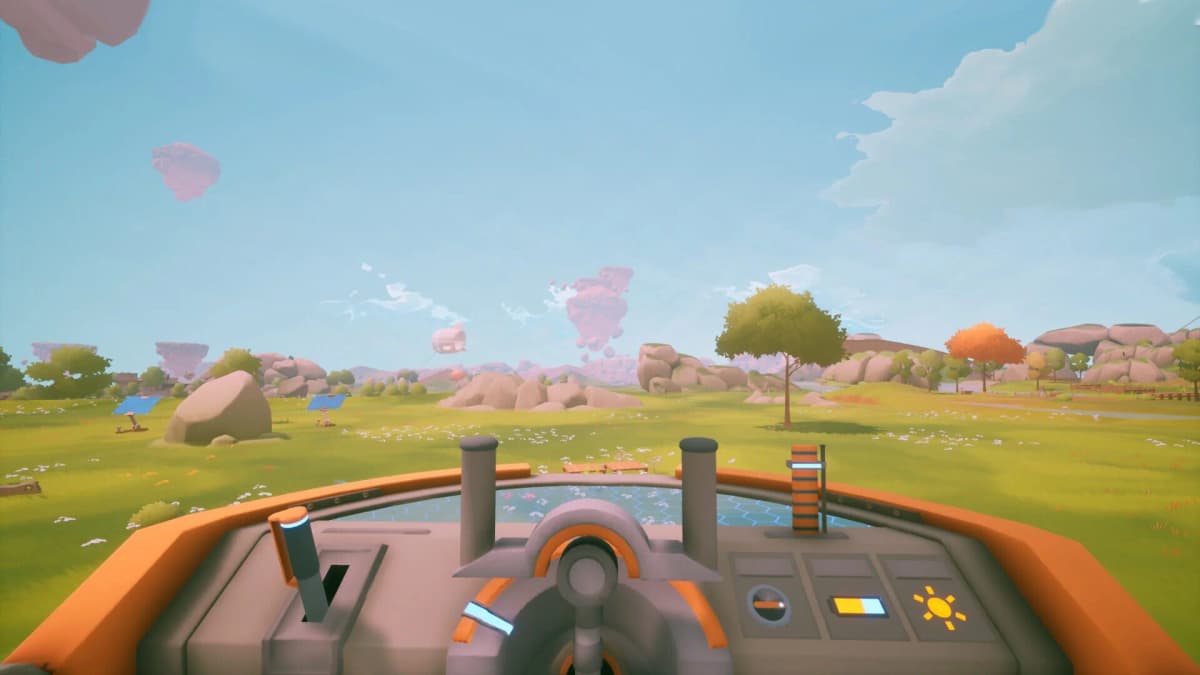
Food is the part of the loop players overlook most, because feed feels like a maintenance item rather than a production requirement. In Solarpunk it is both: keep Animal Feed stocked, keep water covered, and keep the chickens tied to the coop. When all three read 10/10, eggs start arriving.
Step 4: Collect eggs from the basket — it caps at 4
Eggs do not auto-bank. They spawn in an egg basket beside the Chicken Coop, and that basket holds only 4 eggs. Once it is full, production stalls until you collect them by hand. If your coop “stopped working” after a productive stretch, this is almost always why — the basket filled up and nobody emptied it.
Make egg collection part of your normal farm loop. Empty the basket on every pass through the chicken zone and the coop never sits idle on a full basket.
Step 5: Add Animal Transport after the egg loop works
Do not rush Animal Transport before the coop can already produce. Transport is for scaling and convenience, not for fixing a broken husbandry setup. If the chickens are below 10/10 on any need, adding transport just gives you a bigger broken system.
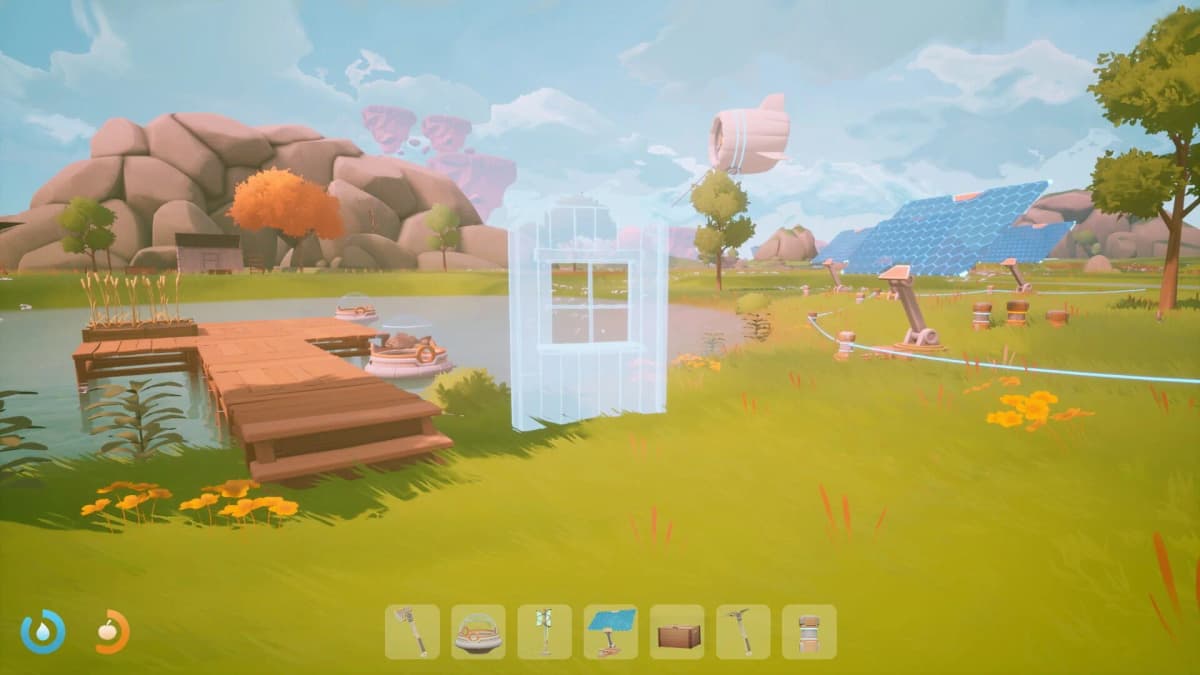
Once the coop is stable, research the transport side and place an Animal Receiving Station, then route the chickens into the production area you already prepared. Station placement is the part to get right: put the receiving point clearly inside the coop zone, beside the food-and-water cluster, not somewhere technically nearby but disconnected from it. A good transport setup keeps the chickens tied to the correct space and cuts how often you sort the animal side of the farm by hand.
- Keep the receiving station inside the coop cluster.
- Do not tuck it into a distant decorative corner.
- Keep it in the same zone as food, water, and shelter.
- Automate only after the coop already works by hand.
Common mistakes
- Skipping the research gate. If the
Animal Basics Packis not unlocked, or you cannot pay the 5x Wheat cost, the rest of the chain will never feel complete. - Building a coop without full support. The coop, its food and water support, and
Animal Feedall matter. Missing one keeps eggs at zero. - Treating “nearly satisfied” as done. Needs must read 10/10. A meter at 9 still produces nothing.
- Letting the egg basket fill. It caps at 4 eggs. A full basket silently stalls production until you collect.
- Expecting transport to fix unmet needs. It will not. Hit 10/10 first, then automate.
- The receiving station not registering. The
Animal Receiving Stationcan fail to register until you save and reload. If everything looks correct but the game acts like the station is not there, reload before you rebuild the farm.
That last point matters because it mimics a design failure. When the station does not register, players often tear up a working setup and rebuild it in the same broken state. Reload first — it is the fastest fix and the one most worth trying before moving structures.
Practical takeaway
Treat eggs in Solarpunk as a needs check, then automate only after the conditions hold. Research the Animal Basics Pack at Tier 5, pay the 5x Wheat cost, build the coop with food and water support and Animal Feed (2x Wheat) from the start, push every need to 10/10, and empty the 4-egg basket on every pass. Add the Animal Receiving Station only once the coop already produces, and if it seems invisible, save and reload before redesigning anything. Keep the zone compact and the whole system stays easy to read.
FinalBoss // Gear
Level up your setup
01Top-rated gaming headsetson Amazon→02High-refresh gaming monitorson Amazon→03Gaming chairson Amazon→04Discounted game keyson Kinguin→Affiliate links · As an Amazon Associate, FinalBoss earns from qualifying purchases.
Want to Level Up Your Gaming?
Get access to exclusive strategies, hidden tips, and pro-level insights that we don't share publicly.
Ultimate Guide Strategy Guide + Weekly Pro Tips