
Table of Contents (7)
Pacifist survival is not the problem. Fake helplessness is.
I do not need Subnautica 2 to turn into an underwater shooter. I do not need a dumb assault rifle strapped to a diving suit so I can cosplay as the worst tourist in alien-ocean history. The part that bothers me is much simpler than that: if a game asks me to survive through “creature mitigation” instead of combat, then mitigation has to feel like an actual action, not a polite word for getting bullied by fish.
That is where this whole debate keeps getting flattened into nonsense. People hear “players want to fight back” and immediately sort themselves into teams. One side acts like every frustrated player is a bloodthirsty maniac who wants to exterminate the ecosystem. The other side acts like the developers are denying some sacred gamer birthright. Both readings are too lazy for what is actually happening.
Subnautica 2 has been pitched in public comments as a pacifist survival game, with the developers focusing on nonlethal tools, aggression tuning, and what they call creature mitigation rather than letting players kill large hostile fauna. Fine. Honestly, more than fine. That design goal makes sense for this series. The ocean in Subnautica works because it feels bigger than you, older than you, and completely uninterested in your power fantasy. The best moments in these games have always come from feeling tiny in a living world. But tiny is not the same thing as useless, and that distinction matters more than any slogan about nonviolence.
What players mean by “fight back” is control, not carnage
When players say they want to fight back, I don’t think most of them are demanding a pile of dead leviathans. What they want is a way to interrupt danger and reclaim momentum. They want the game to acknowledge their decision-making in the exact moment a threat appears. That could be a stun, a scare-off, a decoy, a route blocker, a base defense system, a panic tool, or a terrain trick. The point is not the body count. The point is whether your input changes the situation in a clear, reliable way.
This is why the current argument around Subnautica 2 is more interesting than “violence versus no violence.” Players are already finding and discussing workarounds and tools: flares, resonator-style deterrents, biomods like electric shock effects, and other mid-game options that let them disrupt predators without killing them. That’s the important clue. The audience is not rejecting the pacifist idea outright. The audience is stress-testing whether the nonlethal toolkit is strong enough to carry the fantasy.
If you’ve played enough survival or horror games, you know exactly where the line is. Alien: Isolation is terrifying, but the flamethrower matters because it creates space. It doesn’t erase the alien; it buys you a window. Classic stealth horror works when your “no” button is weak but meaningful. It fails when enemies feel like scripted punishments with teeth attached. That same tension is all over modern survival design: developers want vulnerability-first pacing, while players keep looking for mastery loops. Neither side is wrong by default. But if the game makes every dangerous encounter feel predetermined, players stop feeling vulnerable and start feeling managed.
I’ve seen that complaint spill far beyond survival games. In RPG communities, players regularly describe difficulty spikes as enemies instantly targeting the weakest party member or fights unfolding like the AI already solved the puzzle before the turn started. The frustration is not just “this is hard.” It’s “I don’t feel like I’m playing; I’m managing risk inside a machine that already decided my options.” That same mood is hovering over Subnautica 2 right now, and the studio should take it seriously.
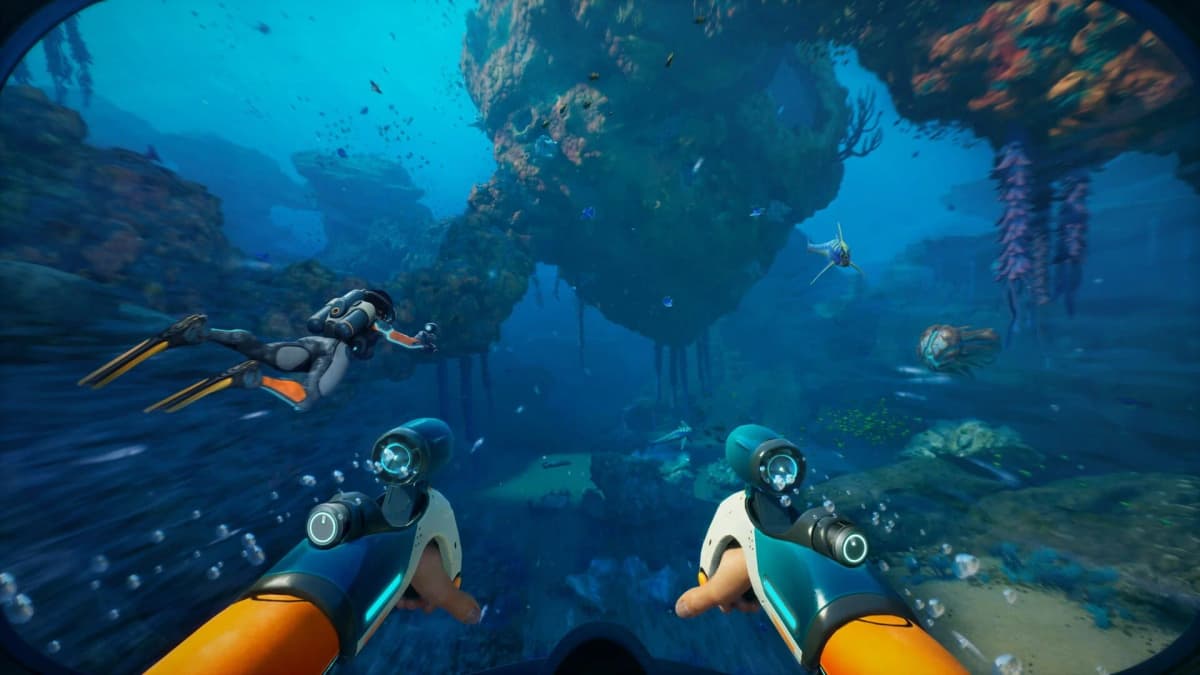
“Creature mitigation” has to be a real gameplay verb, not a design alibi
The phrase itself is interesting because it reveals the ambition. “Mitigation” means the designers do not want victory to come from damage numbers. They want survival to come from reading behavior, managing space, pacifying threats, planning routes, and using tools that alter the encounter without ending the creature. Conceptually, I love that. In practice, it creates a brutal design burden. Once you remove lethal solutions, every nonlethal solution has to work twice as hard.
If a predator charges me and my only meaningful response is “swim away and hope the aggro breaks,” that is not a system. That is prayer with a UI. If I use a deterrent and the creature still clips me, circles back instantly, or keeps camping the same route with no readable downtime, then I have not mitigated anything. I have just performed a ritual the game barely respects.
This is why I keep coming back to one ugly but useful phrase: player-facing outputs. Every mitigation tool needs a visible result. If I trigger a sonic pulse, what changes? Does the creature retreat, hesitate, redirect, lose interest, become more predictable, expose a new escape lane, or leave my construction zone alone for a while? If the answer is fuzzy, the mechanic will feel fake no matter how noble the design philosophy sounds in a Discord post.
- Threat windows need to exist. The game has to give me enough time to identify the danger and choose a response before I am already in the punishment animation.
- Creature behavior needs to be readable. I should learn something from repeated encounters: patrol range, warning tells, sound triggers, chase limits, territorial logic, recovery states.
- Mitigation tools need concrete outputs. Scare-offs, stuns, diversions, and biomod effects cannot just be flavor. They need to produce reliable space, even if only briefly.
- Base-building has to connect to safety in some meaningful way. If structures, placement choices, lights, sound, modules, or crafted defenses do not affect local danger, then building near risk stops feeling daring and starts feeling dumb.
- Progression must improve your relationship to danger. Even in a pacifist game, mid- and late-game survival should feel more informed and more intentional, not just equally scared with shinier gear.
That list is not me asking for the game to become easier. It is me asking for the game to become legible. Difficulty is fine. Oppression can even be the point. But unreadable oppression is just friction wearing a serious face.
The weirdest part of this debate is that the game already knows the answer
What makes all this more frustrating is that Subnautica 2 already seems to be built around adaptation. The biomod system, creature scanning, specialized utilities, and nonlethal interactions all point in the same direction: learn the ecosystem, then turn knowledge into survivability. That is good design territory. That is exactly how you make pacifist survival feel active instead of passive.
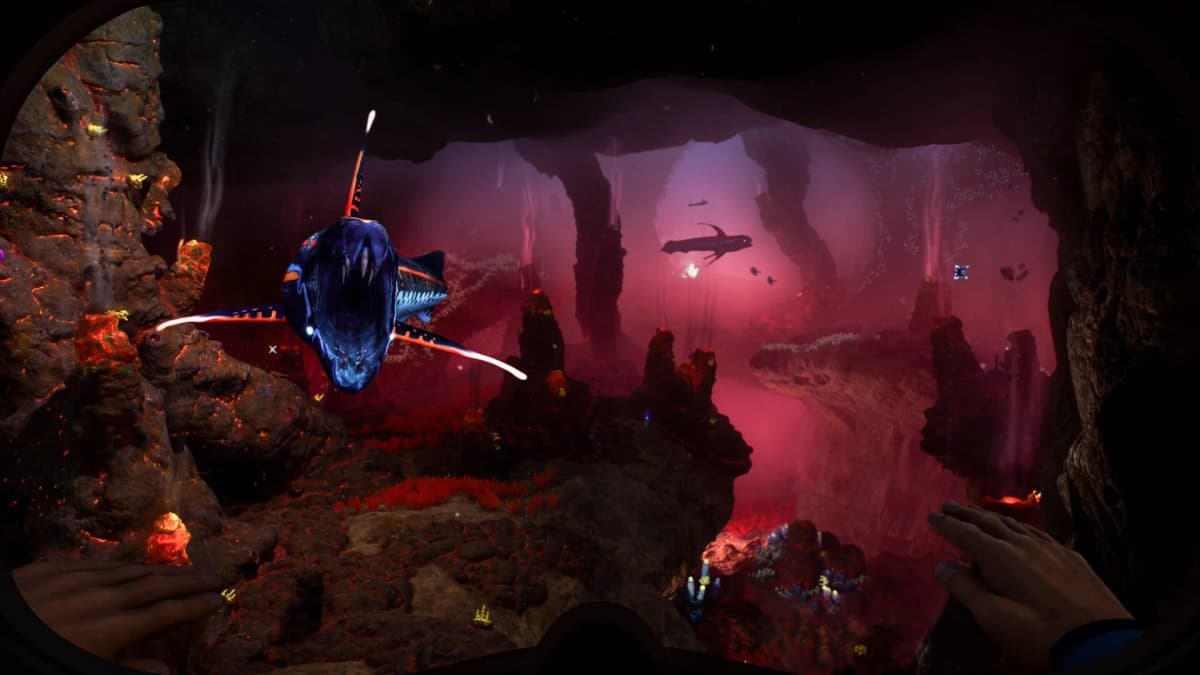
So when public messaging leans too hard on “we aren’t that kind of game,” I think it misses the stronger argument. The correct defense of Subnautica 2 is not moral purity. It is systemic depth. Don’t tell me the game rejects violence like that alone settles the matter. Show me that learning the fauna gives me tools, that smart play changes outcomes, and that the ocean becomes more negotiable as I understand it. That is a much better pitch than wagging a finger at players for wanting self-defense.
And yes, some of the player base is absolutely asking for the wrong thing. There are always people who treat any friction as a demand for bigger weapons. Turning Subnautica 2 into Sons of the Forest with scuba gear would be a disaster. The ecosystem fantasy would collapse the second every major threat became a loot piñata. The ocean should not become a checklist of things I have domesticated through murder. If you let me dominate every encounter, the fear dies, and with it the awe.
But that counterpoint only goes so far. Pacifism is not automatically sophisticated. Nonviolence can be just as shallow as violence if it is implemented as restriction instead of interaction. A game does not become profound because it took away the gun. If anything, taking away the gun means every other verb has to be sharper.
Early Access is where design philosophy stops being a speech and starts being a checklist
This is the part the studio really cannot dodge. Once you launch in Early Access and publicly say creature mitigation is a priority for upcoming updates, you have converted a philosophy into a testable promise. Good. That is how this should work. The conversation is no longer abstract. It is now about whether the next updates improve aggression tuning, create actual downtime, clarify feedback, and give players more nonlethal tools with reliable outcomes.
I’m especially not buying any surprise that players keep building bases near predators. Of course they do. In a survival sandbox, building in stupid, beautiful, dangerous places is half the fantasy. Players don’t just build for efficiency; they build to challenge the world, to plant a flag in a hostile biome, to make a home where the game clearly thinks they shouldn’t. That behavior is not a misunderstanding. It is the natural endpoint of giving people construction tools in a hostile environment.
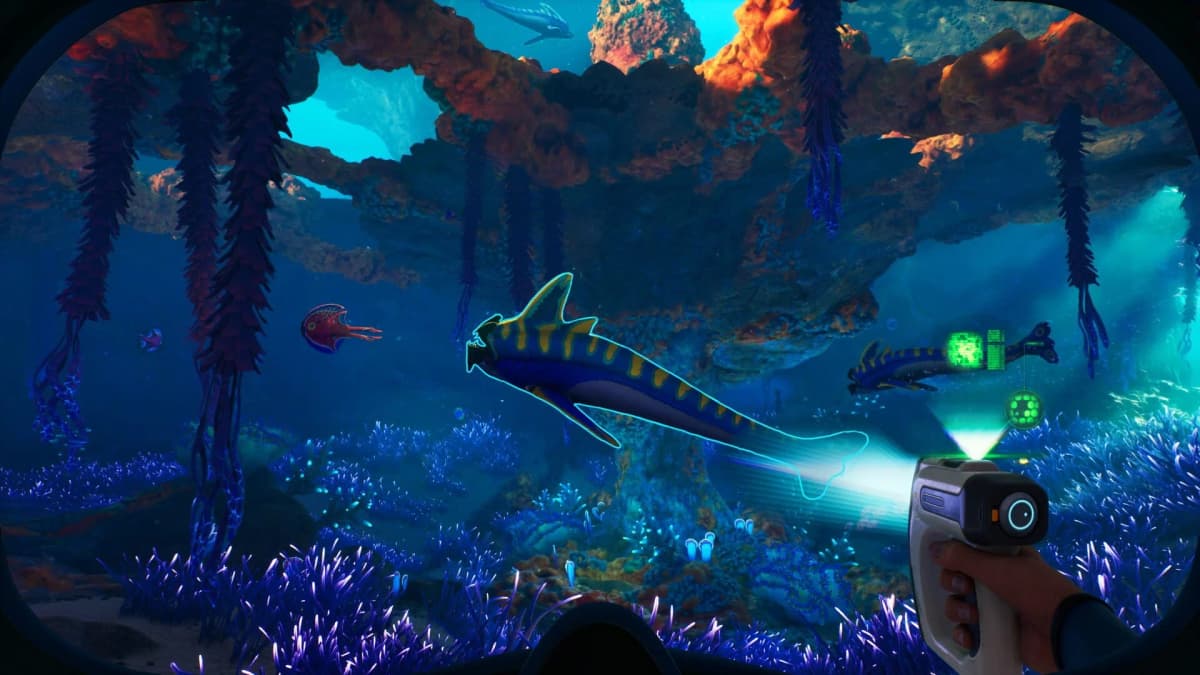
So if the studio seems stunned that people set up shop beside underwater “wolves,” then I think it underestimated what base building means psychologically. Players see a building system and assume, very reasonably, that they will eventually be able to stabilize danger. Not erase it. Stabilize it. If the answer is really “don’t build there,” that is not a thrilling survival lesson. That is the game quietly narrowing its own sandbox.
And that circles back to why the current backlash is not just a bunch of trigger-happy weirdos whining about missing guns. It is a design-trust issue. Players can accept weakness. Players can even enjoy being prey. What they hate is feeling like the rules of survival are vague, the tools are ornamental, and the intended response to danger is perpetual inconvenience. Nobody boots up a survival game hoping to become an administrator of bad odds.
My line in the sand for Subnautica 2 is simple
I want Subnautica 2 to stay weird, tense, and nonlethal. I want the ocean to remain hostile in a way most AAA games are too cowardly to attempt. I want predators that feel like ecological forces instead of XP bags. I even want moments where the smartest option is to back off, reroute, and respect the food chain. That is all good survival design.
What I do not want is a game that mistakes helplessness for artistry. If “fight back” is off the table, then “mitigate” has to mean more than flashing a gadget and praying the fish honors the cutscene in the designer’s head. It has to mean readable danger, responsive tools, meaningful progression, and enough systemic clarity that surviving feels authored by the player rather than granted by the AI.
That is the standard. Not guns. Not mass slaughter. Not some childish demand to dominate nature. Just agency. If Subnautica 2 can deliver that through creature mitigation, the pacifist vision will look smart instead of stubborn. If it can’t, then players asking to fight back are not missing the point. The game is.
FinalBoss // Gear
Level up your setup
01Top-rated gaming headsetson Amazon→02High-refresh gaming monitorson Amazon→03Gaming chairson Amazon→04Discounted game keyson Kinguin→
Affiliate links · As an Amazon Associate, FinalBoss earns from qualifying purchases.
Want to Level Up Your Gaming?
Get access to exclusive strategies, hidden tips, and pro-level insights that we don't share publicly.
Ultimate Gaming Strategy Guide + Weekly Pro Tips