
My first bad reservoir in Timberborn looked perfect on pause: a long wall across a river, pumps nearby, farmland ready, everything tidy. Then the water rose, spilled over the top, and taught the lesson the game does not explain clearly enough: a Dam is not a sealed wall. It is an early water barrier that holds water back only up to a point, then lets excess flow over it. If you understand that one rule, dams become one of the best early survival tools in the game instead of a very expensive misunderstanding.
The short version is this: use dams early to preserve river depth through droughts, place them at the narrowest cross-section you can find, and do not rely on them when you need exact water control. For that job, Floodgates are usually better because you can set the water level instead of hoping a static barrier behaves the way you want.
Table of Contents (8)
What a Dam actually does in Timberborn
In practical terms, the dam is Timberborn’s entry-level water-control structure. It blocks and slows water, which raises the upstream water level and helps keep pumps and irrigation alive longer when the drought starts. That is why so many early colonies stabilize the moment a simple dam goes up across the nearest river channel.
The part players miss is the overflow behavior. Community sources widely cite a standard dam starting to overflow at roughly 0.65 m of water depth. Treat that number as a useful benchmark, not a sacred exact spec, because player-observed values can drift a bit across versions and guides. The important takeaway is consistent: once the water gets high enough, the dam stops acting like a hard stop and becomes a controlled spill point.
That role defines the building. A dam is good at retaining some water. It is not good at perfectly sealing a river. If you build with that expectation from the start, your early layouts will make a lot more sense.
When players usually encounter the Dam
Most players really “meet” the dam when the first drought threatens their drinking water and crops. That is the moment where Timberborn stops being a cute beaver builder and becomes a water-management game. You notice your pumps drawing from a shrinking channel, the green irrigated strip starts looking fragile, and the fastest answer is often not a grand reservoir plan. It is a quick dam across the closest useful river section.
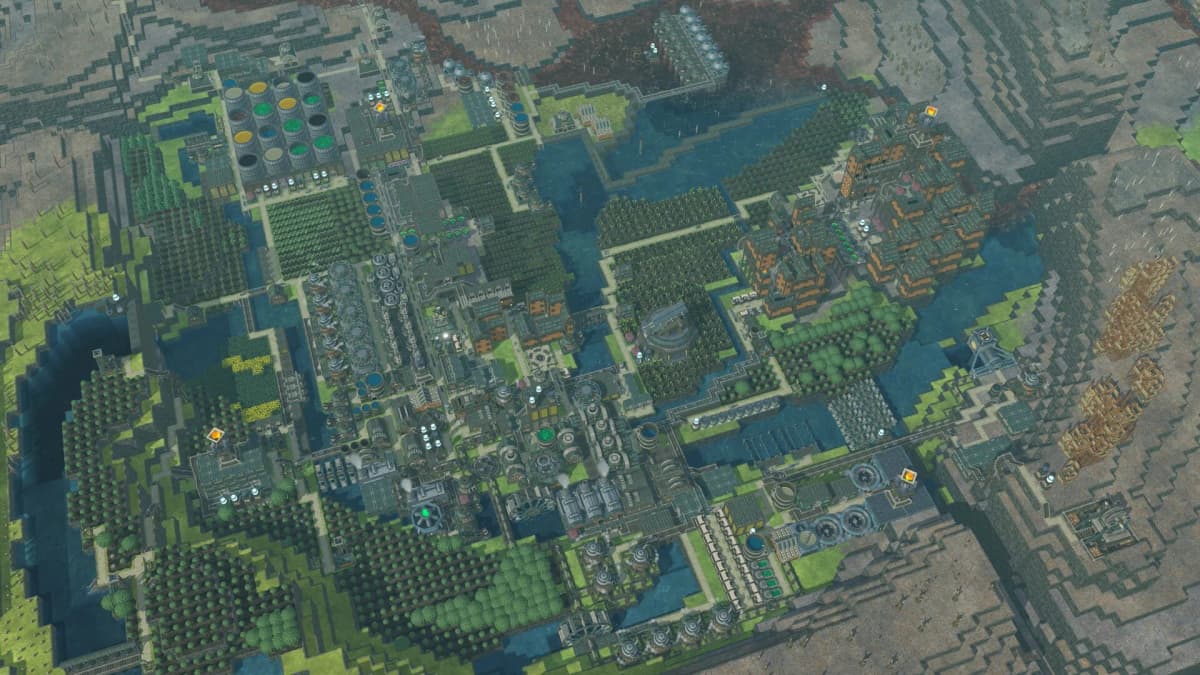
That is still the right instinct. A practical early-game tactic is to dam the nearest river quickly instead of waiting for an elaborate perfect basin. Surviving the next drought matters more than sketching a masterpiece that finishes too late. You can always upgrade the design later with more advanced water-control pieces.
- Build a dam early when your river is shallow enough to disappear quickly in drought.
- Prioritize it when your pumps depend on one narrow stretch of water.
- Use it as a stabilizer first, not as your final forever solution.
Where to place a Dam for the best result
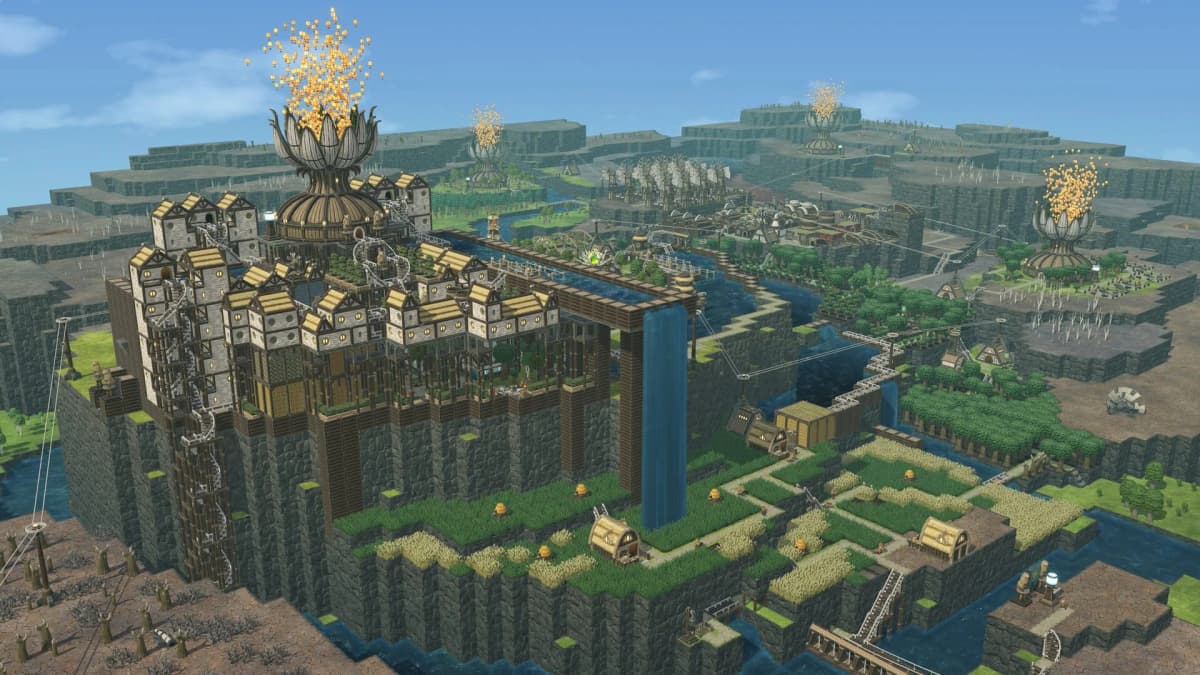
The best placement rule is simple: build at the smallest cross-section available. That usually means the narrowest part of a river, canyon, or natural choke point. This matters for two reasons. First, it cuts material cost because you are placing fewer tiles. Second, it reduces the amount of construction exposed to moving water, which makes the whole project less awkward and easier to finish.
Wide, dramatic dam walls look impressive, but they are usually the wrong first project. They cost more, take longer, and create more chances for your beavers to spend valuable time hauling instead of solving the actual drought problem. In Timberborn, a small ugly fix that works this cycle is often stronger than a beautiful megaproject that finishes after the colony has already been stressed.
If you have a natural basin upstream from that narrow point, even better. Natural basins are ideal reservoir spaces because the terrain is already doing part of the storage work for you. If your map is flat or awkward, some community guides recommend excavating a basin with explosives later on, but that is an upgrade path, not your first emergency answer.
How Dams perform in real colony planning
A dam performs best when you ask it to do three jobs: hold upstream water a little higher, stretch water availability deeper into drought, and create a simple reservoir effect without demanding precision. That is exactly why dams feel so good in the early and lower-mid stages of a settlement. They are forgiving, readable, and immediately useful.
Where they start to fail is fine control. You cannot tune a standard dam to one exact seasonal target. If wet-season flow spikes, the water simply overtops the barrier once the overflow point is reached. If you wanted a perfectly controlled reservoir depth, flood prevention, or tighter downstream regulation, the dam is doing the wrong job.
A useful rule of thumb from community engineering advice is to build barriers about 1.0 unit higher than your target water depth if you are trying to reduce overflow risk in wetter periods. That does not make a basic dam precise, but it does explain why so many underbuilt reservoirs disappoint players: the wall is barely tall enough for normal conditions, so any stronger flow turns into spillover immediately.
Why Floodgates usually beat Dams in bigger builds
If the dam is the beginner’s barrier, the floodgate is the builder’s control tool. The big advantage is adjustable depth. Instead of accepting one passive overflow behavior, you set the water level you want and react as seasons change. That makes floodgates more flexible for reservoir tuning, flood control, and drought management.
That is why a lot of experienced community advice recommends including at least one adjustable floodgate in any larger water-control wall. A pure dam wall works, but it is less adaptable. One adjustable segment gives you a release valve when the wet season gets aggressive or when you want to manage storage more deliberately.
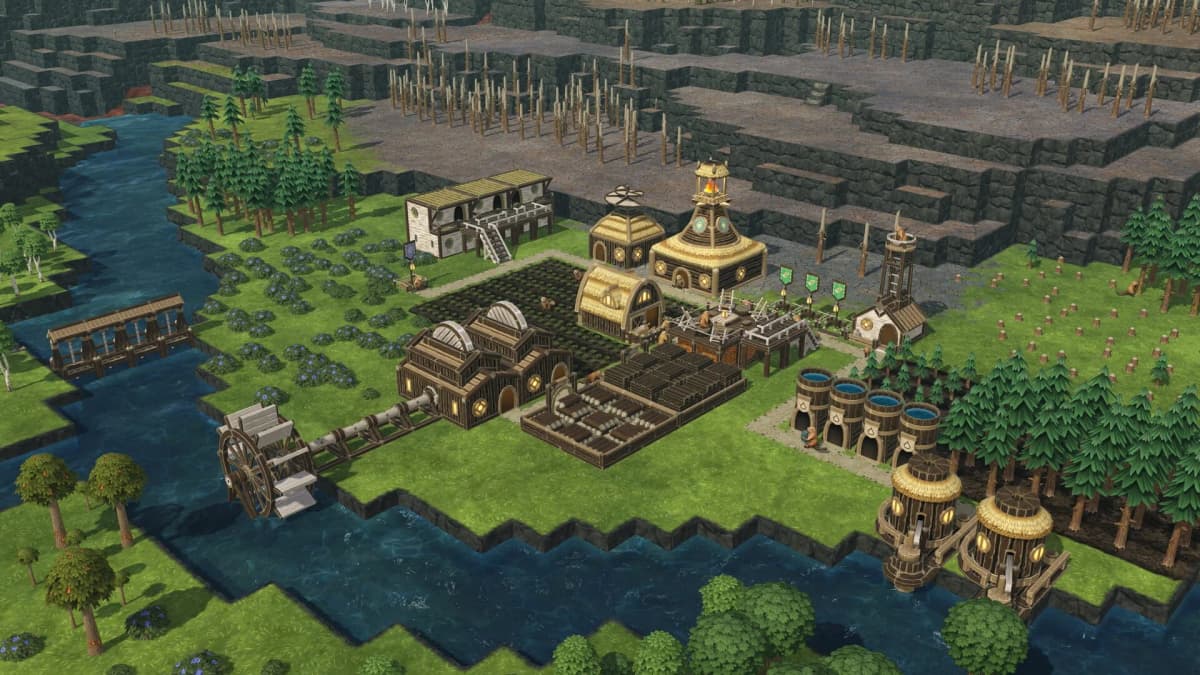
There is also some version and terminology drift to keep in mind. Depending on the guide and the game version, you may also see discussion of other water-control tools, including newer structures such as Iron Teeth-specific sluices or fill and throttling valves. The broad lesson stays the same even if the exact toolset changes: the more advanced your colony gets, the more valuable adjustable water control becomes, and the less a plain dam can carry the whole system by itself.
Reservoir advice that works better than one giant lake
When players move beyond a single emergency dam, the next mistake is often going too big in one place. One massive reservoir feels efficient, but multiple smaller reservoirs are usually safer. They add redundancy, let you manage different areas independently, and reduce the risk that one bad placement or flow issue cripples the entire colony.
- Use natural basins whenever possible.
- Prefer several smaller reservoirs over one giant all-purpose storage area.
- Include at least one adjustable control point in larger walls.
- Leave margin above your intended water depth instead of building to the exact line.
- Upgrade your design in stages rather than rebuilding the whole river at once.
This staged approach also matches how Timberborn colonies actually grow. Early on, a single dam near your pumps may be enough. Later, you add floodgates. Later still, you reshape terrain, separate districts, or build more specialized storage and flow control. Trying to skip straight to the final form is usually how players burn materials and still end up with worse drought coverage.
Common Dam mistakes that waste materials
- Treating a dam like a sealed wall. It overflows, so do not use it when zero spill is the entire objective.
- Building across the widest part of the river first. The narrowest choke point is almost always the more efficient answer.
- Waiting too long for the “perfect” reservoir. A quick nearby dam is often the difference between stable pumps and a rough first drought.
- Using only dams in a large water system. Bigger systems benefit from at least one adjustable floodgate.
- Overcommitting to one giant reservoir. Smaller independent storage areas give you more resilience.
The role of the Dam in one sentence
In Timberborn, the dam is the fast, early, reliable way to hold enough water for drought survival, but the moment you need precision, adaptability, or full control, it stops being the final answer and becomes the foundation you build on top of.
FinalBoss // Gear
Level up your setup
01Graphics cardson Amazon→02Gaming laptopson Amazon→03High-refresh gaming monitorson Amazon→04Discounted game keyson Kinguin→
Affiliate links · As an Amazon Associate, FinalBoss earns from qualifying purchases.
Want to Level Up Your Gaming?
Get access to exclusive strategies, hidden tips, and pro-level insights that we don't share publicly.
Ultimate Guide Strategy Guide + Weekly Pro Tips