
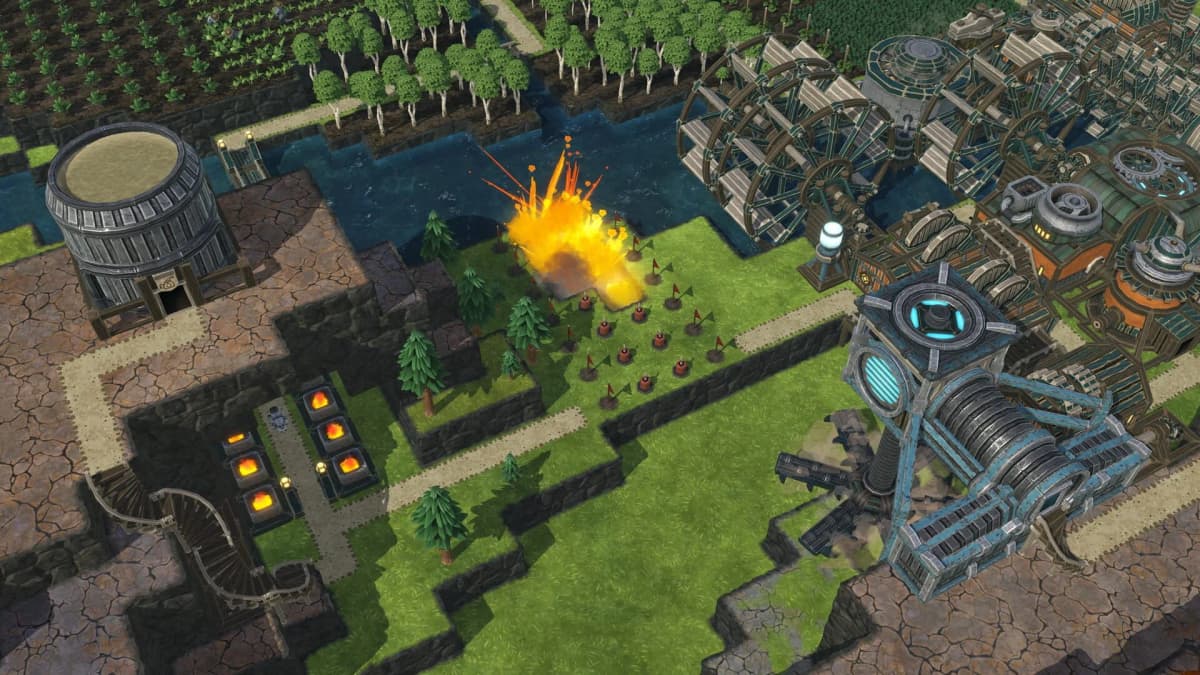
The nasty Update 5 failure in Timberborn does not look dramatic at first. Your canals are full, your farms seem close enough to water, and then the crop ring starts thinning out for no obvious reason. A patch of ground loses irrigation, a mixed canal crosses the 50% badwater mark, and suddenly the same water system that used to carry your district is poisoning it. The shortest useful answer is this: after Update 5, Iron Teeth works best when you stop treating water, farming, and badwater industry as one shared network. Build them as separate systems on purpose.
That is the big planning shift. Your clean irrigation basin should be protected and stable. Your badwater should be routed like an industrial input, not tolerated near fields. Your centrifuges should sit in a dedicated production lane with their own fuel and power logic, because they can create ugly chain failures if they compete with the rest of the colony at the wrong time. If you build around that idea, Update 5 stops feeling chaotic and starts feeling predictable.
Table of Contents (10)
What Update 5 actually changed for irrigation and badwater
Update 5 “Badwater” launched on January 18, 2024, and Mechanistry described it as the game’s fifth major content update. It added new ecological hazards, more than 25 buildings, and reworked all maps around the new mechanics. The change that matters most for day-to-day survival is that badwater is no longer a simple yes-or-no problem. It scales. As badwater concentration rises, irrigation range shrinks. At 50% concentration, irrigation stops. Above 50%, the water starts contaminating nearby ground and killing plant life.
That one change breaks a lot of old habits. Pre-Update 5 layouts often leaned on tiny water bodies, compact dump-fed pits, or “close enough” mixed canals that only had to stay wet. That logic is outdated now. The irrigation algorithm also changed so water-body size matters: smaller bodies irrigate smaller areas, and they disappear faster. The old Water Dump trick is effectively dead as a reliable farm backbone. On top of that, the Irrigation Tower was removed, so you no longer have a meme solution that brute-forces bad terrain. You need cleaner terrain planning.
The Iron Teeth advantage: the Irrigation Barrier
Iron Teeth got the faction-specific tool that makes all of this manageable: the Irrigation Barrier. It costs 400 science points, 10 logs, and 5 treated planks, and it blocks both contamination and irrigation. That last part is the detail players miss. It is not a magical safe wall you can drop anywhere near fields. If you place it carelessly, it will also cut off the irrigation footprint you were trying to protect.
Used well, though, it is one of the strongest planning tools in the patch. Treat it like a hard border between systems. Put your clean farm basin on one side. Put your badwater route, industrial runoff, or risky mixed channels on the other. Do not run the barrier through the middle of land that still needs watering. In practice, it works best when it defines the edge of a district, not when it tries to rescue a sloppy canal layout after the fact.
The layout that works now: three separate lanes
If you are rebuilding an Iron Teeth colony for Update 5, plan around three lanes instead of one giant water grid. This is the part that saves the most time, because it prevents you from redesigning the same district again later.
- Lane 1: clean irrigation for crops, bushes, and trees that must never touch meaningful badwater concentration.
- Lane 2: badwater transport for collection, diversion, and controlled flow away from food production.
- Lane 3: industrial extraction where centrifuges, storage, and power are clustered so the production chain can be managed as a factory.
Old layouts often combined all three. That is the trap. Once badwater becomes a scaling threat, the “mostly clean” canal is no longer good enough. A shared channel can quietly shrink your irrigation radius before you notice it, and by the time crops show the damage, the colony is already behind.
Build the clean irrigation basin first
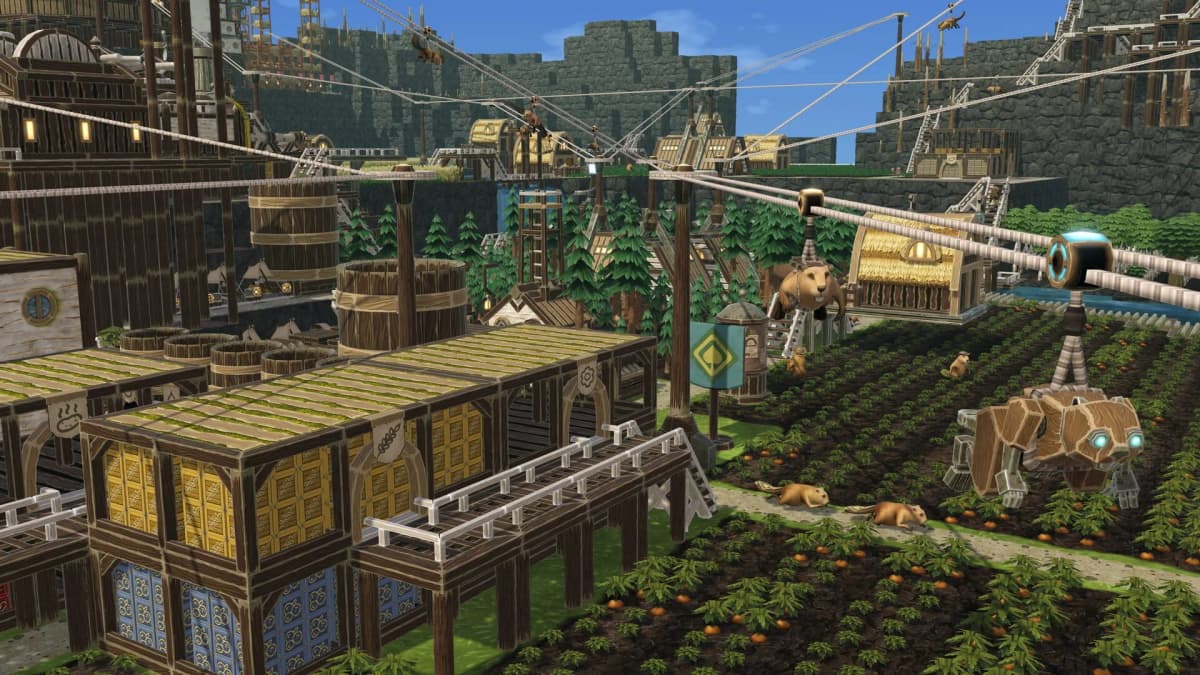
Your farm water should be large, stable, and boring. Bigger clean water bodies now matter more, because they provide better irrigation coverage and do not vanish as quickly. That means broad basins, deliberate reservoirs, or thicker clean canals beat the tiny pit designs that used to be efficient. If your farmland depends on a narrow puddle staying alive at the edge of evaporation, it is going to fail sooner in Update 5.
For Iron Teeth, the safest pattern is a permanent clean reservoir feeding a farm shelf, with an Irrigation Barrier marking the outside edge where contamination could approach. Keep badwater routes one terrain layer away if possible. Distance matters because it gives you time to spot a routing mistake before it touches fields. If the farm only survives when every gate is perfectly timed, it is not a good farm anymore.
Route badwater like an input, not a flood
Community routing advice after Update 5 converged on the same idea: separate badwater early and send it somewhere intentional. That can be an off-map outlet, a dead-end industrial canal, or a controlled loop that feeds processing. What you do not want is a badwater stream wandering past your food and then becoming somebody else’s problem later. Once it mixes, you are gambling with irrigation radius and soil safety.
My rule for Iron Teeth planning is simple: if a channel can ever carry badwater, it should never be trusted as farmland support. That includes seasonal alternates and “temporary” diversions. Update 5 punishes improvisation here. Build dedicated gates and channels for contamination handling, and assume mixed-use canals will eventually betray you at the worst moment.
How to place centrifuges without wrecking your economy
Badwater is valuable now because it feeds the extract chain, but centrifuges are not side projects. Current community reference numbers treat the Centrifuge as a heavy industrial building: 5 badwater becomes 1 extract, each batch takes about 2 hours, the machine draws 200 horsepower, and it burns logs as fuel. Even if you treat those exact numbers as subject to version checks, the practical lesson is the same: a centrifuge district needs serious support.
For Iron Teeth, that usually means clustering centrifuges near three things: badwater access, log storage, and reliable power. Do not scatter them along the main canal because it looks tidy. Put them in an industrial block where haulers can keep them fed and where a power shortfall does not instantly cripple food production or pumps on the far side of the settlement.
The production chain order that makes sense
- Capture or divert badwater into a dedicated industrial route.
- Store logs nearby so centrifuges do not steal from your whole map through long hauling trips.
- Feed centrifuges with stable power instead of leftover power.
- Store extract close to the machines, not across your farm district.
- Expand the chain only after one machine runs consistently through a full cycle of wet season and hazard pressure.
This is especially important for Iron Teeth because the faction naturally leans into heavier industry and engine-supported midgame power. That is an advantage, but it also makes it easy to overbuild. One centrifuge can be useful. Four centrifuges can quietly consume the margin that kept your colony stable.
How stalls start, and how to stop them before they cascade
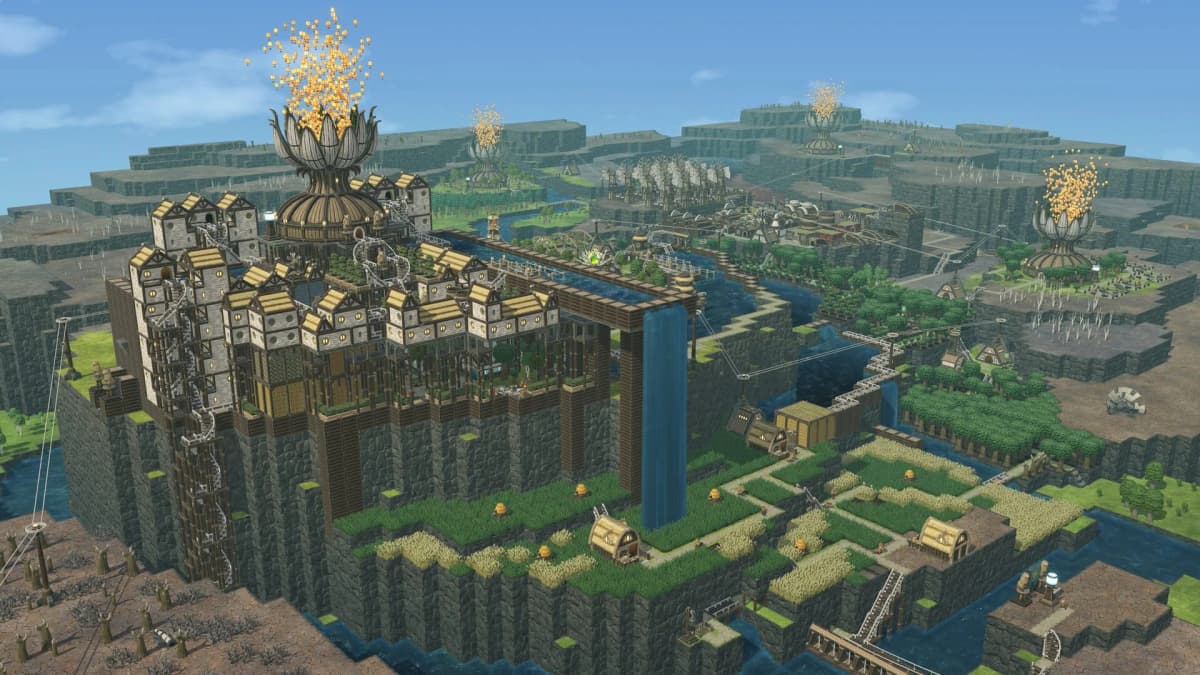
The ugliest Update 5 stall is a circular failure. Badwater arrives, so your centrifuges wake up. Centrifuges want power and logs. Engines also want logs. Haulers start pulling fuel long distance. Farms and core industry wait on labor. Then the machines you built to profit from badwater begin starving the systems that keep the colony alive. The problem is not just throughput. It is priority confusion.
There are three practical ways to stop this. First, keep a dedicated log reserve near the centrifuge block instead of one universal pile for the entire colony. Second, make sure your power system has margin before the badwater industry goes live; do not rely on the last spare horsepower. Third, assign hauling capacity to the extract lane on purpose. If every resource competes for the same workers, the newest industrial chain will usually be the one that creates pathing waste and steals response time from food.
- Do not let your centrifuge district share its entire fuel stock with engines and construction.
- Do not scale extract production before your clean-water agriculture is stable through a full hazard cycle.
- Do pause or throttle centrifuges temporarily if food, power, or hauling starts wobbling.
- Do keep the industrial route physically short, even if that means terraforming earlier than you planned.
Old habits that Update 5 punishes hard
A lot of frustration with this patch comes from using solutions that used to be clever. Tiny irrigation pits are weaker now because small bodies irrigate less and dry out faster. Mixed canals are worse now because partial badwater concentration still matters. Emergency barriers thrown down beside crops can backfire because they also block irrigation. And a farm that sits near a “usually clean” stream is not a safe farm once badwater events start shaping the map.
The cleanest rebuild usually looks less fancy than the old one. Bigger reservoirs. Clear separation. Fewer dual-purpose channels. Industry on its own lane. That sounds conservative, but it is more efficient because it stops the expensive redesign cycle where one contamination event forces you to move every field, path, and warehouse around a poisoned canal.
The practical takeaway for Iron Teeth colonies
If you want an Iron Teeth settlement that feels strong instead of fragile in Update 5, build in this order: secure a large clean irrigation basin, isolate badwater with terrain and barriers, turn badwater into a dedicated industrial route, and only then scale centrifuges into a real extract economy. The patch did not just add a new hazard. It changed what counts as a safe layout.
Once you accept that, the rest of the planning becomes clearer. Clean water is for life support. Badwater is for industry. The Irrigation Barrier is your border tool, not your panic button. And the centrifuge block should run like a factory with its own fuel, hauling, and power logic. Build those separations early, and Update 5 becomes much easier to control.
FinalBoss // Gear
Level up your setup
01Graphics cardson Amazon→02Gaming laptopson Amazon→03High-refresh gaming monitorson Amazon→04Discounted game keyson Kinguin→
Affiliate links · As an Amazon Associate, FinalBoss earns from qualifying purchases.
Want to Level Up Your Gaming?
Get access to exclusive strategies, hidden tips, and pro-level insights that we don't share publicly.
Ultimate Guide Strategy Guide + Weekly Pro Tips