
In Timberborn, dams are the first serious water-control tool you get, and the right early use is straightforward: build a complete dam wall across the narrowest river choke point to raise the upstream water level, keep nearby crops irrigated longer, and create a buffer for droughts. The catch is that a dam is not a full stop block. Community guidance and stream-gauge observations place its spill point at about 0.65 m, so once water rises high enough, it flows over the top instead of stopping entirely. That single detail explains why dams are so strong early: they store water without completely killing downstream flow during normal wet periods.
Table of Contents (8)
Why dams matter so early in Timberborn
Timberborn is built around a simple pressure point: your settlement can look stable during wet weather and then collapse once the river drops. Food stops growing, water pumps lose reach, and any plan that depended on the river staying full starts to unravel. Dams matter because they are available from the start, before you move into more refined control tools, and that makes them the earliest way to shape the map rather than merely react to it.
That early access is the real reason dams are so central. A well-placed dam can extend irrigation upstream, buy extra time during drought, and smooth out the transition into your first larger reservoir project. In other words, it is not just a defensive structure. It is the first point where you begin managing water elevation on purpose, which is the system Timberborn keeps asking you to understand for the rest of the game.
What a dam actually does, and what it does not do
The easiest mistake is assuming a dam works like a levee. It does not. A dam raises the water level behind it, but it still allows water to pass once the water gets high enough. That is why a dam can preserve upstream depth and irrigation while still letting the river continue downstream during wetter parts of the cycle. If you expected a complete barrier, the result can look confusing: the wall is built, yet the far side still gets water.
That behavior is exactly why dams are useful in the early game. A full barrier would be risky unless you already knew how much water your colony could afford to hold back. A dam gives you a softer intervention. It lifts the river where you need it most, but it does not completely sever the system the way a solid wall can. For irrigation, this matters more than many new players realize. If the river stays just high enough behind the wall, fields that would have dried out sooner can remain productive deeper into a drought cycle.
Where to place your first dam
The best first location is usually the narrowest river crossing near the farmland and water access you are trying to protect. This is practical for two reasons. First, fewer tiles means lower material cost. Second, a narrow choke point is easier to seal fully, and a fully sealed wall matters because any gap will let water through and undermine the whole point of the build.
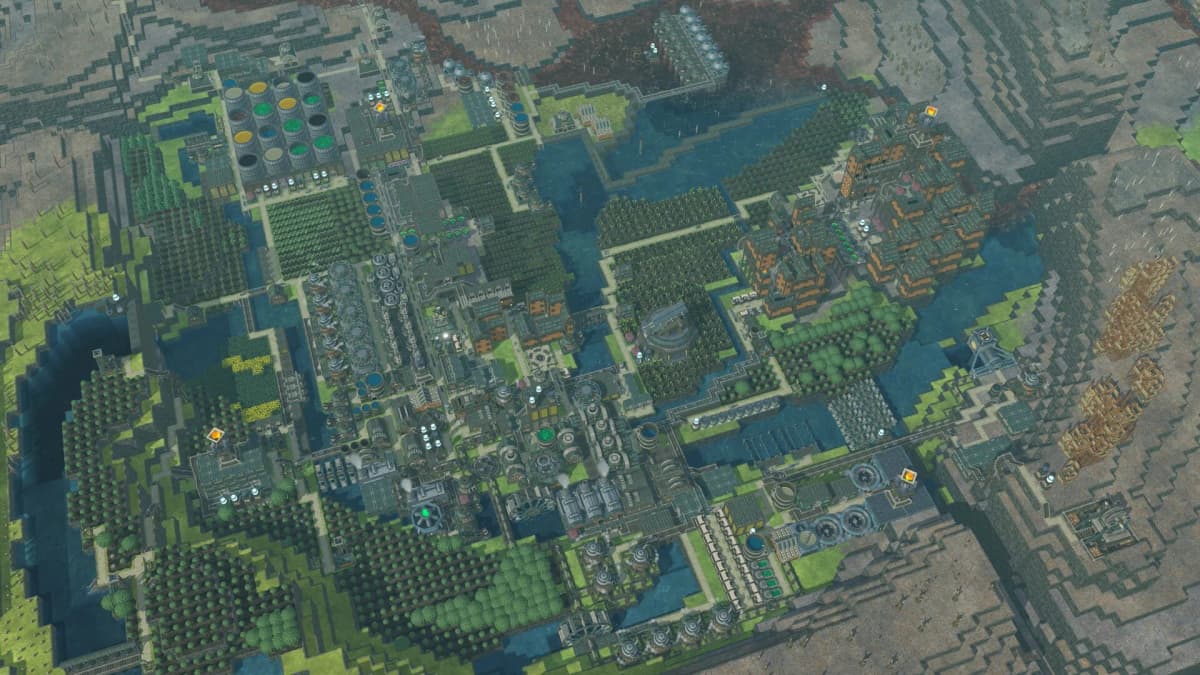
If you are choosing between a wide river near your district and a tighter pinch point a little farther away, the pinch point is often better unless it creates a reservoir in the wrong place. Timberborn rewards efficient control. Spending more materials to block a broad section can work, but it is harder to finish quickly, harder to adjust later, and more punishing if you misread the terrain. Early on, speed and reliability matter more than building the biggest wall you can afford.
- Look for a natural choke point where the river narrows.
- Make sure the tiles you want irrigated are upstream of the dam, not downstream.
- Do not leave a one-tile opening and assume it will “mostly work.” Water will use any gap.
- Think about future expansion: if this will become a major reservoir, leave room for later control upgrades.
If your map has a very wide starting river, the decision gets less automatic. Some maps make a classic early dam expensive enough that a later floodgate-heavy setup becomes more attractive. That does not change the core rule, though: you want the cheapest fully sealed wall that raises the water level where your colony actually benefits from it.
How to turn a dam into a real reservoir
A dam by itself is only half the plan. The useful part is the water body behind it. Guides consistently point toward reservoir planning as the next step: you want as much meaningful depth and surface area as the terrain allows, because that determines how much water you are really storing. A wall across a shallow stretch can still help irrigation, but it will not feel nearly as strong during drought as a wall that backs up into a deeper basin.
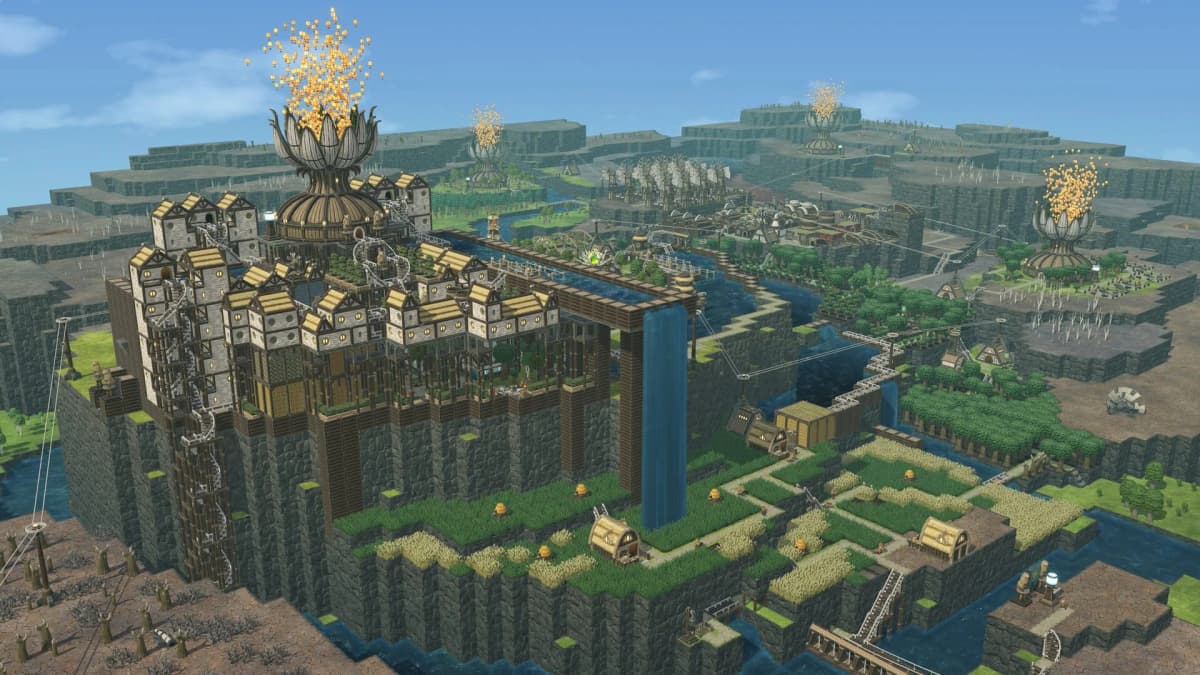
This is also where the best-practice disagreement appears. Some community advice treats dams as a quick immediate fix and suggests adding floodgates later once the colony is stable. The more official-style wiki guidance leans toward integrating at least one floodgate into the wall from the start so you already have a controllable release point. Both approaches make sense depending on your situation. If you need emergency drought protection, a plain dam is fast and cheap. If you are building a long-term reservoir that will anchor the district for many cycles, planning for controlled release from the beginning is usually cleaner.
Dams, levees, and floodgates are different tools
The game becomes much easier once you stop treating these three structures as upgrades of one another. They serve different jobs.
- Dams raise water while still allowing spillover once the level gets high enough. They are ideal for early irrigation support and basic drought buffering.
- Levees fully block water. Use them when you need absolute separation or strict channel shaping, but remember that they are much less forgiving if you cut off a flow you still needed.
- Floodgates give controllable release height in 0.5 m increments, making them the best choice when you want to fine-tune reservoir level, delay discharge, or manage a downstream branch with more precision.
In practice, dams are the easiest place to start, floodgates are what make a water system flexible, and levees are what make a system rigid. A lot of frustrating early layouts come from using a rigid tool where a forgiving one would have done the job better.
Common mistakes that make dams underperform
- Building a partial wall: if there is an opening, water will take it. Finish the seal before judging whether the dam “works.”
- Blocking the wrong side of the farm: irrigation gains come from raising upstream water elevation, so the protected farmland has to be on the correct side.
- Using a dam when you wanted total control: if you need exact release timing, go to floodgates sooner.
- Ignoring reservoir shape: a wall in front of a poor basin can feel weak even if the structure itself is correct.
- Forgetting downstream needs: if power or other infrastructure depends on consistent flow farther along the river, a reservoir layout that looks good locally can still create problems.
The last point becomes more important as your colony matures. Dams help stabilize water, but they also change where and when that water moves. If you only evaluate the immediate farming benefit and ignore the rest of the river, you can end up fixing one bottleneck while creating another.
Advanced dam use: routing flow and protecting power
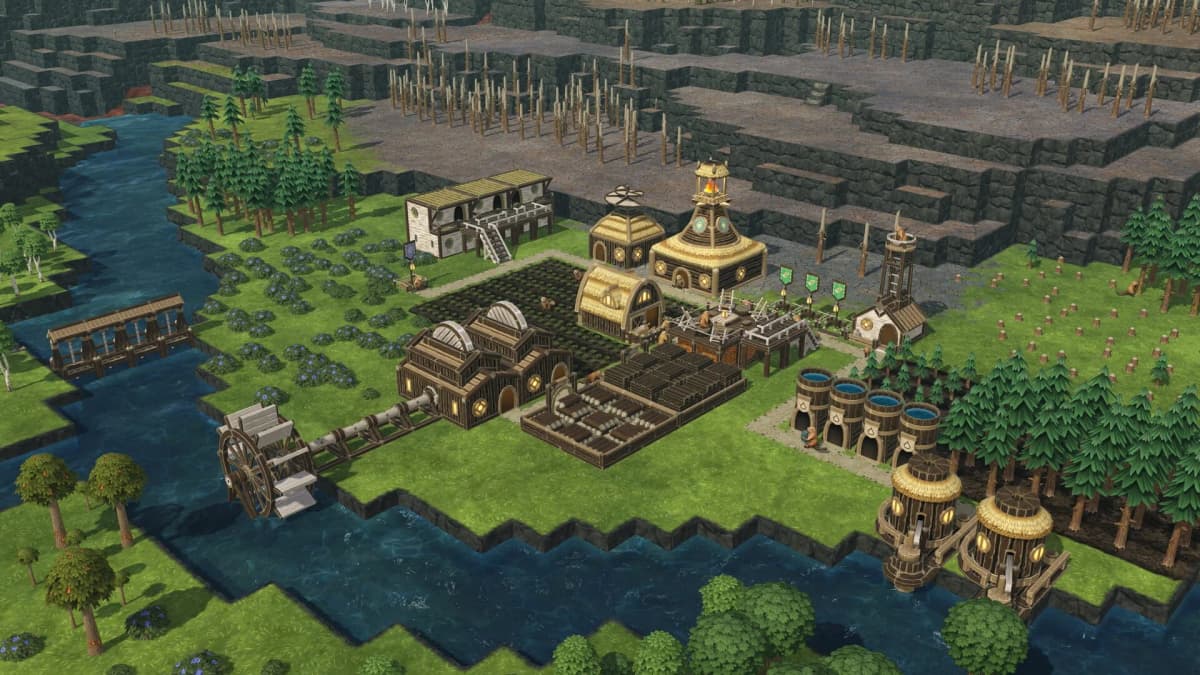
Later on, players use dams as part of more elaborate routing systems: branch channels, release control, and layouts that resemble T-valves. These setups can work well, but they are less universal than the basic early-game advice. One important warning from water-control guidance is that branch elevation still matters. If one path sits lower, water will prefer that lower route regardless of how elegant the design looks on paper. In other words, gates and walls do not override terrain.
There is also a power angle. Water flow stability matters for water wheels, so a dam layout that constantly changes downstream flow can hurt power output. Opening and closing gates near turbines may solve a storage problem while creating an energy problem. If a district depends on water-driven power, it is worth separating your control structures from the power line where possible or at least planning for steadier downstream release. This is one of those second-order effects that newer players often feel before they understand why it is happening.
That is why optimization advice around “perfect” dam timing should be treated carefully. The base mechanics are clear: dams raise water, spill over instead of fully blocking, and work best at sealed choke points with good reservoir terrain. The more advanced claims about overfilling, exact drought extension, or ideal chain timing depend much more on map geometry, reservoir size, and current patch behavior.
Practical recommendation
If you want the safest rule to follow, use dams early as broad water-level tools, not as precision valves. Place the first one at the narrowest useful choke point, seal it completely, make sure the farmland you care about is upstream, and think about the basin behind the wall instead of the wall alone. Then, once the colony is stable, add floodgates where you need deliberate release control. That approach matches what dams do best in Timberborn: they buy stability early, teach you how the river behaves, and set up the more exact water engineering you will need later.
FinalBoss // Gear
Level up your setup
01Graphics cardson Amazon→02Gaming laptopson Amazon→03High-refresh gaming monitorson Amazon→04Discounted game keyson Kinguin→
Affiliate links · As an Amazon Associate, FinalBoss earns from qualifying purchases.
Want to Level Up Your Gaming?
Get access to exclusive strategies, hidden tips, and pro-level insights that we don't share publicly.
Ultimate Guide Strategy Guide + Weekly Pro Tips