
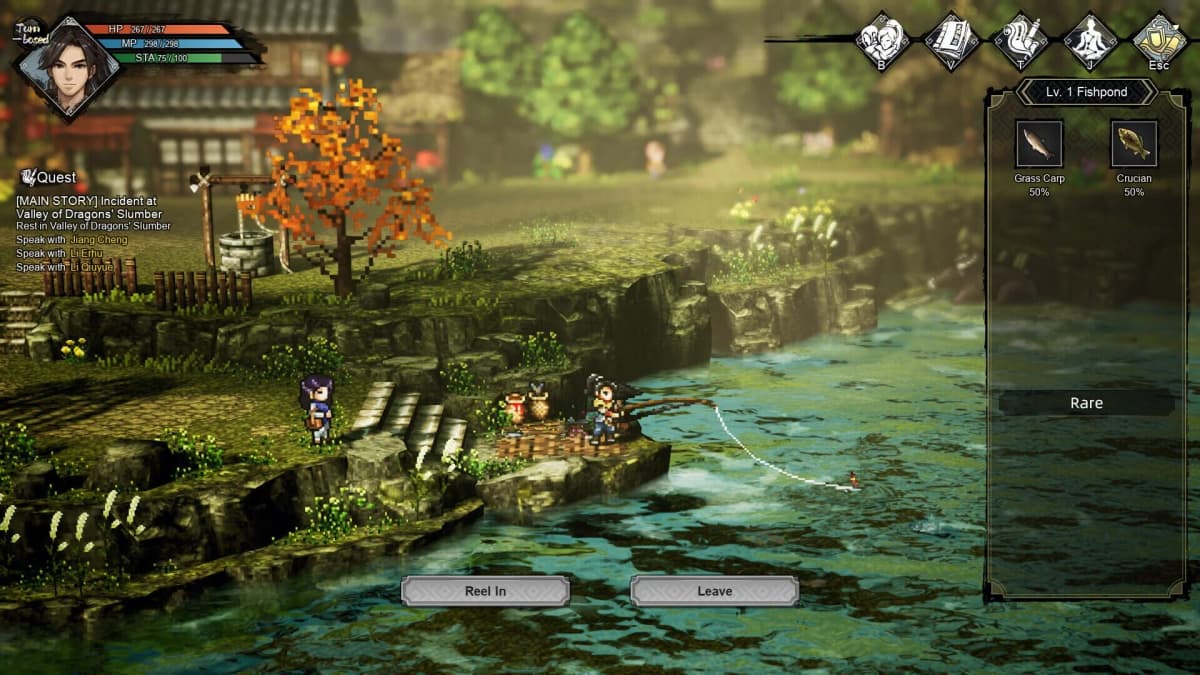
Wandering Sword has an image problem. From a distance, it looks like another polished pixel-art RPG borrowing prestige from the HD-2D boom. Up close, based on the PC release and the strongest review evidence around it, it turns into something far more interesting: a wuxia RPG built on tile-based tactics, martial arts cultivation, and a progression model that cares less about raw levels than how you train, specialize, and position yourself. That difference matters. It is the reason this game stands out, and it is also the reason some players will bounce off it before the good stuff fully reveals itself.
The short version is simple. Wandering Sword is smart, ambitious, and unusually rich in mechanical identity. It is also a little uneven, occasionally clunky in how it introduces itself, and not remotely built for players who want immediate clarity or friction-free momentum. Score it on what it is trying to do rather than how quickly it flatters you, and it lands at a strong 8.5/10.
Table of Contents (10)
Key takeaways
- Score: 8.5/10
- Best strengths: deep tactical combat, flexible build crafting, and convincing wuxia worldbuilding
- Biggest weaknesses: slow early momentum, system friction, and rougher edges than the concept deserves
- Best for: tactics fans, build tinkerers, and players starving for a real martial-arts RPG
- Less suited to: players who want simple progression, fast payoffs, or highly streamlined pacing
The combat is the reason to care, even if the game hides that fact at first
This is where Wandering Sword separates itself from the pack. Battles play out on a tiled grid, but the game is not content to stop at basic turn-based positioning. It also lets you switch between turn-based and real-time combat modes, which sounds like a gimmick until you look at how the rest of the systems are built. Attacks have ranges. Positioning matters. Area-of-effect skills matter. Cooldowns matter. The shape of the battlefield matters. You are not simply picking “Attack” and waiting for damage numbers to sort themselves out.
That creates a very specific kind of tactical rhythm. Many RPGs advertise strategic combat when what they really mean is “bring the right stats.” Wandering Sword asks for more active thinking than that. It wants the player to read spacing, decide when to commit strong abilities, and understand how martial arts techniques interact with movement and timing. Reviews consistently point to that richness as one of the game’s biggest wins, and for good reason. Once the combat clicks, it stops feeling like a nice-looking throwback and starts feeling like a dense tactical toy box.
The catch is that this click is not immediate. Early impressions can undersell what the system becomes. If someone walks in expecting a breezy JRPG loop with gorgeous sprites, the first few stretches may feel more familiar than special. That is one of the central tensions of Wandering Sword: its most distinctive feature is not hidden exactly, but it does ask for patience. Players willing to learn the flow of cooldowns, movement, and skill economy are likely to see depth. Players waiting for a fast, flashy first-hour knockout punch may never get that feeling.
Its progression system thinks like wuxia, not like a standard level grind
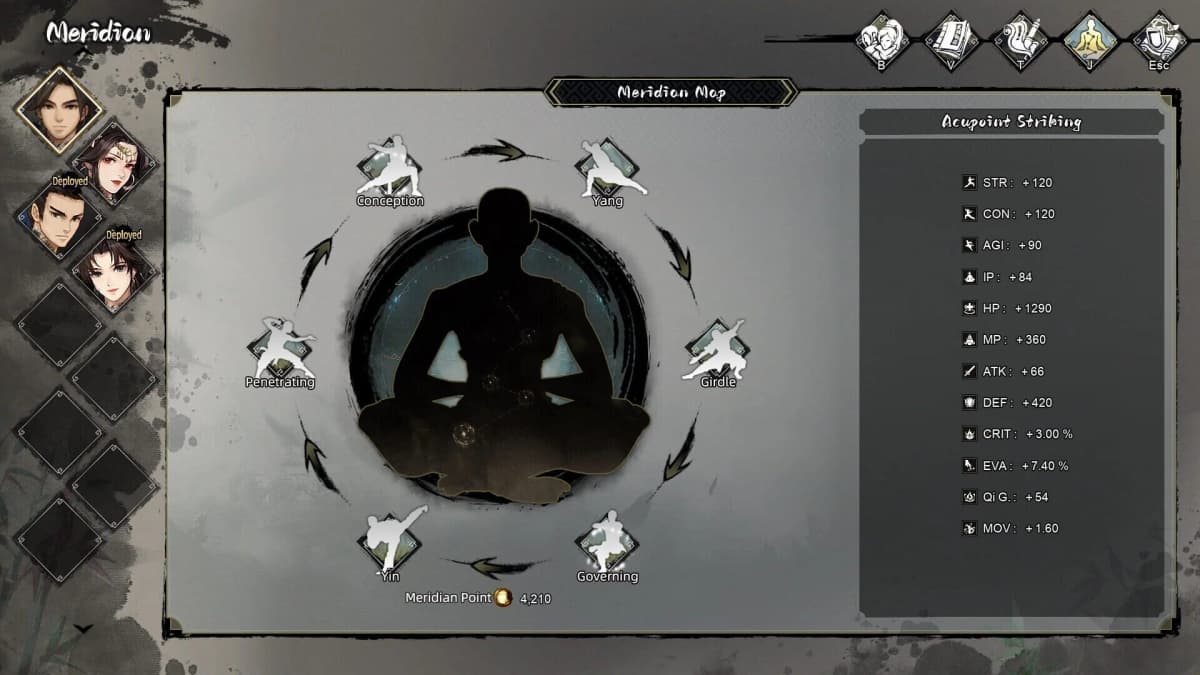
This is the other big hook, and it is arguably the sharper one. Wandering Sword does not lean on a simple “gain a level, gain a few stats, move on” structure. Instead, it pushes character growth through martial arts training, Qi pathways, cultivation-style development, and the steady strengthening of specific techniques. Some reviews describe learning from martial artists and spending Martial Points to improve abilities and attributes. Others highlight Qi nodes and the way growth is tied to systems that feel closer to building a practitioner than raising a generic fantasy hero.
That design choice gives the entire game a stronger identity. The combat, story, and progression all seem to come from the same fictional logic. You are not just equipping the next stronger sword and calling it character building. You are shaping a fighting style. Weapon preferences matter. Martial arts schools matter. Skill choices matter. For players who love RPGs because they let you poke at systems and discover weird, powerful, or simply satisfying combinations, this is catnip.
There is, again, a price. Depth like this creates overhead. Wandering Sword asks players to care about several interlocking ideas at once, and not everyone wants their RPG to feel like a training manual for fictional kung fu economics. If your favorite role-playing games are the ones that get out of your way and let you enjoy the story with minimal bookkeeping, this structure can feel busy. The complexity is the attraction and the warning label at the same time.
The wuxia setting is not wallpaper, and that gives the whole game more weight
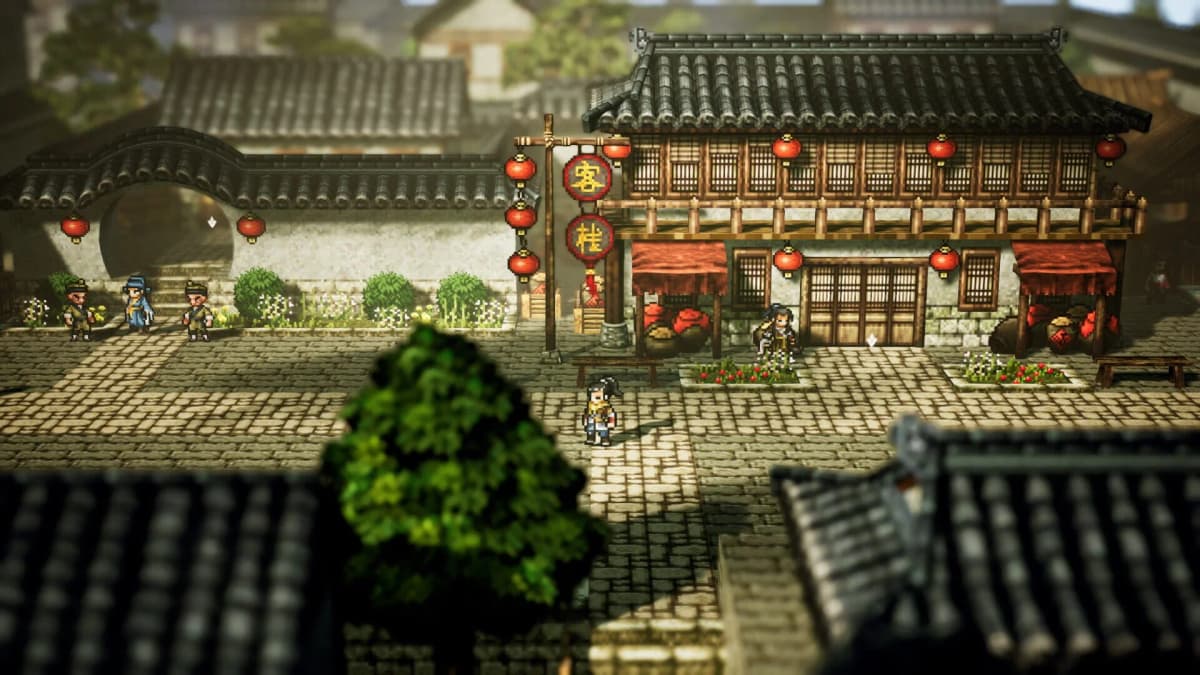
Plenty of games borrow a theme. Fewer actually build themselves around it. Wandering Sword follows Yuwen Yi through a conflict that widens into sect rivalries, cult activity, criminal factions, revenge, mentorship, and the broader world of Jianghu. The important part is not just that ancient China and martial-arts fiction provide the aesthetic. The important part is that the game’s systems appear to speak the same language as its story. Training, faction dynamics, martial identity, and the social texture of the world all feed into the experience.
That helps the narrative punch above the usual “retro RPG with a decent plot” category. Critical coverage has praised the scope of the story, and that tracks with what the game is trying to build: not a tiny local adventure, but a wide martial-arts journey with multiple regions, major power groups, and meaningful side content. Steam lists over 75 locations across five regions, along with recruitable characters and multiple endings. Whether every player sees all of that is another matter, but the scale itself is hard to dismiss.
More importantly, the world seems to have a sense of place. That is a quiet strength, but a real one. A lot of pixel-art RPGs blur together because their settings are thin variations on generic fantasy. Wandering Sword has a cultural and thematic specificity that immediately makes it more memorable. If you have spent years wishing more RPGs would stop recycling the same medieval European shorthand and commit to something else, this game understands the assignment.
It looks excellent, but presentation is only half the story
The visual pitch is easy to grasp: 2D pixel characters moving through 3D environments, with lighting and environmental effects adding texture to a style that many players already associate with modern retro prestige projects. By most accounts, Wandering Sword uses that format well. Critics praised the look, especially the way its landscapes and water effects help sell the setting. This is not just nostalgia bait with a sharper resolution. It has atmosphere.
Still, the art alone is not what makes the game worth recommending. In fact, the attractive presentation may accidentally create the wrong expectation. Someone might see the screenshots and assume the main draw is visual comfort food. That is backwards. The art gets attention; the systems earn the respect. Wandering Sword would not be nearly as interesting if it were only pretty. The reason it sticks in the conversation is that there is real structure under the surface.
Where Wandering Sword trips over itself
For all its strengths, this is not a perfectly polished machine. A few critiques show up repeatedly enough to matter. The first is pacing. The opening does not immediately announce how distinct the game becomes, and that can make the early hours feel more ordinary than the later systems deserve. A slow burn is fine when the hook is obvious. It is more dangerous when a game initially looks like something you have already played before.
The second issue is friction. Not brokenness, not disaster, just friction. Post-launch updates suggest the developers kept smoothing rough spots, which is encouraging, but it also underlines the fact that Wandering Sword launched with edges still showing. Some of that comes from complexity, some from how systems are explained, and some from the general reality of a large RPG trying to juggle tactical combat, faction-heavy storytelling, exploration, recruitment, and multiple character-building layers at once. Ambition is part of the charm here. It is also part of the mess.
The third issue is audience mismatch. This is not the right pick for someone chasing nonstop combat spectacle or immediate dopamine every five minutes. It is more measured than that. The reward comes from understanding how its pieces fit together over time. If that sounds satisfying, great. If that sounds like homework, the game probably loses you.
Platform notes and the state of the release
Wandering Sword first launched on PC in September 2023, and that remains the version most reviews discuss. More recently, console plans have expanded, with Switch and Switch 2 versions announced for 2026 and additional DLC included, while PlayStation 5 and Xbox Series X|S versions have been pushed further out after a delay. That matters for patient players. By the time those versions arrive, they may benefit from a game that has already had more time to settle, though exact platform performance is still something to judge when those editions are actually in players’ hands.
Who should play it, and who should probably pass
Play Wandering Sword if you want a tactics RPG with real mechanical texture, if build crafting is one of the main reasons you play RPGs at all, and if a proper wuxia setting sounds more exciting than yet another fantasy map filled with interchangeable kingdoms. It also makes sense for players who enjoy games that grow on them because the systems keep opening up rather than because the cutscenes get louder.
Skip it, or at least wait for a sale, if you need instant clarity, rapid pacing, or a cleaner and more streamlined experience. Players who prefer straightforward progression and low-maintenance combat loops may admire Wandering Sword more than they enjoy it. There is a difference, and this game sits right in that gap.
Bottom line
Wandering Sword earns its reputation the hard way. It does not coast on presentation, and it does not win because wuxia is a fresh skin over familiar systems. It wins because the combat has real bite, the progression has personality, and the world feels shaped by the same ideas that drive the mechanics. It loses points because the road into those strengths is bumpier than it should be, and because some players will feel the drag long before they feel the payoff.
Final Verdict: 8.5/10. This is a smart, substantial wuxia RPG with the kind of build depth and tactical texture that can keep the right audience hooked for a long time. It is easy to recommend to strategy-minded RPG fans. It is much harder to recommend to anyone who values elegance and immediacy above all else. The unresolved question hanging over the whole game is also the most interesting one: how many players will stay long enough to meet the version of Wandering Sword that is actually worth celebrating?
TL;DR
- Score: 8.5/10
- What works: hybrid turn-based and real-time combat, tactical positioning, martial-arts-driven progression, strong wuxia identity, lots of content
- What does not: slow early hook, some system friction, uneven pacing, not especially welcoming to players who want simplicity
- Best for: tactical RPG fans, build crafters, wuxia lovers, players who enjoy learning dense systems
- Not ideal for: anyone looking for a breezy, immediate, highly streamlined RPG
FinalBoss // Gear
Level up your setup
01Top-rated gaming headsetson Amazon→02High-refresh gaming monitorson Amazon→03Gaming chairson Amazon→04Discounted game keyson Kinguin→
Affiliate links · As an Amazon Associate, FinalBoss earns from qualifying purchases.
Want to Level Up Your Gaming?
Get access to exclusive strategies, hidden tips, and pro-level insights that we don't share publicly.
Ultimate Reviews Strategy Guide + Weekly Pro Tips