
You keep running out of Power Cells, scrap, and Tech Scrap, and the main GATE facility never refills. Portal Worlds fix that. They are self-contained areas whose loot respawns, so the right ones become repeatable farming loops instead of one-off detours. The two you actually want early are Far Garden for renewable basics and Flathill for Power Cells.
Table of Contents (8)
The short version
- Far Garden (Portal World designation Anteverse 2-A) is your first renewable loop. Its portal sits in the Office Sector on Level 3 and is already open — no puzzle to solve.
- Flathill is the repeatable Power Cell route. You reach it through Silo Three on Level Three of the GATE facility, unlocked with a Keypad Hacker (the recipe comes from Dr. Mayfield).
- Flathill’s Power Cells are static items that respawn every few days, so treat the route as a recurring lap, not a one-time clear.
- Security Robots are a renewable scrap source: they drop Robot Oil, Metal Scrap, Tech Scrap, Glass Scrap, and Coil, and they respawn.
- Open the caged ladder shortcuts on your first Flathill pass so every return trip is faster.
Why Portal Worlds beat normal scavenging
The main facility is finite. You strip a room, and that loot is gone. Portal Worlds give you renewable loot instead: food, materials, Tech Scrap, and high-value items that come back after a reset. That changes your base economy. Rather than draining every nearby room and hoping the next sector covers your shortage, you run a short loop, restock, and get back to crafting.
This matters most for power and upgrades. Power Cells keep workstations, cooking, and refrigeration running, and scrap feeds repairs and bench upgrades. A renewable layer under all of that is the difference between a base that stalls and one that keeps growing.
Far Garden: your first renewable loop
Far Garden is the Portal World designated Anteverse 2-A, and it is the one most players should farm first. Its portal is in the Office Sector on Level 3, and it is already open when you arrive — there is no puzzle gating it, so you can start farming the moment you reach it.

Keep your expectations grounded. Far Garden is not where you go for rare power tech; it is where you go when your operation stalls on the boring essentials — basic materials and office loot. If your crafting queue is full of benches, storage, and room upgrades, this is the portal that keeps them fed, and it does so without the heavier enemy pressure of later routes.
Flathill: the repeatable Power Cell route
When your base starts leaning on powered equipment, Flathill becomes the Portal World that matters most. You access it through Silo Three on Level Three of the GATE facility, and the door needs a Keypad Hacker — you get that recipe from Dr. Mayfield. Build the hacker first, or you will walk all the way there and bounce off a locked keypad.
Flathill is a linear street-and-rooftop route, which is good news once you know it and bad news when you do not. The enemies are Composers, and they roam the streets and buildings, so expect several short fights rather than one set-piece. The biggest time saver is unlocking the caged ladder shortcuts on the building roofs during your first proper pass. Do it even if it means carrying less loot home on run one — those ladders turn Flathill from an awkward expedition into a dependable farm.
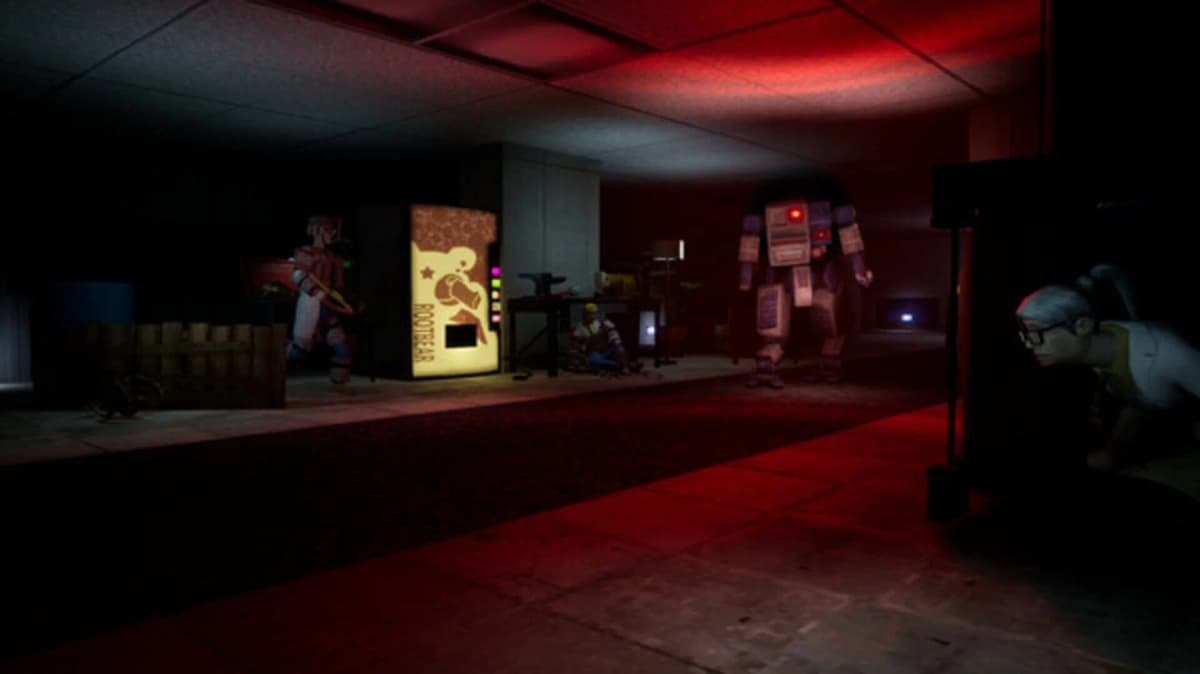
The payoff is the Power Cells. They are special static items rather than random drops, and they respawn every few days, so the route rewards a regular lap rather than a single sweep. Run something else in between, then come back and the cells are back. Your priorities on each pass:
- Open every shortcut that shortens the rooftop return path before you start hauling loot.
- Learn the static Power Cell spawns so you know exactly which buildings to check each reset.
- Keep a few inventory slots empty on entry so you are not forced into bad drop decisions mid-route.
- Skip fights you do not need — Composers are a time tax, not the goal.
Note: Flathill is not the only place to find Power Cells. Manufacturing West holds others, including one in the back of an overturned truck near radioactive waste — but reaching that one requires draining the radioactive waste first, so it is a separate hazard run, not part of the Flathill loop.
Farm Security Robots for renewable scrap
If you are short on Metal Scrap, Glass Scrap, or Tech Scrap, farming Security Robots is more efficient than sweeping random rooms. Defeating one yields Robot Oil, Metal Scrap, Tech Scrap, Glass Scrap, and Coil, and the robots respawn, so a known robot route becomes a reliable scrap tap.
Fight them where the space favors you. Pull them into tighter sightlines, avoid crossfire from multiple angles, and do not chase a bad position just because the map looks small. Resource farming turns unprofitable the moment you spend half the haul on healing, repairs, and replacement ammo. One or two clean robot kills per loop is already enough to keep bench upgrades and tech crafting moving without exhausting the main facility.
Common mistakes
- Heading to Flathill without a Keypad Hacker. The Silo Three entry on Level Three is locked behind it; craft the hacker (Dr. Mayfield’s recipe) before you make the trip.
- Treating Flathill cells like instant respawns. They come back roughly every few days, not per visit — run another loop in between instead of standing around.
- Confusing the routes. Flathill is reached via Silo Three; the radioactive-truck Power Cell is over in Manufacturing West and needs the waste drained first. They are different runs.
- Ammo-dumping every Composer. If utility loot is the goal, skip fights you can walk past.
- Entering full. A nearly full inventory forces bad drop decisions and wastes the run; leave slots open, especially for Power Cells and bulk scrap.
Practical takeaway
Build the loop and stop improvising. Farm Far Garden (Office Sector, Level 3) to stabilize basic supplies, build a Keypad Hacker and run Flathill via Silo Three when your base starts eating Power Cells, and mix in Security Robot kills whenever Metal, Glass, or Tech Scrap runs dry. Because Flathill’s cells reset every few days, rotate these instead of waiting on any one route — each lap fixes a different shortage, and that is what keeps a base growing instead of surviving.
FinalBoss // Gear
Level up your setup
01Top-rated gaming headsetson Amazon→02High-refresh gaming monitorson Amazon→03Gaming chairson Amazon→04Discounted game keyson Kinguin→Affiliate links · As an Amazon Associate, FinalBoss earns from qualifying purchases.
Want to Level Up Your Gaming?
Get access to exclusive strategies, hidden tips, and pro-level insights that we don't share publicly.
Ultimate Guide Strategy Guide + Weekly Pro Tips