
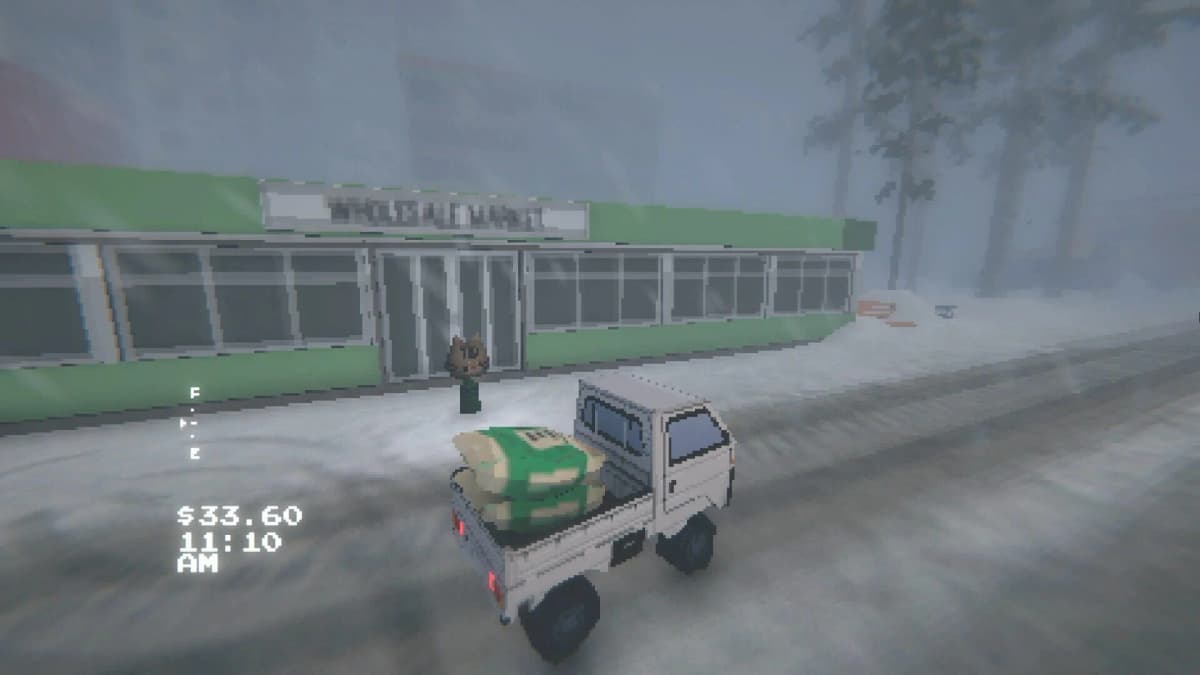
You want to know one thing before you buy: will Easy Delivery Co. scare you, or is it a cozy game that just looks creepy? The honest answer is that it is a relaxing driving game with strange secrets — the dread comes from atmosphere and a story that quietly rots the world around you, not from monsters or jumpscares.
Table of Contents (8)
The short version
- Not survival horror. No combat, no enemy that hunts you, no resource-management fear loop. The core loop is driving packages between towns.
- It is genuinely unsettling. The official store description sells it as “a relaxing driving game with strange secrets,” and those strange secrets do real work.
- The scariest mechanic is the shopkeepers. As the story progresses, their dialogue glitches out and they eventually go “offline.” That is the clearest eerie beat in the game.
- The look does a lot of the lifting. Low-poly models run through a PS1-style pixelization filter, which carries instant retro-horror associations.
- Best label: cozy horror / eerie cozy-sim. Buy it for mood and mystery, not for scares-on-demand.
What Easy Delivery Co. actually is, moment to moment
You play a courier in a snowy mountain region, driving packages between towns and learning the area as you go. The loop is navigation and delivery: find the address, plan the route, get there, repeat. There is no weapon, no health bar to defend, and nothing chasing you down a corridor. If you came expecting a horror game in the survival-horror sense, this is not that.
What makes it land differently is where the tension lives. In a horror game the question is “what is chasing me, and how do I survive?” In Easy Delivery Co. the question is “why does this quiet world feel wrong, and what will I notice on the next run?” The unease is threaded into the ordinary job instead of bolted on as a separate scary mode.
Where the horror feeling actually comes from
The eerie reputation starts with the look. Easy Delivery Co. renders low-polygon models through a pixelization filter that deliberately emulates a PlayStation 1 aesthetic, and that grainy, low-fi style carries instant retro-horror baggage. Fog, sparse roads, and empty winter towns do the rest — the world feels lonely before anything strange even happens.
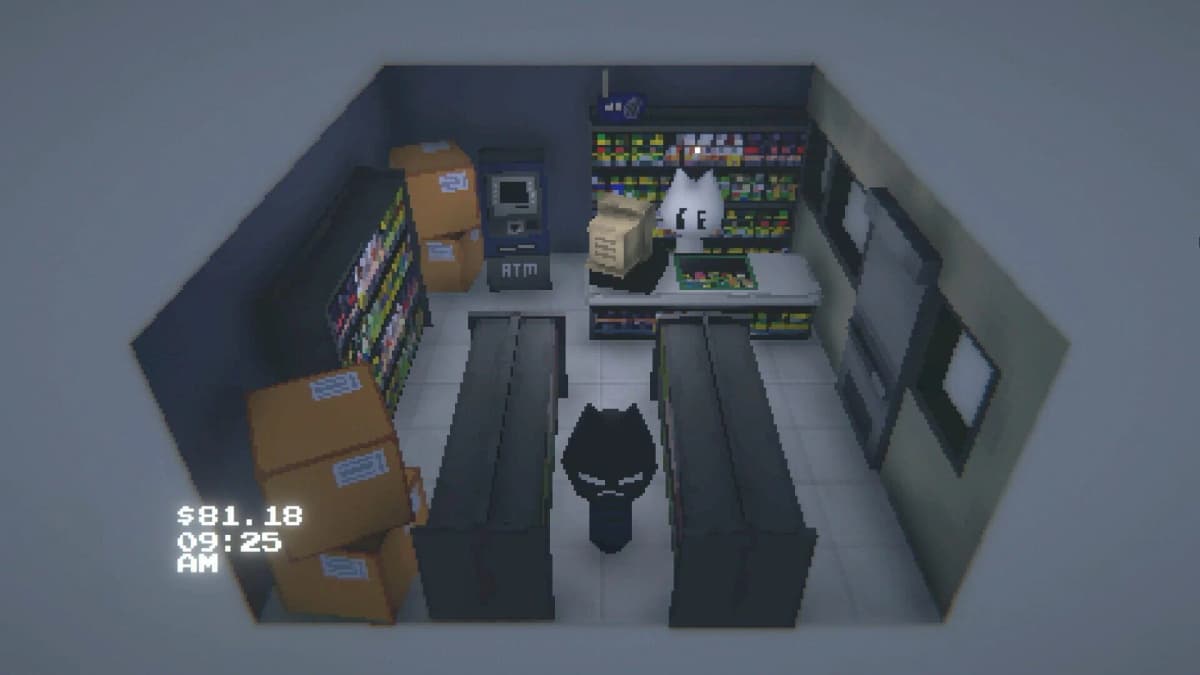
But the strongest unsettling beat is mechanical, not just visual: the mystery changes the people around you. As the story advances, it affects the personalities of the shopkeepers — their dialogue progressively glitches out until they go “offline.” Watching familiar NPCs you have been delivering to slowly corrupt and shut down is the moment most players point to when they call the game creepy. The horror is not a creature in the dark; it is the town itself breaking down.
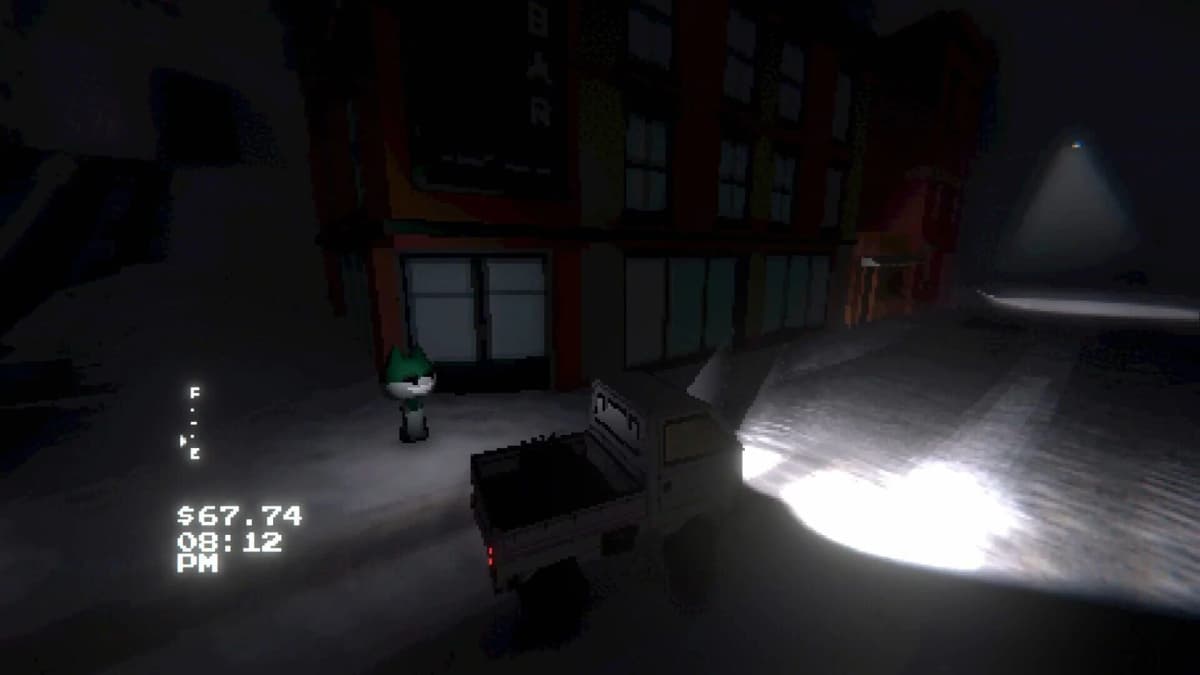
So the “horror” here is seasoning, not the main course. The road, the weather, the silence, and the slow corruption of the people you know do the work. That is enough for some players to call it horror outright. If you are used to heavier genre games, it may barely register as scary at all — and both reactions are reasonable, because the design leans on tone rather than overt threats.
- Horror-like elements: PS1-style visuals, isolation, fog and snow, NPCs that glitch and go offline, a mystery that destabilizes the world.
- What is absent: a monster that hunts you, combat, a survival-horror resource loop, and a jumpscare-first structure.
How you encounter the eerie side
There is no horror mode to unlock, no scary difficulty to pick, and no item that flips the game into horror. The unsettling side grows out of normal play: deliveries, exploration, revisiting towns, and watching the mystery push back against the cozy surface. The right frame is not “when does the horror start?” but “when do the deliveries start feeling stranger than they should?”
That is also why the deepest scares are the ones you trigger yourself by digging. If you want the explicitly weird material — the hidden content and secret-driven endings — you have to go looking for it. Our guide to the secrets and hidden endings covers what is buried under the cozy exterior, and the cat.wav secret is the single creepiest rabbit hole most players miss on a first run.
Who will find it scary, and who will not
This is the buying filter that matters. If lonely spaces, eerie soundscapes, and worlds that feel subtly wrong get under your skin, Easy Delivery Co. will read as horror to you — cozy players who dislike dread may find it more stressful than they expected. If you mainly play survival horror, psychological horror, or anything jumpscare-heavy, you will likely file it under “creepy atmosphere” rather than “scary game.”
- You will find it scary if: isolation, low-fi visuals, and NPCs that decay and shut down unnerve you.
- You will not find it scary if: you want chases, combat pressure, or a clear horror-game structure.
- You will enjoy it most if: you like cozy loops but want them flavored with mystery and dread.
What role the horror plays
Judged by function rather than vibe, the horror is a support system for tone and story, not a gameplay pillar. It gives your deliveries emotional texture, makes the snowy roads feel lonelier, and turns simple town-to-town movement into something faintly suspicious. It also makes the mystery land harder, because the world is already primed to feel unstable when the shopkeepers start glitching.
That is why the community guides for this game are about routes, achievements, endings, and progression — not enemy patterns or fear management. Players spend their energy on navigation and completion, which is exactly what you would expect from a delivery game wearing a horror coat. If you are after the actual ending content rather than the mood, our full walkthrough and all-endings guide lays out how the story resolves.
Common mistakes
- Waiting for a horror “mode” to start. There isn’t one. The unease builds through normal deliveries, so you may quit before it sets in.
- Buying it as straight horror. If you want a monster and a survival loop, you will keep waiting for systems the game does not have.
- Dismissing the mystery as cosmetic. “Relaxing driving game” undersells the strange secrets — the glitching, offline shopkeepers are central, not decorative.
- Rushing past the secrets. The creepiest content is hidden and easy to miss if you only do the obvious deliveries.
Practical takeaway
If you need one label, call it cozy horror: a relaxing courier sim whose strange secrets quietly unsettle the world. Buy it if you want a calm delivery loop that turns eerie as the town and its shopkeepers come apart around you. Skip it if you are specifically after a monster-driven or jumpscare-heavy experience. Meet it on its own terms — the road, the snow, the silence, and the people slowly going offline do all the haunting.
FinalBoss // Gear
Level up your setup
01Top-rated gaming headsetson Amazon→02High-refresh gaming monitorson Amazon→03Gaming chairson Amazon→04Discounted game keyson Kinguin→
Affiliate links · As an Amazon Associate, FinalBoss earns from qualifying purchases.
Want to Level Up Your Gaming?
Get access to exclusive strategies, hidden tips, and pro-level insights that we don't share publicly.
Ultimate Guide Strategy Guide + Weekly Pro Tips