
Table of Contents (9)
Ascension in Slay the Spire 2, explained fast
If you came from the first game expecting a 20-rank grind, the sequel rewires the rules. Ascension is live in Slay the Spire 2 Early Access, but the ladder stops at A10 instead of the original game’s A20 — and every rank you climb stays stacked on top of the last one. Start an A10 run and you are not just playing rank 10; you are carrying all ten penalties at once.
The short version
- Ascension unlocks after your first win with a character — clearing all three acts, including the Act 3 boss.
- Each rank is gated behind clearing the one below it: beat
A1to openA2, and so on up toA10. - Early Access caps the ladder at
A10; the original game went toA20. - Penalties are cumulative — every rank adds a new modifier without removing the old ones.
- Solo progress is per-character. Pushing the Ironclad to
A5does nothing for the rest of the roster. - Co-op tracks its own progression separately, and a higher clear in a lobby can unlock that rank for everyone in it.
Slay the Spire 2 entered Early Access on March 5, 2026, so balance is still moving — recent patches have already reworked enemies, cards, and bosses. The structure of the Ascension system below is stable; treat individual numbers as patch-dependent.
How you unlock Ascension levels
The loop is simple. Win a standard run with a character to clear all three acts and the Act 3 boss — that unlocks Ascension for that character. From there you climb one step at a time: beat A1 to unlock A2, beat A2 to unlock A3, and so on. You never skip ranks. You earn each one by clearing the highest level you currently have.
Solo progression is tied to the individual character, not your account. Push one character to A5 and the rest of the roster still sits at base difficulty. If you want several characters ready for high-difficulty runs, you climb each of them separately. This is the first place returning players lose time, because the instinct is to assume the unlock is account-wide. It isn’t. (If you are still filling out the roster, see how to unlock all characters fast.)
- Clear the game once with a character to unlock Ascension for that character.
- Clear your highest unlocked rank to open the next one.
- Solo progression is per-character, not roster-wide.
- Early Access stops the ladder at
A10. - Each rank adds a modifier instead of replacing the previous one.
What the 10-rank ladder actually does to your run
Read the ladder by the kind of pressure each rank adds, not as a list to memorize. Lower ranks tighten pathing and economy — harsher rewards, less margin to recover from a greedy route. The middle of the ladder is where Ascension stops feeling like a meaner normal run and starts changing your deckbuilding: when resources are tighter, healing windows matter more, elite routes demand frontloaded damage, and speculative cards get riskier because you have nothing spare to smooth over a mistake.
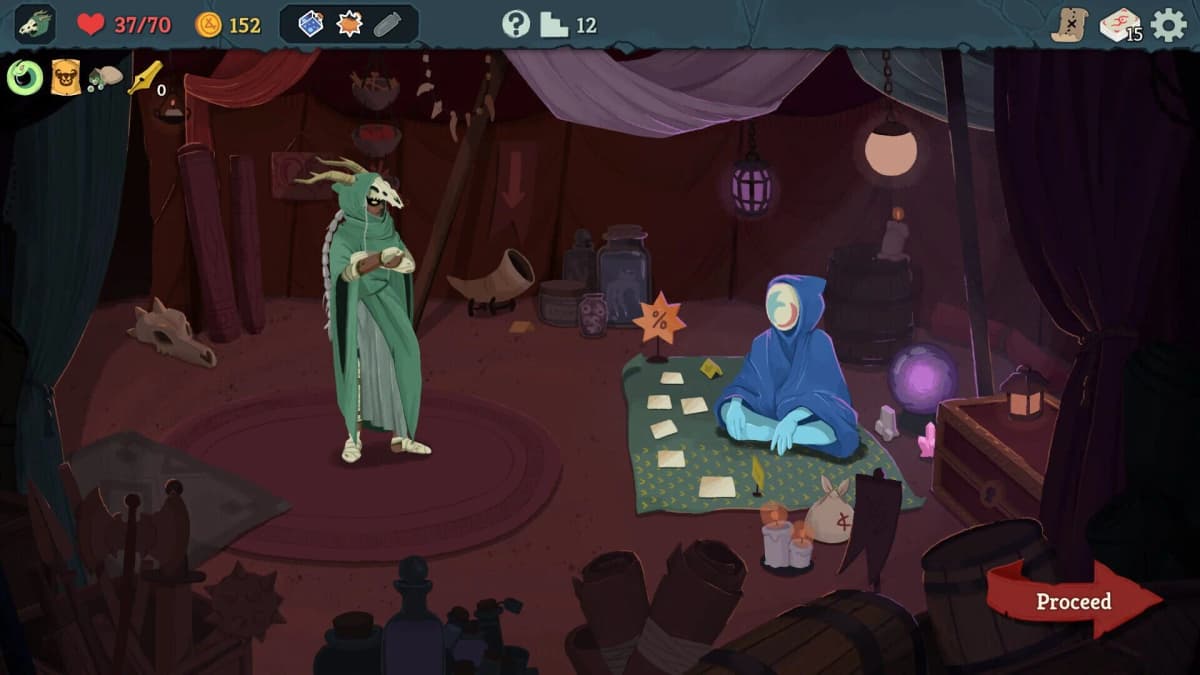
The single biggest structural change waits at the top: A10 adds a double-boss finale in Act 3 on top of the full cumulative stack. That is the breakpoint that reshapes deck evaluation, because a deck that barely survives one long boss fight can fail the second check even when its hallway fights look excellent. For the exact modifier attached to each rank from A1 to A10, our all Ascension levels explained guide breaks down the full list.
- Lower ranks make routes and rewards harsher.
- Penalties stack, so every new rank makes all earlier ones permanent.
- Later ranks pile on harsher opening conditions, raising the chance an otherwise good Act 1 hand bricks.
A10is the major breakpoint: it adds an Act 3 double boss on top of everything else.
Why A10 doesn’t mean the game is only half as hard
It is tempting to line up A10 against the first game’s A20 and call Early Access a softer climb. Don’t. The ladder is shorter, but the floor under your feet isn’t lower. The sequel is a systems-level follow-up, not a remix — new relic interactions, card enchantment choices, and tougher enemy pacing all change how often a “normal” run stays stable. Ten stacked penalties on a harder base game is not the same as ten penalties on the original.
If you are importing habits from the first game, the most expensive mistake is assuming old autopilot still carries high Ascension runs. Decks built on fragile setup, narrow infinite lines, or one explosive boss turn can look fine on paper and collapse once the stacked penalties start choking your economy and consistency.

How solo and co-op Ascension differ
Solo is the clean version: each character climbs its own Ascension track. Co-op runs on a separate track entirely. Clearing a higher Ascension in a multiplayer lobby unlocks that rank for every character in that lobby, with the lobby gated to the lowest unlocked level among the players in it.
That makes multiplayer more than a fun variant — it can be the fastest way to get several characters ready for high Ascension play. The catch is that co-op difficulty planning matters more. The run’s Ascension pressure applies to the whole session, so the right rank is usually the highest one your least consistent player can survive, not the highest one your strongest player wants to test. Because this is Early Access, expect multiplayer progression to be one of the systems most likely to get adjusted in a future patch.
- Your solo track and your co-op track are separate — they do not mirror each other.
- A higher clear in a lobby unlocks that rank for everyone in it.
- The lobby is gated to the lowest unlocked level among the players, so pick a rank your weakest player can clear.
- Use co-op to consolidate unlock progress when your group is stable and clearing consistently.
How to plan your runs as Ascension rises
The rule is simple: climb only as fast as your fundamentals stay intact. On lower Ascensions you can get away with loose pathing, speculative shop visits, and a deck that does one strong thing without backup. The moment cumulative penalties start biting, you need consistency over flair. Prioritize the cards and relics that solve common bad turns — energy, draw smoothing, reliable block, and damage that turns on early enough to handle elites without bleeding half your life total. When the economy tightens, value removes and consistency tools higher, and lean on every efficient heal you can find.
Learning a new character? Sit on base difficulty or A1 for a few extra clears rather than brute-forcing the ladder. Solo progression is per-character, so each one carries its own learning tax anyway. You gain more from understanding that character’s weak Act 1 fights, comfortable elite thresholds, and scaling package than from scraping out one ugly higher-rank clear and stalling there.
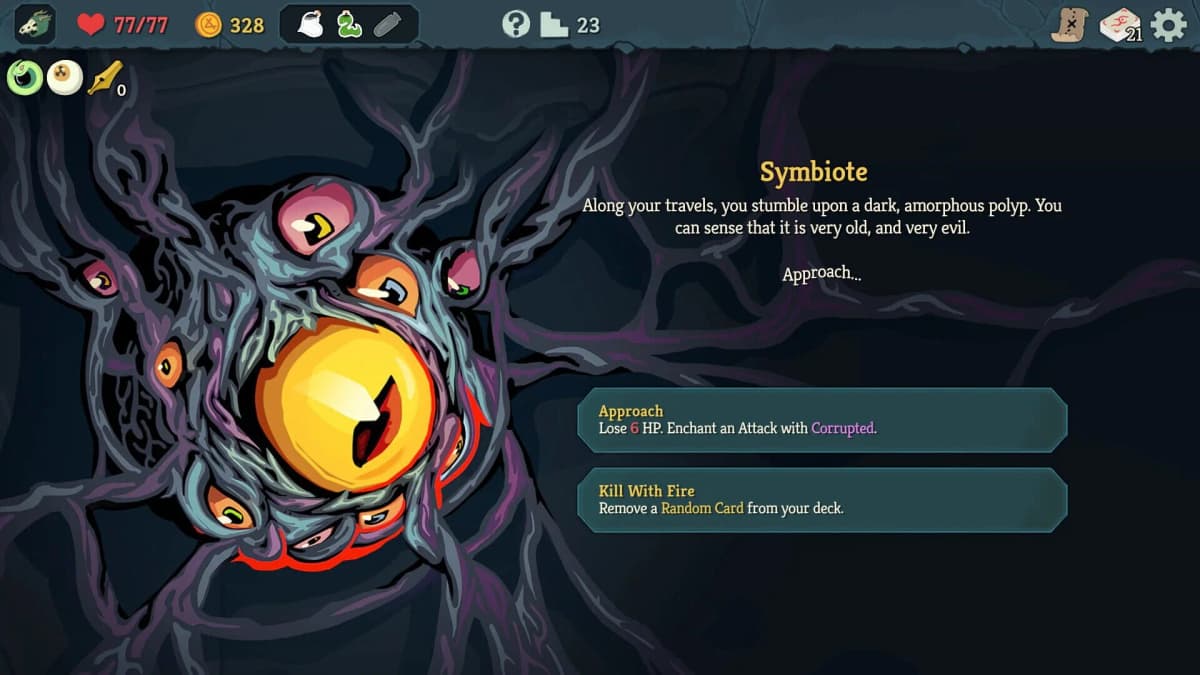
As you approach A10, build with the double-boss finish in mind from the middle of Act 2 onward. You want carryover stability: sustained block, damage that still functions after a bad draw cycle, and enough potion discipline that you do not walk into the final sequence empty-handed.
- Take elites when your deck already answers the current act, not because the map looks efficient.
- Value removes and consistency tools more as economy pressure climbs.
- Save at least one high-impact potion for the Act 3 finish on
A10. - Don’t over-specialize for one boss matchup and ignore general survival.
- At high Ascension, surviving bad draws beats improving your best-case turn.
Common mistakes
- Treating ranks as separate modes. They are layered penalties — every increase permanently changes the texture of the run, it doesn’t swap one rule for another.
- Assuming the A10 cap means easy. Even at
A10the ladder forces real changes to routing and deckbuilding because the penalties compound instead of rotating. - Expecting account-wide solo progress. Each character climbs alone; the rest of the roster stays at base until you grind them up individually.
- Picking a co-op rank for your strongest player. The lobby is gated to the lowest unlocked level, so plan around the player most likely to die.
- Building only to survive one boss. The
A10finale is two checks, so a deck that limps through the first fight can still lose the second.
Practical takeaway
Keep one model in mind: Slay the Spire 2 Early Access uses a shorter Ascension ladder that caps at A10, but every step matters because the penalties are cumulative. Unlock it with your first win, climb one rank at a time, remember that solo progress is per-character while co-op rides its own shared track, and build for the A10 double-boss finale rather than for one last fight. Climb only as fast as your consistency holds, and the ladder stays a difficulty test instead of a wall.
FinalBoss // Gear
Level up your setup
01Top-rated gaming headsetson Amazon→02High-refresh gaming monitorson Amazon→03Gaming chairson Amazon→04Discounted game keyson Kinguin→
Affiliate links · As an Amazon Associate, FinalBoss earns from qualifying purchases.
Want to Level Up Your Gaming?
Get access to exclusive strategies, hidden tips, and pro-level insights that we don't share publicly.
Ultimate Guide Strategy Guide + Weekly Pro Tips