
You want one honest number before you buy: how long does The Midnight Walk actually take? Plan for about 4-6 hours to reach the credits, and 6-10 hours if you are going for the platinum. The reason those ranges are so tight is the structure: six chapters, each under an hour. This is a curated horror-fantasy adventure, not a long-form exploration grind.
Table of Contents (6)
The short version
- Main story: about 4-6 hours to see the credits.
- Exploration-heavy run: closer to 7-8 hours if you slow down and inspect every handcrafted scene.
- Completionist / 100% (platinum): about 6-10 hours.
- Structure: six chapters, each one beatable in under an hour (roughly 30 minutes each at a normal pace).
- Opening: the first chapter is especially brief, so the start feels faster than the full game.
- Format: single-player dark-fantasy adventure on PS5 and Steam.
How the six chapters add up to your runtime
The six-chapter layout is the clearest way to estimate your time. Each chapter is built to be finished in under an hour, with most players landing around 30 minutes per chapter at a steady pace. Six compact chapters at roughly that length is exactly how you arrive at the 4-6 hour main-story window. Your total runtime is a string of short, deliberate episodes, not one sprawling open map.
It also explains why the completionist figure does not balloon. Because the base game is compact, full completion adds cleanup passes and extra interaction with each chapter rather than doubling the campaign. Use these three benchmarks:
- Straight through, minimal detours: you are tracking toward the lower end, near 4 hours.
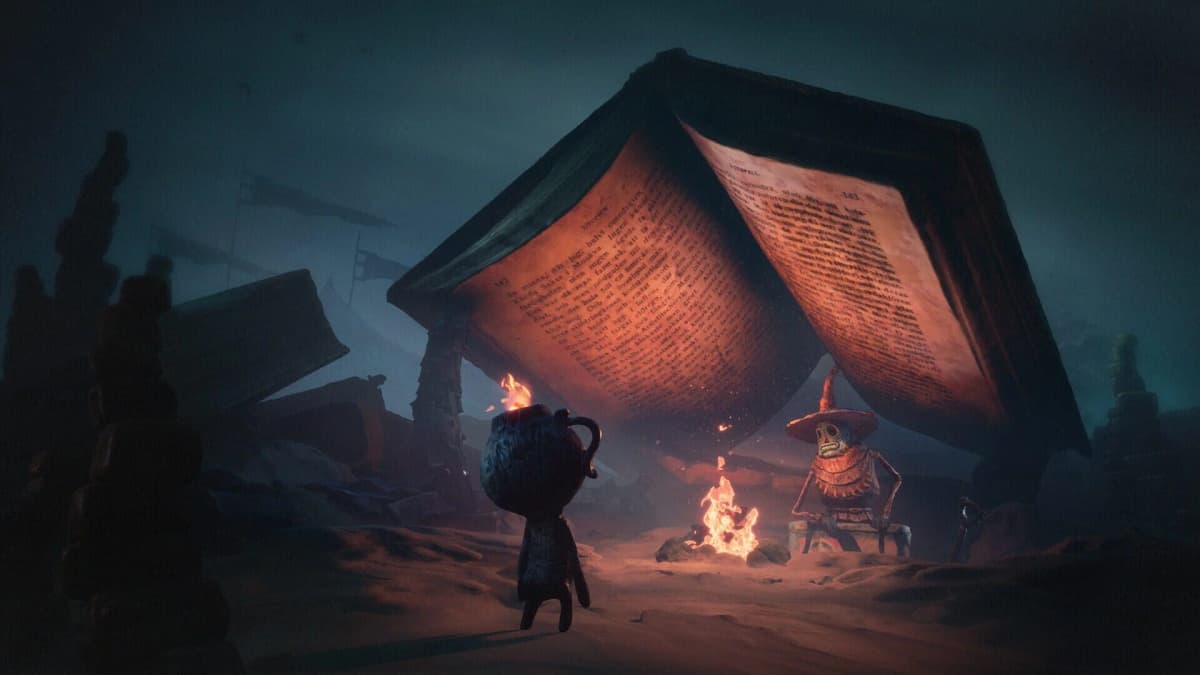
- Slow and exploratory: inspecting the clay world and lingering on puzzles pushes you to the upper end, around 6-8 hours.
- Going for the platinum: budget the full 6-10 hours, with the extra time spent on a cleanup pass after your first clear.
Main-story run versus completionist run
A main-story run means pushing through all six chapters to the ending credits without chasing every objective. That is the 4-6 hour number, and it is the figure most people actually want. If you explore thoroughly, expect to drift toward 7-8 hours.
A completionist run targets the platinum trophy or all achievements, and that is where the 6-10 hour range applies. The completionist path extends the runtime meaningfully but still keeps the game firmly in the short-adventure category. If you only want the credits, this is a weekend game across a few evening sessions. If you want everything, give the cleanup its own block of time after the first clear rather than treating it as automatic. For the route itself, see our platinum cleanup guide and the full trophy and platinum route breakdown.
Why the opening makes the game feel shorter than it is
The first chapter is especially brief, which can distort your read on the whole game. Finish the opening fast and it is tempting to assume the entire adventure is a tiny prologue. It is not. The first chapter is a short on-ramp; the remaining five chapters carry the bulk of the 4-6 hour story.
So if you are one hour in and wondering whether that was the whole thing, do not use the opening as your benchmark. The early pace runs faster than the chapter average, and the game still settles into a normal multi-hour story across the full six-chapter arc. If you want a section-by-section sense of what is ahead, our full chapter walkthrough covers every chapter and ending.
Common mistakes when judging the length
- Counting it as five chapters. Some video listings describe “five tales” of fire and darkness. The game has six chapters, so estimating off five undercounts your runtime by a full chapter.
- Treating the platinum as automatic cleanup. The completionist run adds real time on top of the story. Plan for the 6-10 hour band, not the 4-6 hour one, if you want everything.
- Judging total length from chapter one. The opening is deliberately short and is not representative of the average chapter.
- Expecting an open-world time sink. This is a handcrafted, chapter-based single-player game. The atmosphere is dense, but the runtime is intentionally compact.
Practical takeaway
The Midnight Walk is a short, curated adventure: around 4-6 hours for the main story (up to 7-8 if you explore), and around 6-10 hours for the platinum. It is built from six chapters, each under an hour, with a notably brief first chapter that makes the opening feel quicker than the whole. Aim for the credits and it is a weekend; aim for 100% and you add a focused cleanup pass on top.
FinalBoss // Gear
Level up your setup
01Top-rated gaming headsetson Amazon→02High-refresh gaming monitorson Amazon→03Gaming chairson Amazon→04Discounted game keyson Kinguin→
Affiliate links · As an Amazon Associate, FinalBoss earns from qualifying purchases.
Want to Level Up Your Gaming?
Get access to exclusive strategies, hidden tips, and pro-level insights that we don't share publicly.
Ultimate Guide Strategy Guide + Weekly Pro Tips