
The ugly wipe in Wandering Sword almost always comes from the same mistake: you stack damage, you ignore range and positioning, and then a story fight punishes a party that can only do one thing. The short answer is that good teams here are built around weapon roles, not raw star ratings. Wandering Sword is a premium single-player wuxia RPG with no gacha pulls and no microtransactions, so “best team” means the squad whose weapon types cover the grid — not the one with the rarest names.
Table of Contents (12)
The short version
- Build around weapon roles, not tier lists. The five weapon types each hit the grid differently: Sword = straight line, Saber = column/wide front, Polearm = the tiles surrounding you, Fist = single target, Hidden Weapon = ranged.
- Cover at least three ranges. A team that can clear a line, hit a crowd, and reach the back row out-performs four characters all swinging in melee.
- Start with what you have. Wei Huo and Bai Jin are available from the very start — Bai Jin is your only ranged DPS for the first half of the game.
- Add Shangguan Hong after Wudang. She is a Sword user and the cleanest mid-game cornerstone once she unlocks.
- Most recruits need 60 Affinity and a fiery icon by their name. Gift them up before you expect them to fight.
Why weapon type is the real meta
If you take one idea from this guide, take this: in Wandering Sword, your weapon type decides how you fight, because combat is a grid and every weapon hits a different shape of it.
- Sword — hits in a straight line. The medium-range generalist; great for picking targets out of a row or attacking from the side of a mass battle.
- Saber — hits a column / wide front. This is the “fight entire mobs at once” weapon and clears crowds fastest.
- Polearm — hits the tiles around you. Built for being surrounded; it is the defensive/anchor weapon that returns damage to everything adjacent.
- Fist — single target, one square away. The control weapon: it carries the best early status effects to shut a boss down in a duel.
- Hidden Weapon — ranged. Your only way to attack from a distance and stay out of the melee; weak on early skills, nasty once they come online.
There are 14 recruitable companions in the base game, split roughly across the five types — about three each of Sword, Saber, Fist and Polearm, plus two Hidden Weapon users. That spread is the whole reason flat tier lists mislead new players: a “top” pick is worthless if it duplicates a range you already have and leaves another empty.
The best early-game team core
You do not have to wait for famous names — two of your strongest building blocks are available from the start. Wei Huo and Bai Jin are both From-Start companions. Wei Huo joins early in Wutong Village during the opening Detoxifying Items mission; Bai Jin shows up in Luo Village and is recruited later at Petalsfall Forest after his Mount Wanzi side quest and 60 Affinity.
The reason to prioritize Bai Jin is concrete: he is a Hidden Weapon wielder, which makes him your only reliable ranged DPS until Leng Wuqing becomes recruitable around the halfway point. A team with no ranged option has to walk into every fight, and Bai Jin fixes that immediately.
Recommended early core
- Protagonist — your flexible slot; pick the weapon that covers a range your companions lack.
- Wei Huo — a From-Start anchor available in the opening hours.
- Bai Jin — your first ranged threat (Hidden Weapon); recruit him at Petalsfall Forest after his side quest and 60 Affinity.
- Fill the last slot for range coverage — a Saber user to clear crowds or a Polearm user to absorb hits, rather than a second melee duelist.
The classic early mistake is making every slot a melee finisher. It feels strong in small skirmishes and collapses the moment a fight surrounds you or pushes enemies to the back row. Keeping a ranged or AoE shape in the party is what carries you through the longer story battles.
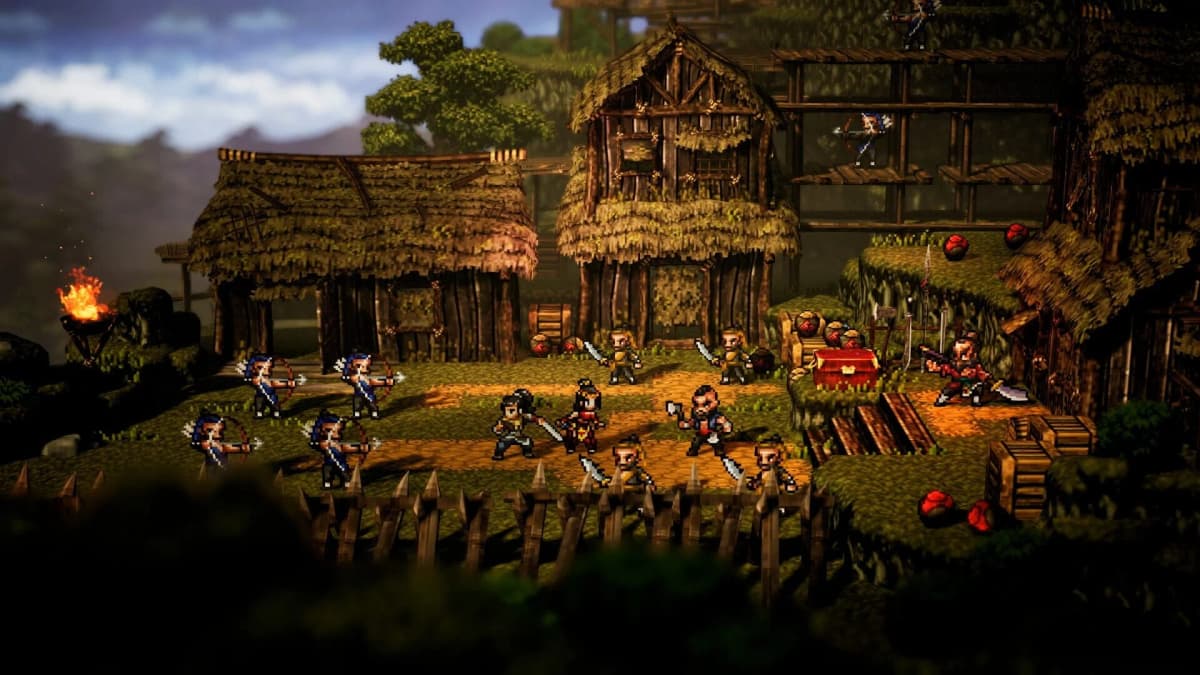
Mid-game: add Shangguan Hong, keep the ranges covered
Once you join the Wudang Sect, your roster widens and Shangguan Hong becomes available. She is a Sword user — a clean line-damage cornerstone you slot in alongside your existing ranged and anchor picks. Recruit her through the Toad Epidermis side quest out of Pingkang City, raise her Affinity to 40 for the Qingmu Sect quest, then finish it to invite her in; pushing Affinity to 70 unlocks an extra move.
The better mid-game approach is to keep a balanced spine and only swap a piece when a recruit clearly fills a range you are missing. Do not bench your only Hidden Weapon user to make room for a third melee character.
Three strong mid-game cores
- Balanced spine: Protagonist + Shangguan Hong (Sword, line) + Bai Jin (Hidden Weapon, ranged) + Wei Huo as the front anchor.
- Crowd-control core: swap one slot for a Saber user to delete grouped enemies, keeping Bai Jin for back-row reach.
- Duel core: against single bosses, bring a Fist user for single-target status control alongside Shangguan Hong’s line damage.
That is the real shape of a strong party: not one fixed lineup, but a spine of complementary weapon types you rotate around the encounter and your recruitment windows.
Synergy logic: why these teams work
The best Wandering Sword teams work because each slot covers a different part of the grid. That is the synergy that matters more than any star rating.
- Shangguan Hong (Sword) reaches down a line to pick targets out of a row.
- A Saber user clears the column in front of you so you are not whittling a crowd one enemy at a time.
- Bai Jin (Hidden Weapon) hits the back row and stays safe, the one thing a pure-melee team simply cannot do.
- A Polearm anchor wants to be surrounded — it punishes everything adjacent while protecting your squishier pieces.
- Your protagonist should fill whichever range is still open, not duplicate a job a companion already does well.
A team with one deliberate gap-filler beats a team of four characters all swinging at the same square.
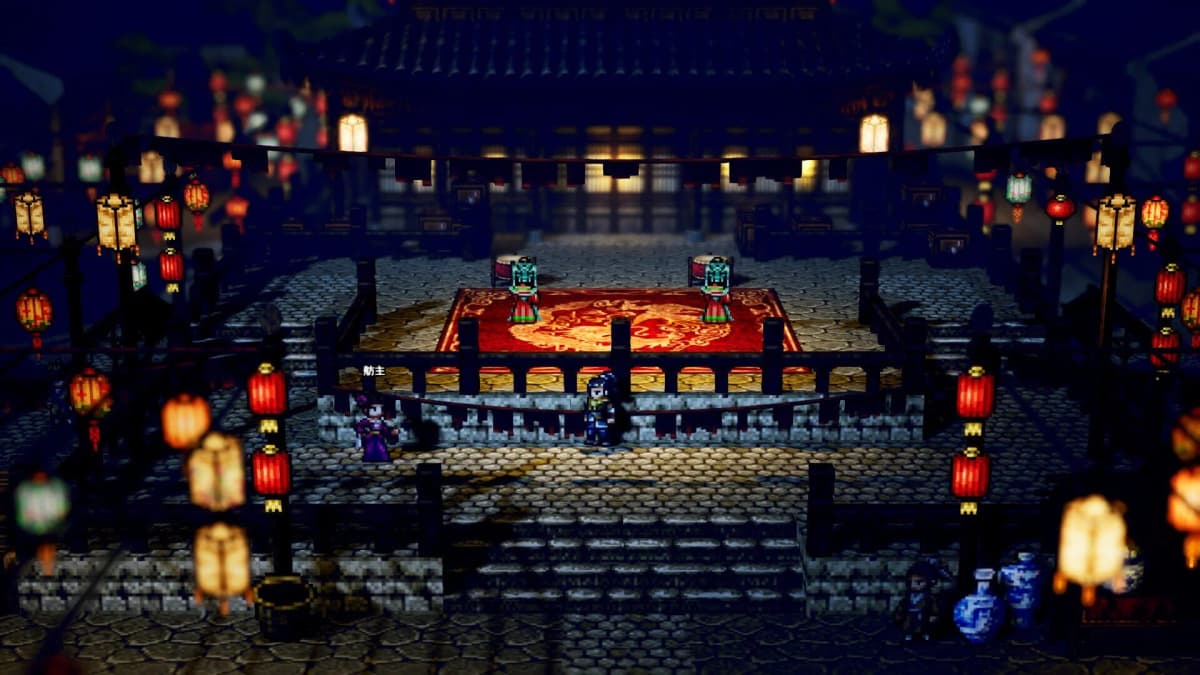
Late-game: keep the core, swap the weak range
Late-game team building is the same principle with more options. Keep your reliable spine and swap in high-impact unlocks only when they improve a range you are weak in. A second Hidden Weapon user, Leng Wuqing, becomes recruitable around the midpoint and pairs well with Bai Jin if you want a heavy back-row game; later Polearm options like Li Yuanxing (recruited from the Beggars’ Sect in Tancheng after the Siege of Mount Windless) round out the anchor slot.
Do not chase a “final perfect team” so hard that you weaken your current one. The squad you can field right now — with every range covered — is worth more than the roster you plan to field ten hours later.
Recruitment rules that decide your roster
Most companions are not handed to you. Two conditions gate a permanent recruit:
- The fiery icon must be lit beside their name when you approach them on the map — that means their quest chain is complete.
- Affinity of at least 60 with the protagonist, raised through gifts and shared side quests.
Because of this, recruitment timing is part of the meta. Build Affinity early on the companions whose weapon type you want, so the range you are missing is actually fieldable when the fight demands it.
The upgrades that matter more than one swap
A well-shaped team still underperforms if the build underneath it is neglected. Before obsessing over the next recruit, get these foundations right:
- Meridians — deepen the core stats that make a companion actually feel strong.
- Moves — your role coverage falls apart if a character’s skill loadout does not match their weapon shape.
- Equipment — a stable core with better gear beats a “better” roster with worse gear.
- Protagonist HP and attack — treat these as essential, not optional polish, since your flexible slot fills whatever range is open.
If your party feels weaker than it should, this is usually where the problem is. The roster gets blamed first, but shallow upgrades are the real bottleneck.
Common mistakes
- Running all melee. Without a Hidden Weapon user you have to close on every enemy; keep Bai Jin (and later Leng Wuqing) for back-row reach.
- Stacking the same range. Two Sword users do not cover more grid than one — spread your weapon types.
- Benching your only ranged or AoE piece for a flashy melee recruit. You are trading coverage for raw numbers and usually losing.
- Expecting recruits to fight at low Affinity. No fiery icon and under 60 Affinity means no permanent recruit — gift them up first.
- Treating Polearm as pure damage. It is the surrounded-anchor weapon; use it to soak hits and punish adjacency, not to top the damage chart.
Practical takeaway
The strongest way to build teams in Wandering Sword is to cover the grid, not chase a tier list. Start with your From-Start picks — Wei Huo as an anchor and Bai Jin for ranged Hidden Weapon damage — add Shangguan Hong’s Sword line after Wudang, and fill the last slot with whatever range your party still lacks (Saber for crowds, Polearm to anchor, Fist to lock down a boss). Raise Affinity to 60 ahead of time so the companion you need is fieldable, then back the squad with real investment in meridians, moves, equipment, and protagonist stats. A team with every range covered holds up far better than one built on the rarest names. For more, see our companion best weapon guide, the full character recruitment guide, and tips on using Inheritance Points efficiently.
FinalBoss // Gear
Level up your setup
01Top-rated gaming headsetson Amazon→02High-refresh gaming monitorson Amazon→03Gaming chairson Amazon→04Discounted game keyson Kinguin→
Affiliate links · As an Amazon Associate, FinalBoss earns from qualifying purchases.
Want to Level Up Your Gaming?
Get access to exclusive strategies, hidden tips, and pro-level insights that we don't share publicly.
Ultimate Guide Strategy Guide + Weekly Pro Tips