
Table of Contents (11)
Chapter 5 Overview: Structure, Length, and Key Mechanics
Chapter 5 of Replaced is where the game starts to layer its systems more aggressively: ranged parry (bullet deflection), powered platforming, stealth routes, and a multi-phase boss are all introduced and tested in sequence. Expect 45-75 minutes on a first run depending on how quickly you adapt to deflection timing and the crane platforming section.
Major components you will encounter:
- Opening ambush that teaches bullet deflection
- Rooftop traversal using powered air conditioning units and batteries
- Dense PCPD combat encounters mixing melee and ranged enemies
- Stealth sections involving patrolling drones and spotlights
- A crane and moving-platform segment requiring precise timing
- Unlocking and learning to use the Overdrive ability
- Final multi-phase fight against the Commissioner and a generator
The chapter uses frequent checkpoints, including one directly before the Commissioner, so failures rarely send you far back. The main difficulty spikes are the first bullet-deflect sequence, the drone stealth, and understanding the boss/generator loop.
Opening Ambush: Learning Bullet Deflection
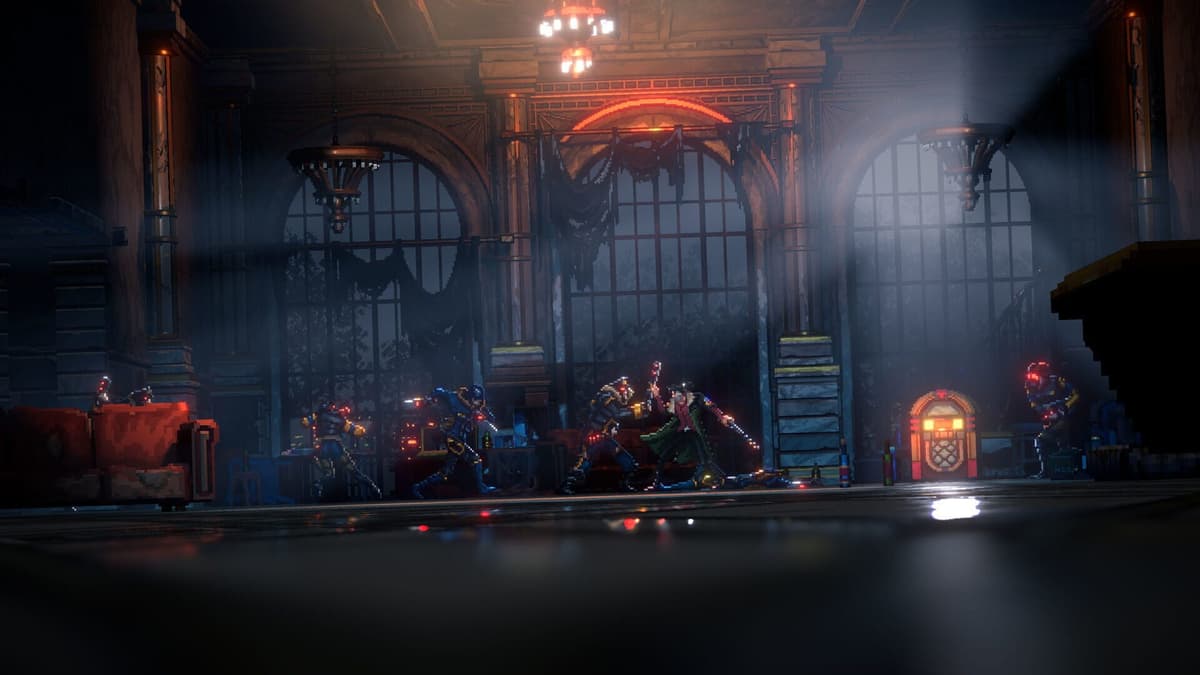
The chapter begins with Tempest and R.E.A.C.H. driving toward the Wall. After the cutscene, you are dropped into an ambush by PCPD forces. This is the formal introduction to bullet deflection, and the game expects you to use it immediately rather than just dodging.
Core elements of this first encounter:
- One or more ranged PCPD officers firing in short, rhythmic volleys
- Standard melee units that try to close distance while you focus on the gunner
- A small, flat arena with limited vertical cover, encouraging active deflection
To handle this encounter efficiently:
- Identify which button on your platform is mapped to parry/deflect (for example,
LB/L1on many gamepads). You must press this as bullets are about to hit, not when they are fired. - Watch the ranged enemy’s animation. There is typically a shoulder or muzzle-flash cue just before each bullet. Your window is slightly after the flash, just as the projectile reaches you.
- Keep melee enemies in your peripheral vision. Use quick light strings to stagger them, then turn back toward the gunner to time the next deflect.
- When in doubt, prioritize facing the shooter. The game is lenient about your exact character position but stricter about your facing and timing when reflecting bullets.
Deflected bullets will hit enemies behind you or return to the shooter depending on angles. For this first encounter, simply surviving without taking excessive chip damage is sufficient; full optimization is not required yet, but getting comfortable with the rhythm will make later rooms significantly easier.
Rooftops and AC Unit Puzzles: Batteries and Double-Jumps
After the ambush, progression moves onto rooftop sequences that introduce environmental puzzles using air conditioning units and portable batteries. These segments teach you to link traversal options to powered devices.
Typical pattern for these puzzles:
- You see a large AC unit venting no air, positioned just below a ledge you cannot reach with a standard jump.
- Nearby is a battery dock or empty slot on the unit, and somewhere in the environment there is a removable battery.
- Carrying the battery usually restricts your combat options or movement slightly (no ledge grab or attack while carrying in certain segments), so the route back must be clear and deliberate.
Execution steps:
- Scan the immediate area horizontally first. Batteries are rarely hidden vertically far above or below your current plane.
- Pick up the battery with the interaction button (commonly
X/Square/Edepending on platform). - Backtrack or move forward along the obvious path while looking for minor geometry that can snag you-edges, low rails, or enemies that spawn when you are encumbered.
- Slot the battery into the AC unit’s socket. Once powered, the unit will blow an air column or otherwise enhance your jump, effectively granting a contextual double-jump when passing through its updraft.
- Time your jump so you enter the updraft at the top of your first jump arc, then press jump again at the apex to get the maximum boost to the next platform.
Common failure modes here are:
- Trying to double-jump too early, before the character is fully within the air column.
- Not aligning horizontally with the strongest part of the updraft; small horizontal corrections midair help secure the ledge.
- Leaving a battery behind on a previous screen and having to repeat traversal. In general, if you see an unpowered unit, confirm the nearest battery before proceeding.
These rooftop AC puzzles will repeat later in the chapter, so building a consistent pattern-locate unit, trace cable or sight-lines to battery, plan the return path-reduces friction.
Construction Zones and PCPD Combat Rooms
Moving deeper into the chapter, environmental design shifts toward partially built structures and scaffolding. Encounters here mix vertical drop-ins with multiple ranged officers and sturdier melee units.
Key principles for these mid-chapter fights:
- Open with control. Use your first seconds to either close the distance on a ranged enemy or position yourself so their fire crosses through their own melee allies, allowing more efficient bullet deflections.
- Reserve dodge for burst patterns. Standard single shots should be deflected; multi-shot or shotgun-like patterns are often safer to sidestep with a dodge input (commonly
B/Circle/Shift). - Use environmental edges. Some arenas allow juggling enemies into walls or knocking them off slightly lower platforms, buying breathing room.
- Watch for stagger windows. After a successful deflect, some enemies will be momentarily open to heavy attacks or finishers. Capitalizing on these shortens the encounter significantly.
Health management is less forgiving here because chained mistakes—missing a deflect, eating a melee combo, then rolling late—tend to occur together. Expect several rooms that act as skill checks on your ability to alternate between parry, dodge, and repositioning.
Subway and Old Phoenix City Streets
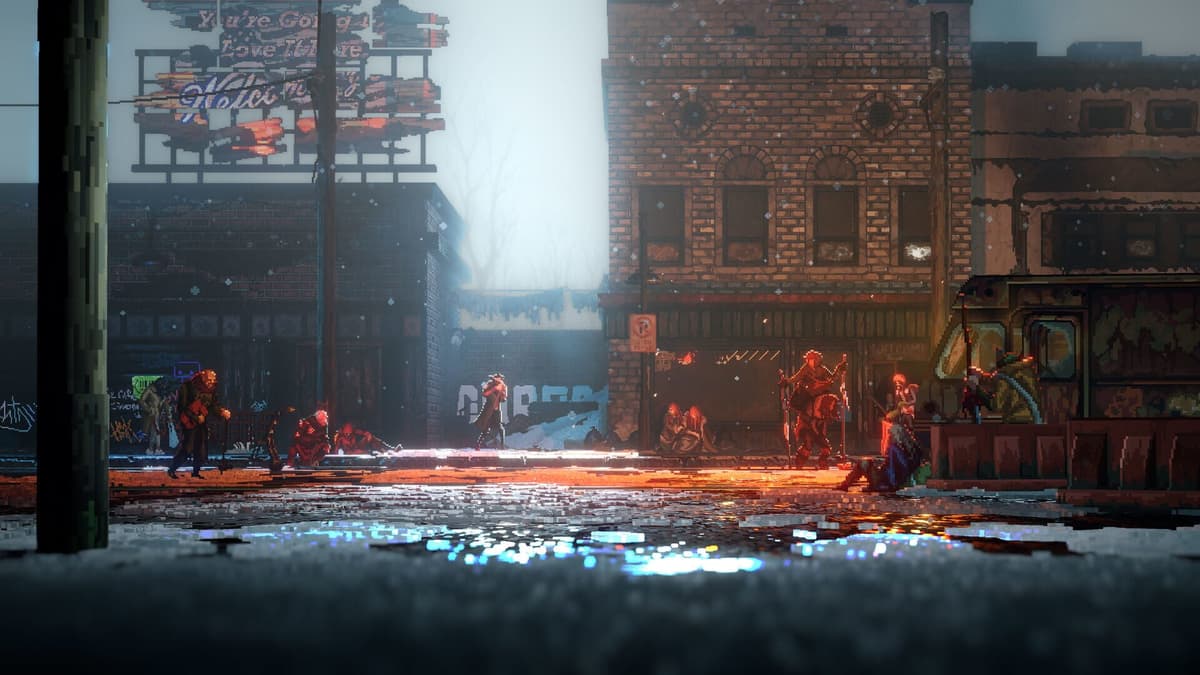
The middle stretch of Chapter 5 routes you through a subway section and then out into the Old Phoenix City streets. Visibility is slightly lower, and combat spaces are narrower, emphasizing line control and target prioritization.
Subway tips:
- Use background elements—support pillars, train cars, and signage—to break lines of fire temporarily while you reposition.
- Expect enemies to spawn from both sides in some rooms. Keep your character near the midline until you confirm where the next wave spawns.
- Audio cues in the subway are useful; listen for the distinct reload or shout sounds that precede ranged volleys.
On the streets:
- Encounter density increases slightly. Some fights start with multiple ranged units already in position; a fast approach, using sprint plus dodge-cancel, minimizes their opening damage.
- Environmental storytelling elements (neon signs, shopfronts) sometimes hide side paths with optional scans. Before triggering obvious forward exits, quickly sweep the edges of each combat arena.
- Expect a gradual ramp-up in enemy aggression here as the chapter moves toward its stealth and boss segments.
Drone Stealth Sections: Spotlight Management
Later in the chapter, the game introduces drone stealth. Overhead or mid-distance drones sweep the environment with visible spotlights; being caught triggers alarms and either calls in reinforcements or forces a reset depending on the specific section.
Core rules of these sequences:
- The cone or circle of light represents the detection zone. Stepping into it while the drone has line-of-sight triggers detection.
- Solid cover—crates, walls, overhangs—blocks detection even if the light touches you, as long as the drone cannot “see” your character.
- Timing is based on predictable patrol patterns; drones rarely react dynamically, so once you learn the path, you can repeat it consistently.
Approach for clean runs:
- Before moving, watch a full cycle of drone movement from your current safe zone. Note where the light slows, accelerates, or pauses.
- Identify intermediate safe pockets—shadowed corners, alcoves, or the lee side of objects—that let you break each crossing into smaller moves.
- Use short, controlled taps of the movement stick or keys instead of full sprints. Overshooting into light is a frequent cause of failure.
- When multiple drones overlap patterns, wait for the rare moment when both are oriented away; pushing early usually leads to getting pinned midway.
These stealth sections often precede or integrate with the crane and moving-platform area, so think of them as rhythm exercises for timing and patience before more demanding traversal.
Crane and Moving Platform Traversal
The crane segment is a notable traversal spike. You will jump between moving platforms, sometimes under drone surveillance, while maintaining forward momentum. This is where earlier AC-powered double-jump practice pays off.
Key details:
- Some platforms move at slightly different speeds or directions; jumping too late or too early desynchronizes the chain.
- AC units may be positioned to give you vertical boost mid-sequence. Missing a single boost often means you cannot reach the next crane arm.
- Checkpoints are reasonably spaced but not after every single jump. Plan for short sequences, not individual hops.
Practical execution:
- Align your character near the leading edge of each platform before jumping off. This shortens the horizontal distance to the next target.
- Commit to the jump; minor midair correction is possible, but hesitation—jumping then trying to step back—usually leads to falls.
- When AC updrafts are involved, jump into the column from slightly before the unit, not right on top of it, to ensure your arc passes through the strongest lift zone.
- If drones are active, treat their spotlights like moving hazards: factor their timing into when you leave each platform, aiming to land outside their active sweep.
Overdrive Ability: When and How to Use It
During Chapter 5 you gain access to the Overdrive ability, a temporary combat boost that activates once a meter is filled through offensive or defensive actions. Exact parameters vary by build and difficulty, but the general behavior is:
- A visible meter fills as you land hits, perform successful deflects, or maintain pressure.
- Once full, activating Overdrive (typically via a dedicated ability button or modifier + attack, such as
RB/R1) temporarily boosts damage output, speed, or responsiveness. - Overdrive duration is limited; exiting combat prematurely can waste its potential.
Usage guidance in Chapter 5:
- Do not trigger Overdrive in basic hall encounters. Save it for multi-wave fights or dense PCPD rooms where the extra burst clears threats before they can chip you down.
- Overdrive synergizes well with bullet deflection; the increased pace encourages aggressive parry-counterattack sequences.
- In the Commissioner boss fight (see below), reserve at least one Overdrive activation per phase to either burn down the generator quickly or punish the boss during a vulnerability window.
Collectibles and Scan Opportunities
Chapter 5 includes multiple scan collectibles for players aiming for 100% completion. Exact locations can vary subtly with difficulty and camera framing, but their general placement follows consistent logic.
Patterns to watch:
- Immediately after high-intensity combat rooms, check alcoves or recesses that were not practical to explore mid-fight.
- Near powered devices (AC units, battery docks), look for offshoot ledges reachable once the new traversal path is active.
- In the subway, small dead-end side tunnels often hide scans; take brief detours when the main objective marker is clearly forward.
- In office or indoor sections, background terminals and consoles are frequent scan targets; pass close to them and watch for interaction prompts.
If a screen layout looks suspiciously elaborate for a simple pass-through corridor—multiple levels, tucked-away corners—it is usually worth slowing down to check for a scan before moving on.
Commissioner Boss Fight: Phases and Generator Management
Chapter 5 ends with a multi-phase battle against the Commissioner. A final checkpoint places you directly before this encounter, so experimentation costs minimal time. The fight’s core structure revolves around alternating damage on the boss himself and destroying a generator.
General layout and flow:
- The arena is a relatively flat space with the Commissioner as the primary threat and a generator device placed separately in the background or to the side.
- The fight repeats across multiple phases. Each phase involves:
- Engaging the Commissioner, learning or reusing attack patterns.
- A moment where attention must shift to the generator to progress.
- Returning focus to the boss as his behavior escalates.
Commissioner attack expectations (pattern-agnostic principles):
- He will mix telegraphed heavy attacks with faster strings. Heavy attacks are often designed for dodge rather than parry; look for exaggerated wind-ups.
- Some attacks may be deflectable, rewarding you with a stagger window. Use visual cues—glows, distinct weapon positions—to identify these.
- Between combos, there are small neutral windows where you can safely reposition toward or away from the generator.
Managing the generator:
- The generator typically becomes a necessary target when the boss’s defenses shift—shields, damage reduction, or new hazards may appear linked to it.
- Once the condition to attack the generator appears (visual or audio cue, or a brief lull), move aggressively to it and unload as much damage as possible before the Commissioner’s pressure resumes.
- Overdrive is highly effective here; triggering it just before opening on the generator can shorten the exposure window.
- After enough damage, the generator will destabilize or explode, ending that phase’s environmental effect and returning the focus to the Commissioner.
Phase-to-phase adaptation:
- Expect the Commissioner to gain new variations on his attacks each phase—additional hits in a combo, altered timing, or new ranged options.
- Do not assume the same dodge timing will remain safe; give each new animation a test attempt where survival, not damage, is the priority.
- Resource management matters. Try to enter each new phase with at least partial Overdrive charge and as much health as possible, even if it means playing conservatively at the end of the previous phase.
Once the final generator cycle is complete and the Commissioner’s health is fully depleted, a concluding sequence will trigger, marking the end of Chapter 5 and transitioning to the next narrative segment.
Related Guides
- Replaced is a cyberpunk pixel noir love letter to Blade Runner… with a catch
- Replaced Just Hit Game Pass, But Is This Flashy Cyberpunk Indie Really Worth Your Time?
- Replaced: How to Beat Every Chapter – Complete Story Walkthrough
- Replaced: Chapter 2 Walkthrough – Station Hub, Tempest & Termites
FinalBoss // Gear
Level up your setup
01Top-rated gaming headsetson Amazon→02High-refresh gaming monitorson Amazon→03Gaming chairson Amazon→04Discounted game keyson Kinguin→Affiliate links · As an Amazon Associate, FinalBoss earns from qualifying purchases.
Want to Level Up Your Gaming?
Get access to exclusive strategies, hidden tips, and pro-level insights that we don't share publicly.
Ultimate Guide Strategy Guide + Weekly Pro Tips