

Most people who get stuck in Replaced are not stuck on the combat. They are stuck because the game keeps changing what it wants from you — a brawl here, a sniper-evasion crawl there, a power-routing puzzle two rooms later — and it rarely announces the switch. This is a chapter-by-chapter map of the whole story so you always know which mode you are in, where the bosses are, and what each chapter is actually about.
Replaced runs across ten numbered chapters plus a prologue, all chapter-gated, but most of your upgrades sit behind optional side quests and a couple of hub chapters you return to — so it is not a strictly linear collectible sweep. The combat is Batman: Arkham-style free-flow melee: parry the yellow tells, dodge the red ones, and chain baton-and-gun combos between them.
Table of Contents (15)
The short version
- Chapter 1 — Non-Standard Task: lab escape and combat tutorial.
- Chapter 2 — Machine Learning: the station/arcade/hospital hub and your first side quests. No boss.
- Chapter 3 — The Lowest Low: Termite Tunnels and Prospero Mine, ending at the Uncle Ben boss.
- Chapter 4: the train-station hospital and a flashback investigation.
- Chapter 5: the drive to the Wall and the subway — learn bullet deflection, unlock Overdrive, and fight the Commissioner.
- Chapter 6: forest and industrial zones built around stealth and platforming.
- Chapter 7: back at the station — Tempest’s comic quest, Sandra’s spy investigation, collectibles. No boss.
- Chapter 8: the Tower District — recruit four technicians, crack Marsh’s apartment safe for A.R.G.O., then the Commissioner rematch.
- Chapter 9 — Lend a Hand: the assault on Central Tower and the final Commissioner encounter.
- Chapter 10 — Full Circle: the finale and the Matriarch, resolving REACH and Warren.
Three systems you use in every chapter
- Free-flow melee: fights are about reading tells, not mashing. Yellow flash = parry, red flash = dodge. Tap a short combo, then react to the next windup — the counter window is generous if you are not panicking.
- Layered platforming: the game hides scans, music tracks, and upgrades just off the obvious route. A ledge in the background with a clean, contrasting edge is almost always climbable.
- Stealth as crowd control: you are not a pure stealth character, but thinning a group before you commit to a brawl is the difference between a clean run and a reset.
When you stall, the useful question is always: am I supposed to fight this, sneak past it, or climb to something just off-screen? That alone clears most roadblocks.
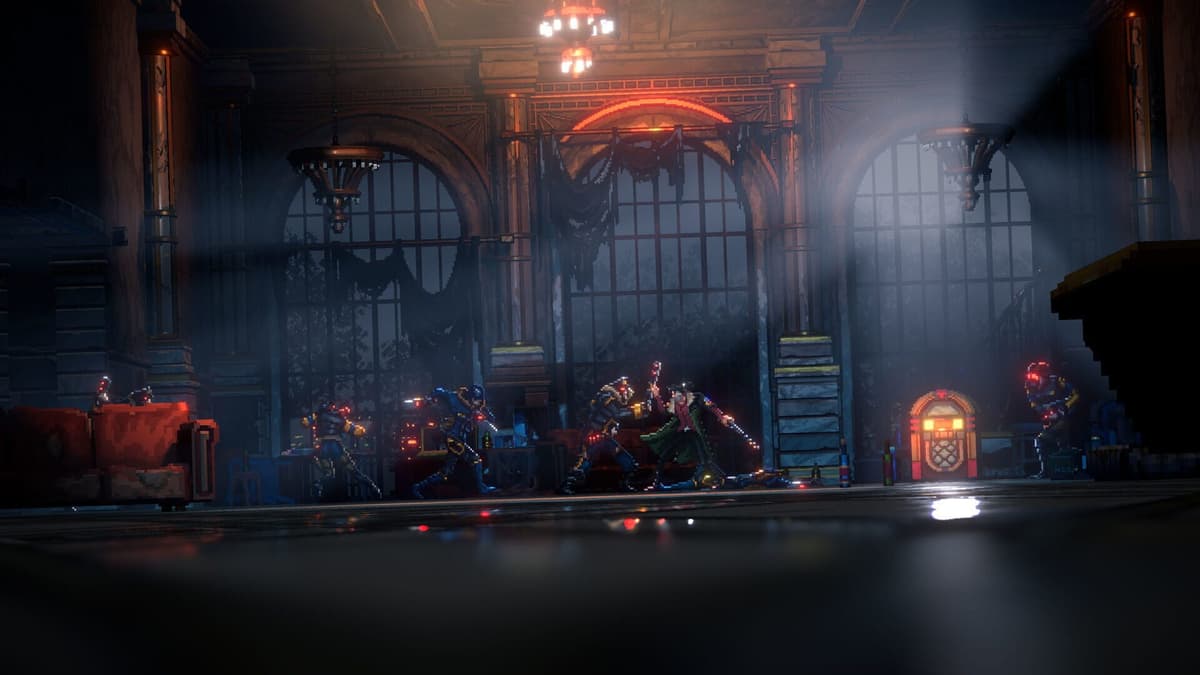
Chapter 1 — Non-Standard Task (lab escape & first fights)
You wake as REACH inside Warren Marsh’s body amid a lab disaster. This whole chapter is a guided tutorial, but you can still walk past early collectibles if you treat it as pure cinematics.
- Lab escape: follow the prompts, but pause between set-pieces to scan the background for interaction shimmers. The first scans are easy to miss.
- Sewers & first platforming: watch the parallax layers — a background ledge with a clear edge is usually a real path.
- Termite Camp intro fights: the first brawls teach the core loop. Tap attack twice, wait for a swing, then dodge through and counter.
- South Labor District stealth: cover-based stealth before you meet Tempest. You are not meant to fight the gunmen yet — move only when their attention shifts.
If fights already feel rough, this is the place to open Pause → Settings → Gameplay and adjust difficulty. Getting comfortable here pays off once the game stops holding your hand.
Chapter 2 — Machine Learning (the station hub)
Chapter 2 is the hub introduction outside the walls. You meet David, talk to the Matriarch, and work through several characters’ quests across the train station, the arcade, and the hospital before resuming the hunt for Termites. There is no single “fix the arcade” objective — the arcade game is just one of the side activities, not the chapter’s main goal, and there is no boss fight here.
- Do a slow lap first: talk to everyone before chasing markers. Lines hint at later quests, and side rooms hide early scans.
- Treat the side quests as the chapter: the station, arcade, and hospital errands are the content here. Knock them out while the world is calm.
- Combat tip: as enemy types start mixing, kill the fastest melee attacker first, even when the bruiser looks scarier — one agile foe behind you ruins a clean exchange.
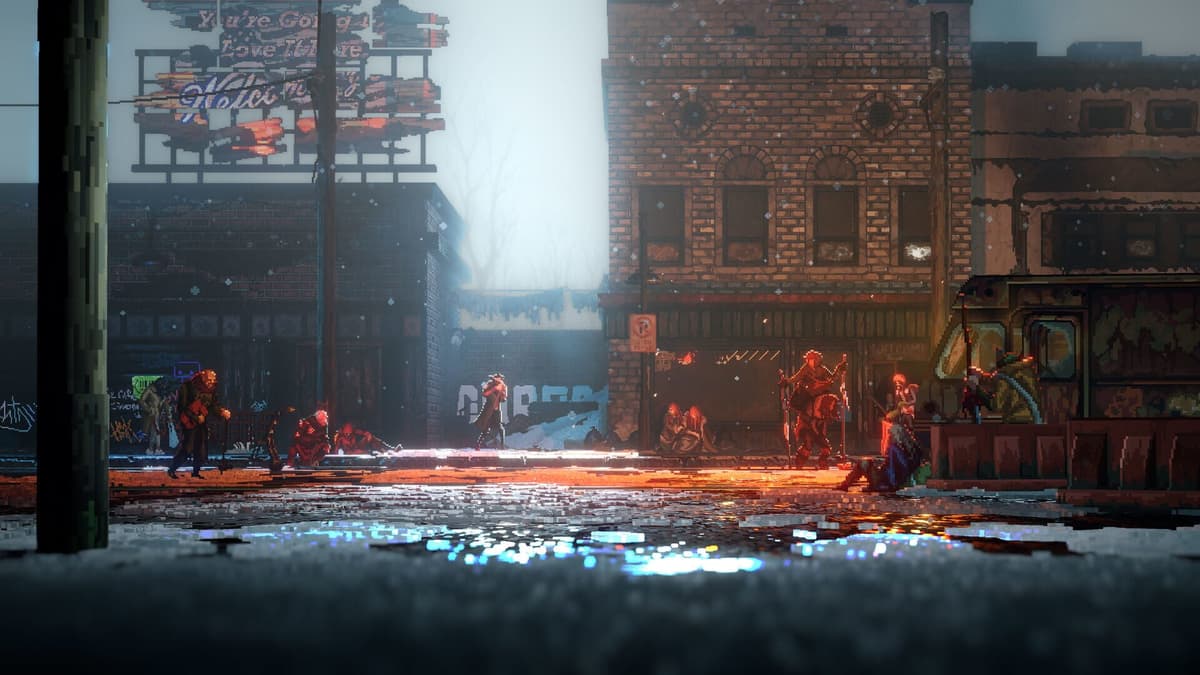
Chapter 3 — The Lowest Low (Termite Tunnels, Prospero Mine & Uncle Ben)
This is where the game commits to combat. Chapter 3 runs through the Termite Tunnels and Base, down into Prospero Mine and the Water Station, and ends at Uncle Ben’s lair with the chapter’s boss fight.
- Tunnels & mine: tight corridors mean ranged enemies are dangerous. Break line of sight on door frames and pillars to force them into melee range.
- Vertical detours: the “wrong” way down often hides a scan; the critical path tends to keep you mid-height.
- Uncle Ben (boss): a two-phase fight. Read his windups, dodge through the red tells, and punish the recovery gaps rather than trading blows.
This is the first chapter where you can usually slip past groups with ladders and drops instead of brawling everything — useful when your health is low. Step-by-step boss tactics live in our Chapter 3 walkthrough.
Chapter 4 — The train-station hospital & investigation
Chapter 4 returns to the train-station hospital and folds in a flashback investigation. It is a quieter, story-forward chapter that rewards thoroughness.
- Investigate everything: treat it like an adventure game — if you can scan or interact with it, do it. You get better context for later beats, and the game rarely punishes curiosity.
- Cross the same ground twice: any area you re-enter is usually worth a detour for extra scans and overheard dialogue.
- Stealth stretch: a mid-chapter stealth section is tougher than Chapter 1’s. Watch a full patrol cycle before you move.
By the end of this chapter, combat starts feeling more expressive — a good moment to start weaving in environmental hazards.
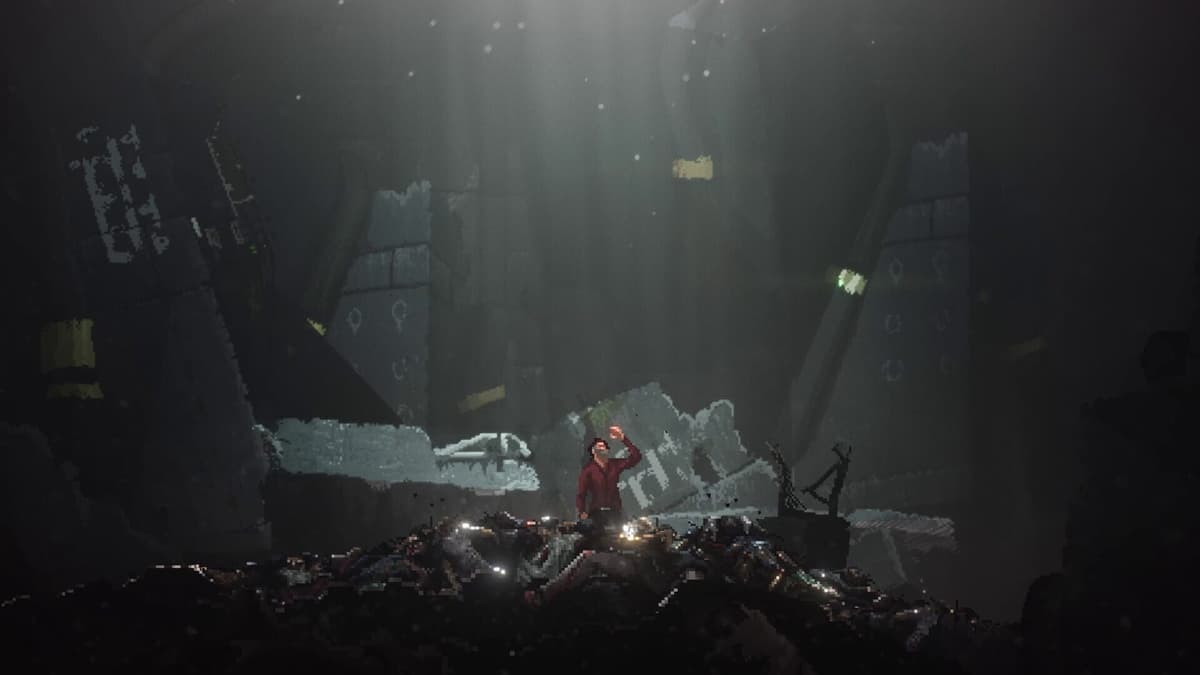
Chapter 5 — To the Wall, bullet deflection & the Commissioner
Chapter 5 is the difficulty step-up. On the approach to the Wall and through the subway you learn bullet deflection, unlock Overdrive, and close the chapter with the first Commissioner boss fight.
- Bullet deflection: when you are pinned by gunfire, the deflect window is strict but consistent. Don’t tap early — watch the muzzle flash and deflect as the shot leaves the barrel.
- Subway platforming: expect moving platforms and battery swaps. Survey the whole room and find the empty slot before you pick up a battery.
- Overdrive: save it for larger groups rather than one-on-one duels — it is a tempo reset for when a fight gets out of hand.
- Commissioner (boss): the encounter loops through combat phases tied to destroying generators. Use your new deflection to stay safe between phases instead of forcing offense.
If you can clear the mid-chapter ambushes without repeated deaths, you are in good shape for the back half. The full fight breakdown is in our Chapter 5 boss guide.
Chapter 6 — Forest, industrial puzzles & stealth
Chapter 6 changes the vibe entirely: a forest section, stealthy infiltration, and the heaviest puzzle-platforming so far across forest and industrial zones.
- Forest traversal: paths hide behind foreground silhouettes. Slight gaps in trees or fences that break the pattern are usually where you pass through.
- Verticality in stealth: you now have ladders and ledges — bypass patrols by going up and over instead of hugging the same plane.
- Power-routing puzzles: trace cables from source to destination; when in doubt, reset every switch and activate them one at a time.
- Hazard timing: in the faster traversal stretches, wait an extra beat to read a moving hazard before committing — rushing just sends you back to the checkpoint.
This chapter is a patience test. The platforming is fair; rushing it is what gets you killed.
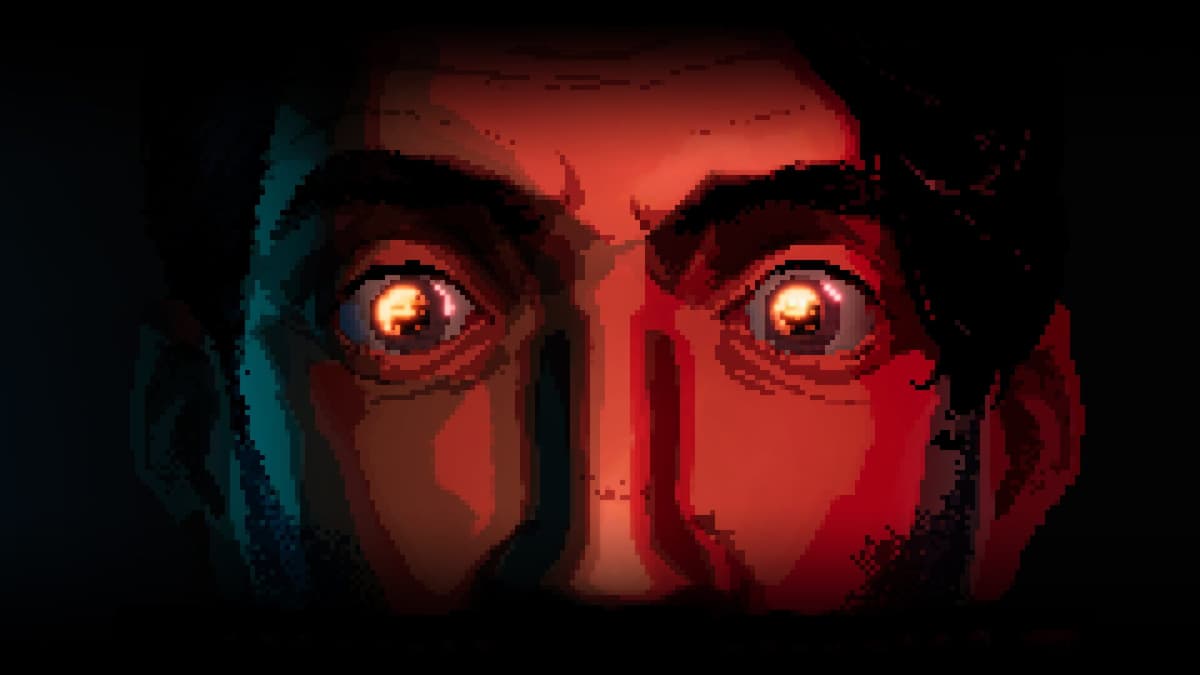
Chapter 7 — Back at the station (Tempest, Sandra & collectibles)
Chapter 7 returns you to the railway station after the car landing, and it is built around exploration and side quests rather than combat — there is no boss here.
- Tempest’s comic quest: gather six comic books scattered across the hospital, council chambers, and arcade, then return them for a Balance Unit upgrade.
- Sandra’s spy investigation: uncover a spy’s identity by examining an ID card and hacking Yo-Yo’s terminal to reach the police database.
- Arcade minigame: beat the arcade horror game (score above 22,075) to earn an Adrenaline Injector.
- Sweep the collectibles: this chapter is dense with scans, music tracks, and documents — a calm chapter is the right time to clear them.
For the exact comic and scan locations, see our Chapter 7 walkthrough.
Chapter 8 — The Tower District & A.R.G.O.
Chapter 8 is a story-critical infiltration through Phoenix City’s Tower District — streets, sewers, rooftops, Marsh’s apartment, and a train. It ends with the Commissioner rematch.
- Recruit four technicians: help the Melophile, Thirsty, Troubled, and the Shady technician to clear the security checkpoint.
- Marsh’s apartment safe: find the clues around the room and enter the password sequence Birthday, Substitute, Cayenne to unlock A.R.G.O. — the tool you use to delete REACH.
- Train ambush & rematch: after you get A.R.G.O., a train fight leads into the Commissioner rematch. It is simpler than the first time — no extra adds, no hazards, just dodging and timing across three escalating phases.
This is also a strong cleanup chapter: revisit earlier “dead ends,” since several open up with your expanded move set.
Chapter 9 — Lend a Hand (assault on Central Tower)
Chapter 9 is the assault on Central Tower, the heart of Phoenix Corporation, and it contains the final Commissioner encounter. It combines everything: stealth, vertical platforming, tight combat, and environmental puzzles.
- Layered stealth-combat: many rooms can be partly cleared with stealth before the fight breaks open. Check vents, ledges, and secondary doors before you charge.
- Security systems: laser grids, cameras, and drones — read the patterns, and remember one control panel often disables several obstacles at once.
- Wave gauntlets: don’t burn everything on the first group. Keep energy and Overdrive in reserve until you are sure it is the last wave.
This chapter is the real exam on your build. If you finish encounters with health to spare, you are ready for the finale.
Chapter 10 — Full Circle (finale & the Matriarch)
The finale resolves REACH and Warren and brings the Phoenix City story to a head, closing with the Matriarch at the top of Central Tower.
- Pre-finale prep: there is no radical respec here — success is about execution, so be comfortable with your habits before the point of no return.
- Final gauntlet: waves punish tunnel vision. Keep track of off-screen threats, rotate targets, and use finishers to thin crowds fast.
- Matriarch (boss): a timing-based encounter built around deadly currents. Read the telegraphs, move on her patterns, and the fight becomes far more manageable once you see the rhythm.
- Story closure: let the ending breathe — it rewards players who collected the scattered lore along the way.
Common mistakes
- Mashing through tells: the melee is parry-yellow, dodge-red. Mashing attack gets you punished — react to windups instead.
- Treating hub chapters as filler: Chapters 2 and 7 are where most side-quest upgrades live. Skipping them leaves you under-equipped for the late game.
- Saving Overdrive for “the right moment”: spend it on big groups when a fight slips. A perfect moment rarely arrives.
- Rushing the platforming: Chapter 6 kills more players through impatience than any boss does. Read hazards before you commit.
- Brawling everything: from Chapter 3 on, ladders and drops let you skip fights — use them when your health is low.
Practical takeaway
Replaced is ten chapters of the game quietly switching modes on you. Learn the parry-yellow, dodge-red melee early; treat Chapters 2 and 7 as your upgrade runs; and keep your three real boss fights in mind — Uncle Ben in Chapter 3, the Commissioner in Chapter 5 (and his rematches), and the Matriarch in the Chapter 10 finale. Know which mode each chapter is in before you walk in, and the story stops feeling like a series of ambushes and starts feeling like a route you already know.
Related Guides
- Replaced is a cyberpunk pixel noir love letter to Blade Runner… with a catch
- Replaced Just Hit Game Pass, But Is This Flashy Cyberpunk Indie Really Worth Your Time?
- Replaced: Chapter 2 Walkthrough – Station Hub, Tempest & Termites
- Replaced: How to Beat Chapter 5 – Full Walkthrough & Boss Guide
FinalBoss // Gear
Level up your setup
01Top-rated gaming headsetson Amazon→02High-refresh gaming monitorson Amazon→03Gaming chairson Amazon→04Discounted game keyson Kinguin→Affiliate links · As an Amazon Associate, FinalBoss earns from qualifying purchases.
Want to Level Up Your Gaming?
Get access to exclusive strategies, hidden tips, and pro-level insights that we don't share publicly.
Ultimate Guide Strategy Guide + Weekly Pro Tips