
Shattered Descent is Saros’s third biome, and the route through it is fixed in shape even if the encounters aren’t: arrive from Bastion, unlock the Grapple at the terminal on the observation platform, drop into the lower levels, trigger the mandatory Carcosan Eclipse to open the gate, pick up Overdrive mid-biome, optionally clear a Nightmare Strand, then fight Rhabdom in the temple arena at the bottom. There is no route around the Eclipse. If the path is locked, you haven’t missed a side passage — you haven’t triggered it yet.
This walkthrough is current as of July 2026, checked against Housemarque’s post-launch patch notes through 1.005.002 (17 June 2026). None of the six post-launch updates changed the Shattered Descent route, the Eclipse gate or Rhabdom’s attack set, and the ability names Grapple and Overdrive are unchanged. Note the correct spelling in-game and in the patch notes is Carcosan, not “Carcosian”.
Table of Contents (17)
The route through Shattered Descent, step by step
- Arrive from Ancient Depths. After beating Bastion and leaving its arena, ride the Jump Network pads upward to the surface. That drops you into Shattered Descent’s settlement.
- Handle the story beat. Move into the main building to trigger it. Depending on your progression this includes grabbing a Primary Datacore and taking it back to Kayla via the Passage before returning.
- Unlock Grapple. Head to the small observation platform beside the main building and the containers, and interact with the terminal there. Grapple is unmissable and mandatory — it lets you zip to the purple hook points that appear across every biome from here on.
- Cross and descend. Grapple the purple points to cross the big gap, then ride the elevator down into the lower levels.
- Trigger the Carcosan Eclipse. At the bottom you reach the Eclipse switch. Interact with it. The gate ahead will not open unless the Eclipse is active — this is the one biome where the Eclipse is required rather than optional.
- Traverse the Eclipse zone. Push through the altered arenas and corridors, clearing exploding plant enemies and Rupture packs. Watch for side passages: several collectibles and optional encounters sit off the main line, reachable by grapple.
- Unlock Overdrive. Partway down you reach a chamber where you talk to Primary. Move into the next room to unlock Overdrive: activate it with L3+R3 once your Power bar is full, then fire with R2. The game immediately drops you into a Solar Cage full of Rupture enemies to try it on — a clean activation deletes the whole pack.
- Optional: Nightmare Strand. You’ll pass its entrance on the way down. Details below.
- Rhabdom. Keep descending through the temple structures. A large circular arch is your signal that the boss arena is close.
- After the boss. Drop down the far side of the arena to find a teleport and a depowered bridge interface that needs a Circuit — the one you picked up in Blighted Marsh. Kayla refuses to repair it; Primary does it automatically. Teleport to Shattered Descent – Bridge Controls, talk to Lina, slot the Circuit, then cross the raised bridge by grapple, work through the corridor network, and shoot the buttons flanking the gate to open the way into the city.
The Carcosan Eclipse is mandatory here — stop looking for a skip
The most common progression mistake in Shattered Descent is assuming you missed a branch when the route locks. You didn’t. Elsewhere in Saros the Carcosan Eclipse is an optional biome modifier you trigger at switches to shift the environment into a harsher, corrupted state with altered paths, tougher enemies and better loot. In Shattered Descent it is the key to the gate, and guides are unanimous: there is no other option.
Because it’s also a difficulty spike, prep before you pull the switch. Top off healing, swap into your safer weapon set, and avoid dumping emergency resources on the room immediately before the gate unless you have no choice. You are opting into a harder version of the rest of the biome, so walk in stocked.
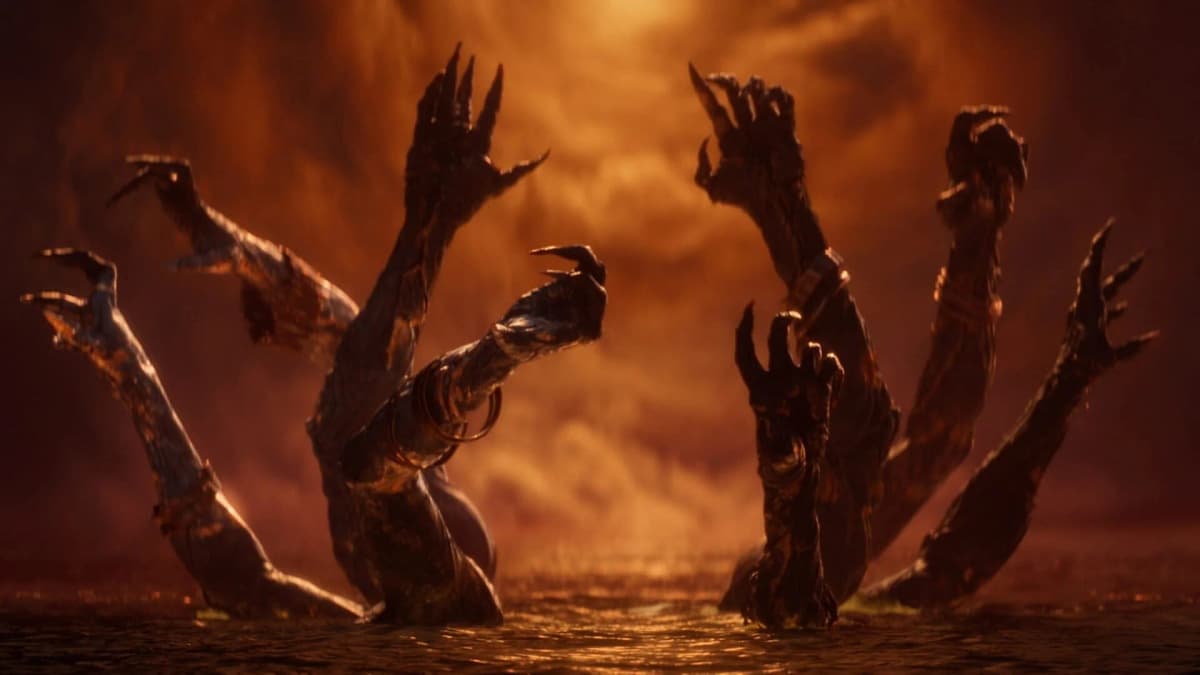
Treat the Grapple as a combat tool, not a traversal upgrade
Shattered Descent is the most vertical area in the game to that point, and the purple hook points are placed for fights as much as for gaps. The key technique — and it carries straight into the boss — is that you can grapple between points mid-air without landing. That’s your reset button.
A simple rule for the biome’s arenas: if melee enemies are stacked on your position and a ranged threat is still alive, grapple out first and shoot on landing. Don’t try to finish a wave from a narrow ledge with perfect aim. Move, force the pack to string out, then kill whatever is generating the most screen pressure — healing support and ranged units first, heavies last.
- Take short side paths while you’re healthy and the geometry is simple; skip long optional loops when you’re low and a main-path checkpoint is open.
- Kill healing support early. Leaving it alive stretches every fight and costs more resources than the detour saves.
- Use vertical movement to isolate one enemy type at a time instead of brawling in the middle of the arena.
- If the objective seems unclear after the Eclipse, look up. This biome hides progress behind vertical sightlines constantly.
Nightmare Strand: when it’s worth it
Nightmare Strand is a flagged high-risk room with trial modifiers active and tougher enemies. It is entirely optional in Shattered Descent, and it is the biggest swing decision in the biome.
What clearing it gives you:
- Restores your Second Chance if you’ve already lost it — enormous going into Rhabdom.
- A large Lucenite payout.
- Health, plus high-proficiency weapons.
The call is simple: attempt it if you actually like your current loadout and you’re reading the enemy mix comfortably. Coming out of a Nightmare Strand with restored Second Chance, better weapons and a full wallet makes Rhabdom dramatically more forgiving. Forcing it because it’s available while your run is barely holding together is the fastest way to throw the biome one room before the boss.
Overdrive: spend it, don’t hoard it
Overdrive is a tempo tool, not a panic button. Shattered Descent is short but punishing, so unused power is wasted power. Getting Overdrive and saving it for a “perfect” room usually means carrying it into a death that a timely activation would have prevented.
Use it to break the hardest mixed waves, and — critically — activate it the moment the bar fills during the Rhabdom fight. Its best window is right after Rhabdom commits to a big stomp or lunge, when its recovery leaves it open. If your run has been light on clean weapon drops, an early Overdrive is what turns a mediocre loadout into a survivable one.
Rhabdom boss guide
Rhabdom is the biome’s climax and the fight where the biome’s whole vocabulary gets tested. It does not have discrete scripted phases the way earlier bosses do — it cycles freely through its attack set and comes at you with everything. The difficulty is layered pressure and movement prediction, not phase gates.
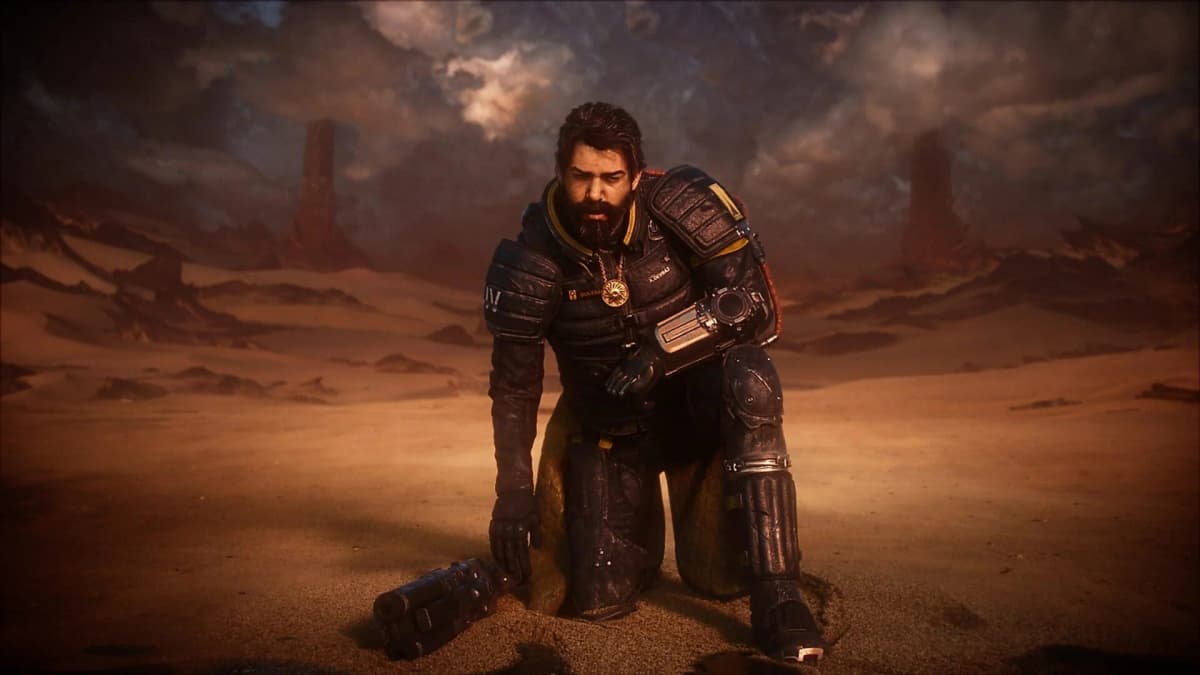
Before you start the fight
- Make sure Second Chance is available in your Armor Matrix, especially if you skipped Nightmare Strand.
- Grab every Aether on the upper platforms before Rhabdom starts moving. The arena is a big circular temple space with four grapple points, and the pickups are free if you take them early.
- You can land some damage as Rhabdom spawns, during its entry animation.
Rhabdom’s attacks and the answer to each
| Attack | Tell | Counter |
|---|---|---|
| Lunge + nova blast | Commits to a leap straight at you, then bursts red orbs on landing | Grapple to a ledge or high point the instant it initiates. Being airborne when it lands skips the orb explosion entirely. Don’t try to parry this one. |
| Triple stomp | Three consecutive jumps, each seeding projectiles or a nova burst; the third is the biggest | Stay low and mobile for the first two, then grapple upward before the third so you’re in the air on impact. |
| Yellow corruption slashes | Waves of yellow slashes in lines or sweeps, usually in sequence | Move laterally and dash through the gaps between waves. Standing still is what gets punished. |
| Homing missiles | Cluster launched at range, tracking your position | Continuous movement and short grapples. Never run in a straight line. |
| Bullet-hell stomp | Ground slam followed by a wide shower of corrupted projectiles | Hold mid-range and chain grapples mid-air to stay off the floor and weave through. |
The win formula
- Position: mid-range. Close enough to shoot consistently, far enough that lunges and stomps telegraph properly.
- Movement: grapple between hook points without landing whenever pressure spikes. Chaining mid-air grapples breaks Rhabdom’s prediction of your path more reliably than dodging does.
- Damage: shoot in the calm windows, fire Overdrive every time the bar fills, and use your Power Weapon to interrupt — timed into a pre-lunge wind-up or an early stomp animation, it cuts off a pattern that would otherwise force you into a risky scramble.
- Discipline: don’t grapple just because a point is lit. Grapple to escape pressure, cross a stomp lane, or force a re-path. Random grapples land you into the next attack with no plan.
Recommended loadout
The Repeater Crossbow is the standout primary for this fight. It applies stacking damage over time, which means your damage keeps ticking while you focus entirely on movement — exactly the trade this fight wants. Beyond that, favour mobility and survivability upgrades (dash cooldown, health, resistances) over raw damage, and bring your most reliable weapon rather than your highest-paper-damage one. If you’re still deciding, our primary and power weapon breakdown covers the full set.
What a clean Shattered Descent run looks like
Secure Grapple immediately, treat side rooms as calculated resource plays rather than mandatory full clears, accept that the Carcosan Eclipse is required and prep before you pull it, take Nightmare Strand only when your build has earned it, spend Overdrive rather than saving it, and arrive at Rhabdom with Second Chance intact and a weapon you trust. Respect the vertical layout and the biome stops feeling harder than it is: positioning is your defence, Grapple is your reset button, and Rhabdom punishes hesitation far more than it punishes low damage.
FAQ
Can I skip the Carcosan Eclipse in Shattered Descent?
No. The vault door ahead stays locked until the Eclipse is active. It’s the only biome where the Eclipse is mandatory rather than an optional risk/reward toggle.
Where exactly do I get the Grapple?
At the terminal on the small observation platform beside the main building in the surface settlement, before you descend. It’s on the critical path — you cannot progress without it.
Does Rhabdom have phases?
Not in the scripted sense. It cycles through its full attack set freely from the start, so there’s no “phase two” moment to prepare for — just sustained pressure.
Has a patch changed this biome?
Not as of 1.005.002 (17 June 2026). Post-launch updates through June covered gameplay and balance polish, collision and geometry fixes, trophy fixes, progression-blocker fixes, Photo Mode, and an alternate unlock condition for the Carcosan Modifiers screen — none of which alter the Shattered Descent route or Rhabdom.
Should I always do Nightmare Strand?
Only when your loadout is genuinely strong. The Second Chance restore and Lucenite payout are excellent, but it runs with trial modifiers active and it will end a fragile run.
For the wider picture, see our Saros walkthrough hub and the full Saros game hub.
FinalBoss // Gear
Level up your setup
01Best-selling PS5 gameson Amazon→02DualSense controllerson Amazon→03PS5 SSD upgrades (M.2 NVMe)on Amazon→04Discounted game keyson Kinguin→
Affiliate links · As an Amazon Associate, FinalBoss earns from qualifying purchases.
Want to Level Up Your Gaming?
Get access to exclusive strategies, hidden tips, and pro-level insights that we don't share publicly.
Ultimate Guide Strategy Guide + Weekly Pro Tips