
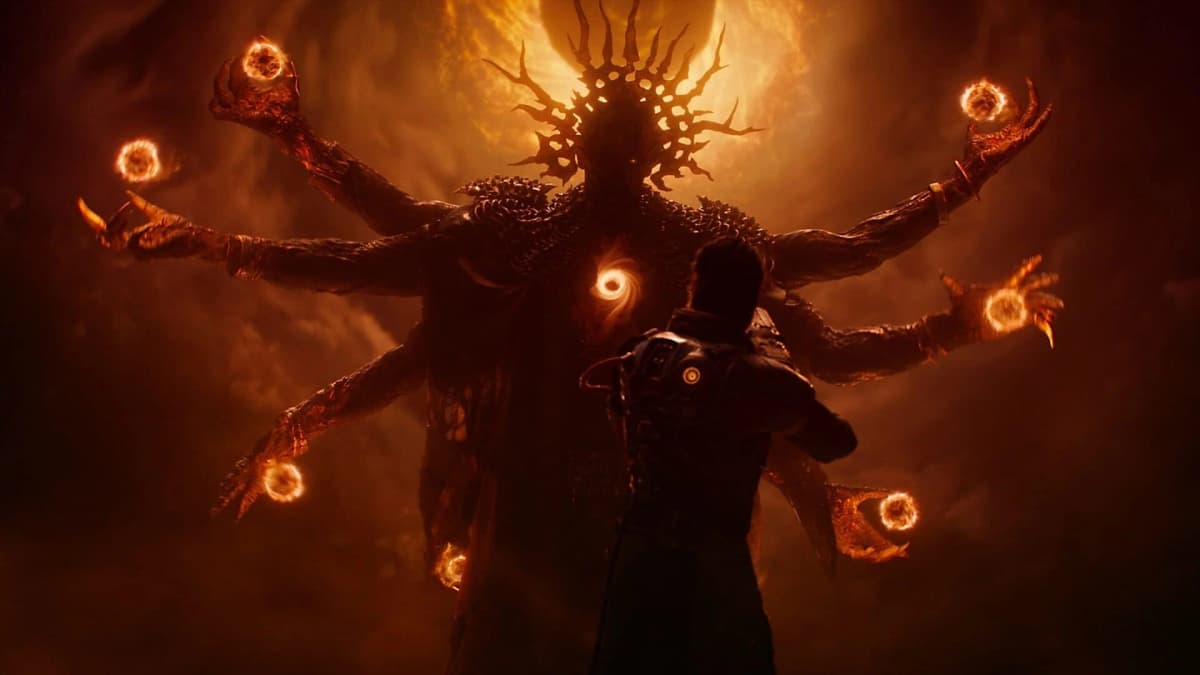
To beat Bastion in Saros, build around consistency instead of burst. Bring a medium-to-long-range primary such as a rifle or hand cannon, keep steady damage on the boss whenever the arena is stable, absorb blue projectiles with the Soltari Shield to refill power-weapon energy, dodge yellow attacks instead of trying to block them, and treat red patterns as movement checks that usually require repositioning or jump-pad use. Bastion is the second Overlord boss in the Ancient Depths, and the fight is less about finding a secret weak point than learning how to survive overlapping projectile patterns without letting your damage drop to zero.
If you remember only one rule, make it this: blue absorb, yellow dodge, red jump or rotate. Public guides vary a bit on attack names, but they line up strongly on that color logic and on the overall rhythm of the encounter.
Table of Contents (19)
Best loadout before you start
The safest Bastion setup is not a close-range rush build. Shotguns can work if your movement is already clean, but they force you into the exact lanes Bastion wants to lock down. Medium-range weapons give you a much easier time reading beam attacks, grid attacks, and floor-control patterns while still keeping pressure on the boss.
- Use a rifle or hand cannon as your main weapon.
- Bring a power weapon that can capitalize on shield-generated energy, with Prominence and Disburser commonly recommended in public guide coverage.
- Equip and actively use the Soltari Shield; it is not optional utility in this fight.
- Do not build your whole plan around face-tanking or point-blank DPS windows.
This matters because Bastion is stationary. Since the boss is not chasing you around the arena, you do not gain much by fighting up close. What you actually need is room to read the projectile palette and enough distance to cross into safe lanes before the arena closes.
What the fight is really testing
Bastion is an arena-control boss. The challenge is not “where do I hit it?” but “how do I keep damaging it while the floor, walls, and projectile lines are trying to pin me down?” That is why broad movement discipline is more important here than perfect aim. If you stop shooting every time the screen gets busy, the fight drags out and becomes harder. If you tunnel on damage and ignore lane control, the red patterns usually punish you immediately.
The winning pace is steady rather than flashy: maintain damage during calm windows, shield only when blue projectiles give you value, and move early instead of waiting until a pattern has fully formed around you.
The color rules that make Bastion manageable
Blue attacks: absorb them when the angle is clean
Blue projectiles are the most useful part of the fight because they can typically be absorbed with the Soltari Shield, and successful absorption helps refill energy for your power weapon. That turns defense into offense. Instead of treating every incoming shot like a threat you must flee from, Bastion gives you specific patterns that actually help you charge back up.

The important detail is that you should absorb selectively. Do not hold the shield up against everything on screen and hope it works out. If the arena is mixing blue shots with yellow homing fire or a red wall, take the safe line first. Blue is valuable, but living through the pattern matters more than squeezing one extra charge tick out of the shield.
Yellow attacks: dodge first, block second if at all
Across public guides, yellow bullets, beams, and tracking patterns are treated as dodge mechanics. If you try to solve yellow pressure by shielding in place, you often lose space and get trapped by whatever comes next. Bastion’s yellow beam attacks are especially good at forcing indecision: players hesitate, shield too long, and then eat a follow-up pattern because they never rotated.
The better habit is simple: see yellow, move. Dash through the lane if that is your cleanest exit, or rotate away before the beam fully commits. You are trying to preserve a path toward a jump pad or a safe side of the arena, not win a durability check.
Red attacks: treat them as arena-reset moments
Red patterns are the most dangerous part of the encounter. Different guides describe them with slightly different names, including nova-style bursts, red walls, and grid-based lockdowns, but the practical answer is the same: reposition early, use arena traversal, and do not get stubborn about holding your current spot.
If you try to sidestep a red wall at the last second, you are usually already too late. Bastion’s red patterns are where the arena’s jump-network pads stop feeling like bonus mobility and start feeling mandatory. If a floor hazard is expanding or a wall is sweeping across your lane, use the pad network to gain height or cross into an open channel instead of trying to weave through a nearly closed gap on foot.
How to use jump pads without panicking
The jump pads are part of the boss mechanics, not emergency decoration. Bastion repeatedly creates situations where the easiest answer is vertical or cross-lane movement. Players who ignore the pads tend to get cornered by grid attacks and then blame the projectile density, when the real problem is that they stayed grounded too long.
A good habit is to keep mental track of the two nearest pads at all times. You do not need to stand directly on them, but you should know where your next escape route is before the arena fills. That one adjustment makes the fight much more repeatable, especially in later patterns where mixed projectiles can make the floor look busier than it really is.
- Fight from a range where you can see the next pad route clearly.
- Move toward a pad before a red pattern fully seals your lane.
- After landing, re-establish damage immediately instead of drifting around the arena without shooting.
- If a yellow beam and a red floor pattern overlap, use movement to solve the red threat first, then re-center for the yellow follow-up.
The last point matters because Bastion punishes delayed decisions. You do not need to react perfectly to every projectile; you need to solve the deadliest layer first.
When to spend Prominence or Disburser
Prominence and Disburser are repeatedly recommended because Bastion gives you enough sustained uptime to make charged power damage worthwhile. The trap is spending that damage at the wrong moment. If you dump a power weapon just as a beam attack starts or right before a red wall pattern forces a jump, you lose both pressure and mobility.
The safest timing is after a clean blue absorption sequence or during a stable lane where Bastion is not actively locking the floor. Use your primary to keep the boss under constant pressure, then convert shield-generated energy into a controlled power burst once you know you can finish the animation and still move.
If you are unsure when to fire, err on the side of patience. Bastion is a pattern-learning boss, not a gear-check. Surviving one more cycle cleanly usually gives you a better damage window than forcing a bad one.

Phase breaks, add waves, and turrets
Guides broadly agree that Bastion has multiple phase breaks tied to health thresholds, with smaller enemies or turrets appearing between major damage segments. Exact attack naming is inconsistent across sources, and the add descriptions are not perfectly standardized either, but the shared advice is clear: clear the extra threats fast so the arena does not become unreadable.
Some coverage specifically notes stationary bots or turrets, including red-shielded variants that may need melee to break before you can remove them efficiently. If that version of the add wave appears in your run, do not keep pumping ranged fire into an obvious shield while Bastion’s arena pressure is ramping back up. Close the distance during the downtime, break the turret, then get back to your preferred mid-range lane before the boss resumes full pattern pressure.
The goal during add waves is speed, not style. Every extra enemy left alive turns simple yellow dodge checks into cluttered screens and makes blue absorption riskier because more non-blue projectiles are mixed in.
Common mistakes that make Bastion feel harder than it is
- Using the shield on everything. The Soltari Shield is strongest when it is converting blue shots into energy. Using it as a universal answer usually gets you pinned by yellow or red follow-ups.
- Standing too close. Close-range play shrinks your reaction time and makes beam attacks, homing shots, and wall patterns much harder to read.
- Ignoring jump pads until the last second. By the time a red grid or wall fully forms, your safest route is often already gone.
- Stopping damage completely during movement. Bastion is easier when you keep pressure on it. Fire whenever the lane is stable, even if it is only a short burst.
- Saving power weapons forever. Prominence or Disburser only help if you actually convert your blue absorptions into damage during clean windows.
- Letting add waves linger. The fight becomes much messier if turrets or smaller enemies stay up during later patterns.
If you keep dying to the same pattern, change the rule you are using
Repeated deaths in Bastion usually point to one wrong habit rather than low stats. If yellow beam attacks keep catching you, stop trying to shield them and start dodging earlier. If red wall or grid attacks are killing you, your issue is usually pathing, not damage output; start identifying your nearest jump pad sooner. If your power weapon never seems available when you want it, you are probably missing blue absorption opportunities or wasting shield uptime on attacks that should be dodged instead.
That is why Bastion becomes consistent once the palette clicks. Even if different guides use different names for the patterns, the boss stops feeling random when you classify each attack by function: blue is fuel, yellow is movement, red is relocation. Once you play by those rules, the Ancient Depths second boss turns into a controlled, repeatable fight rather than a chaotic wall.
FinalBoss // Gear
Level up your setup
01Best-selling PS5 gameson Amazon→02DualSense controllerson Amazon→03PS5 SSD upgrades (M.2 NVMe)on Amazon→04Discounted game keyson Kinguin→
Affiliate links · As an Amazon Associate, FinalBoss earns from qualifying purchases.
Want to Level Up Your Gaming?
Get access to exclusive strategies, hidden tips, and pro-level insights that we don't share publicly.
Ultimate Guide Strategy Guide + Weekly Pro Tips