
If you searched for The Midnight Walk best teams, you are looking for something the game does not have. There are no recruitable squads, no class lineups, no tier list of party comps. You play one character, The Burnt One, and you escort one companion, Potboy, across six chapters to the summit of Moon Mountain. The only “team” is that pair, and the real skill is protecting Potboy’s flame while you read rooms, solve light puzzles, and slip past the clay creatures hunting you.
Table of Contents (12)
The short version
- The only team: The Burnt One (you) plus Potboy. There is no roster to build.
- Your job: scout ahead, control spacing, and keep threats away from Potboy’s flame.
- Potboy’s job: carry the light, ignite matchsticks and torches, and open the next stretch of the route.
- What “comps” actually means here: how aggressively you escort. Patient play beats greedy play in every chapter.
- Run length to plan around: roughly 4-6 hours for the story, 6-10 hours for 100%, with each of the six chapters running under an hour.
Why there is no traditional “best team”
The Midnight Walk is a single-player first-person adventure built around one companion relationship. You are The Burnt One. Potboy is a small living flame in a clay pot, and his light is what lets you navigate the dark, ignite torches and matchsticks, and push forward. That is the whole party. Advice copied from RPGs or character-collectors will point you the wrong way, because there is no hidden S-tier lineup to chase.
The journey runs across six chapters, each titled a “Tale,” and ends at the summit of Moon Mountain in the final chapter, “The Tale of Moon Mountain.” Along the way you meet named figures like The Soothsayers and Moonbird, and you cross places such as Molgrim Swamp. None of them join you as controllable units. They shape the route and the story; the controllable team never changes.
The actual meta: The Burnt One + Potboy
If you want the closest thing to a meta comp, it is this. The Burnt One is the scout, the bodyguard, and the decision-maker. Potboy is the light source, the progress key, and the one vulnerability you manage at all times. The synergy is simple: Potboy enables movement and interaction, and you create the conditions that let him do it safely. Reverse those roles, let Potboy lead the risk, and the pair gets weaker immediately.
Early game: scout first, move Potboy second
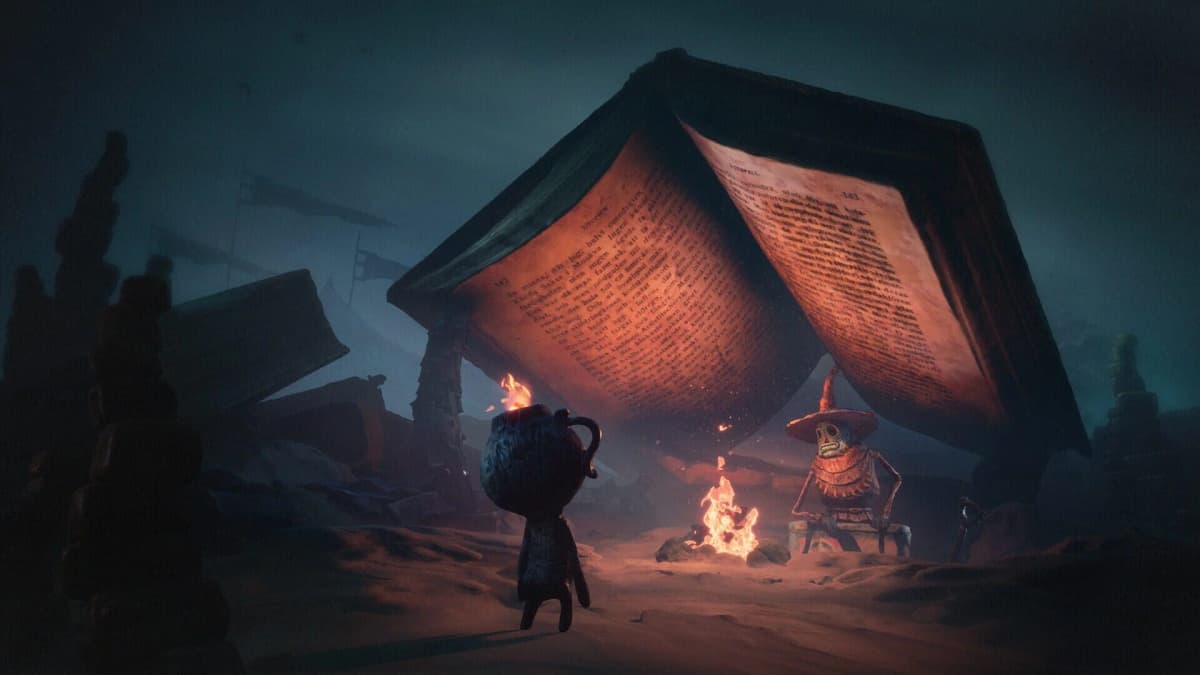
The early chapters are short. The first one is especially brief, so do not expect a long ramp before threats appear. The strongest play is conservative from the start: check corners, find hiding spots, note your retreat route, and learn where danger can approach before you commit Potboy into an unfamiliar space. Treating the flame like something you always shove forward is the most common early mistake. You can recover from bad positioning far more easily than Potboy can recover from being exposed.
Mid game: clear the route before you expose the flame
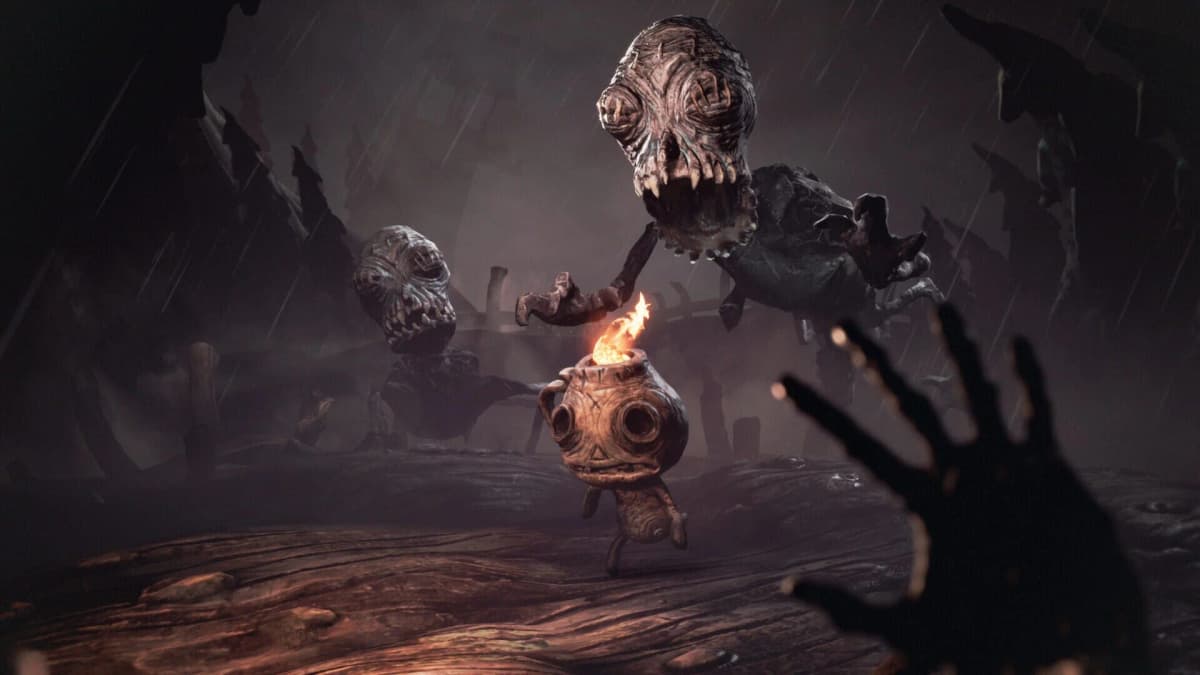
As chapters start layering light puzzles and active threats together, your priority shifts from speed to certainty. Stop asking “how do I get Potboy to the objective fastest” and start asking “how do I remove the uncertainty before the flame is out in the open.” This is where the clay creatures matter. The Crawler and The Grinner are named threats built into the world, and they punish you for walking Potboy into a space you have not read. Spot interactables first, confirm the puzzle is readable, and keep an escape line open before the companion follows you in.
Late game: survival-first escort beats greedy exploration
Late chapters are where players invent a fake aggressive meta that does not exist. There is no high-skill brute-force route. The stronger approach is a survival-first escort loop: secure the path, move Potboy, stabilize, then sweep for anything optional only if the area still feels safe. The final chapter, “The Tale of Moon Mountain,” is the destination, not a place to start taking risks you avoided everywhere else.
“Budget” and “F2P” versions, translated for this game
This is not a free-to-play roster game, so there are no literal budget or premium teams. If you are using those words the way team-building guides do, what changes is execution, not the duo.
- Budget / safest: keep Potboy close, over-scout every room, and prioritize safe repositioning over fast puzzle solves.
- Comfort: fully read an area before touching obvious objectives. Triggers feel riskier when you hit them blind.
- High-efficiency: move faster only after you understand how the game telegraphs danger and how much space Potboy needs to stay protected.
The low-cost version of the meta is simply patient escort play. It gives up some speed, but it is far more forgiving, and over a 4-6 hour story that consistency matters more than shaving a few minutes per chapter.
Synergy logic: why the pair works when you play it right
Potboy is not flavor. His flame is tied to navigation, tension, and progression, so your synergy is built around protecting a resource, not dealing damage. You are strongest when each half sticks to its job.
- Potboy: provide light, ignite matchsticks and torches, and open forward progress.
- The Burnt One: read the room, control spacing, manage threat exposure, and decide when it is safe to advance.
- Win condition: keep the flame alive and useful without letting panic or curiosity pull Potboy into a bad position.
This is why protective play is not passive. It is the support, the tank, and the control role at once. For the full breakdown of the flame mechanic, see our guide on how to use Potboy for light puzzles and stealth.
Common mistakes that make the team feel worse than it is
- Treating Potboy like a flashlight instead of the center of your strategy.
- Walking him into new spaces before you know the layout, then getting caught by The Crawler or The Grinner.
- Solving light puzzles from the obvious front angle instead of securing the area first.
- Overcommitting to optional collectibles when the escort path is not stable.
- Hunting for nonexistent builds, gear, or party slots instead of improving positioning.
Best approach by player type
New players: run the safest version of the duo. Keep Potboy protected, check every route twice, and accept slower progress. With chapters that each take under an hour, the time cost is small and the consistency is worth it.
Exploration-focused players: split each area into two passes. First pass is escort security, second pass is cleanup once you know the space. That keeps the pair stable while you chase collectibles toward the 6-10 hour completion mark. For chapter-by-chapter routing, use the full walkthrough for all chapters and endings.
Repeat runs: only cut corners once you know where threats and puzzle friction appear. Speed should come from route knowledge, not from abandoning Potboy discipline. If you want the cast and how each figure fits the story, see the characters guide and full roster.
A note on VR
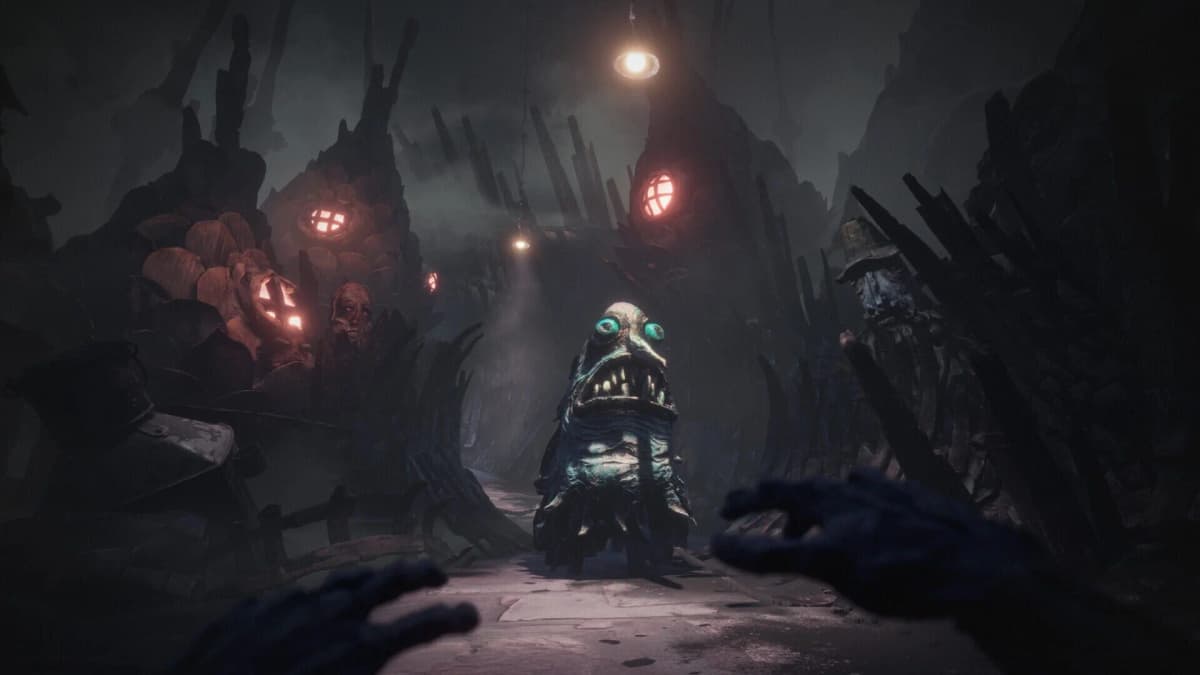
The escort logic is identical in VR, but disciplined scanning matters even more because the spatial awareness and tension run higher. The game is fully playable flatscreen and in VR on PS5 with PS VR2, flatscreen or PC VR on PC, and flatscreen only on Nintendo Switch 2. Whichever way you play, slow, deliberate observation protects Potboy better than playing aggressively for style points.
Practical takeaway
The best team in The Midnight Walk is not a hidden combination. It is The Burnt One and Potboy, played with the right priorities. Build your whole approach around protecting the flame, scouting ahead, and clearing safe routes before you advance, and you are already running the game’s strongest meta. Stop looking for extra party slots and tighten the one companion bond the game is actually built around.
FinalBoss // Gear
Level up your setup
01Top-rated gaming headsetson Amazon→02High-refresh gaming monitorson Amazon→03Gaming chairson Amazon→04Discounted game keyson Kinguin→
Affiliate links · As an Amazon Associate, FinalBoss earns from qualifying purchases.
Want to Level Up Your Gaming?
Get access to exclusive strategies, hidden tips, and pro-level insights that we don't share publicly.
Ultimate Guide Strategy Guide + Weekly Pro Tips