
When The Midnight Walk launched on May 8, 2025, one question caused more confusion than any puzzle or monster in it: how does the PS VR2 support actually work? Here is the part most store pages bury — this is not a VR-only release. It is a PS5 game with optional PS VR2 play, so the real decision is not whether you can get in, it is which way you want to walk through MoonHood’s clay-built dark fantasy.
Table of Contents (8)
The short version
- One game, two ways to play it. The same PS5 release runs in standard flat-screen mode and in PS VR2 — there is no separate VR edition to buy.
- You miss nothing in flat mode. The full story, every chapter, and all progression are identical without a headset.
- VR’s payoff is presence, not content. It deepens the fire-lighting, object handling, and the “close your eyes” moments. It does not add chapters or a separate campaign.
- Marketed as “five tales of fire and darkness,” played as six chapters — the sixth is a short final chapter.
- Built by MoonHood, the studio founded by the people behind Lost in Random, Fe, and Ghost Giant — which is exactly why the VR pitch is about mood and physicality, not combat systems.
What PS VR2 support actually means here
The Midnight Walk is fully playable on PS5, and it also supports PS VR2. That makes it a hybrid title, not a headset-first game with a fallback flat mode. If you were worried about missing the story, the areas, or core progression without a headset, you will not: the same adventure is presented in two formats. The headset is a way to play, not a branch of content you unlock or buy separately.
That distinction matters because this game is sold first on atmosphere and handcrafted identity. MoonHood and Fast Travel Games pitch it as a dark fantasy adventure built from real clay models with stop-motion-style presentation. MoonHood was founded by Klaus Lyngeled and Olov Redmalm, whose prior work — Lost in Random, Fe, Ghost Giant, Stick It to the Man, and Flipping Death — explains why the VR conversation centers on presence and tactility rather than complex combat or replay loops.
How to set up the PS VR2 version on PS5
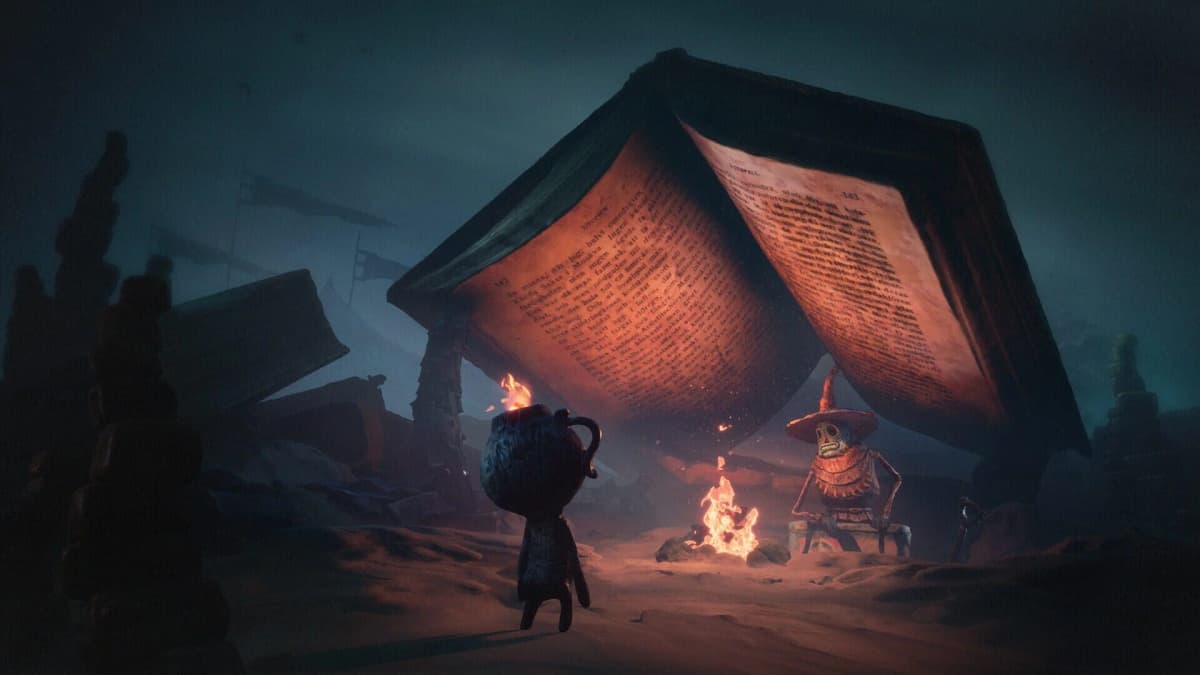
The acquisition side is refreshingly simple: you want the main PS5 release of The Midnight Walk, not a VR-only edition. The headset switches how the game runs; it does not change which version you own.
- Buy or download the PS5 version of The Midnight Walk.
- Play it on PS5 as-is for the standard flat-screen experience.
- Connect your PS VR2 headset and launch the game with it on to play in VR — the PS VR2 presentation runs from the same install.
- Remember that any PS VR2-specific features only apply with the headset; they are not active during standard TV play.
If you are comparing store listings, the wording to watch is the split between playable on PS5 and PS VR2 features require PS VR2. In plain terms: the headset is optional access to the VR presentation, not a later in-game unlock or a paid bonus campaign. For the wider platform picture — including PC and how VR works off PlayStation — see our full VR platforms and setup guide.
What PS VR2 changes once you start playing
The strongest case for PS VR2 is not more content — it is making the game’s signature interactions more immediate. The fire-lighting is the clearest example: striking a match, handling objects, and guiding Potboy’s flame all read better when your hands and your sense of space are doing the work instead of a thumbstick.
Potboy sits at the center of that design. He is not a story-flavor sidekick; he is a flame-carrying companion tied to navigation, survival, and puzzle flow. In flat mode that relationship is still core. In VR, protecting and guiding his fire becomes more physical because depth and proximity pull at your attention directly. His function does not change — but the moments feel closer. If you want to get the most out of him either way, our guide on using Potboy for light puzzles and stealth breaks down the mechanics.
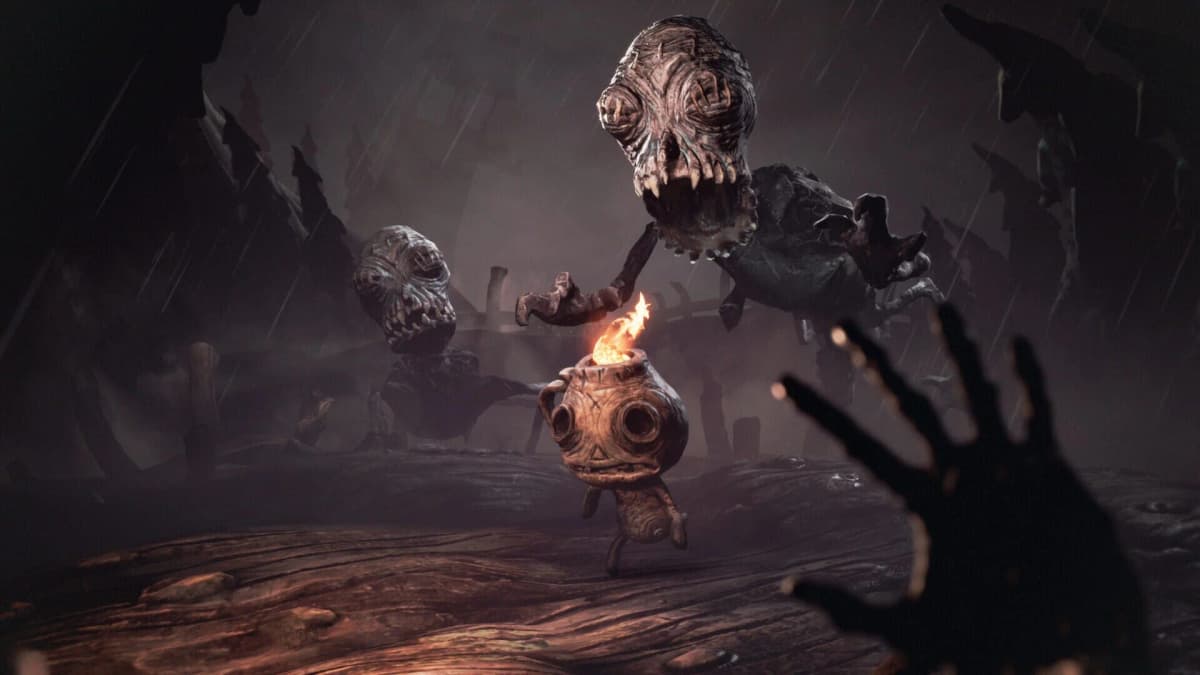
The other headset hook is the “close your eyes” mechanic — one of the most distinctive ideas in the game. You literally close your eyes to reveal hidden pathing and to deal with certain threats in a way the game refuses to frame as a conventional action sequence. It is the kind of mechanic that sounds odd on paper and lands harder in a headset, where the sense of presence carries part of the effect.
Does PS VR2 make it better, or just different?
The honest answer is “different first, better if you value immersion.” The game works as a complete experience in both formats, which is good news if you prefer narrative adventures on a TV or simply do not want a headset on for the full run. It also means you should not expect PS VR2 to unlock an expanded ruleset, extra chapters, or a separate identity for the game.
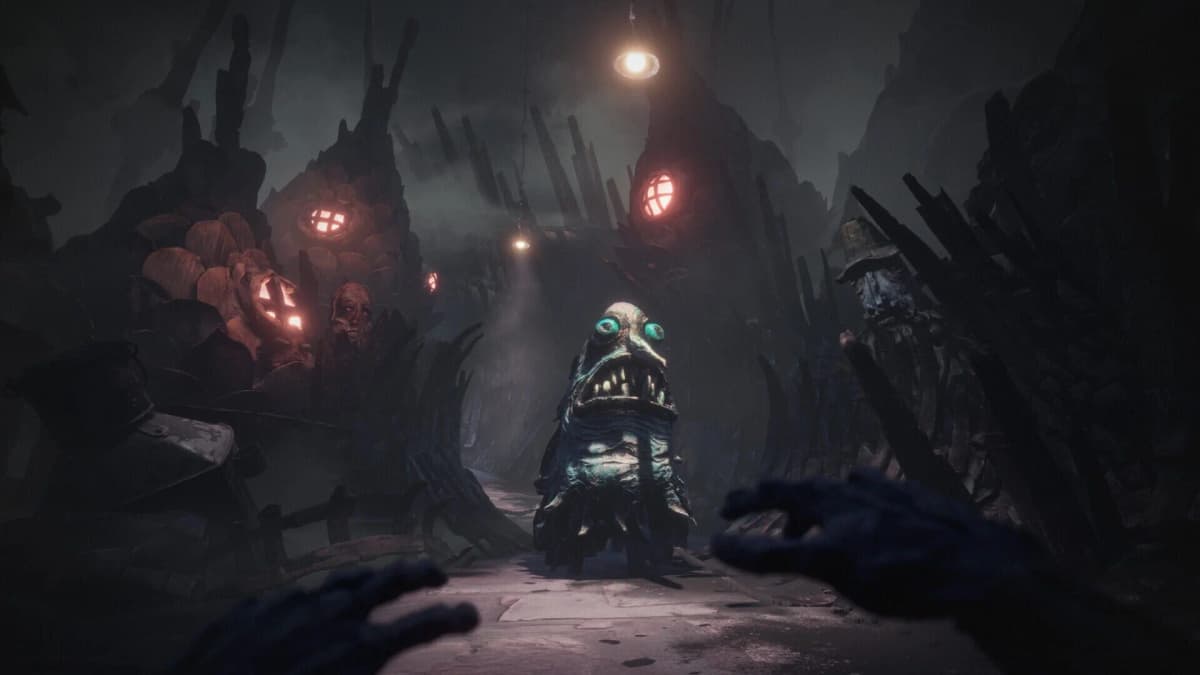
That fits the structure. The Midnight Walk is marketed as “five tales of fire and darkness,” but you actually play through six chapters — the sixth being a short final one. This is a curated, story-driven layout, not a systemic sandbox. In a game built like that, VR’s job is to deepen scene-to-scene presence: the texture of the clay world, the eeriness of the monster encounters, the closeness of Potboy’s flame. If atmosphere is your favorite part of games like this, PS VR2 has the stronger case. If efficient progression through a story is, flat PS5 gives up less than you might fear.
Common mistakes
- Hunting for a “VR edition.” There isn’t one. Buy the standard PS5 release; PS VR2 runs from that same copy.
- Assuming flat mode is the cut-down version. It is not. The full story, all six chapters, and complete progression are there without a headset.
- Expecting VR to add content. PS VR2 changes how the game feels, not what is in it — no bonus campaign, no exclusive path.
- Counting on “five tales.” The “five tales of fire and darkness” line is marketing; plan for six chapters, including a short final one.
- Buying PS VR2 just for this game. If you do not already own the headset, the flat version is a legitimate, full-fat way to play — there is no rush.
Who should choose PS VR2 — and who shouldn’t
PS VR2 makes the most sense if you already own the headset and want the most tactile version of the game. The art style, object handling, fire interactions, and close-quarters tension are exactly the elements that benefit from VR without needing fast, combat-heavy design to carry them. Flat PS5 is the smarter pick if you are mainly here for the story, the puzzles, and the journey with Potboy — or if you are deciding whether the game is worth buying without already owning PS VR2. The non-VR version is not a compromised backup; it is a full way to play the release.
Playing on PC instead of PlayStation? VR works differently off PS5 — our Quest 3 and PC VR setup guide covers that route.
Practical takeaway
The Midnight Walk treats PS VR2 as an optional enhancement, not a requirement. Buy it as a PS5 game, switch on the headset if you want the strongest version of its tactile fire mechanics and eerie presence, and stay on flat mode if you mainly want the same six-chapter narrative without a headset. PS VR2 is a real atmosphere upgrade — especially around Potboy and the “close your eyes” mechanic — but it does not replace the standard PS5 experience. Either way, you are playing the whole game.
FinalBoss // Gear
Level up your setup
01Best-selling PS5 gameson Amazon→02DualSense controllerson Amazon→03PS5 SSD upgrades (M.2 NVMe)on Amazon→04Discounted game keyson Kinguin→
Affiliate links · As an Amazon Associate, FinalBoss earns from qualifying purchases.
Want to Level Up Your Gaming?
Get access to exclusive strategies, hidden tips, and pro-level insights that we don't share publicly.
Ultimate Guide Strategy Guide + Weekly Pro Tips