
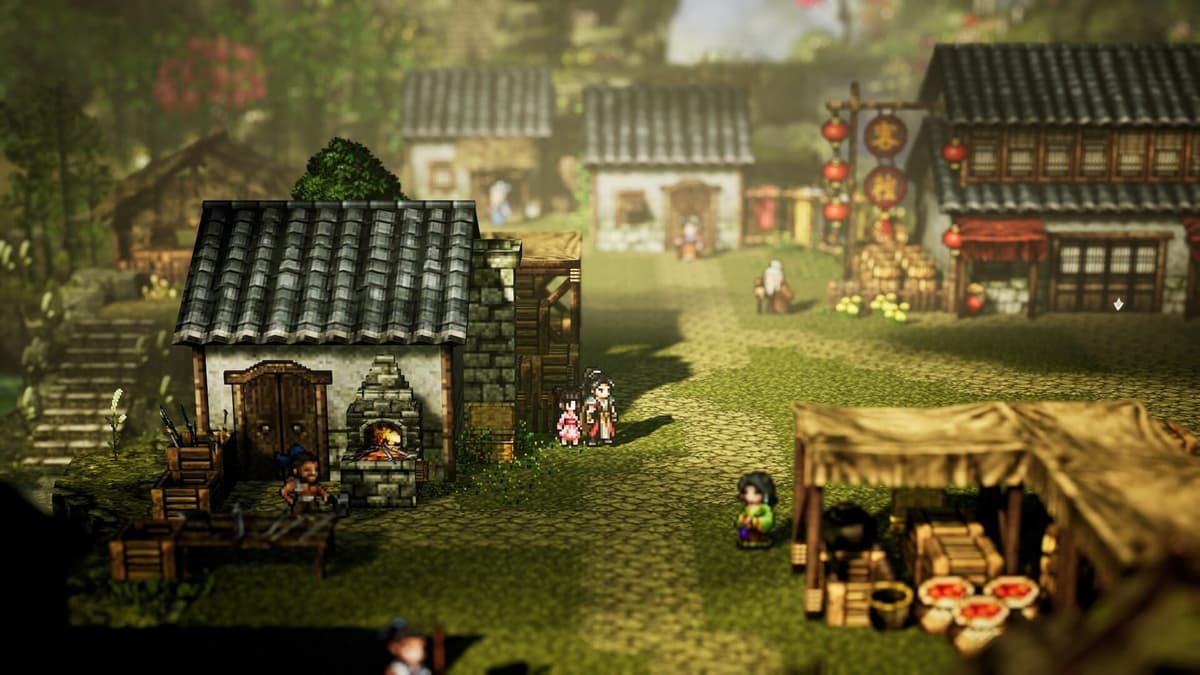
Wandering Sword punishes the corridor-RPG instinct. The opening makes you feel weak, then the wall vanishes the moment you realize the wuxia structure hides most of your power in side quests, recruitable companions, cultivation techniques, and the Meridian Map rather than in the next main objective. Here is the early route that actually keeps you ahead of the difficulty curve.
Table of Contents (9)
The short version
- Follow the fixed opening order: Incident at Valley of Dragons’ Slumber, then Entering Wutong Village, then Detoxifying Items, then Luo Village, then Tempest Stockade.
- Recruit Wei Huo in Wutong Village during Detoxifying Items — he is the first companion you can pick up.
- Clear side quests before pushing the story. Every recruitable companion needs at least one side quest, and some lock out if you advance too far.
- Forget character levels. There are none. Your stats come only from equipment, equipped cultivation techniques, pills, and meridians.
- Pour cultivation level-ups into the Meridian Map. Those gains are permanent and can be reset for free, so you cannot ruin a build.
- Start with the sword for the smoothest opening, but know there are five weapon types and you are not locked in.
Why standard RPG habits fail here
The trap is treating optional content as optional. In most RPGs side quests are pocket money and lore. In Wandering Sword they are the engine: companions, cultivation techniques, and crafting blueprints are gated behind exploration and quests, not handed to you for advancing the plot. Grinding enemies still helps early for gear and Martial Points, but the returns flatten fast. Once they do, your next real power spike comes from a new technique, a new recruit, or unblocked meridians — not another lap around the same enemies.
This is a premium single-player wuxia RPG with no gacha or microtransactions, so there is nothing to “save up” for and no reason to hoard. Spend Martial Points, chase quests, and build aggressively.
The best early-game route, region by region
The opening is fixed, and the order is worth knowing because it sets your rhythm. The main story runs: Part 1 Incident at Valley of Dragons’ Slumber, Part 2 Entering Wutong Village, Part 3 Detoxifying Items and Cave Fight, Part 4 Luo Village, then Part 5 Tempest Stockade. Use those beats as checkpoints, not as a race.
- Valley of Dragons’ Slumber. Get through the opening incident and let the game teach you turn-based positioning.
- Wutong Village. This is your first real hub. During the Detoxifying Items quest you can recruit Wei Huo, the earliest companion in the game. Talk to and inspect NPCs before you leave.
- Detoxifying Items and the cave fight. Clear the cave content tied to the questline before moving on — it is part of the same early loop, not a detour.
- Luo Village. A small Central Plains village with a bandit problem. Take the local errands here; this is exactly the kind of place that hides recruits and quest chains.
- Tempest Stockade. The next story beat. By the time you reach it you should already have Wei Huo, a starter weapon you are comfortable with, and a cultivation technique you are leveling.
The pattern repeats: when a town opens, slow down, talk to everyone, finish nearby side quests, then advance. A village is rarely just a shop — it is a cluster of future power spikes behind conversations and favors.
Recruit companions on the way through, not at the end
Recruitment is core progression, not a side hobby. Every recruitable companion in Wandering Sword requires completing at least one side quest — in some cases a precise chain of events — and a few become permanently unavailable if you push the main story past them. That is the real reason to clear side content before advancing: you are not just collecting party members, you are protecting access to quest chains that carry other rewards.
Wei Huo in Wutong Village is your template for the whole game: the recruit is sitting inside an early quest, easy to miss if you rush. Assume every new region has at least one companion lead buried in ordinary interactions, and grab them as you go. For the full roster and who is worth slotting first, see our companion recruitment and team-building guide.
Stats come from gear, techniques, pills, and meridians — not levels
This is the system that breaks most newcomers’ expectations: characters do not have levels. All of their power comes from four sources — equipment, the cultivation techniques they currently have equipped, drugs and pills, and their meridians. Understand that and “how do I get stronger” answers itself.
- Cultivation techniques. You can equip up to four at once. They cap at Level 10, with passive bonuses unlocking at Levels 5 and 10. Only the techniques you actually have equipped grant their passives, so swapping changes your effective build.
- Meridian Map. Leveling any cultivation technique grants Meridian Points, which you spend on the Meridian Map to strike meridians and gain permanent attribute boosts and passive abilities. Meridian pills (notably from the Mirage Water boss) are a second source of points.
- It is risk-free. Meridian allocation can be reset for free and without limit, so experiment — you cannot permanently wreck a build.
The practical takeaway: meridian and cultivation gains are the closest thing the game has to permanent account power. A weapon gets replaced and an equipped technique can be swapped out, but your meridian foundation keeps paying off across the whole run. When you are deciding where to invest, that foundation usually wins.
Weapon choice: start with sword, but know all five types
Wandering Sword has five weapon types: Sword, Saber, Polearm, Fist/Unarmed, and Hidden Weapons (the ranged “attack from afar” option that new players often overlook). Sword is the cleanest start because strong swords show up early and smooth out the opening, but it is a convenience pick, not a life sentence.
The types differ by attack shape, which matters on the game’s grid:
- Sword — hits in a straight line.
- Saber — hits a column.
- Polearm — hits the tiles around you, so it covers adjacent enemies better than a sword.
- Fist/Unarmed and Hidden Weapons — round out the roster, with Hidden Weapons giving you a genuine ranged option.
If you chose something other than sword, there is no reason to restart. Pick based on the attack shape you want and the techniques your run is handing you. For the full breakdown by stage of the game, see our Wandering Sword weapon guide.
Let one early side quest show you why exploration pays
A concrete example of how side content gates real progression: the Golden Scorpion sits in the deepest part of the cave above Monkey Woods, outside Qinghe Village. Defeating it opens the Southern Chronicles storyline (the Scorpion Envoy Route). Separately, the Deadly Scorpion side quest — collecting three scorpions from the Bamboo Sea to make antivenom — is how you recruit the companion Tiedan. Neither shows up by marching down the main path. That is the loop the whole game runs on.
Common mistakes
- Rushing the main story past a recruit. Some companions lock out permanently. Clear side quests in each region first.
- Grinding for levels. There are no levels — farming only gives gear and Martial Points, and the payoff flattens quickly.
- Ignoring the Meridian Map. It is permanent, free to reset, and the most durable power you can build. Spend your points.
- Equipping techniques and forgetting only the equipped ones count. You have four slots; the passives you are not seeing are the ones you left unequipped.
- Skipping Hidden Weapons. The ranged type exists and solves problems the sword cannot.
- Leaving Wei Huo behind. He is the first easy recruit, tucked inside the Detoxifying Items quest in Wutong Village.
Practical takeaway
Play the opening in order — Valley of Dragons’ Slumber, Wutong Village (grab Wei Huo), the detoxification cave, Luo Village, Tempest Stockade — and treat every hub as a stop, not a checkpoint. Clear side quests before advancing so you do not lose recruits, start with sword for an easy ramp but stay open to all five weapon types, and build your lasting power on the Meridian Map and cultivation techniques rather than on grinding. Do that and the game’s open structure works for you instead of against you. When you are ready for the full path to the endings, follow our chapter-by-chapter walkthrough.
FinalBoss // Gear
Level up your setup
01Top-rated gaming headsetson Amazon→02High-refresh gaming monitorson Amazon→03Gaming chairson Amazon→04Discounted game keyson Kinguin→
Affiliate links · As an Amazon Associate, FinalBoss earns from qualifying purchases.
Want to Level Up Your Gaming?
Get access to exclusive strategies, hidden tips, and pro-level insights that we don't share publicly.
Ultimate Guide Strategy Guide + Weekly Pro Tips