
Table of Contents (18)
Why Rough Hide Matters (and How It Became My First Real Wall)
After about ten hours in Windrose, Rough Hide quietly became my first real progression wall. I hit that classic survival-game moment where three different upgrades all wanted the same resource: early armor, my first proper backpack, and some basic ship gear. On paper Rough Hide sounded common – “you get it from animals” – but I was constantly broke on hides while my storage overflowed with wood and ore.
The breakthrough came when I stopped treating hides as a side product of random hunting and started building proper farming loops around them. Once I leaned into boar farming in Coastal Jungle and later unlocked the Tortuga merchant, my hide problems effectively disappeared.
This guide walks through the exact methods I use now in a fresh save to stay ahead of Rough Hide demand – from your first island all the way to bulk buying crates in Tortuga.

Step 1 – Know Exactly Where Rough Hide Comes From
Before you optimize anything, it helps to be clear on what actually drops Rough Hide and what’s a waste of time. I experimented with pretty much every animal I could swing at; here’s how it shakes out in practice.
Main Rough Hide Sources
- Boars & Sows (Coastal Jungle / early islands)
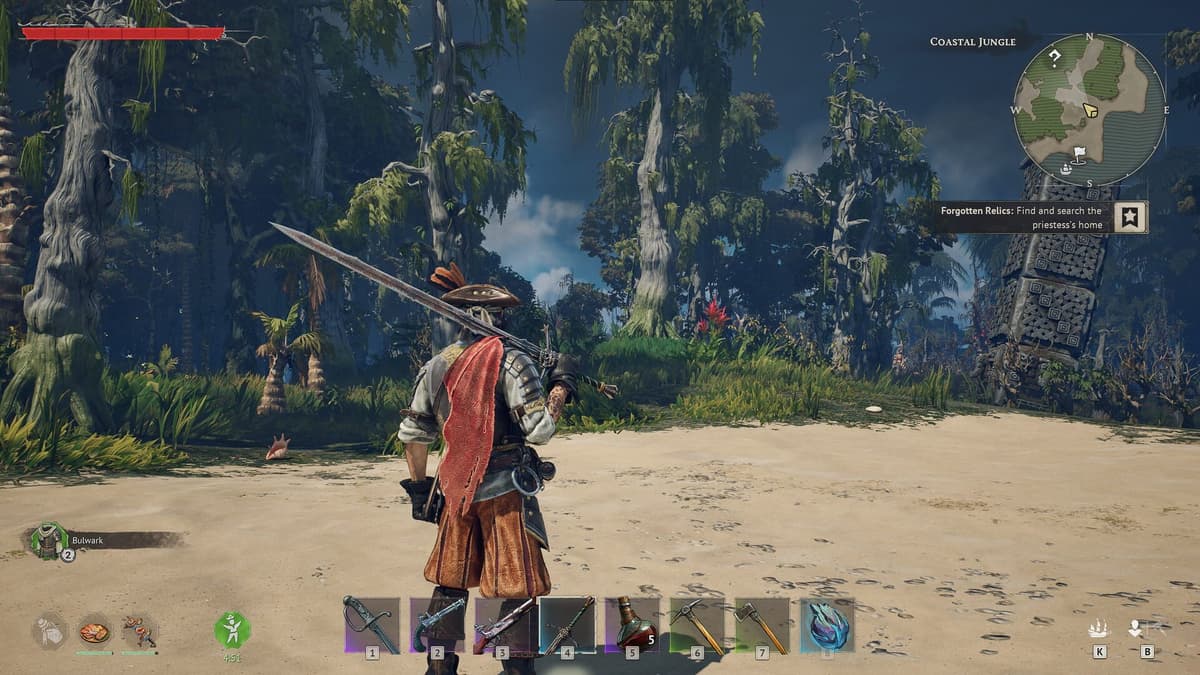
These are your bread and butter. Every boar or sow I’ve killed has dropped at least one Rough Hide, and in some cases more. They spawn in forested areas on and around the starting islands in Coastal Jungle, usually in small groups. - Savage Boars (later biomes)
Once you push into later biomes (like Foothills and beyond), you’ll start seeing Savage Boars. They hit harder but pay out big: around 5 Rough Hides per kill in my runs. This is the first real “high-yield” hunting target. - Wolves & Goats
These can drop Rough Hide, but they’re terrible value for your time. Wolves are aggressive and annoying in packs, goats soak way more hits than boars. I treat any hides from them as a bonus, never a primary source. - Merchant crates in Tortuga
After you reach Tortuga and clear its Coastal Jungle story requirements, a merchant there sells crates of Rough Hide. In my game it’s been 20 Rough Hides for 40 Piastre, and another bundle option of 200 hides for around 400 silver equivalent. This turns money into hides at scale and is the best late-game method.
The key takeaway: early game is all about boars, mid-game is Savage Boars plus boars, and late-game is mostly the Tortuga merchant with hunting as backup.
Step 2 – Finding Boars Consistently in Coastal Jungle
My first mistake was assuming every island had the same animal spread. Windrose’s world is procedurally generated, so each seed shuffles where the good boar islands sit. The patterns are consistent, but the exact spots change.
How I Scout for Boar Islands
- Stay off the bare beaches – I rarely see boars right on the sand. Push a bit inland until the vegetation thickens.
- Look for forest clearings – Any slightly open patch inside a forest, especially near small slopes or rocks, has a good chance of spawning a boar group.
- Listen for grunts – Boars have distinct snorts and squeals. I’ve found more boars by stopping to listen than by sprinting around.
- Check multiple islands early – On some seeds, my starter island only had one small boar group. I had to sail to the nearest couple of islands before I found “the good” boar island with three or four spawn spots.
When you find an island with multiple boar spawns, mentally mark it as your Rough Hide farm. As soon as you can place a fast travel point there (or whatever your current tech allows), do it. That one decision saved me more travel time than anything else I did in early Coastal Jungle.
Creating an Efficient Boar Circuit
What finally made hides feel “infinite” for me was turning one good island into a loop:
- Start at your camp or fast travel point.
- Circle the island in a consistent direction (I always go clockwise so I don’t miss spots).
- Hit every known boar clearing on the way.
- By the time you finish the loop, enough time has usually passed that the first group has respawned on your next trip.
With basic gear, one full loop on a decent boar island usually gave me 10–20 Rough Hides, which is enough for an armor piece or a big chunk of a backpack upgrade.
Step 3 – Safe Boar Combat: “Swing – Swing – Dodge – Kite – Repeat”
I died to boars way more than I want to admit. On my first run I tried to face-tank them and got deleted whenever two charged at once. The pattern that finally clicked for me is:
Swing – Swing – Dodge – Kite – Repeat
- Swing ×2 – Open with one or two light attacks as the boar finishes a charge or when it’s trotting toward you. Don’t get greedy with a full combo.
- Dodge – As soon as you see the wind-up for the next attack, use your dodge key (or a quick sidestep) to get out of the boar’s line.
- Kite – Back off a bit, let the boar reset its pathing, and reposition so only one boar has a clean line on you.
- Repeat – Once you’ve made space, move back in and repeat the pattern.
Dealing with Charging Boars
Some boar variants have a nasty unblockable charge that feels cheap until you learn it. The counter is all about timing:
- Watch for the tell – a longer, more committed wind-up before they sprint.
- Don’t try to block – it’s flagged as unblockable; you’ll just eat the hit.
- Time a sidestep or jump right as they lunge. Too early and they curve into you; too late and you get trampled.
- Once they finish the charge, they often have a brief recovery window – that’s your safe moment for a couple of hits.
Common Boar-Fighting Mistakes
- Pulling the whole group – I try to tag one boar at max range and kite it away from the others before committing.
- Fighting on steep slopes – Camera jank + weird hitboxes on hills = random deaths. I lure them onto flatter ground whenever possible.
- Underestimating stamina – If your stamina is low, stop attacking and just focus on dodging for a few seconds.
Once I forced myself to respect these basics, boars went from “mini-bosses” to walking sacks of Rough Hide.
Step 4 – Graduating to Savage Boars in Later Biomes
The first time I met a Savage Boar, I tried to treat it like a normal one and got absolutely wrecked. The upside is that they’re worth it: they drop around 5 Rough Hides each, so two or three kills can match an entire early-game boar loop.
When You’re Ready for Savage Boars
- At least one full Rough Hide armor set or equivalent protection.
- A weapon upgraded a tier above your starter gear. li>Reliable healing food in your hotbar, not stuck in storage.
Mechanically they’re just meaner boars: faster charges, more damage, and less forgiveness if you mistime a dodge. The same “Swing – Swing – Dodge – Kite” pattern still works, you just have less room for error.
In mid-game, I usually keep one Savage Boar island marked as my main hunting ground and only fall back to normal boars if I’m nearby anyway or doing other quests.
Step 5 – Turning Tortuga into Your Rough Hide Factory
Once you reach Tortuga and clear its Coastal Jungle storyline chunk, the entire Rough Hide equation changes. There’s a merchant there who sells Rough Hide in bulk, and this is where I stopped thinking of hides as a bottleneck entirely.
- Crate of 20 Rough Hides – Costs about 40 Piastre.
- Bulk bundles – Around 200 hides for roughly 400 silver, depending on how you’ve converted currency.
That works out to roughly 2 hides per Piastre, which is absurdly efficient once you have any kind of money farming route. People call this “the single best source of Rough Hide” for a reason: it converts time spent making silver directly into time saved not slaughtering animals for an hour straight.
How I Use the Tortuga Merchant in Practice
- I plan a dedicated “money run” (quests, resource selling, etc.).
- At the end of that run, I visit the merchant and buy enough Rough Hide crates to cover my next few upgrades.
- I only go back to active hunting when I’m exploring a new biome or specifically need meat and other drops.
This flipped my routine: instead of “I’m short on hides, guess I should go hunt,” it’s “I’m rich, I’ll just stockpile hides now and not think about it later.”
Optimized Rough Hide Routes for Each Stage of the Game
Early Game (Pre-Tortuga)
- Scout 2–3 nearby Coastal Jungle islands.
- Identify the one with the highest boar density.
- Set up a camp and, when possible, a fast travel point there.
- Run a consistent boar loop until you have:
- Basic armor.
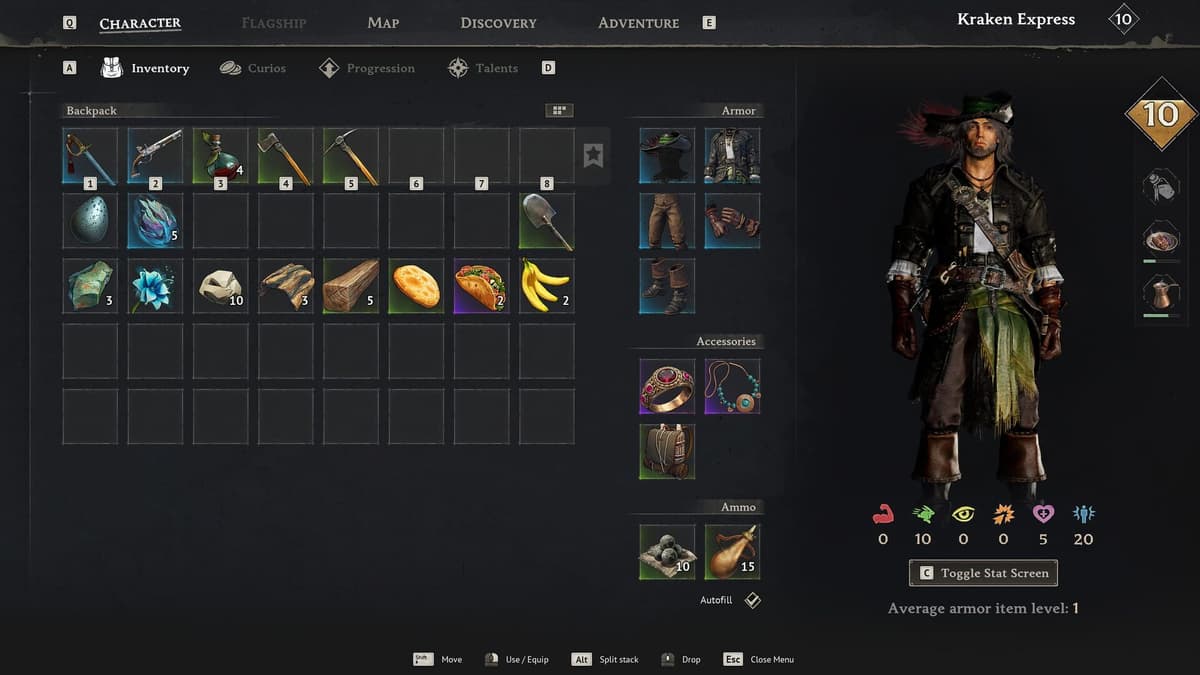
- Your first upgraded backpack (e.g., Sailor Backpack once you have the other materials). Use the crafting path
Workbench → Accessories tab → Backpack.
Mid-Game (Savage Boars Available)
- Locate at least one island or biome pocket with Savage Boars.
- Run short, focused hunting sessions when you’re already in the area for quests.
- Supplement with normal boars only if you’re truly desperate.
- Start hoarding silver in anticipation of Tortuga’s merchant.
Late Game (Post-Tortuga Merchant)
- Switch your mentality from “farm hides” to “farm money.”
- Use Tortuga to convert silver/Piastre into crates of Rough Hide whenever you’re in town.
- Keep hunting purely for fun, food, or if you happen across a dense boar spawn while exploring.
Common Rough Hide Pitfalls I Hit (So You Can Skip Them)
- Relying on wolves and goats – I wasted so much time chasing wolves because they felt like “real predators.” For hides, they’re just not worth the hassle compared to boars.
- Staying on the starter island too long – Some seeds just have bad boar density. If you’re struggling to find more than one group, sail to another island sooner rather than later.
- Ignoring backpack upgrades – I tried to hoard every hide for armor and delayed my backpack. That backfired when I had to keep interrupting farming trips because I ran out of space. The Sailor Backpack paid for itself in fewer trips.
- Fighting boars in big open herds – Pull them one by one. Getting chain-charged by three at once is a fast way to lose time and durability.
- Underpreparing in co-op – With multiple players, boars melt fast but so does your health if you’re not coordinating. We had best results designating one player to pull and kite while others flank.
FinalBoss // Gear
Level up your setup
01Top-rated gaming headsetson Amazon→02High-refresh gaming monitorson Amazon→03Gaming chairson Amazon→04Discounted game keyson Kinguin→Affiliate links · As an Amazon Associate, FinalBoss earns from qualifying purchases.
Want to Level Up Your Gaming?
Get access to exclusive strategies, hidden tips, and pro-level insights that we don't share publicly.
Ultimate Guide Strategy Guide + Weekly Pro Tips