
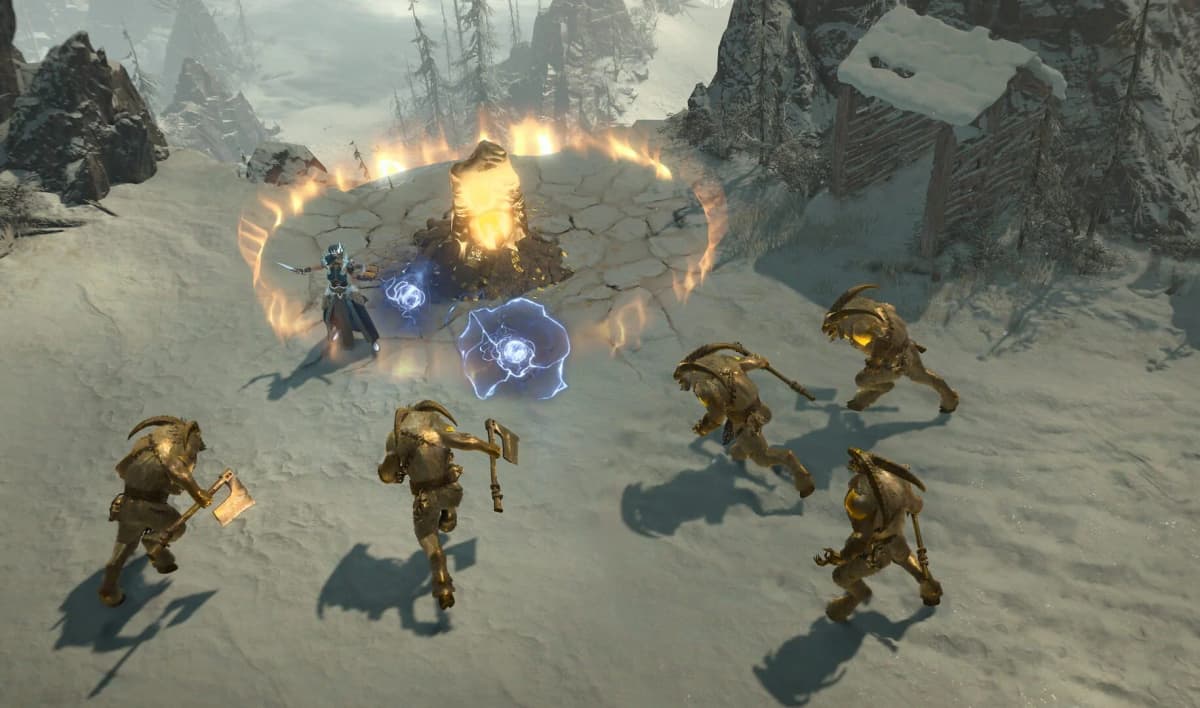
Short answer: yes, the Falling Star Arbiter Paladin is still one of the best endgame shells in Diablo IV, and in Season 14: Season of Death Awakening (live June 30 – September 15, 2026, currently on the 3.1.x patch line after the July 21 hotfix 3.1.1) the Arbiter archetype sits in the global S-tier on Icy-Veins’ endgame list. What has changed since this build first got written up is the framing: the season it was published for — Season of Infernal Chaos — ended back in 2025, and the itemisation around Arbiter has moved on. Sanctis of Kethamar is still mandatory. Herald’s Morningstar is not. Below is the current version.
Table of Contents (16)
What changed since the original write-up
- Season: Season of Infernal Chaos was Season 10 (autumn 2025). Lord of Hatred — the expansion that added the Paladin — launched April 28, 2026 with Season 13. The live season now is Season 14: Season of Death Awakening, running to September 15, 2026, when Season 15 begins.
- Difficulty ceiling: Lord of Hatred raised the level cap to 70 and extended the Torment ladder to Torment XII. “T4” is no longer the top of the mountain — Blizzard’s July 21 hotfix tunes Mythic Tribute rewards around Torment X and Torment XII, which is where the build actually gets tested now.
- Gear: Sanctis of Kethamar is unchanged as the defining Unique. The weapon slot has shifted from a named Unique to aspect-driven picks. Rings moved to Celestial Strife plus a second multiplier.
- Talismans: the charm/seal rework means the goal is a Legendary Seal with +1 Charm Slots so you can run six charms — not a fixed named set.
The short version
- Engine: Falling Star repeatedly triggers Arbiter form and Wing Strikes.
- Damage: Wing Strikes carried by Vulnerable scaling, auras, and Blessed Hammer as support.
- Stat priority: cooldown reduction and Arbiter Form Duration first, then crit damage and Vulnerable damage.
- Key Unique: Sanctis of Kethamar (amulet). Still non-negotiable.
- Key aspects: Tyrael’s Jurisdiction, Holy Punishment, Lagera’s Sovereignty, Celestial Strife.
- Biggest trap: stacking attack speed as if wings were a normal basic-attack build.
If your form stays up, the build feels top-tier. If it does not, fix cooldown reduction and form duration before you change anything else.
Why Falling Star and Arbiter of Justice work together
Arbiter of Justice is the reason this build exists. The Ultimate has a long base cooldown, but the payoff is large: it transforms your Paladin into Arbiter form, grants a large movement-speed boost through Seraph’s Wings, boosts Wing Strikes, and makes nearby enemies Vulnerable. In one button you get mobility, damage, and a strong multiplier to build around.
The upgrades matter too. Reach of the Law lets Wing Strikes apply Judgement, which is a big part of why Arbiter setups snowball inside packs. Divine Intervention adds a short ascension window and rains Blessed Spears before you land, then leaves enemies Vulnerable on landing. In practice that gives you a safer re-entry, a bursty opener, and another reason to land directly on the pack instead of beside it.
Falling Star is what turns that Ultimate from a powerful cooldown into an endgame engine. Once unlocked, it can trigger Arbiter form and Wing Strikes on cooldown, so the whole build chases near-constant form uptime. The goal is not to use Arbiter often. The goal is for Arbiter form to be your default state. That is why cooldown reduction beats flashy side stats: every second shaved off the cycle keeps the entire build online.
Your core combat loop
The rotation is easier than the gearing suggests. On a normal pack, open with Falling Star into the middle of the biggest cluster. If Arbiter form is not already active, trigger Arbiter of Justice immediately. Once you are inside the pack and getting value, activate Defiance and Fanaticism, then hold Blessed Hammer while Wing Strikes and on-landing effects do the real work around you.
The order matters. Falling Star and Arbiter create the window. The auras amplify it. Blessed Hammer keeps damage flowing while Wing Strikes pulse around you. If you press your auras too early while still running between packs, you waste the strongest part of your burst. Save those activations for contact, not travel.
Against elites and bosses, play it cleaner. Do not spend Falling Star just because it is ready if the target is about to move or phase. Wait for a committed animation, land directly on top of the stationary window, then stack your auras and Hammer channelling there. Arbiter’s built-in Vulnerable pressure is one reason boss damage stays strong even though the build looks like a speed-farming setup at first glance.
Respect melee range. This build is powerful up close, but it is still up close. The worst deaths happen when players assume the wings make them invincible and stop watching ground effects or crowd control during the transition between forms.
Current gear list (Season 14)
Build for uptime first, damage second. A weaker Arbiter that is active all the time clears faster than a theoretically stronger one that disappears every other pull. The current high-end Arbiter lists on Icy-Veins and d4guides.gg converge on roughly this package:
| Slot | Current pick | Why |
|---|---|---|
| Amulet | Sanctis of Kethamar | The build-defining Unique. Boosts Aura Potency inside Arbiter form and multiplies Wing Strike damage. Nothing else comes close in this slot. |
| Weapon | High-roll ancestral with Aspect of Lagera’s Sovereignty | Multiplicative Disciple-skill damage, which covers Arbiter, Wing Strikes and Blessed Hammer at once. Griswold’s Opus is the common alternative on Wing Strikes lists. |
| Helm | Aspect of Glynn’s Anvil | More maximum Resolve plus damage reduction per stack — the backbone of staying alive in melee. |
| Chest | Aspect of Interdiction | Block chance scaling off Resolve. Pairs directly with Glynn’s Anvil. |
| Gloves / shield | Tyrael’s Jurisdiction and Holy Punishment | Jurisdiction is the big Wing Strike multiplier; Holy Punishment lifts your Holy and Fire damage across the whole kit. |
| Boots | Arbiter’s Zephyr | Mobility and Arbiter synergy; the standard pick on Evade-flavoured Arbiter variants. |
| Rings | Celestial Strife + Utmost Glory / Ascension-style aspect | Celestial Strife stacks Vulnerable damage on kills while in Arbiter form. The second ring is a raw multiplier. |
What about Herald’s Morningstar? It is still a good weapon — but only if you are running a Blessed-Hammer-heavy Arbiter and want extra crit pressure between Wing Strike bursts. It is no longer the uncontested best-in-slot it was written up as. If most of your damage comes from Wing Strikes and aura explosions, the weapon slot is better spent on a multiplicative Disciple aspect.
Tempering priority is unchanged: Arbiter Form Duration first, then cooldown-reduction support, then crit damage and Vulnerable damage. What you should not do is chase attack speed as a primary solution. Wing Strikes are not an attack-speed-dependent engine in the way many players expect. If the build feels slow, the fix is more cooldown reduction, better duration tempering, or better landing discipline — not faster swings.
Paragon, glyphs and charms
Current Arbiter setups build around the Divinity board for its large multiplicative Vulnerable bonus inside Arbiter form — which is exactly why keeping enemies permanently Vulnerable matters so much — supported by Resolve-oriented defensive boards. The Arbiter glyph is the core socket: it scales Wing Strike damage off Willpower in radius and adds damage the longer you hold form.
Talismans changed shape. With the seal and charm rework, the goal is a Legendary Seal with +1 Charm Slots so you can run all six charms, then fill those charms with ranks to Arbiter, Wing Strike, your auras and key passives. Light’s Epiphany is still viable but is now an optimisation layer rather than a mandatory set — do not warp the rest of your gear to chase it.
Where the build actually sits in the meta
Icy-Veins’ Season 14 endgame tier list puts the Arbiter Disciple Paladin — the archetype this build belongs to — in global S-tier alongside the Auradin. Overgear’s Paladin list agrees, ranking Arbiter above standard Blessed Hammer. Pit-focused lists have Wing Strikes clearing Pit 120-plus.
Be honest about the ceiling, though. If you want the absolute highest Pit push on a Paladin, the Judgement / Spear of the Heavens build has the higher recorded clears. Where Falling Star Arbiter wins is the combination: it is one of the fastest Paladin speed-farmers and a legitimate high-Torment build, which is rare. If you want a slower, punchier melee alternative, compare it with the Paladin Zealot Zeal build; for the aura-and-bolt version of holy damage, see the Holy Purifier Paladin guide.
When to switch into the endgame version
Early on, do not force the full Arbiter fantasy. Falling Star is the turning point, because it gives you reliable form entry and the movement pattern the whole build depends on. Once that skill is online, start practising the jump-in, aura, Hammer loop even before your gear is perfect.
The full endgame version clicks once you have enough cooldown reduction and form-duration tempering that Arbiter returns before the build feels empty. Sanctis of Kethamar is the other checkpoint. Before that Unique, the build still works but feels like a good Paladin setup with a strong transformation. After it, it becomes the screen-wide wing build.
A simple readiness test helps: if you can chain pack to pack without walking much, if Blessed Hammer feels like support instead of your whole damage plan, and if Arbiter is available often enough that you are thinking about positioning rather than waiting on cooldowns, you are in the right version. If not, keep pushing uptime instead of scattering resources across side upgrades. For the broader gearing route, see how to get powerful fast in Diablo IV.
Common mistakes
- Using Falling Star as travel only: it should be your engage and form engine, not just a gap closer.
- Pressing auras before contact: you lose too much combat value that way.
- Overvaluing attack speed: wings care more about uptime than swing speed.
- Landing beside packs: Divine Intervention and Vulnerable value are far better when you land in the centre.
- Chasing Herald’s Morningstar on a Wing Strikes build: it belongs on Hammer-heavy variants, not this one.
- Assuming boss damage is automatic: save your jump for stable boss windows instead of chasing movement.
The most common mistake by far is poor landing discipline. Landing just outside a pack costs Vulnerable application, delays your real damage, and forces an awkward reposition while your best window is already ticking down. Clean landings are a bigger damage increase than many small gear upgrades.
FAQ
Has Falling Star or Arbiter of Justice been nerfed?
Not by name. Blizzard’s live balance notes for the Paladin cover Zenith, Clash, Blessed Shield and Shield Charge, plus a broad Oath pass, but there is no line-item change to Arbiter of Justice, Falling Star or Wing Strikes in the published notes. The archetype’s meta position has held.
Is Sanctis of Kethamar still worth chasing?
Yes. It is still described as the biggest single damage-gaining piece on current Arbiter build guides. Treat it as your first real farming target, not an optional luxury.
What difficulty should I be testing this at?
Lord of Hatred extended the ladder to Torment XII. Torment IV is now a mid-point, not a finish line. Use your clear speed and potion usage at your current Torment as the signal for whether to push, and remember the July 2026 hotfix made Mythic Tribute drops much more generous at Torment X and guaranteed at Torment XII.
Which season is this build current for?
Season 14, Season of Death Awakening, which runs from June 30 to September 15, 2026. The build is not season-power dependent, so it carries into Season 15 with only gear-level tuning.
Practical takeaway
Falling Star Arbiter is still the Paladin build that gives you speed-farming pace and real high-Torment damage in one package. Get the three things that actually make it work: cooldown reduction, Arbiter Form Duration, and Sanctis of Kethamar. Then layer Tyrael’s Jurisdiction and Holy Punishment, socket the Arbiter glyph on a Divinity-led Paragon setup, and get a Legendary Seal with an extra charm slot. Everything else is filler. For the rest of the Paladin picture, browse the full Diablo IV hub.
FinalBoss // Gear
Level up your setup
01Top-rated gaming headsetson Amazon→02High-refresh gaming monitorson Amazon→03Gaming chairson Amazon→04Discounted game keyson Kinguin→
Affiliate links · As an Amazon Associate, FinalBoss earns from qualifying purchases.
Want to Level Up Your Gaming?
Get access to exclusive strategies, hidden tips, and pro-level insights that we don't share publicly.
Ultimate Guide Strategy Guide + Weekly Pro Tips