
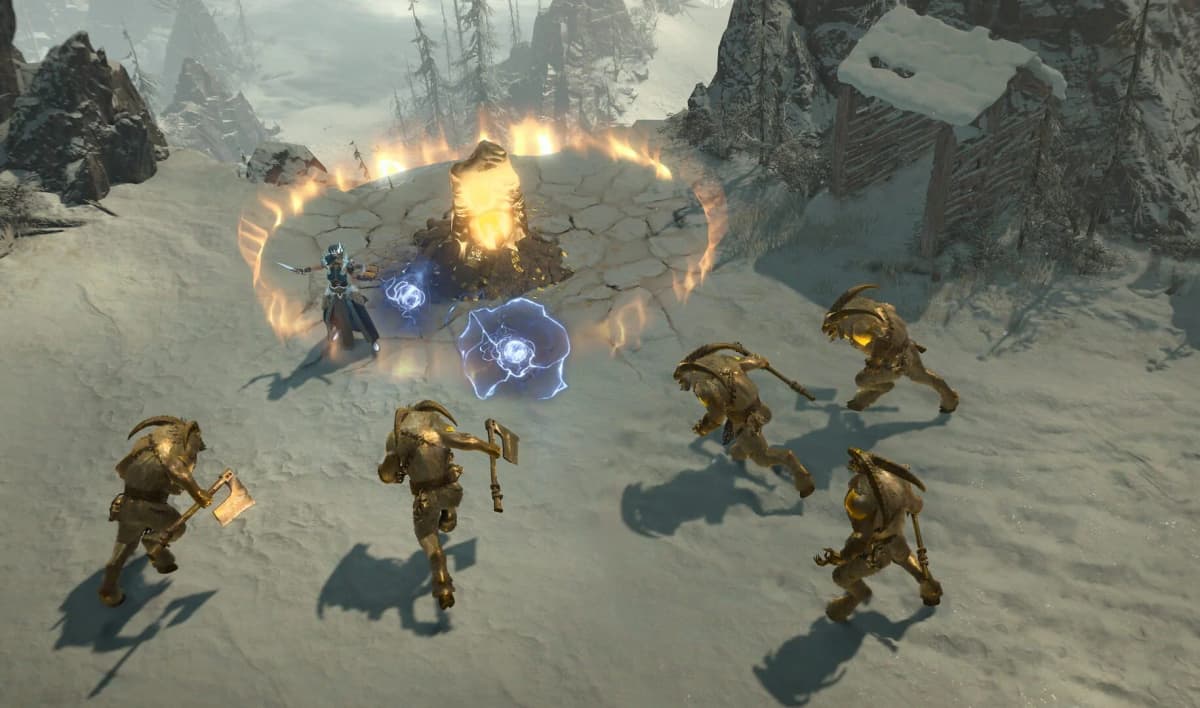
Getting powerful fast in Diablo IV is not about loot luck — it is about sequencing. The players who hit real damage first are the ones who level on the fastest content available, unlock the systems that multiply everything, and only then start spending materials. In Season 14: Season of Death Awakening (live June 30 to September 15, 2026, on the 3.1.x patch line) the route is: rush to 70 on low difficulty through Helltides and Whispers, clear every Stronghold around 50, push low-tier Pit to unlock Torment, then commit to War Plans, Paragon, Glyphs and Masterworking — in that order.
Table of Contents (17)
What changed since this guide was written
If you followed an older version of this route, two things are now wrong. Chaos Perks and the seasonal War Table are gone — they were Season 10 (Season of Infernal Chaos) mechanics and were retired when that season ended, along with Infernal Warp and the 666-Aether Bartuc summon. And the ceiling moved: Lord of Hatred raised the level cap to 70 and extended the Torment ladder to Torment XII. The permanent replacement for the old seasonal power layer is War Plans, the Lord of Hatred endgame routing system with its own activity skill trees.
The short version
- Stay on Normal for most of the climb. Faster kills beat slower “better” rewards while you are levelling.
- Helltides plus Tree of Whispers in the same zone is still the fastest XP lane in the game.
- Clear every Stronghold at around level 50 on Normal for large first-clear XP.
- Start Tempering at level 10 — movement speed on boots and amulet, then weapon damage.
- Push low-tier Pit to unlock Torment, then farm Torment for real power.
- Masterwork and Mythic-craft last, once your build direction is locked.
Levels 1 to 50: Helltides and Whispers, on the lowest difficulty you can stomach
XP does not scale with difficulty well enough to offset slower kill speeds, which is why every current speed-levelling guide says the same thing: stay on Normal until you are visibly overpowered.
Finish the campaign once per account (or the seasonal questline on a fresh season) — experienced players land around level 40 to 45 doing this on Normal — then switch entirely to density farming:
- Run active Helltides, or whatever corruption-zone variant the current season layers on top of them. Mob density plus kill-streak XP is the whole point.
- Stack Tree of Whispers objectives inside the Helltide zone so one loop pays twice.
- Open Tortured Gift chests and any seasonal spawn events inside the zone rather than sprinting past them.
Well-routed, this stretch reaches the mid-40s in roughly 90 to 120 minutes with a proper levelling build. Do not overthink gear here: socket gems into weapons because offensive gains are immediate, upgrade a strong rare if it grants a guaranteed offensive aspect, and do not sink premium rerolls into armour you will replace in twenty minutes.
At around level 50, drop to Normal if you had raised difficulty and clear every Stronghold in the game. First-clear XP and renown make this one of the highest-value single hours of the whole climb, and it opens up map routing you will use later.
Levels 50 to 70: Pit entry and Infernal Hordes
From 50, keep the Helltide and Whispers loop running but start mixing in the content that gates your endgame:
- Nightmare Dungeons, but only enough to start collecting and levelling Glyphs. They are not your XP engine; they are your Glyph engine.
- Infernal Hordes / Infernal Compasses, which most current guides name alongside Helltides as the two main power sources past 60.
- Low-tier Pit, which is both a good XP loop and the unlock path for Torment.
At 60, stop improvising. Pick your actual endgame build, then make sure every core piece is tempered and imprinted for it. This is the single largest “why does my character feel bad” fix at this stage of the game.
Unlocking Torment
Torment progression in Lord of Hatred is bound to Pit tiers rather than to campaign completion. The pattern current guides describe is stepped: clear a low Pit tier to open Torment I, then push Pit incrementally for each further Torment step. Exact thresholds are displayed in-game and have shifted between seasons, so treat the in-game requirement as authoritative rather than any fixed number from an old guide — but plan on low double-digit Pit tiers to get Torment I, and expect to keep climbing Pit for the rest.
The ladder now runs to Torment XII. That matters for your farming targets: the July 21, 2026 hotfix (3.1.1) greatly increased Mythic Tribute drop rates at Torment X and made them guaranteed at Torment XII, which is now the cleanest deterministic Mythic route in the game.
War Plans: the permanent power layer
Once you finish the Lord of Hatred campaign, the command table in Tyrial unlocks War Plans — a sequence of five endgame activities you commit to running in order, with rewards you choose while planning. This replaced the old seasonal War Table as the thing you should be checking between runs.
The reason it belongs in a power-progression guide is the seven activity skill trees. Every time you run an activity inside a War Plan, you earn XP toward that activity’s tree, and those trees permanently change what the activity pays out. That is a compounding multiplier on your farming, which beats almost any single gear upgrade over a season.
Practical advice: use your three free rerolls to get repeated node types into one plan so tree XP concentrates, and pick reward types based on what you are blocked on rather than on autopilot. Full detail in our War Plans guide.
Horadric Cube, Enchanting and Upgrade to Unique without wasting materials
This is the part most players overdo. The Horadric Cube, the Occultist’s Enchanting and any Upgrade to Unique function are all powerful, but they work best as targeted corrections, not as a lottery machine for every drop. For the full recipe list, see how to use Horadric Cube recipes.
Start with one question: does this item already have the right foundation? A good foundation means the slot supports your build, item power is high enough to keep it equipped for a while, and at least some affixes are already useful. If not, do not spend heavily. Then use each system for its best job:
- Horadric Cube: shape or add missing value on high-confidence pieces, not temporary filler.
- Enchanting: reroll one dead affix on a near-good item. Best when you need one fix, not a full rescue.
- Upgrade to Unique: reserve for slots that define your engine. Do not spend it on generic armour if your power comes from weapon scaling or a ring interaction.
Spend weapon first, then jewellery, then the most durable armour slot you expect to keep. Weapons multiply everything. Rings and amulets usually carry the affix or aspect logic that makes a build feel complete. Early armour is a trap if you keep replacing it every few runs.
Paragon, Glyphs and Masterworking, in the order that pays
After 60, the biggest trap is obsessing over Glyphs while ignoring the broader Paragon board. Prioritise unlocking your Legendary Paragon nodes first — each board has one, and they provide some of the largest single power jumps available. They reshape a build more than an early Glyph bump does.
Once those are online, Glyphs become far more rewarding because they amplify a build that already has an identity. Nightmare Dungeons and the Pit are your scaling tools here. If a run gives Glyph progress, gear checks, and finishes quickly, it is productive. If it is technically possible but painfully slow, drop a tier and keep the loop clean.
Masterworking comes after that, and it is genuinely a post-60/70 system. Do not Masterwork a piece just because it is equipped — Masterwork items that already carry the affixes and interactions your build needs. The same logic applies to Mythic crafting: it perfects a strong build, it does not create one.
The clean endgame loop
- Build a War Plan aimed at your current bottleneck and run it end to end.
- Helltides for materials, density and general loot flow.
- Infernal Hordes for compact gear and materials.
- Pit for Torment unlocks, item power and Masterworking materials.
- Nightmare Dungeons specifically for Glyph levels.
- Kurast Undercity once you are at Torment X or above, for the improved Mythic Tribute rates.
Common mistakes that slow your power down
- Raising difficulty too early: if kill speed drops hard, your “better” loot run is worse overall.
- Overcrafting before 60: early materials disappear into gear you replace almost immediately.
- Skipping Tempering until endgame: it unlocks at level 10 and movement speed alone pays for itself.
- Ignoring War Plans trees: they are the compounding system; skipping them costs you every future run.
- Masterworking the wrong item: only invest when the item already belongs in your real build.
- Chasing Mythics before fundamentals: Mythic crafting perfects a strong build; it does not create one.
FAQ
What is the level cap now?
Lord of Hatred raised it to 70, and the Torment ladder extends to Torment XII. Older guides that treat 60 or Torment IV as the finish line are describing a pre-expansion game.
Can I still farm Chaos Perks to power up fast?
No. Chaos Perks, Infernal Warp and the Bartuc summon were Season of Infernal Chaos (Season 10) mechanics and were removed when that season ended. War Plans and their activity trees are the permanent replacement.
What is the single fastest thing I can do at level 1 in a new season?
Finish the seasonal questline to unlock the season’s systems, then farm Helltides with Tree of Whispers objectives stacked inside them, on Normal, with a proper levelling build. Nothing else comes close for the first 40-odd levels.
Which season is this current for?
Season 14, Season of Death Awakening, running June 30 to September 15, 2026, latest official note server hotfix 3.1.1 (July 21, 2026). Season 15 starts September 15.
Practical takeaway
Respect the order of value rather than farming harder. Level fast on Normal through Helltides and Whispers, clear Strongholds at 50, Temper from level 10, push low Pit for Torment access, then let War Plans trees compound while you spend materials only on keepers. Save Masterworking and Mythic crafting for a build you have already committed to. That sequence is the fastest jump from undergeared to endgame-ready. Pick your class with our Lord of Hatred tier list, or browse everything on the Diablo IV hub.
FinalBoss // Gear
Level up your setup
01Top-rated gaming headsetson Amazon→02High-refresh gaming monitorson Amazon→03Gaming chairson Amazon→04Discounted game keyson Kinguin→
Affiliate links · As an Amazon Associate, FinalBoss earns from qualifying purchases.
Want to Level Up Your Gaming?
Get access to exclusive strategies, hidden tips, and pro-level insights that we don't share publicly.
Ultimate Guide Strategy Guide + Weekly Pro Tips