
Most players lose the early game in Heroes of Might & Magic: Olden Era not to a bad town screen but to wasted days: a split army that can’t clear anything, a flashy artifact grabbed instead of a daily mine, and one autobattle in the wrong fight that bleeds shooters you needed for the next three turns. The opening is about tempo, and tempo is mostly discipline.
Table of Contents (14)
The short version
- Put almost all troops on one carry hero. Two weak stacks clear slower than one strong one.
- Hire 2-3 support heroes early; use them to scout, flag structures, and ferry recruits forward.
- Take the nearest sawmill, ore pit, and gold mine before chasing scattered pickups. Daily income compounds; loot piles don’t.
- Build a creature dwelling before economy chains, prioritising a ranged dwelling if your faction has one.
- Only fight neutrals that unlock something: a mine, a road, an outpost, the path to the next zone.
- Play close fights manually instead of autobattling; save auto-resolve for clear stomps.
- Aim to push the first real bottleneck by week 2.
That hybrid plan works on most random maps. The only real decision is how greedy you can be with an economy build versus how hard you commit to a recruitment rush. Your starting zone usually answers that for you.
1. Pick a carry hero early and do not split the army
The most common opening mistake is spreading units across heroes because it feels efficient. It isn’t. Two weak stacks don’t clear the map faster than one strong stack unless the map is already safe. Your main hero should carry almost every combat-capable unit, especially your best ranged stack and any durable front line that can screen it.
Neutral fights in the opening are decided by action economy, not raw army value. One concentrated army kills targets before they retaliate, protects shooters, and reaches guarded mines with strength to spare. Divide troops too early and you often can’t take the fights that actually matter.
Support heroes still earn their keep, just as logistics pieces. Use them to grab loose resources, flag unguarded structures, sit on road junctions, and ferry reinforcements. Think in terms of a hero chain: town to road, road to front, front to carry. That keeps your main hero fighting instead of walking back for recruits. If you want a faster body of troops to chain forward, see our guide to recruiting more units fast.
2. Resource management starts with mines, not exploration
Week 1 resource management is brutally simple: secure daily production first. Wood and ore are usually the first chokepoints for town growth, and gold gets tight the moment you hire extra heroes and fill new dwellings. A flashy artifact off-road can wait. A mine that pays every day cannot.
Clear for income, not for curiosity. Given a choice between a guarded mine and three scattered pickups in different directions, the mine is usually the better opening play even if it costs a little army health. Daily income compounds; one-time piles don’t. For the full economy picture, including which resources gate which buildings, read our complete resources guide.
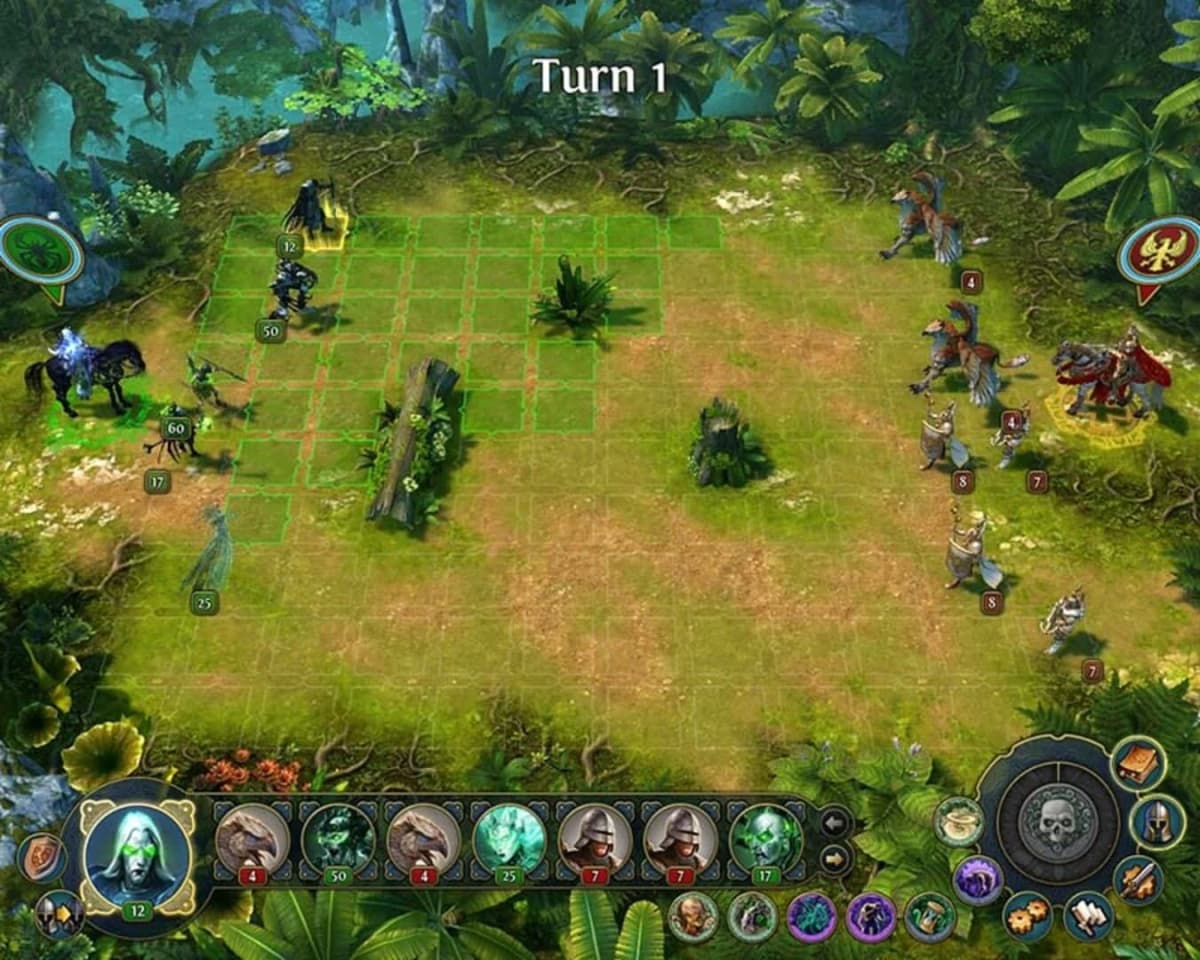
This is also why roads matter. They tend to connect the things that decide the early game: towns, outposts, bottleneck fights, and higher-value production nodes. Wandering into fog for minor loot burns your most valuable resource, which is hero movement.
3. Build creature dwellings before greedy economy chains
Unsure what to build first? Default to creature dwellings. Early units snowball in a way economy buildings can’t: fresh troops win more fights, which buys more mines, more treasure, and more map control. A building that pays off later doesn’t help if your opening army can’t break the first guarded chokepoint.
Ranged units are especially valuable in the opening because they convert initiative and positioning into cleaner wins. If your faction has an early ranged dwelling, that is usually a strong first-week priority; follow it with a front-line dwelling that keeps enemies off your shooters. Because each faction’s roster and law bonuses change what’s worth building first, your exact priority shifts with your town — our best faction laws guide breaks down those differences.
There is one exception: if your starting area is very safe and rich, or the map is clearly slow, you can lean a little harder into economy. Even then, delaying recruitment too long is risky. A good opening still wants units online before the first week rolls over.
4. Choose between an economy build and a recruitment rush
There are two reliable early-game plans, and the map usually tells you which to run.
Economy build
Use this when nearby fights are awkward, your starting zone has plenty of safe pickups, or early enemy contact looks unlikely. Build one useful dwelling so your carry hero keeps clearing, then invest in income and faction-resource structures to stabilise your town. It’s the safer route, and it lowers the chance you run out of gold supporting multiple heroes.
The trap is becoming too passive. An economy build is not permission to turtle: you still take mines quickly and you still prepare a week-two expansion push.
Recruitment rush
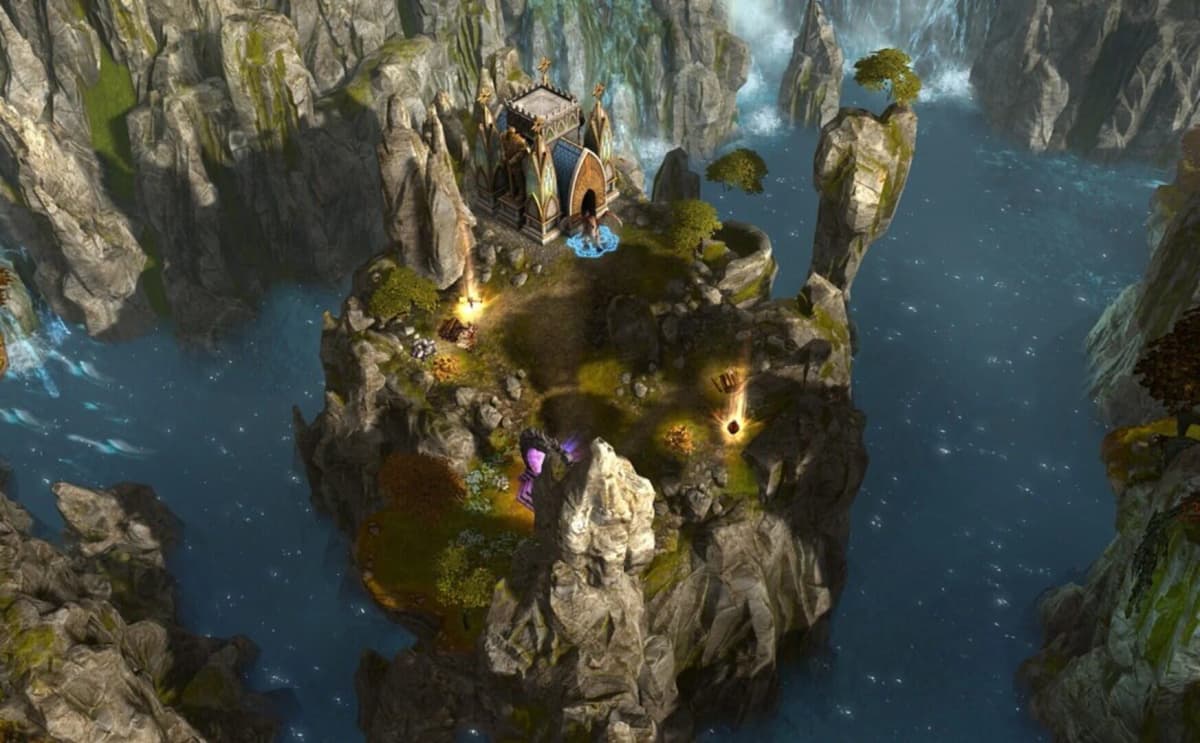
Use this when roads point toward an outpost, a neutral bottleneck, or an enemy lane you can contest early. Spend aggressively on dwellings and recruitment, keep your carry topped up with fresh troops, and push for map control before the opponent stabilises. This is the better opening when you can turn early army power into a town, outpost, or artifact that swings the whole match.
The risk is obvious: spend everything on units, then take sloppy losses, and the opening collapses. A recruitment rush only works if your fights stay efficient.
5. Fight neutrals for position, and use autobattle wisely
Not every neutral stack deserves your time on day 1. Fight the guards that unlock something meaningful: a mine, a movement lane, an outpost, a treasure chest on your main route, or the road into the next zone. Skip fights that only trade units for low-impact loot.
Auto-resolve is best understood as a stomp tool. When your army heavily out-stats the enemy it usually returns a clean win, often with no losses at all, so there’s little reason to play those battles by hand. The catch is the close fight: when the matchup is tight, auto-resolve is far less predictable, and a guarded mine or a ranged-heavy neutral pack can cost you shooters you didn’t need to lose. If a battle protects a key node and isn’t a clear stomp, play it yourself.
As a rule, preserve ranged units first, protect your fastest damage dealers second, and let disposable blocking stacks soak retaliation when you can. That’s how you keep momentum instead of winning one fight and arriving too weak for the next.
6. Move support heroes first, then the main hero last
It sounds minor, but it’s one of the best early-game habits you can build. Send secondary heroes to scout first each turn so you know where resources, enemies, and safe routes actually are. Once they’ve revealed the map, your carry hero takes the most efficient line instead of guessing.
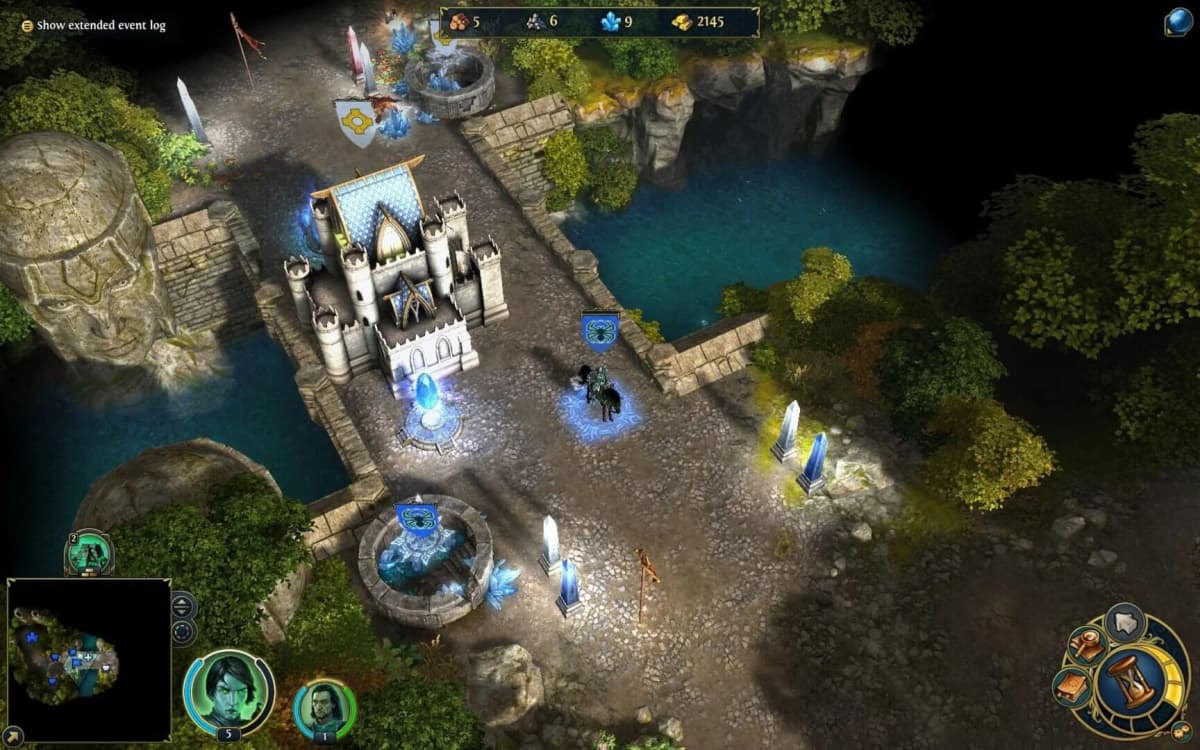
It also makes army transfers cleaner. A support hero can pick up recruits from town, step onto the road, and pass them forward so the main hero spends more movement on combat than travel. At a meaningful fork, the support hero reveals both directions before the carry commits. Use support heroes to open the fog; use the main hero to exploit what it reveals.
7. Push the first bottleneck by week 2 and look for outposts
The opening ends when your starting zone stops being the whole game. By late week 1 or early week 2, identify the fight that opens the next important area: a bottleneck guard on a road, a pass into another sector, or a defended outpost that controls movement and recruitment pressure.
Outposts aren’t map decoration. They change how safe your lanes are, how quickly reinforcements move, and how much pressure you can apply without backtracking. If your recruitment rush is going well, an early outpost is often where a strong opening becomes a winning midgame.
Don’t force the bottleneck too early, though. If the fight costs the army you need to hold the next area, you’ve only moved the point of failure forward. Break out when you can still keep pushing after the win.
8. Small optimisations that quietly win the opening
- Equip artifacts immediately. Small stat gains matter when your first real fights are close.
- On early treasure-chest choices, take gold until your first key build and extra hero hires are paid for; after that, feeding XP into the carry becomes more attractive.
- Use the marketplace when one missing resource blocks an important dwelling. The exchange rate hurts less than losing a full day of tempo.
- Check enemy hero positions whenever the map shows them. Opening greed is much safer when you know nobody can punish it next turn.
- Upgrade units selectively. An upgrade that improves initiative, durability, or ranged pressure usually beats a cosmetic sidegrade.
Common opening mistakes to avoid
- Splitting your best units between multiple heroes too early.
- Taking every neutral fight instead of the ones that unlock mines, roads, and outposts.
- Autobattling close clears and arriving at day 4 with a damaged army.
- Building economy before your first creature dwelling is online.
- Sending the main hero into fog before support heroes scout the route.
- Ignoring roads and wasting turns on disconnected pickups.
Practical takeaway
For the safest, most repeatable opening in Heroes of Might & Magic: Olden Era, play a disciplined hybrid: one carry hero, two or more support heroes, mines first, a creature dwelling early, and a week-two push through the first real bottleneck. Lean into an economy build only when the map is slow, and switch to a recruitment rush when an outpost, road lane, or enemy timing window is there to punish. Early-game success in this series is rarely about one perfect build order; it’s about turning the first seven days into reliable map control without throwing away units to do it.
FinalBoss // Gear
Level up your setup
01Top-rated gaming headsetson Amazon→02High-refresh gaming monitorson Amazon→03Gaming chairson Amazon→04Discounted game keyson Kinguin→
Affiliate links · As an Amazon Associate, FinalBoss earns from qualifying purchases.
Want to Level Up Your Gaming?
Get access to exclusive strategies, hidden tips, and pro-level insights that we don't share publicly.
Ultimate Guide Strategy Guide + Weekly Pro Tips