
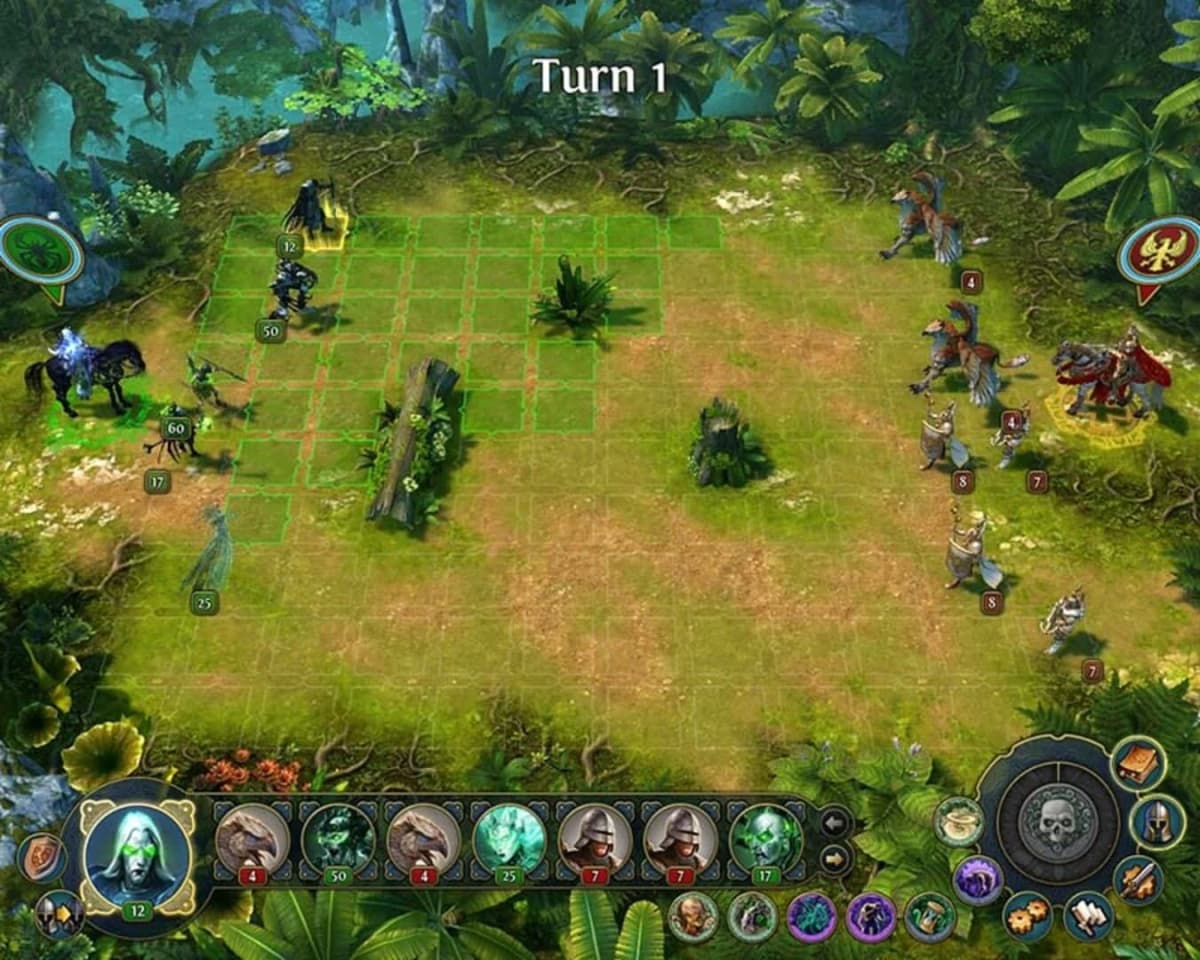
The panic turn in Heroes of Might & Magic: Olden Era is rarely the battle where you lose your army. It’s the end of Week 1, when you open the recruitment panel, see half the creature buttons greyed out, and realise the enemy hero is marching with nearly double your numbers. Fixing that is not about earning more gold. It’s about lining up the four systems that actually decide army size: building dwellings before the weekly tick, taking the Recruitment skill line for the +50% growth specialisation, flagging external dwellings, and spending Law Points on growth instead of decoration.
Current for July 2026. Olden Era entered Early Access on 30 April 2026 with six playable factions — Temple, Necropolis, Grove (Sylvan), Dungeon, Hive and Schism — and full 1.0 is targeted for late 2026 with no fixed date. Balance patches have been shipping continuously, so treat the specific numbers below as current-build values, not permanent ones.
Table of Contents (19)
The short version
- Recruit from owned cities via the right-side person icon with the +, or use the city screen’s Recruit All.
- Every unit needs its prerequisite dwelling. A greyed-out button means a missing building or exhausted weekly growth — not a lack of gold.
- Growth refreshes weekly. A dwelling built before the weekly reset participates in that week’s growth, so Week 1 build order decides whether your army scales or stalls.
- The Recruitment skill line’s Rank II specialisation, Direct Supervision, gives +50% troop growth across all tiers in every city you own. It’s the single biggest multiplier in the game.
- Legion’s Leg boots add another +50% creature growth in all cities, and it stacks with Direct Supervision and fortification bonuses.
- Capture more cities, flag external dwellings, and lean on faction laws that boost growth. More towns plus growth laws beat one over-polished castle.
Recruitment is city-based, and that matters more than most players expect
Units come from cities you own, not from your hero out on the road. Open an owned city, then recruit through the right-hand panel’s person icon with the + sign, or use City screen → Recruit All for the fastest bulk purchase.
The catch is that every creature needs its prerequisite dwelling built first. A greyed-out recruit button means one of two things: you don’t have the required building, or you already exhausted that unit’s weekly growth. Both look identical at a glance, which is why players waste turns assuming they’re short on gold.
One more detail wins real matches. Recruit without assigning units to a hero and they sit in the town garrison — fine for defence, useless for immediate map pressure. Drop recruited stacks into the hero row at the bottom of the city interface and they’re ready to move instantly. That’s the cleanest way to keep tempo right after a weekly refresh.
Week 1 is where your future army count is decided
Creature growth is weekly, so your first-week build order isn’t a minor optimisation — it decides whether your early army scales or crawls. Critically, a dwelling finished before the weekly tick contributes to that coming week’s growth. A dwelling finished one turn after it does not, and you have lost a full week of that unit line permanently.
Prioritise structures that put bodies on the board over prestige buildings:
- Dump early resources into dwellings that produce units. Tier 1 and core support dwellings give the most reliable immediate volume.
- Build creature dwellings early in the week so their growth lands on the next refresh.
- Keep enough gold in reserve to recruit on refresh day, not just to construct buildings.
You can survive a week without one fancy upgrade. You usually cannot survive a week where your rival simply fielded more troops. This is why players who look “lucky” on Week 2 usually aren’t — they just respected the refresh cycle. If you’re still learning the optimal first turns, the best opening strategies guide walks through early build order in detail.
The biggest growth spike comes from a hero specialisation
The strongest tool for recruiting more units isn’t a building — it’s your hero, on the Recruitment skill line. At Rank II, the Direct Supervision specialisation grants +50% troop growth across all tiers, in every city you own.
That is enormous, because it attacks the real bottleneck: weekly supply. Extra damage helps you win one fight; extra growth keeps you winning fights without falling behind on replacements. And because it applies to all your cities rather than one, its value scales with every town you capture — which is exactly why expansion and growth reinforce each other.
Stacking it further
Direct Supervision isn’t the only +50% in the game, and the bonuses compound:
- Legion’s Leg (legendary artifact boots): +50% creature growth in all cities. It stacks with Direct Supervision.
- Fortification upgrades: upgrading your city walls doesn’t only improve defence — the second and third fortification levels increase weekly creature growth as well. This is the most underrated build in the game, because players read “walls” as a defensive spend.
- Faction laws on the creature side of the tree add further weekly growth on top.
Players stacking hero mastery, artifacts and fortifications together report pushing total growth toward +200% in all cities. That is not a niche build — that’s the actual ceiling of the macro game, and it’s what separates armies that look “overwhelming” from armies that look ordinary.
Don’t ignore Tavern hero utility
The Tavern is more than a backup hire. If the building is available, use it to recruit an extra hero. That extra body lets you chain armies, collect loose resource piles, and stand in town ready to receive newly recruited stacks. Even a hero who is weak in combat is perfect for army logistics — and with Direct Supervision applying across all your cities, your main growth hero no longer needs to babysit a specific town.
Flag external dwellings — Olden Era is more generous than Heroes III here
This is one of the clearest departures from the classic formula, and a lot of veteran players under-use it out of Heroes III habit.
In Heroes III, a flagged adventure-map dwelling caps at one week of stock and you had to visit it constantly or waste production. In Olden Era:
- Flagged dwellings stack their weekly growth across weeks. You don’t have to visit every week to avoid losing production — it accumulates while you do other things.
- Each flagged dwelling also increases that creature’s growth in your cities. So capturing a dwelling is a double payment: its own accumulating pool plus a permanent boost to your town production of that unit.
- Creature banks grant units on clear, and some units are only obtainable this way rather than from city dwellings at all.
The practical implication: map clearing is not a side activity you do between city turns. Every flagged dwelling permanently raises your weekly ceiling, and the ones you take in Week 1 compound for the rest of the match.
More cities beat one perfect city
A common mistake is fully developing one castle before taking another. It feels safe, but it slows your creature growth badly — and with Direct Supervision applying per city, it actively wastes your best specialisation.
The strongest expansion pattern is to capture cities quickly, then keep the first investment in each one practical:
- Get the city stabilised.
- Prioritise income structures and the basic Tier 1 dwelling.
- Recruit low-tier volume there even if you don’t upgrade everything locally.
- Shuttle units toward your main hero when you’re ready to consolidate.
Low-tier volume isn’t filler in Olden Era. Early on it’s how you clear efficiently, screen your shooters, and preserve your expensive stacks. Satellite towns don’t need to be masterpieces — they need to generate useful bodies and gold without draining your treasury.
Faction laws are a growth engine, not a side menu
Law Points are generated daily by your cities and spent in a faction-specific law tree, split between general/economic upgrades and creature-oriented ones. The creature side includes weekly growth boosts, stat increases for specific tiers, and faction-mechanic enhancements — Necromancy scaling for Necropolis, for instance.
These look expensive next to immediate gold or convenience picks, but they pay back on every single weekly refresh for the rest of the game. Growth laws are also resource-hungry, so support them by clearing map pickups, mines and neutral guards efficiently. For which laws are worth the Law Points per faction, see the best faction laws guide.
The judgment call is simple: if a law gives long-term creature growth, it usually beats a vanity upgrade. Olden Era rewards snowballing production, not just one clean fight.
Fund it all: keep gold and resources flowing
None of this works if you can’t pay for it. Recruitment, dwellings, fortifications and growth laws all compete for the same treasury, so a steady resource economy is what lets you buy on refresh day instead of watching growth go to waste. If you’re unsure which resources gate which buildings — and where to source the rarer ones — the complete resources guide covers it.
How to troubleshoot weak recruitment turns
- Recruit button is greyed out: check the required dwelling first. If the building exists, you’ve exhausted this week’s growth.
- You have gold but no army spike: gold is only one gate. Weekly creature growth is the other, and it’s usually the stricter one.
- Your fresh units are stuck in town: recruit directly into a hero row, or use a Tavern hero to transfer them quickly.
- Your elite stacks never fill out: expand to more cities and stop overcommitting to top-tier recruitment before your economy can hold it.
- Growth feels flat despite good buildings: you’re probably missing the Recruitment line entirely. Direct Supervision is worth reshaping a hero’s skill path around.
The biggest trap is treating recruitment problems as tactical. Most of them are macro errors made three turns earlier.
Common mistakes
- Saving gold for a dream stack while your weekly growth quietly expires unspent.
- Over-polishing one castle instead of capturing a second source of growth.
- Leaving fresh recruits in the garrison when you needed them on the map.
- Skipping growth-focused faction laws because they cost more up front.
- Treating fortification upgrades as purely defensive and deferring them indefinitely.
- Ignoring external dwellings because Heroes III trained you to think they cap at one week.
FAQ
What is the +50% creature growth skill called?
Direct Supervision, at Rank II of the Recruitment skill line. It applies to all tiers in every city you own.
Does the +50% growth bonus stack with anything?
Yes — with the Legion’s Leg boots (+50% in all cities), with fortification-level growth bonuses, and with creature-side faction laws. Stacked, players report totals approaching +200%.
Do I lose external dwelling production if I don’t visit weekly?
No. Olden Era stacks flagged dwelling growth across weeks, unlike Heroes III. Flagging one also raises that creature’s growth in your cities.
Is Olden Era finished?
Not yet. It entered Early Access on 30 April 2026 with six factions and is targeting 1.0 in late 2026. Balance patches are ongoing, so verify growth values in your current build before committing a whole strategy to them.
Practical takeaway
To recruit more units in Heroes of Might & Magic: Olden Era, stop treating recruitment like a shopping screen and start treating it like your main win condition. Build creature dwellings before the weekly refresh, take the Recruitment line for Direct Supervision, upgrade fortifications for the growth they quietly carry, flag every external dwelling you pass, capture more cities than feels comfortable, and spend Law Points on growth instead of decoration. Keep gold in reserve for refresh day so growth becomes field power immediately.
The armies that look overwhelming in Olden Era aren’t built by lucky rolls — they’re built by players who respected creature growth from the first week and never wasted a town turn. For the exact hotkeys that make this routine fast, keep the complete controls guide handy.
More Heroes of Might & Magic guides
- Heroes of Might & Magic: Olden Era – 11 Tips Before Starting
- Olden Era: Complete Controls Guide
- Olden Era – Best Opening Strategies
- Olden Era: Best Faction Laws Guide
- Olden Era: Complete Resources Guide
- All Heroes of Might & Magic: Olden Era guides →
FinalBoss // Gear
Level up your setup
01Top-rated gaming headsetson Amazon→02High-refresh gaming monitorson Amazon→03Gaming chairson Amazon→04Discounted game keyson Kinguin→Affiliate links · As an Amazon Associate, FinalBoss earns from qualifying purchases.
Want to Level Up Your Gaming?
Get access to exclusive strategies, hidden tips, and pro-level insights that we don't share publicly.
Ultimate Guide Strategy Guide + Weekly Pro Tips