
The economy in Heroes of Might & Magic: Olden Era stalls for one reason more than any other: players spend rare resources on prestige buildings while Wood and Ore run dry, and the marketplace can’t bail them out of an Alchemical Dust shortage. Get the order right and most economy decisions answer themselves.
Table of Contents (11)
The short version
- Olden Era has seven resources: Gold, Wood, and Ore (common); Mercury, Gems, and Crystal (rare); and Alchemical Dust (special).
- Wood and Ore decide your opening — they power income buildings and creature dwellings, so secure them before chasing anything shiny.
- Alchemical Dust has no mines. You get it from piles on the map, exchanges, disenchanting artifacts, and storages — not from a steady daily source.
- Marketplaces stack. Each one you own cumulatively improves your trade rate; the Merchant hero skill counts as an extra marketplace on top.
- Sulfur is gone. Alchemical Dust now fills the special-resource slot that older Heroes games gave to sulfur.
Know the seven resources before you build anything
Not every resource is equally urgent, and reading that hierarchy correctly is half the economy. Olden Era runs on seven materials split into three tiers, and they behave very differently from each other.
- Gold: the universal currency. It pays for recruitment and most structures, and it’s what you spend at the marketplace to cover other shortages.
- Wood: your biggest early bottleneck. It appears in so many income and recruitment buildings that it usually runs dry first.
- Ore: the second core expansion resource, essential for keeping the build queue moving.
- Mercury: a rare resource for higher-tier development and magical progression.
- Gems: a rare resource tied to upgrades and advanced structures.
- Crystal: the third rare, frequently demanded alongside Gems and Mercury for elite upgrades.
- Alchemical Dust: the special resource. It has no mine and is governed by completely different rules — treat it as its own economy.
If you’re coming from older Heroes games, the one adjustment to make is that classic sulfur is gone. Alchemical Dust now occupies that special-resource slot, but it’s far more restrictive about where it comes from.
Why Wood and Ore decide your first phase
Most stalled openings happen because players overvalue rare resources too early and underestimate how often Wood and Ore are required. Wood is the most-used early building material, showing up in both income and recruitment chains, so it usually empties first. If your town keeps asking for Wood, that’s not bad luck — it’s how the economy is built.
The correct response is to secure Wood and Ore sources early, even if that means delaying a greedier route toward a flashy rare mine. A stable Wood/Ore flow lets you keep building every day, and that matters more than owning one Crystal or Mercury source you can’t fully use yet. A resource’s value isn’t its rarity — it’s whether it unlocks the next useful building right now.
- Prioritize nearby sawmills and ore pits if the guards are reasonable.
- Pick up loose Wood and Ore piles aggressively during the opening sweep.
- Don’t spend rare resources just because you have them; hold them for true gates.
- If you must choose between a smooth daily build queue and a speculative rare grab, the build queue usually wins.
This is also why early army growth feeds the economy. More weekly creature growth isn’t only combat power — it’s what lets your main hero clear guarded resource nodes and mines faster, converting military strength into economic momentum.
For the recruitment side of that loop, see our companion guide on how to recruit more units fast.
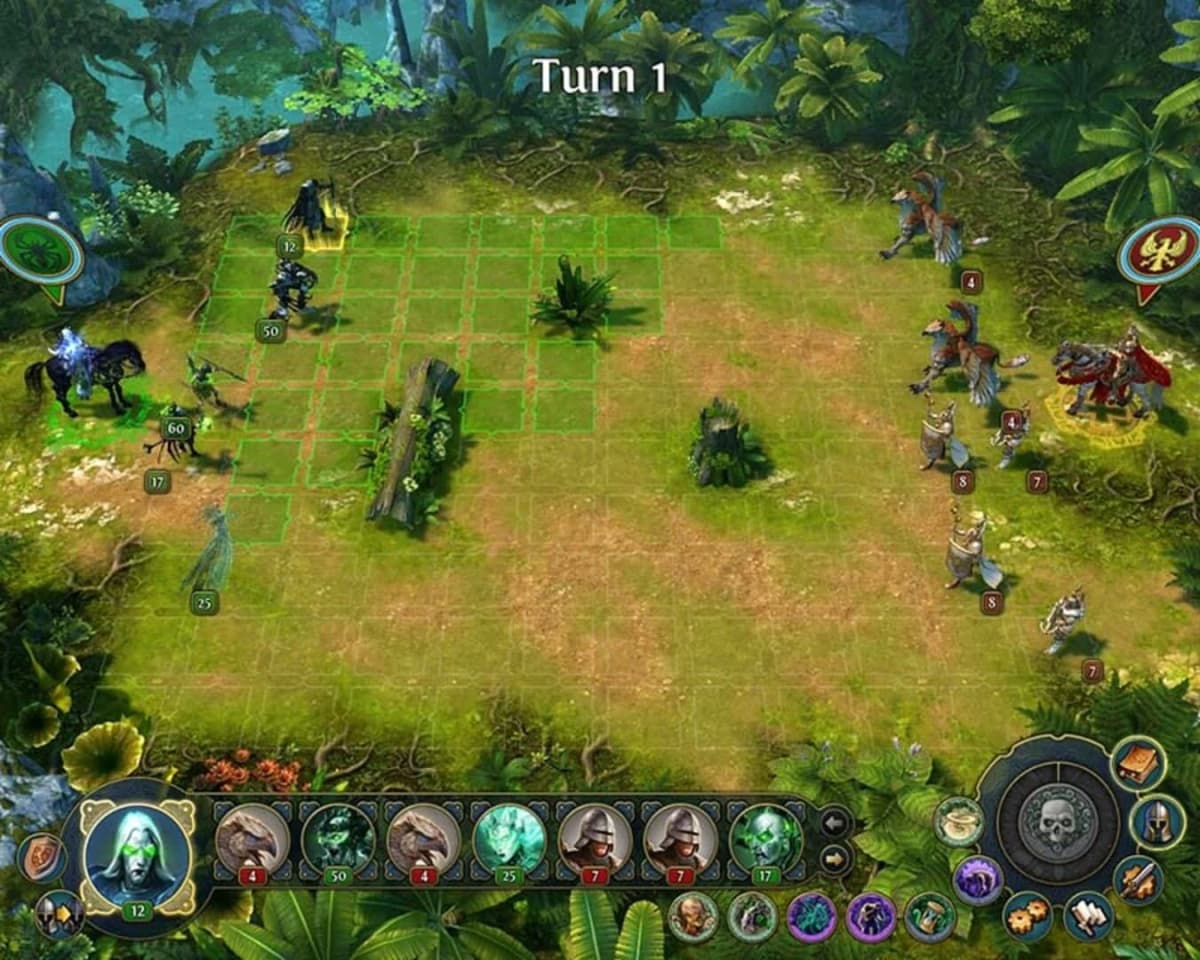
Handling Mercury, Gems, and Crystal without choking your build order
Mercury, Gems, and Crystal are the resources that make a town feel rich or starved in the midgame. They’re scarcer and more contested, and many advanced structures demand combinations of them — so being short on even one can freeze progress.
The mistake is treating the rares like Wood and Ore. You often don’t need them immediately, but once the game starts asking, shortages become painful fast. Scout them early, flag them when practical, and avoid casual spending on buildings that don’t change your next few turns.
When deciding whether to fight for a rare mine, ask one question: does this unlock something important soon, or am I just collecting because it’s shiny? If the answer is “soon,” take the fight. If not, you’ll usually get more value from clearing Gold, Wood, or Ore access first and returning with a stronger stack.
What the rare resources gate
- Advanced town upgrades that move you from basic growth into stronger recruitment.
- Mage Guild and magic-focused infrastructure.
- Elite and late-tier unit progression.
The pattern is what matters: Wood and Ore get you moving, and the rares decide how quickly that movement turns into army and spell power. Plan your build queue around when each rare is actually required, not around tidying up an uneven stockpile.
Alchemical Dust is a separate economy, not just another rare
Alchemical Dust is the resource that most changes how trading works in Olden Era. There is no standard mine for steady daily income, so the usual safety valves don’t apply. If you run dry, the game expects you to solve it with planning and the right map play, not a quick gold conversion.
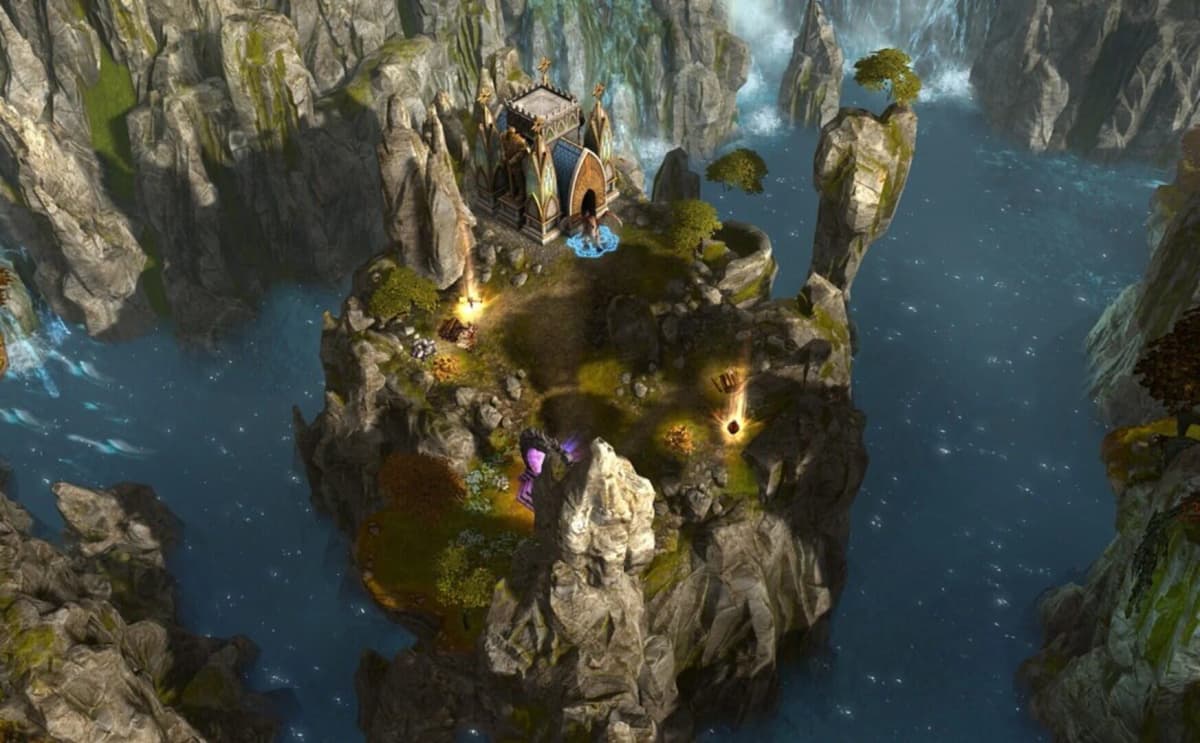
Because it’s scarce, reserve Dust for the moments that justify it: your strongest recruitment upgrades, high-value spell enhancement paths, and other endgame-defining improvements. Spending it casually the moment you find some is the fastest way to regret a turn sequence ten minutes later.
There are four reliable ways to get Alchemical Dust:
- Piles: adventure-map pickups grant Dust directly — route toward them during your sweep.
- Exchanges: you can acquire Dust through the resource-exchange interface, so it isn’t fully locked out of trading.
- Disenchanting artifacts: breaking down artifacts yields Dust, which makes duplicate or low-impact items a practical source of fuel.
- Storages: stored caches on the map can hold Dust worth detouring for.
Dust also has a strong magic connection. If your plan runs through upgraded spells via the Magic Observatory or similar spell-development paths, track your Dust spending before you commit — a tempting town upgrade can delay a far more important spell breakpoint.
Marketplace rules: when trading helps and when it hides a bad plan
The marketplace is excellent for smoothing out Gold, Wood, Ore, Mercury, Gems, and Crystal shortages. Use it to keep momentum, not to dodge hard choices about build priority.
Trade when a small conversion finishes a building that matters immediately. Don’t trade just because you dislike an uneven stockpile. A market exchange that completes a key dwelling or economy structure today is efficient; one that empties your gold for a building you can’t yet leverage is wasteful.
Marketplaces stack: each one you own cumulatively improves your exchange rate, so building more than one is worthwhile on resource-tight maps. The Merchant hero skill helps too — it acts as an additional marketplace, improving your rates wherever that hero is. Don’t confuse it with Smuggler, which periodically supplies rare resources based on your starting faction rather than improving trade rates.
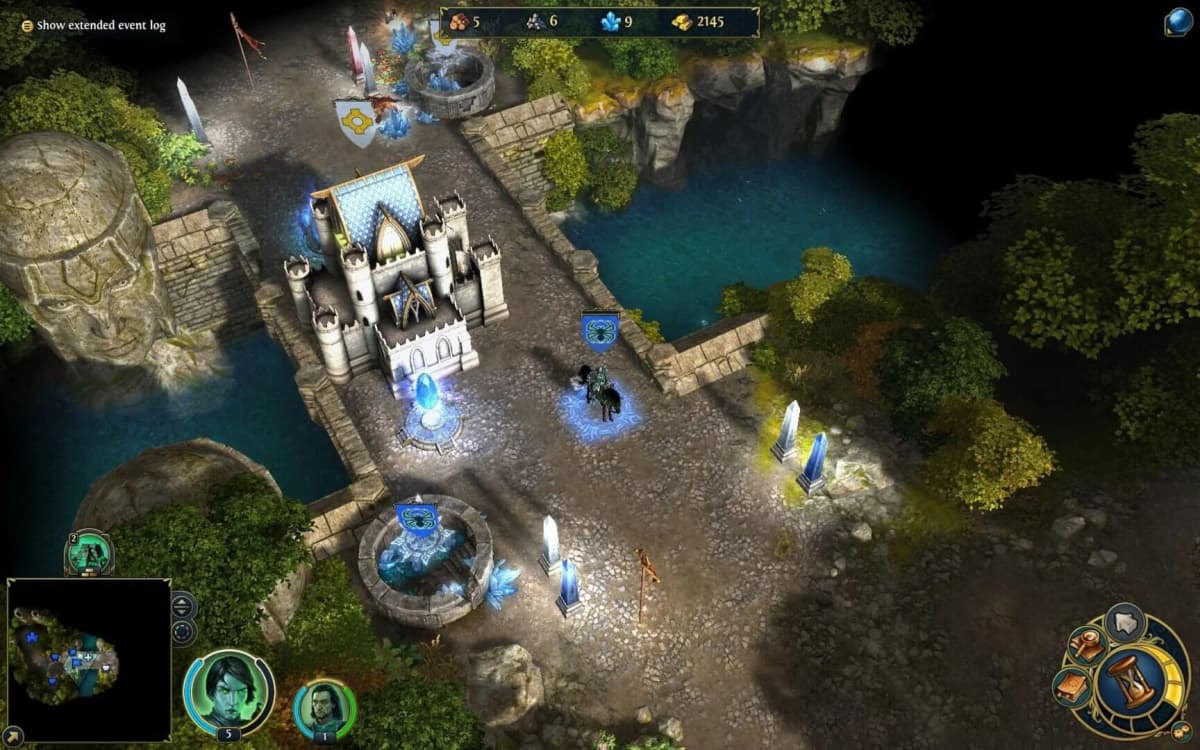
- Trade Gold for Wood or Ore to keep your opening build order alive.
- Trade for Mercury, Gems, or Crystal only when a real upgrade threshold is one step away.
- Build a second or third marketplace when a map keeps starving you of specific rares.
- Don’t burn your gold reserve so hard that you can’t recruit the units the new building just unlocked.
- If you need Dust, lean on piles, exchanges, and artifact disenchanting before overtrading the rest of your economy.
Best map habits for resource collection
Good resource play isn’t only about buildings — it’s route discipline on the adventure map. Your main hero should clear guarded mines and high-value pickups while support movement handles safer loose stacks and troop delivery. Spreading your power too widely usually slows resource capture instead of speeding it up.
- Scout your nearest Wood and Ore access first.
- Mark rare mines mentally, even if you can’t clear them on first contact.
- Use one main combat hero to secure guarded economy nodes efficiently.
- If your faction benefits from matching terrain movement, route your collector through that terrain whenever possible.
- Mobility spells like
Dimension Door, when your run reaches them, turn awkward resource pockets into easy pickups and are worth valuing for that alone.
This is the practical reason single-hero focus is so often recommended early. One strong hero clears faster, takes fewer bad fights, and reaches mines sooner — which funds the second hero and broader map control later. For the wider early-game plan, see our best opening strategies guide.
Common mistakes that cost entire weeks
- Overchasing rares on day one: if it delays basic Wood/Ore income, your town stops growing.
- Using the marketplace as a habit instead of a tool: bad trade timing drains gold that should become units.
- Spending Alchemical Dust the moment you get it: Dust is usually more valuable one or two turns later than right now.
- Ignoring artifact disenchanting as a Dust source: weak or duplicate artifacts are often more useful as progression fuel.
- Building for prestige instead of tempo: a fancy structure that doesn’t affect your next fights can be worse than a plain income building.
- Splitting army strength too early: two weak heroes often fail to capture nodes that one strong hero could clear cleanly.
If your economy feels stuck, check these before blaming the map. Most shortages come from sequence errors: building the wrong thing first, trading too soon, or treating Dust like a normal rare.
Practical takeaway
Manage the seven resources in the order they behave. Lock in Gold, Wood, and Ore first so you can build every day; line up Mercury, Gems, and Crystal for the upgrades that turn momentum into army and spell power; and treat Alchemical Dust as a planned, separate economy fed by piles, exchanges, artifact disenchanting, and storages. Stack marketplaces and pick up Merchant when a map starves you. Follow that order and the economy stops feeling random.
FinalBoss // Gear
Level up your setup
01Top-rated gaming headsetson Amazon→02High-refresh gaming monitorson Amazon→03Gaming chairson Amazon→04Discounted game keyson Kinguin→
Affiliate links · As an Amazon Associate, FinalBoss earns from qualifying purchases.
Want to Level Up Your Gaming?
Get access to exclusive strategies, hidden tips, and pro-level insights that we don't share publicly.
Ultimate Guide Strategy Guide + Weekly Pro Tips