

Table of Contents (14)
TL;DR – Early-Game Stat Priority in Windrose
Put the majority of your early levels into Endurance, then mix in Vitality and your main weapon stat (Strength, Agility, or Precision). Ignore Mastery until much later. After roughly 25 hours and multiple respecs, this pattern has been the most consistently effective across melee and ranged builds.
- 1st priority: Endurance (stamina)
- 2nd priority: Vitality (HP)
- 3rd priority: Your main weapon stat (Strength / Agility / Precision)
- Last: Mastery (crit) – treat as late-game only
If you just want a quick target: by the time you hit the mid-teens in level, aim for around 20 Endurance, 10-15 Vitality, and 10–15 in your weapon’s scaling stat, with 0 in Mastery.

Understanding What Each Stat Actually Does
Before talking numbers, it helps to be clear on what you’re buying with each point. Windrose doesn’t spell this out very aggressively in-game, so I had to learn a lot of this the hard way through testing in the early biomes.
- Endurance – Increases maximum stamina. Stamina powers dodges, sprints, jumps, and heavy attacks. Around the early game, 20 points in Endurance gives roughly +100 stamina, which is a huge jump and easily the single biggest survivability boost you can buy.
- Vitality – Increases maximum health. Each point adds about +13 HP. It feels smaller per point than Endurance, but it still matters once enemies start hitting harder.
- Strength – Main damage stat for clubs, maces, and halberds. If your weapon’s tooltip shows it scaling with Strength, each point up to 20 is worth about +13.45 damage to light attacks on average.
- Agility – Main damage stat for sabers, greatswords, and blunderbusses. Same scaling rule as Strength up to 20.
- Precision – Main damage stat for rapiers, pistols, and muskets. The important quirk: rapiers scale with Precision even though they look like they should be Agility-based.
- Mastery – Increases critical hit chance. On paper that sounds strong, but in early game the return per point is weak compared to what you can get from armor sets and accessories.
There is a hard soft-cap at 20 points for the three weapon damage stats (Strength, Agility, Precision). From 1–20, you gain about 13.45 damage per point on light attacks. After 20, gains drop to around 7 damage per point. That makes the first 20 points in your main damage stat extremely efficient, but still not as life-saving as Endurance early on.
Why Endurance Comes First
The breakthrough moment for me was realizing that every death I had in the first two regions basically traced back to one thing: no stamina when I needed to dodge. It wasn’t that I needed 10% more damage – I needed one more dodge or a last-second sprint out of a bad position.
- More Endurance = more mistakes allowed. With base stamina, you get maybe three aggressive swings and a roll before you’re empty. With +100 stamina from ~20 Endurance, that turns into five or six actions, which is often the difference between “clean kill” and “died trying to finish.”
- Stamina powers both offense and defense. Heavy attacks, charged shots, sprinting between targets, quick repositioning – everything burns the same bar, so raising that bar is universally useful regardless of build.
- Other stamina sources scale with it. Talents like Marathon Runner (+50 stamina) and Agile (reduced stamina costs for mobility) feel much better if your base stamina pool is high. Gear and pendants that cut stamina costs or add flat stamina also stack with Endurance.
After trying “glass cannon” damage builds and even a Vitality-heavy tank experiment, Endurance-first was the only approach that consistently let me handle higher-level biomes earlier than intended and survive mistakes in group fights.
Where Vitality Fits In
There is some community disagreement on Vitality. A few players argue you can mostly skip it and rely on food buffs for HP, since cooked meals can give both health and main-stat bonuses. Others (and this includes me after some testing) find that purely food-based HP feels too swingy when you’re learning boss patterns.
My compromise has been:
- Get 10–15 points of Vitality relatively early for a solid baseline HP buffer.
- Use food to extend that HP rather than completely replace it. Eating two good meals before a tough fight is a noticeable difference on top of your Vitality investment.
- Once you’re comfortable with dodges and enemy patterns, you can temporarily respec out of some Vitality into damage if you want faster clears.
Because respecs are free in Windrose, there’s no real penalty for experimenting here. If you feel like your HP bar is never the reason you die (it’s always stamina or bad targeting), you can lean more heavily into weapon stats earlier.
Weapon Stats: Strong, but Third in Line
Damage stats are very efficient up to 20 points, so it’s tempting to pump them first. I did that on my very first saber build, rushing Agility to 20 while leaving Endurance barely touched. The result was great damage on anything I did hit and a constant feeling of being out of breath and unable to dodge.
There are two important realities that push weapon stats to third place in the early game:
- Gear contributes more to offense than stats. Upgrading or replacing weapons and armor jumps your damage much more dramatically than a couple of points in Strength or Agility. Your crafted or looted weapon tier matters more than min-maxing your stat sheet at low level.
- The first 10–20 points are great, but survivability multipliers come first. A dead high-damage character does less DPS than a slightly weaker one who can stay in the fight. Once you have enough Endurance and Vitality to stand your ground, then you cash in those juicy 1–20 weapon-stat points.
The other thing to keep in mind is not to split weapon stats needlessly. If you’re running a saber and a pistol, it’s very tempting to invest in both Agility and Precision. In practice, you are usually better off building around the weapon you use to deal the majority of your damage, and treating the off-weapon as a utility tool, not a co-equal DPS source.
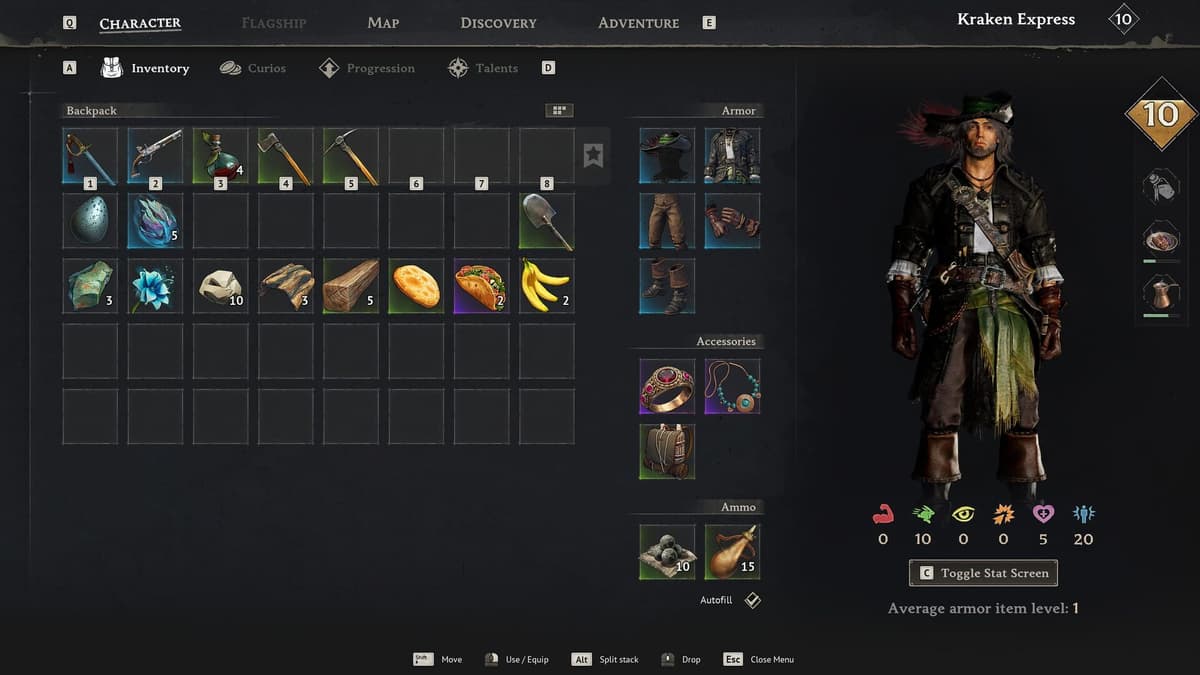
Why You Should Ignore Mastery Early
Mastery looks appealing because everyone loves crits, but the numbers and my own experiments both paint the same picture: it is a trap stat early on.
- Low per-point impact. Each point adds a small bump to critical chance, but not enough to compete with what Endurance, Vitality, or a weapon stat does for you in actual combat situations.
- Crit chance is easy to get elsewhere. Armor sets like Razor or Privateer, plus certain accessories, provide sizeable crit bonuses. Picking up one of those effectively gives you more “Mastery” than 10–15 raw points would.
- Synergy is late-game focused. Mastery only really shines when you have a full kit of crit-damage modifiers, fast weapons, and high base damage. That is a late-game puzzle, not an early-game concern.
Until you are comfortably clearing the toughest content you have access to and are optimizing a specific high-crit build, keep Mastery at 0.
Practical Early-Game Stat Spreads
Here are example spreads that have worked well for me across different playstyles by the time you’re around level 15–20. These assume you’re using Character → Attributes to respec freely as you get new weapons.
Balanced Melee (Saber / Mace style)
- Endurance: 20
- Vitality: 12–15
- Main weapon stat (Strength or Agility): 10–15
- Precision: 0 (unless your main weapon actually scales with it)
- Mastery: 0
This is my default recommendation if you’re not sure what to do. It feels safe, responsive, and your damage will still be solid once you pick up a good weapon and keep it upgraded.
Ranged / Precision-Focused (Pistol / Musket / Rapier)
- Endurance: 18–20
- Vitality: 10–12
- Precision: 15–20
- Strength / Agility: 0 (unless you’re deliberately hybrid)
- Mastery: 0
Here, you lean a bit harder into your main damage stat because ranged weapons benefit a lot from bursting enemies before they can close. You still keep high Endurance so you can dodge and reposition when things inevitably get into melee range.
Vitality-Light “Expert” Build
- Endurance: 20
- Vitality: 5–8
- Main weapon stat: 18–20
- Mastery: 0
I only recommend this once you’re very comfortable with dodging and boss patterns, because your mistake budget is thin. The idea is to rely on Comfort, Rested buff, and two strong meals to pad your HP, while using the freed-up points to hit much harder. Thanks to free respeccing, you can switch into this setup for farming easier zones after you’ve cleared them once safely with a tankier build.
Common Early-Game Stat Mistakes
I made most of these at least once. Avoiding them will save you a lot of frustrating deaths and pointless respecs.
- Over-investing in damage too quickly. Rushing your weapon stat to 20 while leaving Endurance at base makes every fight feel like walking a tightrope. You will kill fast… until you whiff one combo and have no stamina to dodge.
- Splitting points between two damage stats. For saber + pistol, I tried 50/50 Agility and Precision. Both weapons felt mediocre compared to specializing in just one and accepting the other as a backup tool.
- Ignoring Vitality completely. Even with perfect stamina, chip damage and occasional mistakes add up. Having at least a modest HP buffer smooths out bad pulls and environmental damage.
- Dumping early points into Mastery. The crits you gain will not feel worth it compared to what you could have gotten from any other stat. Wait until you have crit gear and a late-game focus before touching this.
- Not respec’ing when you get a new weapon. Because respecs are free, it is always worth opening
Character → Attributesand realigning your stats when you switch from, say, a mace to a rapier. Don’t stay stuck in a Strength build while your best weapon scales with Precision.
How Talents, Gear, and Food Interact with Stats
Your stat sheet is only one part of your power budget. A lot of the “feel” of your build in Windrose comes from how stats combine with talents, equipment, and buffs.
- Talents: Picking up stamina-focused talents like Marathon Runner (+50 stamina) and Agile (15–40% reduced stamina cost on movement) effectively multiplies the value of your Endurance investment.
- Gear: Higher-tier armor and weapons provide bigger raw damage and defense spikes than a handful of stat points. Prioritize staying roughly up to date with your gear level when moving to a new biome.
- Comfort / Rested: Increasing your base Comfort at your camp extends the Rested buff, which indirectly boosts survivability and damage through better regen and stat bonuses.
- Food: Cooking and eating two meals before tough fights is part of the baseline strategy, not an optional luxury. Many recipes add both main stats and Vitality, giving you temporary “free” points on top of your permanent allocation.
This is why the “Endurance → Vitality → weapon stat” priority holds up even as you unlock more systems. Endurance remains universally good, while gear, talents, and food do a lot of the heavy lifting for both damage and HP.
Quick Reference Priority Cheat Sheet
- Push Endurance to ~20 as an early goal.
- Pick up 10–15 Vitality for a comfortable HP buffer.
- Invest 10–20 points in your main weapon stat once stamina and HP feel good.
- Keep Mastery at 0 until you have late-game crit gear and a specific build plan.
- Do not split between multiple weapon stats unless you have a clear hybrid concept and are willing to respec often.
- Whenever you equip a new main weapon, respec to match its scaling stat.
If you follow that framework, early-game Windrose becomes far more forgiving, and you can focus on learning boss patterns, exploring new biomes, and upgrading gear instead of fighting your own stat sheet.
Related Guides
- Windrose: Beginner Guide – 5 Things to Know When Starting Out
- Windrose: How to Increase Inventory & Backpack Size Fast
- Windrose: How to Fast Travel with Bells – Crafting & Usage Guide
- Windrose: How to Get Copper Ores and Copper Ingots – Fast Guide
- Windrose: All Faction Trader Locations & How to Use Them
FinalBoss // Gear
Level up your setup
01Top-rated gaming headsetson Amazon→02High-refresh gaming monitorson Amazon→03Gaming chairson Amazon→04Discounted game keyson Kinguin→Affiliate links · As an Amazon Associate, FinalBoss earns from qualifying purchases.
Want to Level Up Your Gaming?
Get access to exclusive strategies, hidden tips, and pro-level insights that we don't share publicly.
Ultimate Guide Strategy Guide + Weekly Pro Tips